

Wash your car at least once every couple of weeks through winter to stop road salt attacking paint and metal, and wash sooner whenever you’ve driven through visibly salted or gritty roads, according to The AA. Treat the underside, wheels and glass as separate jobs within that same routine, since salt and grime settle there even when the bodywork looks clean.
TL;DR:
- Daily commuters on gritted roads and coastal drivers should wash weekly; garaged, rarely driven cars can wait longer only when no salt residue is visible.
- Rinse loose grit away before touching paint, use separate buckets and a wheel brush, then dry with clean microfiber to limit scratches and water spots.
- Rinse the underside and wheel arches occasionally, clear door drains, and repair visible paint chips before salt reaches bare metal or corrodes structural parts.
- A ceramic coating does not justify longer winter intervals; use shampoo made for coated paint and renew maintenance glaze every few months, following product instructions.
- Postpone washing when water could freeze around locks or seals, and replace plain water with winter screenwash to prevent freezing and clear oily road residue.
Table of Contents
- Recommended winter wash schedule for different driving habits
- How to wash your car safely in winter: a step-by-step technique
- Priority areas to clean and check in winter
- Products and protection: what to use after cleaning
- Practical safety tips and troubleshooting for winter washes
- Does garage storage change how often you need to wash?
- How winter wash frequency protects your ceramic coating
- Detailer perspective: quick routines I use and recommend
- Where to get suitable winter maintenance products
- FAQ
- Sources
Recommended winter wash schedule for different driving habits
A fortnightly wash is the baseline because it gives road salt no time to sit on paint and metalwork before it’s rinsed away. The AA recommends this minimum frequency specifically to avoid the paint and metal damage that salt causes over winter, and it also points to occasional underside cleaning as part of the same routine.
That baseline shifts depending on how and where you drive. Some situations call for more frequent attention, others for less:
- Daily commuters on gritted roads benefit from a wash every week, since salt residue builds up fast on high-mileage routes.
- Coastal drivers face salt spray from the air as well as the road, so a weekly wash helps prevent the same corrosion risk from two directions.
- Anyone caught in a sudden storm or muddy back lane should wash as soon as practical afterwards rather than waiting for the next scheduled clean.
- Garaged or rarely driven cars can stretch beyond a fortnight, but only if no salt has accumulated. A car parked outside after a gritted journey still needs washing on schedule.
A few signs mean you shouldn’t wait for your next planned wash. White, chalky staining around the wheel arches, visible salt crust on the lower panels, or grime thick enough to reduce rear visibility all call for an immediate clean rather than a scheduled one. Reacting to what you actually see on the car matters more than sticking rigidly to a calendar.
How to wash your car safely in winter: a step-by-step technique
Winter grit is sharper and more abrasive than summer dust, so the sequence you use matters more this time of year. Working methodically protects your paint and any existing coating from scratches while still shifting the salt that causes long-term damage.
- Pre-rinse the whole car with a hose or pressure washer to lift loose grit before any mitt touches the surface. This step alone removes most of the abrasive particles that cause swirl marks.
- Wash with a dedicated car shampoo and a clean mitt, working from the top down, using a separate bucket and brush for the wheels so brake dust and grit never transfer to the bodywork.
- Allow a brief dwell time where the product label permits it. Which? suggests around one to two minutes for some shampoos, giving the product time to lift salt and grime before you agitate it.
- Rinse thoroughly, then dry with a clean microfibre towel rather than letting the car air-dry. The RAC stresses thorough drying to avoid water spots and streaking, and a short drive afterwards helps disperse any water trapped around brakes and seals.
The two-bucket method, with one bucket for clean shampoo solution and one for rinsing your mitt, keeps grit out of the wash water and reduces the chance of dragging scratches across the paint. Combined with the pre-rinse, it’s the single biggest swirl-mark reducer in a winter routine.
Pro Tip: In near-freezing conditions, test a small, shaded panel first. If water is likely to freeze on door seals or locks, hold off until temperatures lift slightly.
Priority areas to clean and check in winter
Salt doesn’t stay on the bonnet. It works its way into the underside, sills and wheel arches, where it sits against metal for far longer than anything on the visible bodywork. The Gov identifies these as structurally significant areas, and corrosion in load-bearing parts is treated as a genuine safety issue rather than a cosmetic one.
A few areas deserve deliberate attention each time you wash, or at a set interval through the worst months:
- Underside and wheel arches: an occasional jet or pressure rinse clears packed salt that a standard hose pass won’t reach.
- Door sills and drain holes: check these are clear so trapped water has somewhere to go instead of sitting against metal.
- Glass, mirrors, lamps and number plates: keep these clear for visibility and legal compliance, and top up with a winter-rated screenwash rather than plain water, since the RAC warns that plain water can freeze and that winter screenwash also removes oily road residue that a wash alone won’t shift.
- Visible chips or scratches: spot these while you’re washing so they can be treated before salt gets into bare metal.
Products and protection: what to use after cleaning
Washing removes what’s already landed on the car. Protection is what stops the next layer of salt and grime from bonding to the paint in the first place, which is why the two jobs work together rather than as substitutes for each other.
- A wax, paint sealant or ceramic maintenance glaze gives salt and road film less to grip onto between washes.
- If your car already carries a ceramic coating, maintain it with a coating-safe shampoo and a maintenance glaze rather than reaching for abrasive polishes, which strip away the very repellency you’re trying to preserve.
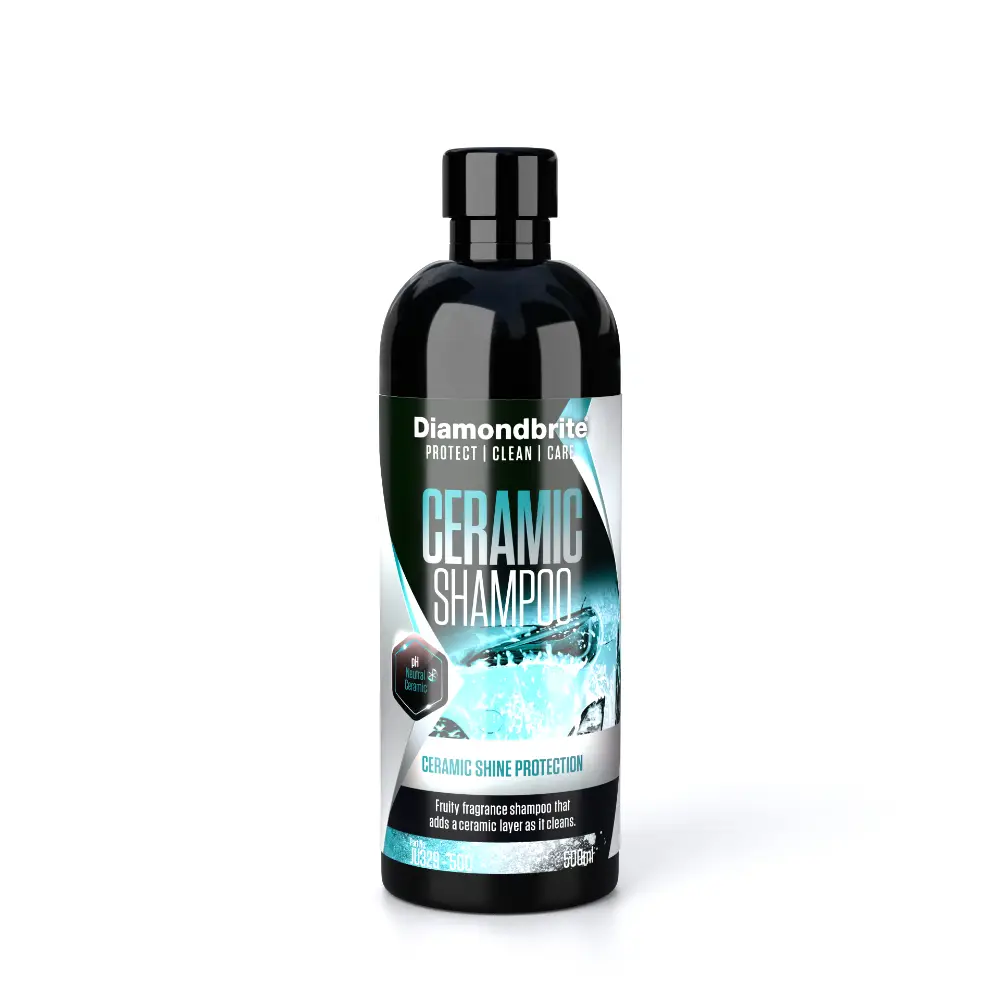
- Our ceramic shampoo is formulated to clean without stripping existing protection, and our Ceramic Glaze tops that up between full recoats.
- Wheels take a harder hit than paintwork in winter, so dedicated wheel care and glass products are worth keeping alongside your regular shampoo rather than relying on all-purpose cleaners.
Protection doesn’t need reapplying at every wash. Most glazes and sealants hold up for a few months before they need topping up, so follow the product’s own instructions rather than assuming more frequent application does more good. The wash schedule handles the day-to-day salt; the protective layer is what buys you time between applications.
Practical safety tips and troubleshooting for winter washes
Avoid washing in sub-zero air temperatures where possible, since water can freeze around locks and seals before you’ve finished drying. If you’ve no choice, keep doors unlocked while you work and dry seals and handles first.
Blot rather than drag your microfibre towel to lift water without pushing grit across the paint, and take a short drive afterwards to clear trapped water from brakes and sills. Household washing-up liquid strips wax and isn’t a routine substitute for proper car shampoo, though a single well-diluted emergency use is unlikely to cause lasting harm, a point both Which? and the RAC make. Keep a mitt, two buckets, a soft wheel brush, a microfibre drying towel and winter screenwash to hand and most of the routine takes care of itself.
Does garage storage change how often you need to wash?
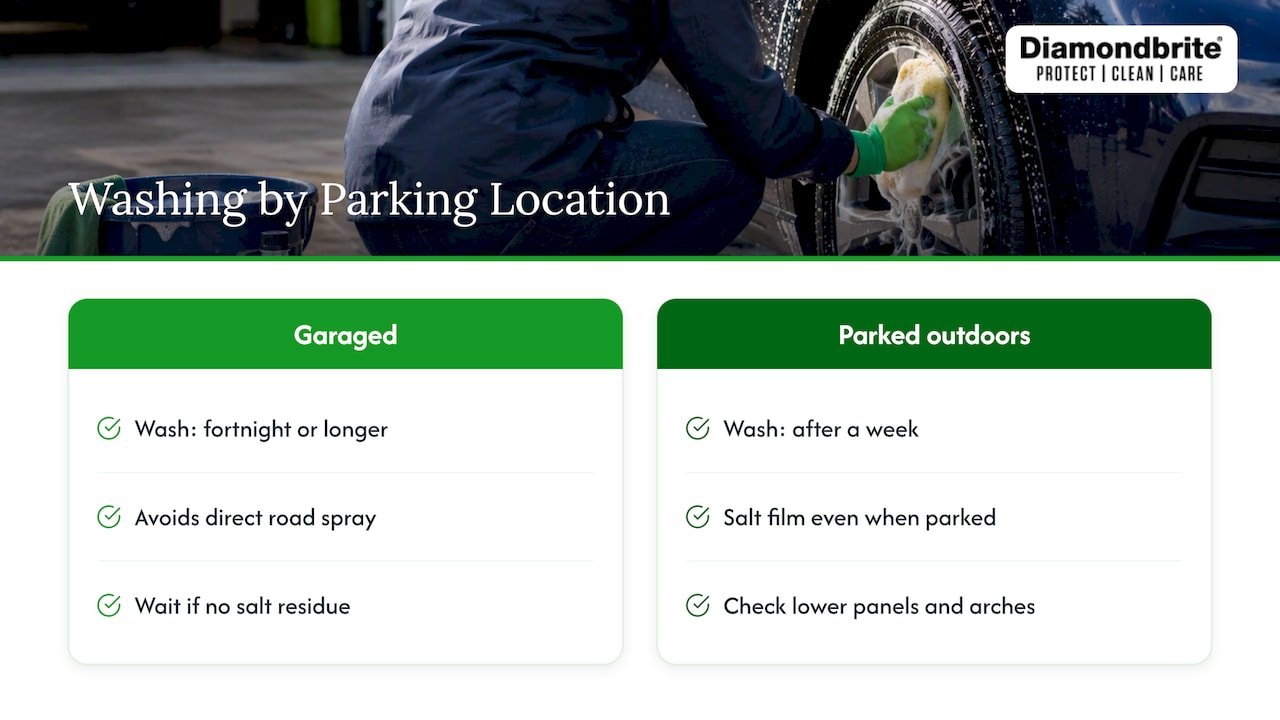
Where you park overnight changes how much salt and moisture your car actually picks up, which in turn changes how often it needs attention. A car kept in a garage avoids direct road spray, overnight condensation and the fine salt mist that settles on anything parked near a treated road, so it can often go longer between washes without visible build-up.
A car left outside overnight, particularly near a main road or in a coastal area, picks up salt film even on days it hasn’t been driven. That residue sits against the paint and underside for longer, which pushes outdoor-parked cars towards the more frequent end of the schedule regardless of how far they’ve actually travelled that week.
The practical takeaway is to let what you see guide the decision rather than the mileage alone. A garaged car showing no salt residue can comfortably wait the full fortnight or beyond, while an outdoor-parked car might need a wash even after a week of light use simply because of where it’s been sitting. Checking the lower panels and wheel arches before deciding whether a wash is due saves unnecessary washing without risking the salt sitting too long either way.
How winter wash frequency protects your ceramic coating
A ceramic coating works by giving dirt and salt less surface to bond to, but that repellency only holds up if the coating itself isn’t left under a layer of grime for weeks at a time. Washing on schedule is what keeps the coating doing its job rather than sitting dormant under road film.
Skipping washes for too long during winter lets salt and contaminants dwell on the coated surface for longer than intended, which gradually dulls the hydrophobic effect even if the coating itself isn’t damaged. Regular washing with a coating-safe shampoo, rather than infrequent deep cleans, is what keeps water beading and sheeting the way a fresh coating should.
The link runs in both directions. A coating doesn’t let you wash less often in winter, since salt still needs removing on the same schedule as uncoated paint, but it does make each wash faster and gentler because contaminants release more easily from a slick surface. Pair the fortnight-or-sooner wash schedule with a maintenance glaze every few months and the coating keeps performing through the worst of the gritting season instead of fading by Christmas.
Detailer perspective: quick routines I use and recommend
On commuter mornings I do a quick wheel rinse and shampoo wipe, nothing more. Fortnightly, I run the full routine with an underside check added in. Ceramic-friendly shampoos and glazes cut the total effort because dirt lifts faster, which matters when you’re balancing a realistic time budget against a proper winter routine rather than an ideal one.
— Will
Where to get suitable winter maintenance products
For the washes and protection covered above, our ceramic shampoo, maintenance glaze, wheel care and glass products are built to work together through salted roads and cold mornings. If you’re mobile detailing and want a broader step-by-step reference alongside our guidance, CDC Detailing’s home wash guide covers the full process in extra detail.
Browse our full winter car care range to find the shampoo, glaze and wheel care products that match the routine above.
FAQ
How often should I wash my car in winter?
Wash at least once every couple of weeks as a baseline, shortening that to weekly if you’re driving daily on gritted or coastal roads, according to The AA. Wash immediately after any trip that leaves visible salt, grit or mud on the car rather than waiting for your next scheduled clean.
Can I use snow foam over a wax or ceramic coating?
Snow foam is generally safe over wax and ceramic coatings when used as a pre-wash step to lift loose dirt before contact washing, since it’s designed to sit on the surface rather than scrub it. Stick to a coating-safe shampoo for the contact wash itself to avoid stripping the protective layer underneath.
When can I wash my car after applying a ceramic coating?
Most ceramic coatings need a curing period before their first wash, and the exact timing depends on the specific product’s instructions, so check the label rather than assuming a universal figure. Until then, avoid rain exposure where possible and skip washing altogether.
Is plain water enough for winter screenwash?
No. The RAC advises using a winter-rated screenwash with antifreeze additives, since plain water can freeze in cold conditions and won’t remove oily road residue the way proper screenwash does.
Do I need to clean the underside of my car in winter?
Yes. The underside, sills and wheel arches are identified as structurally significant areas in the GOV.UK MOT inspection manual, and salt trapped there can lead to corrosion in load-bearing parts if it’s never rinsed away.
Sources
- How to wash a car | The AA
- Best car wash kit 2026: car shampoos and wheel cleaners tested – Which?
- How to check windscreen wash | RAC
- Gov