

The best winter paint protection is simple: start with clean, repaired paint, add a durable layer such as a sealant or ceramic coating before the gritters come out, then wash often enough that salt never sits on the surface. Do those three things and your paintwork goes into spring in far better shape than a car left to fend for itself.
TL;DR
- Road salt, grit and slush are the real threats. Salt can quickly promote rust where paint is chipped or worn.
- Prepare first: wash thoroughly, check for stone chips and repair them before the roads are gritted.
- Wax and sealants are glossy barriers. Ceramic coatings bond to the paint and last longer.
- Wash little and often, with as little paint contact as possible. Rinsing is easier on a protected surface.
- Don’t forget the underside and wheel arches, where salty mud collects.
Table of Contents
- What winter does to your paint
- Step one: prepare the paint
- Step two: choose your layer of protection
- Step three: wash smart through the season
- Our view on winter protection
- Motorcycles, leisure vehicles and matte finishes
- Find the right products
- FAQ
- Sources
What winter does to your paint
In the UK, gritters go out when temperatures are forecast to get close to freezing. The salt they spread rapidly promotes rust on unprotected metal, and chips in the bodywork can turn into rust spots. Haynes also points out that exposure to salt-laden spray from wet roads is pretty much unavoidable if you drive through the season.
The damage is not only chemical. The RAC explains that rain, sleet and snow raise the risk of oxidation, that grit salts speed up corrosion, and that worn paint or protective coatings can leave bare metal exposed. Grit and salt thrown up from the road can also create micro-scratches, and snow and sleet can work moisture into tiny cracks in the paint.
Then there is what you do to the car yourself. Snow on the road can contain grit, salt, sand and stones. Scraping ice by hand can scratch the clearcoat or chip paint, and forcing a frozen door open can tear paint at the seal. Wiping a dirty car dry is just as risky: Carwow notes that colder-month contamination such as salt, mud, grit and slush needs cleaning off properly, and that dry wiping raises the risk of scratching.
We cover the salt side in more depth in our guide to road salt protection for cars.
Step one: prepare the paint
Protection only works as well as the surface under it. Before you apply anything:
- Wash the car thoroughly. Auto Express advises a proper clean before any treatment goes on. Follow a sensible order so wheel grit never reaches the paint: our car wash sequence walks through it.
- Inspect for chips and flakes. Look along the bonnet edge, the front bumper, sills and behind the wheels. Auto Express recommends repairing stone chips before salt reaches the roads, because a chip is where rust starts.
- Avoid swirls while you wash. A pre-wash and a two-bucket method keep grit off the mitt. See how to wash a car without scratching it.
- Do the door jambs. They collect salty slush every time you open the door, so clean them properly before you seal.
If the paint has lost its gloss or has light marring, a polish before sealing gives the protection a better surface to hold. Our note on glaze versus polish explains which one you need.
Step two: choose your layer of protection
There are three broad choices. Direct Line describes traditional waxes and synthetic paint sealants as protective, glossy barriers, while ceramic, graphene and urethane coatings chemically bond to the paint and give more durable protection. Paint protection film (PPF) is a clear urethane film aimed at areas prone to chips and scratches.
| Option | What it does | Best for |
|---|---|---|
| Wax | Glossy barrier on top of the paint | Enthusiasts who enjoy regular reapplication |
| Synthetic sealant | Barrier with a more modern formulation | A quick pre-winter top-up |
| Ceramic coating | Bonds to the paint for durable protection | Daily drivers facing months of salt |
| PPF | Clear film that guards against chips and scratches | Bonnet, bumper and wing edges |
For most people driving through a British winter, ceramic protection is the sensible middle ground. It makes the surface slicker, so dirt and salt release more easily when you rinse, and you are not committing to a full-car film. Our guide to ceramic shampoo benefits shows how a ceramic-infused wash keeps that slickness topped up between coatings.
Applying a sealant or coating
Exact conditions differ from product to product, so follow the label for temperature, curing time and the surface being clean and fully dry. As a rule, apply in a garage or on a dry, still day, never on a wet or frosty panel, and keep the car dry while it cures. Apply the product to the paint panel by panel. If you prefer a spray-on approach, our guide to a panel by panel spray and rinse coating shows how to avoid streaks.
Don’t forget glass, wheels and the underside
Winter protection is not only about paint. Alloys take the brunt of brake dust and salt, so protecting alloy wheels with ceramic coatings is worth doing at the same time. A coated windscreen sheds water and sleet better, as we explain in keeping a windscreen beaded.
Underneath, Haynes recommends removing loose mud and debris from the underside and wheel arches, letting everything dry, then applying underbody anti-corrosion protection everywhere except the brake discs. Wheel-arch liners can hold salty, wet mud against the metal, so this is a separate job from paint care, and it matters just as much.
Step three: wash smart through the season
Protection that is buried under salty film does not do much. Haynes says frequent washing removes salt-laden dirt, and suggests that a good shampoo’s wax layer may last about four weeks, which points to roughly four washes over a winter. In a wet, heavily gritted spell, two weeks can be too long, which is why we wrote about winter wash frequency on UK salt roads.
Cold weather makes washing awkward, so aim to touch the paint as little as you can:
- Snow foam first. Auto Express reports that snow foam followed by a gentle mitt wash removes winter dirt. Not sure whether foam or shampoo suits you? Read snow foam versus shampoo.
- No pressure washer? There are cheap ways to foam your car without one, and the right snow foam dilution ratio gets it clinging in under a minute.
- Lean on your protection. With wax or sealant already on, Auto Express says a hose-only rinse may be enough for lighter grime, cutting paint contact further.
- Never dry wipe. If it is too cold to wash properly, leave the dirt until you can rinse it off.
The detailer quoted by Auto Express makes the point well: coatings make rinsing more effective, and every unnecessary touch with the mitt is another chance to create swirls.
Our view on winter protection
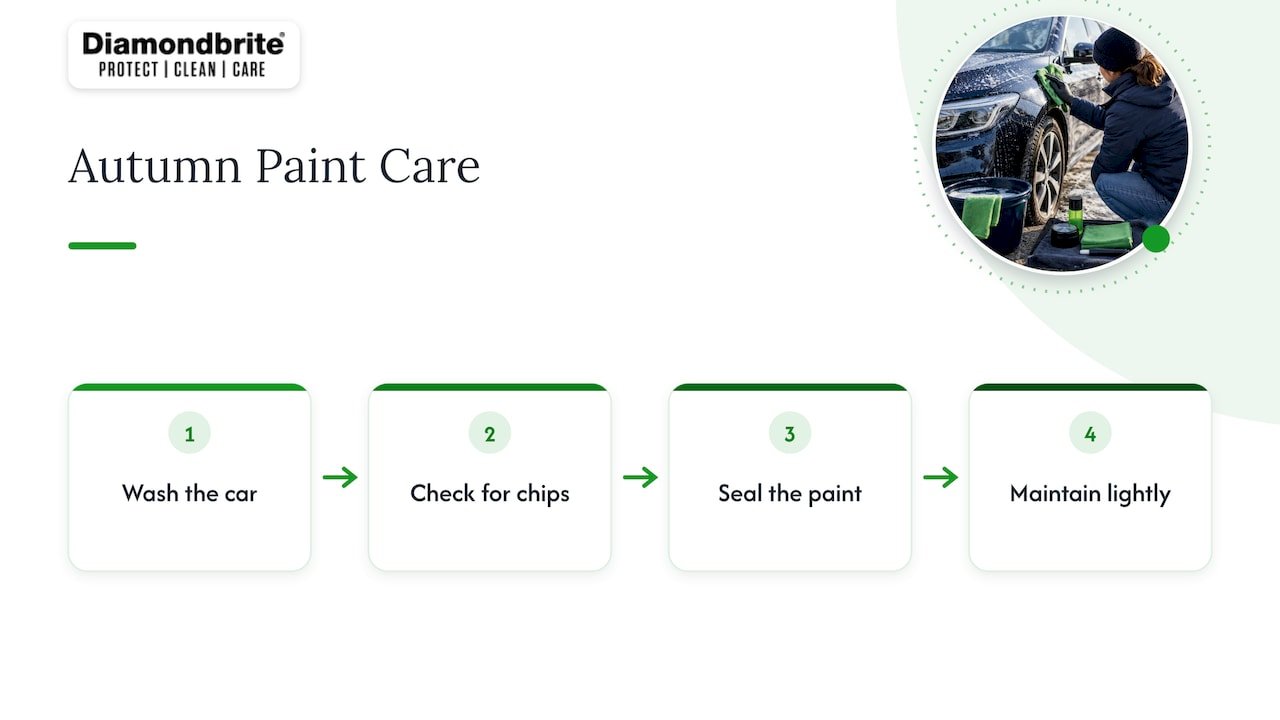
We think most winter paint trouble comes from timing, not from products. People wait until the first white-crusted morning, then try to clean and protect a car that is already wet, cold and covered in salt. The better habit is a calm weekend in autumn: wash, check for chips, seal, and then keep the maintenance light.
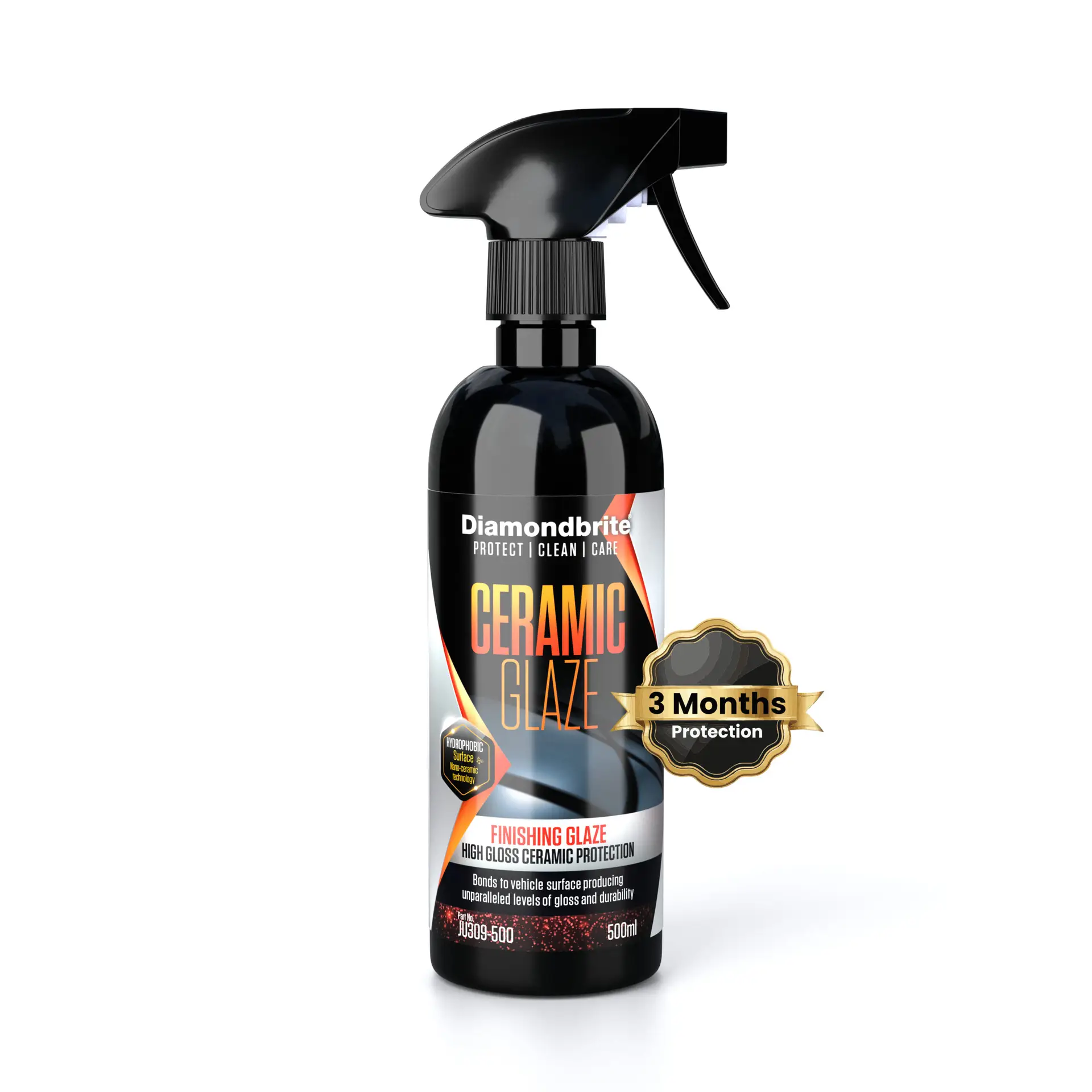
That is why we build our range around ceramic-infused products that work together. A ceramic shampoo and a ceramic glaze keep a durable shield on the paint, and a snow foam takes the hard work out of the pre-wash, so a winter wash is quick and gentle rather than a chore you put off. Less effort means you actually do it, and that is what protects the paint.
We would also rather you wash less aggressively and more often than rely on any one product to do everything. Ceramic protection makes cleaning easier, but it is not a licence to ignore salt.
— Will
Motorcycles, leisure vehicles and matte finishes
The same principles apply to a bike, caravan or motorhome: clean off salt promptly, repair chips, and put a protective layer on the paintwork and metal before the roads are gritted. Motorcycles carry a lot of exposed metal close to the spray from the road, so rinse them soon after wet, salted rides. If your vehicle has a matte finish, never use polish or wax on it; our guide to matte paint protection explains how to look after it.
Find the right products
We stock ceramic glazes, ceramic shampoos, snow foams, wheel care, glass care and packs for cars, motorcycles, leisure vehicles, marine and commercial vehicles. If you want everything for a pre-winter prep in one go, browse the Diamondbrite range and pick the product lines that match your vehicle. Already coated? See how to keep your gloss without waxing a ceramic coating.
FAQ
When should I apply winter paint protection?
Before the gritters start, so that the layer has cured and the paint is clean. In the UK, gritters go out when temperatures are forecast to approach freezing, so autumn is the time to prepare. Check the product label for curing time.
Is a ceramic coating better than a winter sealant for cars?
Synthetic sealants and waxes form a glossy protective barrier. Ceramic coatings chemically bond to the paint and are described as more durable, which suits months of salt. A sealant is a good quick option, while ceramic is the longer-term choice.
How often should I wash my car in winter?
Frequent washing is the best defence against salt. Haynes suggests about four washes over the season if you use a good shampoo, but in heavily gritted, wet weather you may need to wash more often.
Can I wash my car in freezing weather?
It is better to wait for a milder, dry spell and use a foam pre-wash and a gentle mitt to limit paint contact. Never dry wipe a dirty car, as that raises the risk of scratches. Make sure the door seals and locks are not left wet and frozen afterwards.
Sources
- Haynes: how to protect your car from winter salt
- RAC: car rust guide
- Velocity Carspray: causes of car scratches and paintwork damage
- The SMART Repair People: can snow and ice damage your car’s paint?
- Carwow: washing-up liquid and your car paintwork
- Auto Express: winter car care
- Direct Line: how to protect car paintwork in winter