

The best winter car protection in the UK is simple: get the paint properly clean, repair any chips, add a durable protective layer before the salt arrives, then keep washing gently through the season. Road salt, wet leaves, grit and constant moisture do the damage, so the aim is to put a barrier between them and your paint. Here is how to do it, in the order that works.
TL;DR
- Wash thoroughly and decontaminate first. Protection only works on a clean, sound surface.
- Fix stone chips and flaking paint before the gritters start, because salt finds weak spots.
- Add a sealant or ceramic layer to the paint, plus the glass, wheels and rubber.
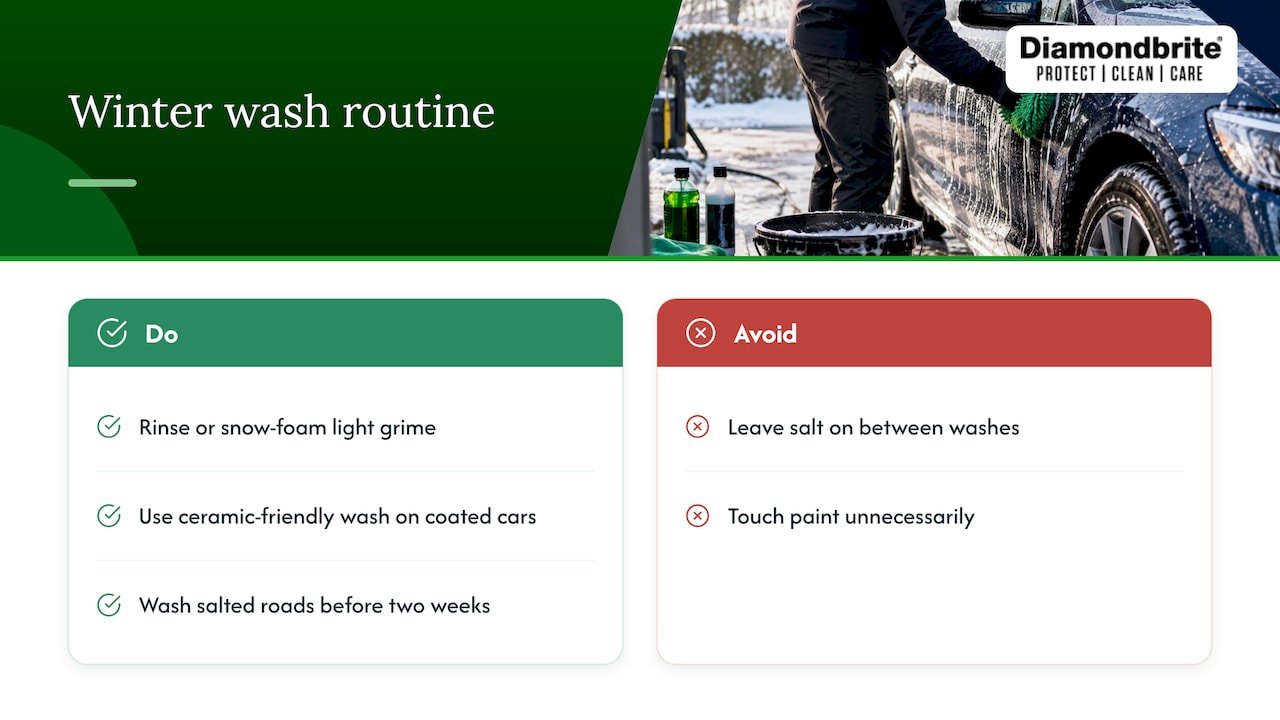
- Rinse or use snow foam for light grime, and do a proper wash regularly through winter.
- Covers help only if they are breathable, and they do nothing for the underside.
Table of Contents
- What UK winters do to your paintwork
- Step 1: Wash and prepare the paint properly
- Step 2: Choose your protection layer
- Step 3: Keep it clean through winter
- Covers, motorbikes and motorhomes
- Our view on winter protection
- Ready to get your car winter-ready?
- FAQ
- Sources
What UK winters do to your paintwork
Wet leaves, rain, road debris, ice and especially salt are the main enemies of car paintwork. None of them is dramatic on its own. The harm is cumulative: a film of salty spray that sits on the lower doors, sills and wheel arches for weeks, then gets rubbed in by a careless wash.
The spots that take the beating are predictable. Wheel arches and lower doors are where grit and water spray strike hardest, so check them first for scratches, chips and dents. Glass suffers too: the Met Office notes that road salt and grit make windscreens very dirty, and it recommends screenwash effective to at least -15°C.
For more on the salt problem specifically, see our guide to road salt protection for cars.
Step 1: Wash and prepare the paint properly
A protective layer sealed over dirt locks the dirt in. Auto Express advises getting the car as clean as possible before any treatment, both to remove contaminants and to give coatings a sound base. The routine:
- Soak first. Use plenty of water, especially around the wheel arches, and avoid rubbing at this stage because grit can scratch the paint.
- Wash roof down with a dedicated car shampoo and a clean mitt. Rinse the mitt in a second bucket of clean water. Our two bucket wash method explains the set-up.
- Keep wheel grit away from paint. Do the dirtiest areas last, as set out in our car wash sequence.
- Skip washing-up liquid. Household detergents are designed to cut through grease and wax, which strips whatever protection you already have.
- Decontaminate. Tar, iron fallout and rail dust bond to paint. Our guides on removing tar safely and removing rail dust cover the chemical-first approach.
- Dry with microfibre, including seals and shut lines, so water does not sit in them and freeze.
If you want the long version of the washing technique, stopping swirl marks is worth ten minutes of your time.
Step 2: Choose your protection layer
Three broad options exist for paint: wax, sealant and ceramic coating. They differ mainly in how long they last and how much effort they take.
| Option | Typical feel | Effort | Best for |
|---|---|---|---|
| Wax | Warm gloss, short-lived | Low, reapply often | A quick pre-winter top-up |
| Sealant | Synthetic, slick finish | Low to medium | Weeks to months of cover |
| Ceramic coating | Hard, water-repellent layer | Higher prep, lower upkeep | Longer-term protection through the season and beyond |
Haynes says a decent layer of wax can last for weeks: apply it to dry paint according to the instructions, then buff with a clean cloth. That is fine for a mild winter, but a UK winter runs for months, which is why many owners move to a sealant or ceramic product. Our comparison of sealant vs ceramic coating looks at weeks against years in detail, and our winter paint protection guide puts the whole sequence in one place.
A ceramic-infused product helps water and road film bead and slide off rather than cling, and that makes every winter wash quicker. Our ceramic products are designed to do exactly this, and you can read what ceramic shampoo does for paintwork before you choose.
Do not forget the rest of the car
- Glass: a coating keeps the windscreen beaded and easier to clear. See ceramic coating on glass.
- Wheels: brake dust and salt sit on alloys all winter. Read how to protect alloy wheels and clean them once coated.
- Rubber and vinyl: door seals and trim dry out in the cold. Our guide to protecting vinyl and rubber shows a safe routine.
- Matte finishes: these need different products. See matte paint protection.
Step 3: Keep it clean through winter
Protection is not a one-off. Salt stays on the car between washes, so how often you wash matters. Our piece on winter wash frequency explains why two weeks can be too long on salted roads.
You do not need a full contact wash every time. Auto Express reports that a previously waxed or sealed car may need only rinsing or snow foam for light grime, and every unnecessary touch risks swirls or tiny scratches. That is a real help if you are short of time. Our snow foam vs shampoo article shows where each fits.
If your car has a ceramic coating, follow a simple maintenance routine, and use a ceramic-friendly wash to keep the beading going.
Covers, motorbikes and motorhomes
Car covers. An outdoor cover gives some protection, but it should be breathable so moisture is not trapped against the paint. The underside stays exposed, security is hardly improved, and the car needs airing now and then. Hagerty UK quoted basic covers from £55 and some custom-fitted ones from £175 in December 2020, so expect current prices to differ.
Motorcycles. The Highway Code warns riders to take care when overtaking vehicles spreading salt or other de-icer. That same spray lands on your frame, wheels and chain area, so rinse after salty rides and keep a protective layer on exposed finishes.

Motorhomes and leisure vehicles. The Camping and Caravanning Club says to clean a motorhome thoroughly before covering it, because grit left on the body can be ground into the paint. It also recommends a breathable, purpose-made cover with a soft underside, and notes that an exterior protective coating can repel water, dirt and algae.
Our view on winter protection
We think winter protection should be simple enough that you actually do it. Most people do not fail because they picked the wrong product. They fail because the routine felt like a weekend job.
That is why we build ceramic-infused care products around ease of use: a clean wash, a protective layer, and a quick maintenance wash that does not need hours. A ceramic-infused finish builds a durable shield that helps water and road film release more easily, so your winter washes take less effort and involve less contact with the paint.
Our range covers paintwork, glass, wheels, interior, motorcycles, leisure and marine, because winter does not stop at the bonnet. Start before the first frost, and your car will thank you in spring.
Will
Ready to get your car winter-ready?
We stock ceramic-infused shampoos, glazes, snow foams and protection products for cars, motorcycles, leisure vehicles and boats, so you can build a complete winter routine in one order. Browse the Diamondbrite range and pick what suits your vehicle.
Not sure where to begin? Start with a shampoo, a protective layer and a glass treatment, then add wheel and trim care.
FAQ
When should I protect my car for winter?
Aim for autumn, before gritting begins in earnest. Auto Express advises inspecting and repairing stone chips or flaking paint before salt is spread on UK roads. A dry, mild day gives you the best conditions for washing and applying protection.
Is a ceramic coating worth it for winter?
It can be, if you want protection that lasts the season rather than a few weeks. It also makes regular washing easier. Our sealant vs ceramic coating guide helps you weigh the time and cost.
How often should I wash my car in winter?
More often than most people expect, because salt stays on the paint between washes. Rinse or use snow foam for light grime, and do a proper wash regularly. Our winter wash frequency guide goes into the detail.
Does a car cover protect my car in winter?
Somewhat. Choose a breathable cover, and air the car occasionally to avoid trapped moisture. It will not protect the underside, so the paint still benefits from a proper protective layer underneath.
Sources
- How To Protect Car Paintwork In The Winter, Direct Line
- Give your car a pre-winter wash and wax, Haynes
- Winter car care, Auto Express
- Winter Car Checks, Dinks Auto Body Repairs
- 6 simple checks to prepare your vehicle for winter, Met Office
- 5 ways to cover your classic car without a garage, Hagerty UK
- Driving in adverse weather conditions, The Highway Code
- A Guide to Winterising a Motorhome, The Camping and Caravanning Club