

Yes, you can apply some waxes to a wet car, but only the right type, at the right moment. A wet-application spray wax is made to go on straight after the rinse, while the panels are still dripping, and be dried off as you go. A traditional paste or liquid wax is not. It needs clean, dry paint, and it does not want rain falling on it while it sets.
This guide explains the difference, how to wax on a wet car without streaks, and what to do when the British weather turns against you.
TL;DR
- Wet-application (spray-on, wipe-off) waxes are designed for damp paint. Paste and traditional liquid waxes are designed for dry paint.
- Wet application is quicker and easier, but it generally gives a lighter layer of protection than a carefully applied dry wax.
- Never wax in active rain, in direct hot sun, or over paint that still carries tar, fallout or grit.
- Fresh ceramic coatings are a different matter: keep them dry for the first 12 to 24 hours.
- Prep matters more than the product. A clean, smooth surface is what makes any wax look good.
Table of Contents
- Wet wax and dry wax: what is the difference?
- How to apply wax to a wet car properly
- Why prep decides the result
- Is it okay to wax in the rain?
- Our view on waxing wet
- Where Diamondbrite fits
- When not to wax
- FAQ
- Sources
Wet wax and dry wax: what is the difference?
The names describe the paint’s condition at application, not the wax itself.
Wet wax is a liquid, usually sprayed, that goes on after washing and rinsing. One detailing guide describes spraying the body and wiping it dry with a microfibre cloth, and notes that cold temperatures are not recommended for the wet method. The same guide says dry waxing, usually with a paste, suits older or more worn paintwork and needs the car dried first.
Dry wax covers paste and many liquid waxes. Carnauba, the traditional natural ingredient, comes from the leaves of a Brazilian palm tree and is one of the most durable natural waxes. Synthetic sealants and ceramic-infused products sit alongside it, and Parkers’ DIY paint protection guide summarises the main options: natural and synthetic wax, ceramic products and graphene alternatives.
| Wet-application spray | Paste or liquid wax on dry paint | |
|---|---|---|
| Paint condition | Damp, just rinsed | Clean, fully dry |
| Time | Minutes, combined with drying | Longer: apply, haze, buff |
| Effort | Low | Moderate |
| Best for | Regular top-ups, busy owners | Seasonal protection, a showpiece finish |
| Main risk | Streaks if the product dries on the panel | Rain or dew before it has set |
Neither is better in every case. Wet application suits a fortnightly or monthly routine. Dry wax suits the occasional proper detail when you have a dry garage and a free afternoon.
How to apply wax to a wet car properly
The method is simple, but the order matters. Work one panel at a time so nothing dries before you reach it.
- Wash safely. Use a pre-wash and a two-bucket wash so you are not grinding grit into the lacquer. Do wheels first, which is why a sensible wash sequence keeps wheel dirt off the paint.
- Rinse thoroughly. Leave the panels wet but free of suds.
- Work in the shade. Panels hot from the sun dry the product too fast and cause streaking. Our guide to washing in a heatwave covers the panel-by-panel approach.
- Spray a small section. One panel, or half a bonnet, at a time.
- Wipe and dry straight away. Use a clean, plush microfibre towel. Fold it often and swap to a dry one for the final buff.
- Check in good light. Look along the panel from an angle for smears and buff them out with a fresh cloth.
If you prefer to rinse a product off rather than wipe it, our walkthrough on spray and rinse coatings panel by panel shows how to avoid streaks.
Why prep decides the result
A wet wax cannot fix what is underneath it. Detailers stress that protection cannot compensate for contamination beneath it: tar, iron fallout or bonded grit gets dragged across the paint by the applicator and leaves marks.
If the paint feels rough after washing, deal with that first:
- Remove road tar with a safe tar removal method.
- Try the 30-second bag test to see whether the paint needs claying.
- Only then add wax or a spray protectant.
The water behaviour you see afterwards is a handy maintenance signal, but it is not proof that a product is high quality.
Is it okay to wax in the rain?
Usually not. Rain can run over freshly cleaned panels, dilute or disturb the product and stop it bonding reliably. A wet-application spray used after a wash on a damp day is not the same as spreading conventional wax while it is actually pouring.
In practice, the sensible rules for the UK are:
- Active rain or heavy drizzle: wait. You cannot control water landing on the panel, and you cannot see streaks properly.
- Damp, overcast, dry-ish day: a wet-application spray is fine, ideally under cover or in the shade.
- Rain after you have finished: a light shower on a finished wax is rarely a disaster. One detailer on a forum got caught by rain about 30 minutes before buffing a full wax job, which shows how easily it happens, so check the product’s label for its cure time and plan around it.
The exception is ceramic. Specialist guidance says water on a fresh ceramic coating can interfere with curing and leave permanent water spots. It advises keeping it dry for roughly 24 hours and avoiding washing for at least a week. That window varies with product, temperature, humidity and the maker’s instructions, and it should not be applied to ordinary wax. Our ceramic curing time guide goes into detail.
Our view on waxing wet
We make ceramic-infused car care, so we see this question from a particular angle. Most owners do not want a Saturday lost to buffing. They want a car that looks good, resists the next shower and does not take hours to maintain.
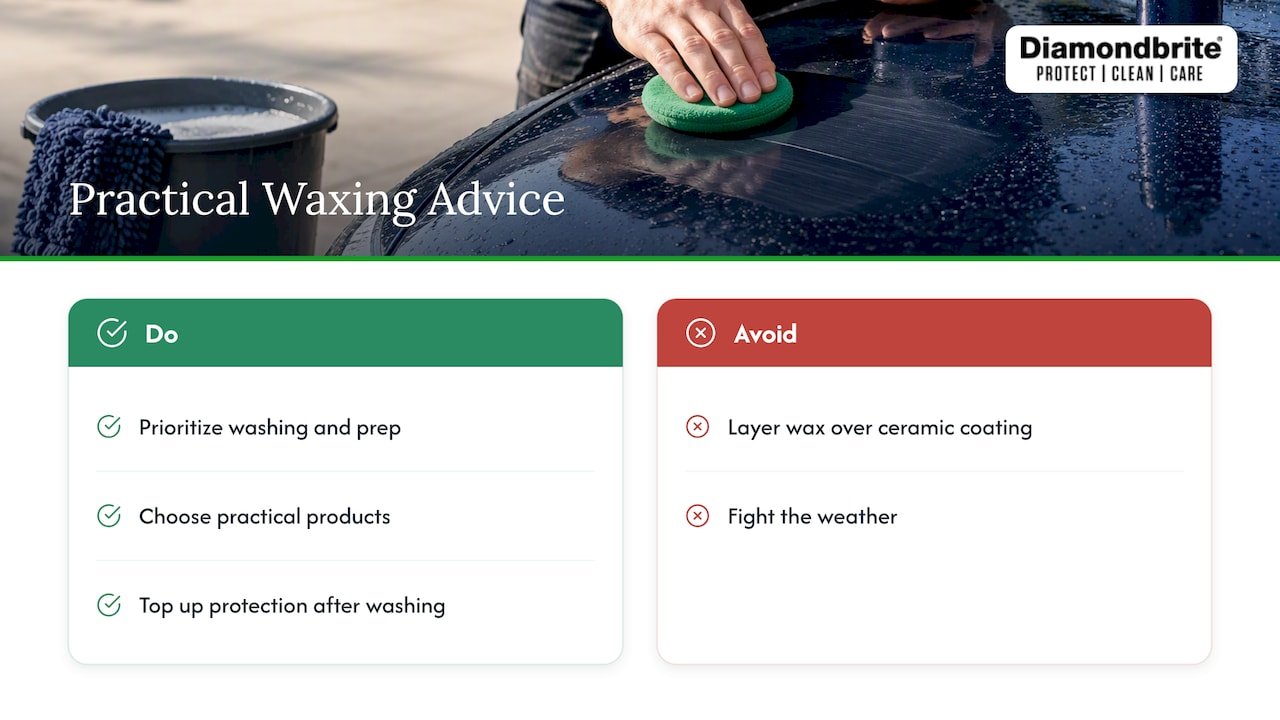
For that kind of owner, a wet-application step after a proper wash is a sensible habit. It keeps protection topped up between bigger jobs, and it fits a British year where dry, warm, shaded days are rare. Where we part company with the old routine is layering wax over a ceramic coating: it is often unnecessary, and we explain why in keeping gloss without waxing your ceramic coating. Maintenance with a ceramic shampoo does much of the same job, as our wash routine for ceramic-coated cars explains.
Our advice is simple. Spend your effort on the wash and the prep, keep the product choice practical, and do not fight the weather.
— Will
Where Diamondbrite fits
If you want protection that suits a busy routine, take a look at our ceramic-infused range, which covers paintwork care, ceramic products, wheels, glass and more for cars, motorcycles, leisure vehicles and boats. Our ceramic shampoo benefits page explains what a wash product can do for your paintwork, and if you are weighing options, sealant versus ceramic coating compares how long each lasts.
When not to wax
- The paint is hot to the touch or in direct sun.
- Rain is falling or about to fall within the product’s stated cure time.
- Tar, fallout or grit is still on the surface.
- The temperature is low enough for the maker to advise against use.
- Your car has a fresh ceramic coating that is still curing.
- You have matte paint. Gloss-enhancing waxes can spoil the finish, so read our matte paint protection guide first.
FAQ
Is it better to wax a car wet or dry?
It depends on the product and your goal. Wet application is faster and easier, so it suits regular maintenance. Dry application with paste or liquid wax suits a thorough seasonal detail on clean, dry paint. Always follow the instructions on the bottle.
How long does car wax need to dry before rain?
It varies by product, so check the label. Some forum users report that a hydrophobic wax simply beads water if it rains soon after, though that is anecdotal. For a ceramic coating, the guidance is far stricter: keep it dry for roughly 12 to 24 hours.
Is it okay to wax a car in the rain?
Not with conventional wax. Rain dilutes and disturbs the product, so it may not bond properly. A wet-application spray used after a wash on a damp but not rainy day is a different situation, and works best in the shade or under cover.
When should you not wax a car?
Avoid waxing hot panels, dirty or gritty paint, matte finishes and freshly applied ceramic coatings. Also avoid very cold weather with wet-application products, as makers and guides often advise against it.
Sources
- Wet or dry wax? Which one to choose?
- A guide into wax, DetailingWiki
- Parkers’ paint protection guide for DIYers
- Car & Bike aftercare, Parx Detailing
- What happens if a ceramic coating gets wet before it cures, New Again