

Follow this wash sequence order: prepare, rinse, apply snow foam, treat the wheels while it dwells, then shampoo top to bottom with two buckets, rinsing each panel as you go, before a final rinse, drying and protection. It mirrors the organised, sequential approach in the exterior valeting standard, respects Environment Agency cautions on run-off, and works well with Diamondbrite ceramic care.
TL;DR:
- Use two buckets with grit guards, wash from the roof downward one panel at a time, and rinse each panel immediately to limit abrasive contact.
- Apply wheel cleaner to cool wheels while the body prewash dwells, following label times, then use dedicated tools to keep brake dust off paint.
- Wash in shade or during cooler hours, and never let snow foam or shampoo dry on the paint, since heat can leave streaks and residue.
- Keep wash water out of surface drains; collect it in a sealed sump or use a foul sewer with your water company’s consent.
- For ceramic coated cars, keep the same sequence, choose pH neutral or ceramic maintenance shampoo, and avoid harsh cleaners that can wear the coating.
Table of Contents
- Step-by-step: from preparation to protection
- Why this order cuts swirls, scratches and cross-contamination
- Common mistakes and quick fixes
- Tools and products, with timing guidance
- Where your wash water should go
- Author’s note: why this order holds up
- How our products fit each step of the sequence
- FAQ
- Sources
Step-by-step: from preparation to protection
Work in this order and you rarely need to think twice about what comes next.
- Prepare. Gather a hose or pressure rinser, a snow foam lance if you have one, two buckets with grit guards, a clean wash mitt, a wheel brush and several microfibre drying towels. Park in shade where you can, and check for fresh paint or recent repairs, which need gentler treatment.
- Initial rinse. Use low pressure across the whole vehicle, roof to sills, so loose grit leaves before anything touches the paint.
- Wheel pre-treatment. Spray wheel cleaner on cool wheels and leave it for the time stated on the label. Carry on with the body while it works.
- Pre-wash or snow foam. Cover the car and let it dwell for the time stated on the product label, so it can soften road grime. Do not let it dry on the paint.
- Shampoo wash, two-bucket method. Start with the roof and upper glass, then the bonnet and boot, then the sides, and finish with the lower panels and sills. Dip the mitt in the shampoo bucket, wash one panel, rinse the mitt in the clean bucket, then rinse the panel straight away.
- Wheels. Agitate with a dedicated brush and rinse thoroughly, keeping the runoff away from painted surfaces.
- Final rinse. Sheet water from the top down so the last suds and loosened grit leave the car.
- Dry and protect. Dry panel by panel with clean microfibre towels. If the paint still feels rough, use an iron remover or clay, then finish with a maintenance protectant, ceramic maintenance shampoo or glaze.
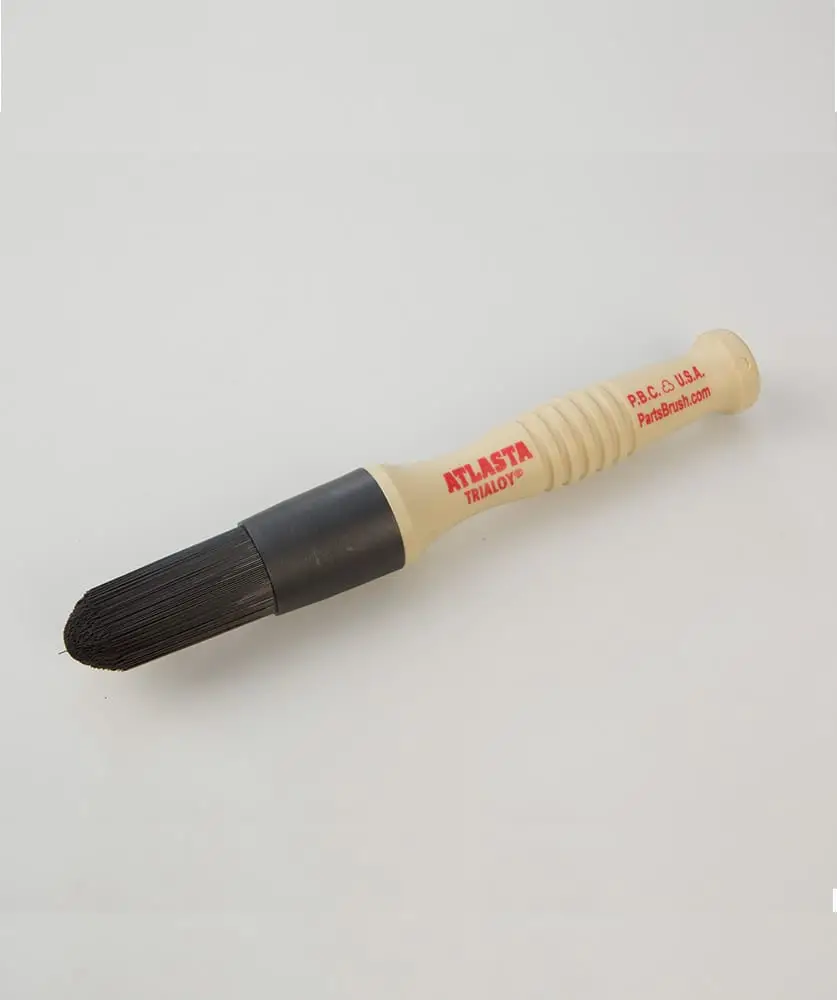
Pro Tip: Wash your wheels with a separate mitt and brush that never touch the paint. Brake dust trapped in a body mitt is one of the quickest ways to put fine scratches into a clear coat.
Preparing equipment beforehand and working in an organised sequence is exactly what the vocational standard describes for exterior valeting, and it applies equally to a driveway wash.
Why this order cuts swirls, scratches and cross-contamination
Gravity does half the work for you. Dirt you loosen on the roof runs downwards, so washing top to bottom means you never drag grit from the sills back across a panel you have already cleaned.
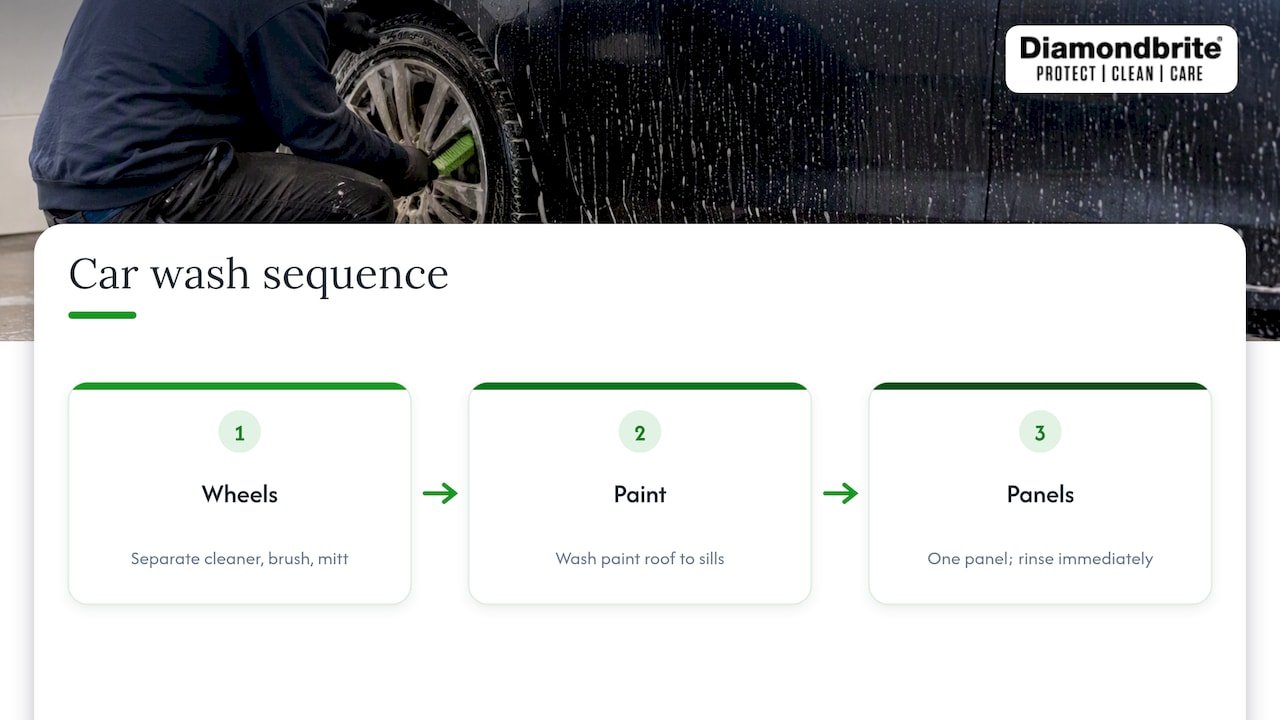
Washing one panel at a time and rinsing it immediately stops abrasive particles settling and drying where you can rub them in. Soap left to sit in sunlight or warm air also dries into streaks, which is another reason to keep moving panel by panel.
Treating the wheels separately matters just as much. Brake dust and iron particles are among the harshest contaminants your car carries, and a dedicated cleaner, brush and mitt keep them off the paintwork. The result is fewer swirls, less polishing later and a finish that stays glossier for longer.
Common mistakes and quick fixes
Most damage during a wash comes from a handful of avoidable habits.
- Washing in direct sun. Hot panels dry products too fast and leave streaks and residue. Wash in shade or at the cool ends of the day.
- Using a single bucket. Grit goes straight back onto the mitt. Use two buckets with grit guards so dirt stays at the bottom.
- Letting wheel cleaner touch paint. Rinse the wheel arches separately, and if you use an aggressive product, rinse the wheels last.
- Reusing filthy water. Rinse the mitt often in the clean bucket and refill both buckets if the water looks grey or gritty.
Tools and products, with timing guidance
A short kit takes care of the whole sequence: snow foam, pH-neutral shampoo, wheel cleaner, two buckets with grit guards, wash mitts, microfibre drying towels, iron remover or clay, and a quick detailer or ceramic maintenance product.
- Wheel cleaner: follow the time stated on the label.
- Snow foam: follow the time stated on the product label.
- Shampoo: brief contact while you wash each panel, then rinse straight away.
For the shampoo step, we suggest our Ceramic Shampoo. Afterwards, our Ceramic Glaze and maintenance products add protection once the car is dry. You can read more about what ceramic shampoo does for paintwork. Whatever you use, follow the product instructions.
Pro Tip: Let the product do the work. Longer dwell times on clean, cool surfaces mean less scrubbing, and less scrubbing means fewer marks.
Where your wash water should go
Wash water carries detergent, brake dust and oil, and it should never reach a surface water drain. Vehicle wash-down water is not suitable for discharge to surface waters. It should go to a sealed sump for collection or to the foul sewer with consent from your local water company.
Many street drains lead straight to rivers and streams, and the Environment Agency notes that wash waters can reach local water bodies through surface water drains. If your drive slopes towards the road, avoid washing there. A commercial wash is a sensible alternative, as modern conveyor sites can recycle a high share of their water.
Author’s note: why this order holds up
I have used this routine on everything from daily drivers to show cars, and the pattern is consistent: fewer swirls, quicker drying and easier upkeep between washes. The order matters more than any single product. For more technique, our guide to panel by panel spray and rinse coating is a good next read.
— Will
How our products fit each step of the sequence
Each step has a match in our range. Our Ceramic Shampoo suits the wash, our Ceramic Glaze handles maintenance and protection once the car is dry, and our wheel care and glass products cover their own stages. Always follow the manufacturer’s instructions and read the safety data sheets before using chemical cleaners.
Ready to build your routine? Browse our full product range and pick the products that match your next wash.
FAQ
What is the correct wash sequence order for a car?
Rinse first, then foam, treat the wheels, wash top to bottom, rinse, dry and protect. Washing from the roof down keeps dirt from landing on panels you have already cleaned.
Should I wash wheels before or after the paintwork?
Start the wheel cleaner early so it can dwell while you pre-wash the body, then agitate and rinse the wheels with their own tools. This keeps brake dust away from your paint.
Can I let wash water run into the street drain?
No. Wash-down water should not enter surface water drains, because many connect straight to local watercourses. Collect it for disposal, use a foul sewer with water company consent, or use a commercial wash.
Does the wash order change for a ceramic-coated car?
The sequence stays the same, but use a pH-neutral or ceramic maintenance shampoo and avoid harsh cleaners that can wear a coating. Finish with a compatible maintenance product to keep the protection performing.
Sources
- DIRTY WATER & VEHICLE WASH-DOWN WATER
- 2021 river basin management plans
- Gov
- Exterior motor vehicle valet