

Use a tyre cleaner before every dressing. Dressing applied over road film, brake dust and old product sits on top of dirt instead of the rubber, so it looks patchy, flings off and fades quickly. A clean, dry sidewall lets the dressing spread evenly and stay put. The routine below takes about ten minutes per car, and it works the same for a motorcycle, caravan or motorhome.
TL;DR
- Clean first, dress second: dressing lasts a lot longer on a clean tyre.
- Use a dedicated tyre or wheel cleaner and a stiff brush, then rinse until the foam runs clear.
- Do the white towel test: rub the dry sidewall, and if the towel picks up black, clean again.
- Let the rubber dry fully, apply a thin coat to the sidewall only, and keep it off the tread and brake discs.
- Wash the wheels and tyres before the paint so grit never reaches the bodywork.
Table of Contents
- Why the cleaner comes before the dressing
- What you need
- The prep routine, step by step
- What to keep dressing off
- Cars, motorcycles and leisure vehicles
- How often should you clean before dressing?
- Our view
- Get the whole wheel routine from one place
- FAQ
- Sources
Why the cleaner comes before the dressing
A tyre looks black and clean after a rinse, but the rubber surface holds a film of road grime, brake dust and the residue of whatever you used last time. That film is what the new dressing bonds to. If it is dirty, the product mixes with it and gives you a brownish, streaky finish.
The DetailingWiki tyre guide gives the practical reasons for cleaning: it reduces the time rubber spends in contact with contaminants, the tyre looks better and the dressing lasts longer. That last point is the one you will notice on the driveway.
There is also a trade-off to know about. Some detailers believe that very aggressive cleaning can strip oils from the rubber. The sensible answer is to choose a cleaner made for tyres and wheels, scrub rather than soak, and rinse well. You do not need harsh chemicals for a good result.
What you need
- A tyre or wheel cleaner. Pick one that is safe on the wheel finish too, because overspray lands on the wheel face. If your wheels are ceramic coated, our guide to cleaning ceramic coated wheels explains the safe routine, and we explain why non-acid cleaners suit coated wheels.
- A stiff tyre brush. Sidewalls are textured and hold dirt in the ribbing. A soft wash mitt will not reach it.
- A separate wheel brush and wash mitt. Never take the tyre brush to the paint.
- Microfibre towels, including one white or light one for the test below.
- A foam or sponge applicator for the dressing.
- Access to a hose or pressure washer for rinsing.
The prep routine, step by step
1. Wheels and tyres first
Start with the dirtiest part of the car. Brake dust and road grit on the wheels will contaminate your wash water and can scratch paint if you do the bodywork first. Our car wash sequence guide shows the order that keeps wheel grit off the paint. Work one wheel at a time so the cleaner never dries on the surface, and out of direct sun if you can.
2. Rinse off loose dirt
Hose the tyre and wheel to knock off mud and loose grit. This lets the cleaner work on the stubborn film rather than on surface dirt. If brake dust is heavy, see how to remove brake dust safely with a short dwell time before you reach the tyre.
3. Apply the cleaner to the sidewall
Spray the cleaner over the whole sidewall, working around the full circumference. Leave it for the dwell time on the label, usually a minute or two. Do not let it dry.
4. Scrub
Use the stiff brush in short strokes, following the sidewall in an arc. Pay attention to the lettering and the ribbing near the rim, where old dressing and grime build up. Expect brown foam on the first clean. That is the film coming off.
5. Rinse thoroughly
Rinse until the water runs clear and there is no foam left in the ribbing. Leftover cleaner residue can cause a hazy finish and weaken the bond of the dressing.
6. Run the white towel test
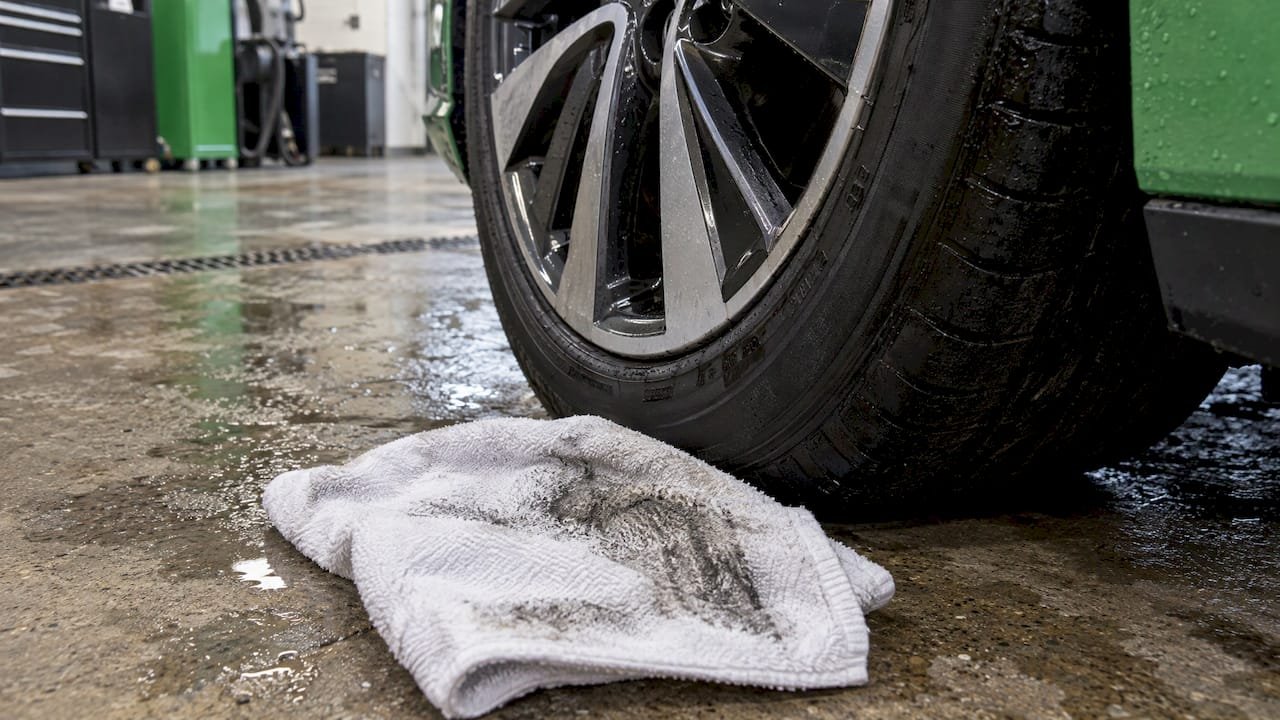
Dry the sidewall with a clean towel, then rub it with a white one. DetailingWiki recommends this check: any black marks on the towel mean the rubber is not clean enough yet. Repeat steps 3 to 5 until the towel comes away clean. Tyres that have never been cleaned properly may need two or three passes. After that, a single pass each wash is usually enough.
7. Let the rubber dry
Water trapped in the texture dilutes the dressing and makes it run. Dry the sidewall with a towel and give it a few minutes in the air. In a cold, damp British winter, allow longer or use a dry microfibre in the ribbing.
8. Apply the dressing thinly
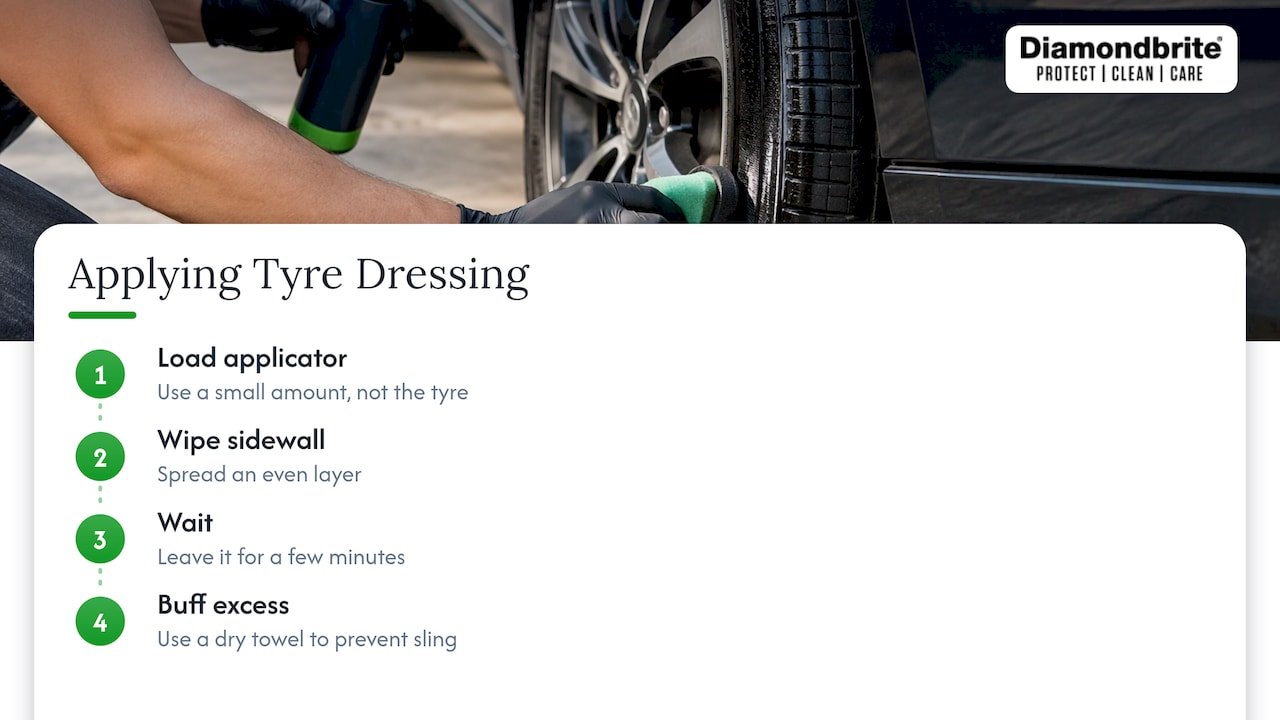
Put a small amount on the applicator, not on the tyre, and wipe it over the sidewall in an even layer. Leave it for a few minutes, then buff off the excess with a dry towel. Excess product is what causes sling, the greasy spots flung up the side of the car when you drive off.
If you want to compare finishes, from satin to gloss, our roundup of the best tyre dressing in the UK is a good place to start.
What to keep dressing off
Dressing belongs on the sidewall and nowhere else. Keep it off the tread, because a slippery tread is the last thing you want. The Highway Code reminds drivers that tyres must be properly inflated and free from certain cuts and defects, with at least 1.6 mm of tread on cars. While you have the tyre clean and in front of you, it is the perfect moment to look over the sidewall for bulges, cuts or cracks and check the tread depth.
Also keep dressing away from:
- Brake discs and pads, which need to stay completely free of product.
- Pedals and the inside of the car, if you have dressed the tyre then climb in with greasy hands.
- Paint, where it can leave marks that need a wash to remove.
Wipe any splash straight away. Wiping the lower edge of the tyre where it meets the rim also gives a neat, professional line.
Cars, motorcycles and leisure vehicles
The routine is the same, but the details change. On a motorcycle, the tyres are smaller and the stakes are higher, because a slick tyre is a safety issue. Dress only the sidewall, and keep product well away from the tread and the braking surfaces. On a caravan or motorhome, you have larger sidewalls and often less frequent use, so a thorough clean before storage and a thin dressing coat keeps rubber looking fresh. In both cases, if you want to protect rubber and vinyl trim over the long term, our guide to protecting vinyl and rubber covers a 12 to 24 month ceramic care approach.
How often should you clean before dressing?
Clean the tyres every time you wash the car, and give them a full scrub with cleaner before each fresh coat of dressing. If you top up the dressing between washes without cleaning, product layers build up and the finish gets uneven. Strip back to clean rubber, using the white towel test as your guide, every few weeks or whenever the finish looks blotchy.
Our view
Most disappointing tyre finishes are not the dressing’s fault. They are a prep problem. People spray a product over a damp, dirty sidewall, then wonder why it runs off after a single drive.
At Diamondbrite, we think of car care as building layers that each do a job: clean, protect, maintain. Tyres and wheels are no different. A good cleaner gets the sidewall back to bare rubber, and the dressing has something to hold on to. It is the same principle behind our ceramic-infused range, which is designed to make upkeep easier and results more durable.
Our advice is simple: give the cleaning step the time it deserves, and the rest becomes quick. It is a cost-effective habit, too, because a dressing that lasts longer means fewer reapplications.
Will
Get the whole wheel routine from one place
If you would like the cleaning, protection and finishing steps to come from the same range, our shop has an Automotive Wheels line alongside ceramic, paintwork, interior and glass products, plus ranges for motorcycles, leisure vehicles and marine. You can browse everything at the Diamondbrite shop.
If your wheels are coated, our guide to protecting alloy wheels with ceramic coatings shows how that protection makes future cleaning easier.
FAQ
Do I really need a separate tyre cleaner?
Yes, if you want the dressing to last. A tyre or wheel cleaner lifts the film of grime and old product that a plain car shampoo leaves behind. It takes only a minute or two longer, and the white towel test will show you the difference.
How long should tyres dry before dressing?
Until the sidewall is dry to the touch, including the ribbing and the lettering. Towel-dry first, then allow a few minutes in the air. Dressing over standing water runs and sings off the rubber as sling.
Why does my tyre dressing fling onto the paint?
Usually because too much was applied, or it went onto a wet or dirty tyre. Apply a thin coat with an applicator, let it settle for a few minutes and buff off the excess before you drive.
Can I put dressing on the tread?
No. Keep it on the sidewall only. The tread is what grips the road, and the Highway Code sets minimum tread and condition standards for tyres, so keep that surface clean of product.