

The best summer UV care is simple: wash in the shade, keep a durable protective layer such as a ceramic coating on the paint, treat the trim, and park out of direct sun when you can. UV light slowly breaks down the clear coat that gives your car its gloss, so protection applied before the hot weeks is far easier than repair afterwards. Here is what the sun actually does, and a routine that fits around real life.
TL;DR
- UV breaks down clear coat over time, leading to fading, dullness and, in severe cases, peeling.
- Wash in a cool, shaded spot with car-specific shampoo, then dry with a clean microfibre towel.
- Wax, sealant or ceramic coating acts as a barrier. Ceramic products are designed to last months or years, while wax needs regular reapplication.
- Rubber, vinyl trim, tyres and headlamps suffer too, so include them in your routine.
- Shade, a garage or a windscreen sunshade cuts exposure on every journey you park.
Table of Contents
- What summer sun does to your car
- Washing safely in hot weather
- Wax, sealant or ceramic: choosing your barrier
- Trim, tyres, glass and wheels
- Parking and shade
- Motorcycles and caravans
- Our perspective
- Build your summer protection kit
- FAQ
- Sources
What summer sun does to your car
The damage is gradual, which is why it is easy to miss. According to a UK bodyshop’s guide to sun damage, UV radiation can break down chemical bonds in the clear-coat polymers, leaving the lacquer brittle, hazy and less transparent. Pigments in the colour coat beneath can then fade. The same source says damage often starts on sun-facing horizontal panels, the bonnet, roof and boot lid, and can progress to oxidation, peeling and, in severe cases, cracking.
This is general photodegradation. A weathering laboratory explains that short-wavelength, invisible UV first attacks a surface’s molecular structure, producing colour change, chalking and flaking, and that coatings can lose flexibility. The RAC also notes that UV can cause fading and discolouration of paint over time.
Paint is only part of the story:
- Plastic mouldings may yellow and weaken under UV, according to the same laboratory.
- Rubber, vinyl trim, tyres and weather seals can turn brittle, discoloured and prone to cracking, while plastic headlamp lenses can cloud or yellow.
- Bird droppings are harder to remove when the sun bakes them on, and can damage paintwork in warm weather. Our guide to removing bird droppings safely covers the method.
- Sun cream can leave stubborn white stains on paintwork and dashboard plastics, so wipe up smears from your hands before touching the car.
Washing safely in hot weather
Hot panels dry soap and water before you can rinse, which leaves spots and streaks. The RAC advises washing in a cool, shaded location with car-specific shampoo and drying with a clean microfibre towel. Early morning or evening is usually best in a UK heatwave.
A few habits make a real difference:
- Let the panels cool. STIHL UK advises against hitting a sun-heated car with cool water in very hot conditions because of thermal shock.
- Go gently with a pressure washer. The same guide suggests a shallow spray angle, starting at low pressure, staying at least 30 cm from the bodywork and keeping below 200 bar.
- Work panel by panel. Rinse each section before it dries. Our panel-by-panel heatwave wash guide walks through it.
- Wash wheels in the right order so grit does not reach the paint: see our wash sequence.
- Choose a gentle shampoo. A pH neutral shampoo cleans without stripping the protection you have applied.
If your car already wears a ceramic coating, the wash routine for ceramic-coated cars keeps the water beading and the surface slick.
Wax, sealant or ceramic: choosing your barrier
The idea behind all three is the same: put a sacrificial, UV-resistant layer between the sun and your clear coat. Parkers’ paint protection guide says waxes are hydrophobic and give good all-round protection but need semi-regular application, whereas ceramic products bond strongly, offer longevity and UV protection, and true coatings can last a couple of years. The RAC describes paint protection film as a clear urethane layer that protects against chips, road debris and UV, though it is a different job and a different budget.
| Option | Upkeep | Best for |
|---|---|---|
| Wax | Semi-regular reapplication | Enthusiasts who enjoy the routine |
| Paint sealant | Longer than wax, shorter than a coating | A middle option for busy owners |
| Ceramic coating or glaze | Months to years, with periodic top-ups | Drivers who want protection that lasts through summer |
| Paint protection film | Fitted once | Cars with high chip risk |
If you are weighing sealant against a coating, our sealant vs ceramic coating comparison sets out the trade-offs in weeks versus years.
How to apply it
Preparation matters more than product. Parkers’ guidance for wax is to apply it with a pad to a clean, dry car out of direct sunlight, cover the panels, leave it for five or ten minutes, then buff with a microfibre cloth. Ceramic products follow the same principles: cool panels, thin even coats and a clean surface. Our walkthrough on applying ceramic glaze to paint and trim covers the detail, and if you polish first, read glaze after polish for the right order.
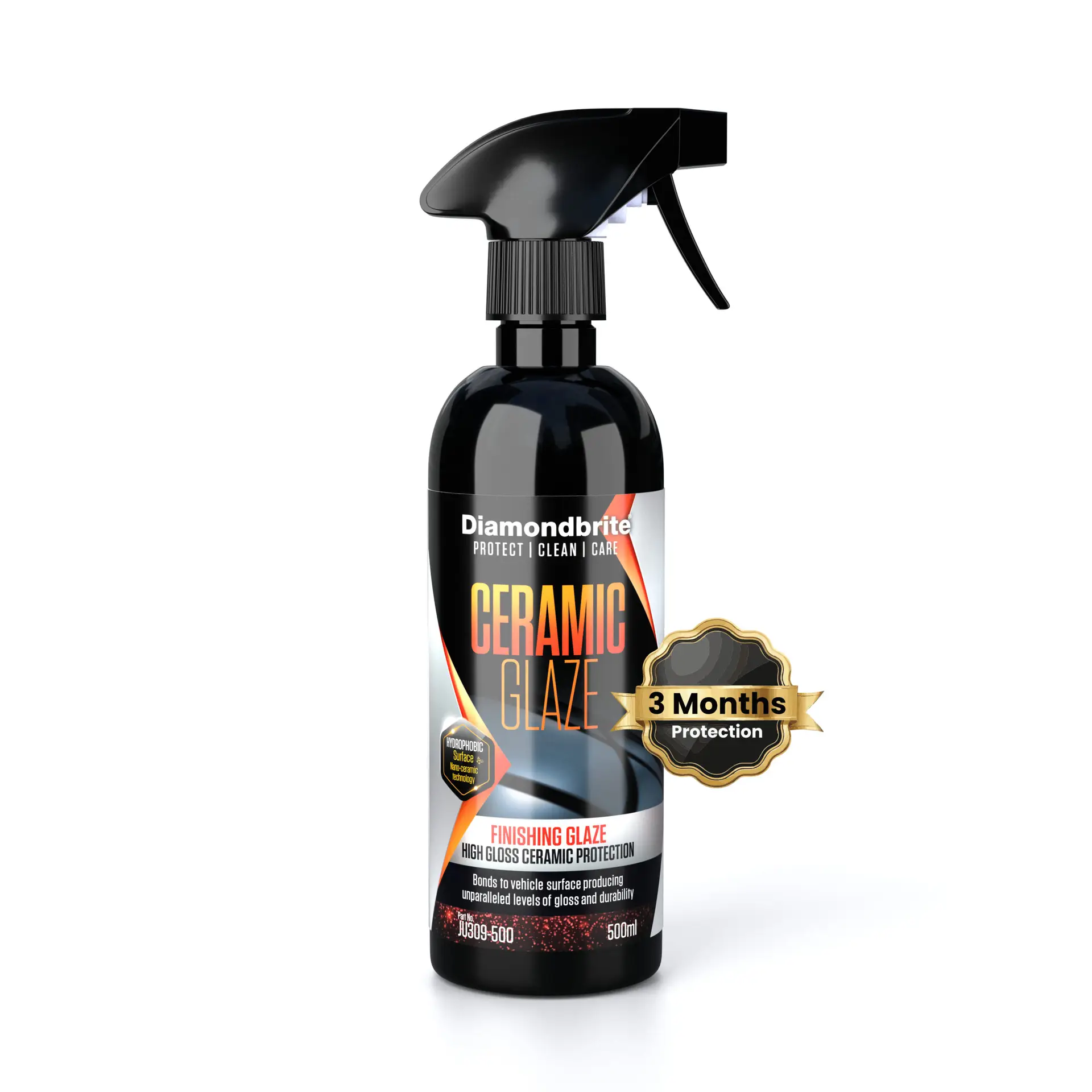
Once a coating is on, you do not need to wax over it. See how to keep gloss without waxing a ceramic coating and how to top up a coating in under an hour. For general care, our ceramic coating maintenance guide is the place to start.
Trim, tyres, glass and wheels
Paint gets the attention, yet the parts that look tired first are often the black plastics and rubber. Because UV can make them brittle and discoloured, a protectant that suits these materials is worth adding to each wash. Our guide to protecting vinyl and rubber safely explains what to use and how often.
A few other areas to include:
- Glass: a coating helps water bead and clears the windscreen faster. See ceramic coating on glass.
- Alloys: brake dust bakes on in heat, so protect them with a ceramic wheel coating.
- Interior: dashboards and seats take direct sun through the glass. Our look at interior ceramic coating helps you decide if it suits your car.
- Matte finishes: these need their own approach, covered in matte paint protection.
Parking and shade
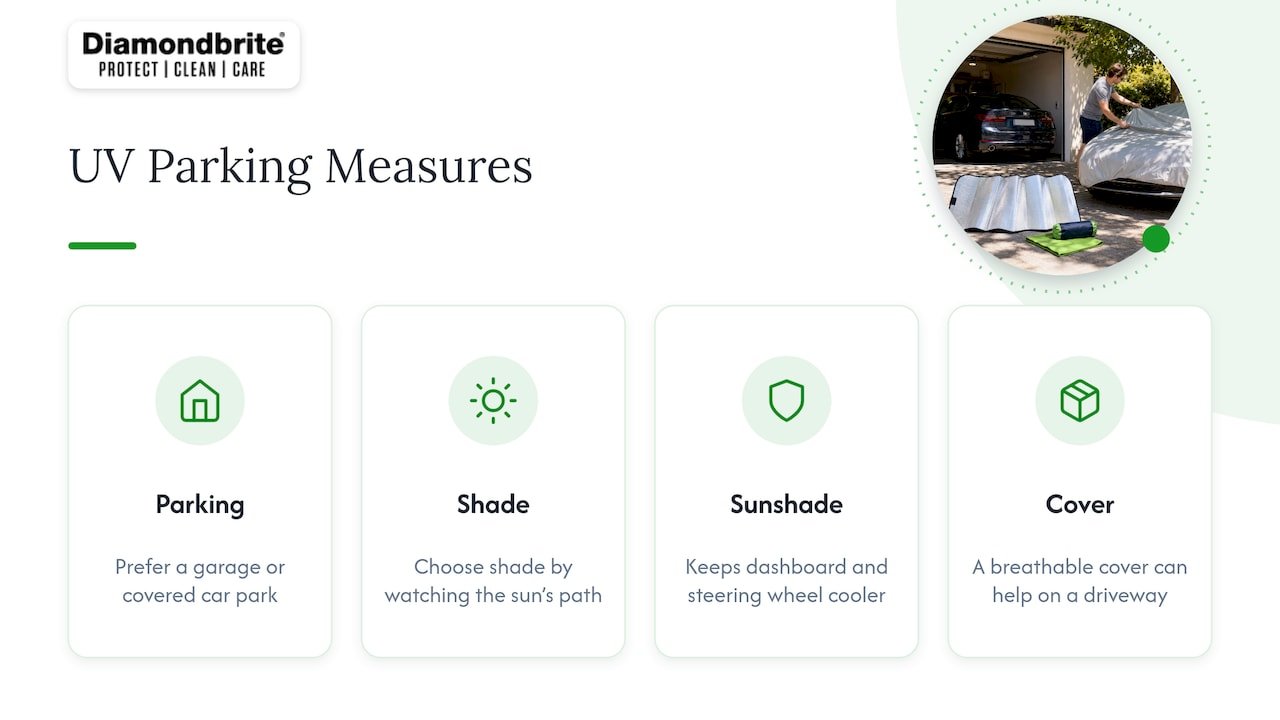
The cheapest UV protection is not being in the sun. Michelin’s advice is to prefer a garage or covered car park, otherwise watch the sun’s path to find shade, and use a windscreen sunshade. It also notes that long UV exposure dries rubber, making it shrink and lose performance. A sunshade keeps the dashboard and steering wheel cooler, and a breathable outdoor cover can help on a driveway.
Motorcycles and caravans
Bikes and leisure vehicles spend long stretches outdoors, so the same rules apply with a few extras. For caravans, one UK guide recommends checking the seals around windows, doors and rooflights for cracks or perishing, and checking tyre pressures and treads, since UV can degrade tyres even while the caravan is stationary. On a motorcycle, pay attention to exposed plastics, the screen and the tank, which all take direct sun.
Our perspective
Most summer damage comes from small neglects repeated over weeks: a car washed in full sun, a bonnet left unprotected, trim never treated. We built our ceramic-infused range to make the right habit the easy one.
Our ceramic glaze and shampoo are designed to build a durable shield on the paint, so each wash maintains protection rather than starting from zero. We think that is the most cost-effective way to care for a car through a hot season, and customers’ reviews often highlight how easy the products are to use.
If you take one thing from this guide, make it this: protect before the heat arrives, then keep washes gentle and shaded.
Will
Build your summer protection kit
Whether you drive a hatchback, ride a motorcycle or look after a caravan or boat, our range covers the exterior, interior, glass, wheels and trim in one place. Start with a ceramic shampoo for the wash and a ceramic glaze for the paint.
Browse the full range at Diamondbrite, and read about what ceramic shampoo does for your paintwork before you choose.
FAQ
Can the sun really damage car paint in the UK?
Yes. UV exposure builds up over time, and it can fade paint and make the clear coat hazy and brittle, according to UK sources. Damage tends to show first on the bonnet, roof and boot lid, which face the sky.
What is the best time of day to wash my car in summer?
Early morning or evening, in shade, when panels are cool. This stops shampoo and water drying on the paint, which is the usual cause of spots and streaks.
How often should I reapply protection?
It depends on the product. Wax needs semi-regular reapplication, while ceramic products can last months or years. Check the instructions on your product, and top up when water stops beading.
Does a sunshade really help?
It helps. A windscreen sunshade blocks UV and keeps the cabin cooler, as recommended by Michelin, which protects the dashboard and seats.
Sources
- Sun’s Impact on Vehicle Paint: A UK Guide
- Reviving Your Car from Sun Damage
- UV Weathering test, Accelerated Weathering Laboratory
- The pros and cons of Paint Protection Film, RAC Drive
- How to wash your car, RAC Drive
- Seven crucial tips for effective summer car care, MotorEasy
- How to wash a car with a pressure washer, STIHL UK
- Paint protection guide, Parkers
- Parking your car in the sun, Michelin
- Preparing Your Caravan for All Seasons