

Spray and rinse coatings are worth using for anyone who wants reliable shine and water-shedding protection without a full day of prep work. For routine maintenance, an SiO2 or ceramic-infused wet-coat is the best starting point, giving quick, repeatable results between proper decontamination washes. Wet-coat formulas are built for exactly this job, so you can top up protection every time you wash.
TL;DR:
- Spray-and-rinse coatings are best used with SiO2 or ceramic-infused wet-coats, which last a few weeks depending on wash frequency and weather.
- Proper application requires working panel by panel, rinsing immediately, and avoiding direct sun or high spots caused by poor timing or technique.
- Regular decontamination washes can often restore water beading, preventing the need for reapplication unless surface dullness or etching occurs.
- These coatings are ideal for quick, routine maintenance but do not replace full ceramic or film protection for impact-heavy or heavily contaminated areas.
- Using the correct size and type of product for your washing routine ensures consistent shine and protection without wasting material.
Table of Contents
- What to buy: matching spray-and-rinse coatings to your car
- How to apply a spray-and-rinse coating correctly
- Fixing reduced beading and keeping performance on track
- Wash water, runoff and your responsibilities
- When wet-coats earn their keep, and when to go further
- Keep your shine topped up with Diamondbrite
- FAQ
- Sources
What to buy: matching spray-and-rinse coatings to your car
Spray-and-rinse products fall into three broad families, and knowing which one suits your routine makes the difference between a car that looks cared for and one that just looks wet.
SiO2 wet coats and ceramic rinse aids go on while the paintwork is still soaked, bond to the surface in seconds, and rinse off clean. They typically last a few weeks depending on wash frequency and weather exposure, and they suit anyone who washes weekly or fortnightly and wants consistent beading without reaching for a polisher. Polymer spray sealants sit a notch below ceramic chemistry in durability, but are more forgiving on technique, making them a sound choice for newer detailers or anyone topping up protection on an older vehicle. Hybrid quick-coats blend sealant ease with some ceramic character, aimed at drivers who want a gloss boost before a show, a sale, or a long trip rather than long-term defence.
Pack size matters more than most buyers expect. A 500ml bottle of concentrate-style wet-coat typically stretches across eight to twelve washes on a medium hatchback, while a larger reserve bottle suits households running two or three cars or anyone doing fortnightly maintenance through a full British winter.
Here is a way to slot a typical range into those use-cases:
- Daily and weekly maintenance: Automotive Ceramic range wet-coats can be designed for repeat application straight after a wash, rebuilding hydrophobic behaviour each time.
- Paintwork gloss and seasonal refresh: Products from an Automotive Paintwork line can work well as a pre-event boost or a gloss top-up between full coating applications.
- Winter and road-salt exposure: A wet-coat reapplied every few weeks through salt season helps shed grit and brine before it sits on paintwork, and we cover this in more depth in our road salt protection guidance.
- Wheels and trims: Automotive Wheels products can be formulated for the heavier contamination wheels face, rather than relying on a bodywork coating to do that job too.
- Glass and screens: A dedicated glass-safe spray from an Automotive Glass & Windscreen range avoids the smearing that body-panel coatings can leave on glass.
None of this replaces a proper ceramic glaze or full coating underneath; a wet-coat is the maintenance layer that extends and refreshes whatever protection is already on the paint. If you are still deciding whether a full ceramic shampoo routine fits your car, our piece on ceramic shampoo benefits walks through what that layer adds.
How to apply a spray-and-rinse coating correctly
Technique matters more with wet-coat products than with almost any other step in car care, because the entire category depends on timing. Get the sequence right and you get an even, streak-free finish in minutes. Rush it and you get high spots, smearing, or a product that never bonds properly.
Before you start, check three things: the paint is already clean (a wet-coat is a maintenance step, not a substitute for washing away grime), the panels are cool to the touch, and you are working in shade rather than direct sun. Have a pressure washer or a hose with reasonable flow, a clean microfibre or two, and a bucket of fresh water ready before you pick up the bottle.
- Rinse the panel thoroughly so it stays wet throughout the process.
- Spray a light, even coat across that one panel only, moving in a steady sweep rather than dousing one spot.
- Allow only the brief dwell time the product instructions specify, if any is called for at all.
- Rinse the panel immediately and thoroughly before any area has a chance to flash dry.
- Move to the next panel and repeat the same sequence.
- Once every panel is coated and rinsed, dry the car with a clean, dedicated drying towel if the product calls for it.
Working panel by panel, rather than coating the whole car before rinsing, is the detail that separates a clean result from a streaky one. Practitioner guidance on wet-coat application identifies dwell time as the main failure point for these products: apply to a clean, cool, wet panel, work one section at a time, and rinse straight away.
Pro Tip: Choose your panel size based on how fast you can realistically spray and rinse it. A bonnet in full sun needs a smaller working area than a shaded door panel.
Avoid letting the product sit and dry on the surface, since that is what causes the high spots and smearing most people blame on “bad product” when it is really a timing issue. Steer clear of direct sun, which accelerates flash-drying, and never reach for a towel that has already picked up grit from an earlier panel. Less product, applied with more control over a smaller area, consistently beats a heavier coat rushed across the whole car.
Fixing reduced beading and keeping performance on track
When water stops beading the way it used to, the instinct is to assume the coating has failed. More often than not, it has not: it is just dirty. A quick way to tell the difference is to run the car through a gentle, pH-neutral wash and watch how beading responds afterwards. If it comes back, you were looking at surface contamination, not coating breakdown.
Loss of beading is often caused by contamination rather than coating failure, and a proper decontamination wash can restore hydrophobic behaviour without needing a full strip and recoat. That single fact saves most drivers an unnecessary reapplication.
If a standard wash does not bring beading back, work through the issue in order:
- Start with a pH-neutral shampoo wash to rule out everyday road film.
- Check for iron deposits or tar spots and treat them with the appropriate remover.
- Use a clay bar or a light chemical decontamination if the surface still feels gritty after washing.
- Reapply your wet-coat once the surface is genuinely clean, not before.
A simple bag test, running a clean hand inside a sandwich bag over the paint, will tell you quickly whether contamination remains even after a wash. If you want the full method, our guide to the clay bar bag test covers it step by step.
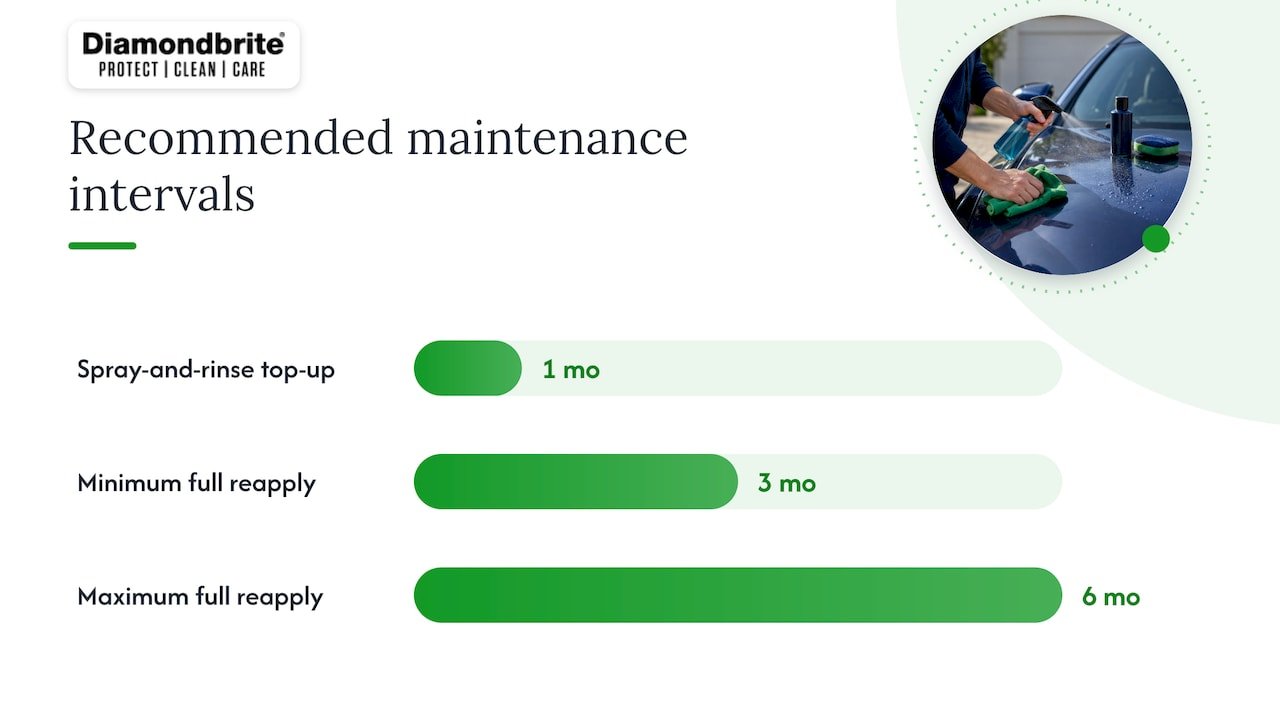
For most drivers, a monthly spray-and-rinse top-up keeps beading strong, while a fuller reapplication every three to six months accounts for weather, mileage, and wash frequency. If beading never returns even after decontamination, and the surface shows dullness or etching, that is the point to consider a professional strip and full recoat rather than another layer of wet-coat.
Wash water, runoff and your responsibilities
Vehicle-wash effluent is not harmless water: it carries dirt, brake dust, oil residue, and whatever detergent you used, and letting that run into a surface-water drain sends pollutants straight into local watercourses. Planning guidance on vehicle washes treats this effluent as a genuine pollution risk and recommends recycling, foul-sewer disposal where it is permitted, or controlled capture for anyone running a commercial operation.
For home detailing, the obligations are lighter but the principle still applies:
- Avoid washing directly over a road drain or anywhere runoff reaches a surface-water system.
- Use a washpad, gravel area, or lawn that lets water soak away rather than channel straight into a drain.
- Where you have access to one, direct runoff to a foul sewer connection rather than a surface-water drain.
- Keep detergent use to a minimum in any uncontained outdoor area.
Rules on drainage vary by council and water authority, so it is worth a quick check locally if you wash regularly at home.
When wet-coats earn their keep, and when to go further
A spray-and-rinse coating is the right tool when your priority is convenience: topping up shine and water-shedding after every wash without committing a weekend to decontamination and polishing. It is not a substitute for physical protection against stone chips or heavy contamination, and it was never meant to be. Comparisons between PPF and ceramic coatings make the trade-off clear: film protects against impact damage, while ceramic chemistry handles water repellency and chemical resistance, and plenty of owners run both, film on the vulnerable front end and a coating everywhere else.
Our honest take: a wet-coat is the right everyday layer for nearly every driver, but if you cover serious motorway miles or park under trees that drop sap, pair it with film or a proper professional coating on the panels that take the worst of it.
— Will
Keep your shine topped up with Diamondbrite
Washing a car properly already takes effort. We built our wet-coat range so the protection step takes minutes, not hours, letting you lock in beading and gloss straight after every rinse rather than saving it for an occasional big detail day. Automotive Ceramic products can slot into the panel-by-panel method above with no extra kit beyond what you already use to wash, and a single bottle may cover several washes depending on car size.
- Pick a wet-coat suited to your wash frequency, from weekly top-ups to seasonal boosts.
- Pair it with the right wheel or glass-specific product rather than stretching one bottle across every surface.
- Reapply straight after your next wash using the panel-by-panel steps above.
Browse the full Diamondbrite range and find the wet-coat that matches how often you actually wash.
FAQ
What is the best spray on rinse off ceramic coating?
The best choice is an SiO2 or ceramic-infused wet-coat applied panel by panel with immediate rinsing, since that method avoids the streaking that comes from letting product dwell too long. An Automotive Ceramic range can be built for exactly this repeat-use application.
Is spray on ceramic coating worth it?
Yes, for routine maintenance between full decontamination washes, since it rebuilds beading and gloss in minutes without the prep work a full coating or polish requires. It will not replace the physical protection of film or a full professional coating, but it is a sound everyday layer.
What is the best ceramic coating in the UK?
There is no single best option, since the right coating depends on how much durability versus convenience you need: a professionally applied ceramic coating lasts far longer than a spray-and-rinse product, but it costs more and takes longer to apply. For most drivers, a wet-coat used between washes alongside a base coating gives the most practical balance.
What is the downside of ceramic coating?
Ceramic coatings give strong chemical resistance and water repellency but offer little defence against stone chips or physical impact, which is why many owners pair them with PPF on vulnerable panels. They also need correct application technique, since poor dwell-time management is a common cause of streaking or residue.
Sources
- How Gyeon’s PPF and ceramic coatings protect your vehicle
- Planning Guidance Note: Vehicle Washes (appendix)
- The ultimate guide to ceramic coating
- PPF wraps vs ceramic coating: Which is better?