

A sealant suits owners who want a cheap, quick refresh every few months, while a ceramic coating suits those after multi-year protection on a car worth the extra prep time. Sealants typically last weeks to a few months; many DIY ceramic coatings run for multiple years, with professional-grade products lasting longer. Neither stops stone chips, that’s PPF’s job. The full comparison, application steps and maintenance routine follow below.
TL;DR:
- Sealants require reapplication every few months and are ideal for owners who prefer quick, low-cost refreshes; ceramic coatings last several years with proper maintenance.
- Ceramic coatings provide stronger water resistance and chemical protection, but demand thorough preparation and precise curing conditions to achieve optimal results.
- Impact protection against stone chips and deep scratches is not provided by either coating; paint protection film is necessary for those risks.
- Professional ceramic installation offers the longest-lasting finish but comes with the highest cost, while DIY options balance cost and durability for patient owners.
- Proper surface preparation, including washing, decontamination, and polishing, is crucial for both products to maximize protection and gloss.
Table of Contents
- Sealant vs ceramic coating: comparing durability, protection and cost
- Sealant and ceramic coating: pros, cons and the myths worth retiring
- Which option suits your car and driving habits?
- Prepping, applying and maintaining either coating properly
- What Diamondbrite’s own testing and guidance add to this picture
- Treating paint protection as one layer, not the whole answer
- Try Diamondbrite’s ceramic range for your own maintenance routine
- Sources
- FAQ
Sealant vs ceramic coating: comparing durability, protection and cost
The two products solve overlapping problems in different ways, and the gap shows up clearly once you compare them side by side.
Durability is the starkest difference. Independent group tests show many sealants and waxes need reapplying every few weeks to a few months, while ceramic coatings, particularly professional-grade ones, last considerably longer with stronger, more persistent water beading. That said, the same testing found some modern sealants deliver beading and value that rival ceramic products over shorter trials, so the gap narrows if you’re comparing a good sealant against a budget ceramic.
Protection scope differs too. Both repel water and offer some chemical resistance, but ceramic coatings generally provide greater hydrophobicity and chemical resistance than traditional sealants and waxes. Neither protects against stone chips or deep scratches. For that, Paint Protection Film is the recognised standard.
Cost tracks the same pattern:
- Sealants: inexpensive bottles or kits, fast to apply, cheap to top up repeatedly through the year.
- DIY ceramic coatings: a higher upfront cost but spread over one to three years, often working out better value per year for patient owners.
- Professional ceramic installation: the most expensive route, but typically offers the longest-lasting and most consistent result.
Preparation matters more for ceramics; to avoid issues like wiper chatter after application, consider stop wiper chatter after windshield ceramic coating: Australian fixes. A sealant tolerates a rushed wash, whereas ceramic coatings demand clay-bar decontamination, machine polishing where needed, and strict curing conditions, since rushed or incorrect curing reduces effectiveness.
Sealant and ceramic coating: pros, cons and the myths worth retiring
Sealants win on speed and cost. They go on fast, need no curing window, and reapplication is simple enough for a Sunday afternoon. The trade-off is a shorter life and weaker resistance to fuel spills, tar and bird droppings.
Ceramic coatings win on longevity and finish. The gloss and water-shedding are more dramatic and last longer, but you pay for it with a steeper price, more demanding prep, and sensitivity to temperature and dust during curing.
Sealant
- Quick to apply, low cost, easy to top up every few months.
- Weaker long-term chemical resistance than ceramic.
Ceramic coating
- Stronger hydrophobicity and gloss, often lasting one to three years for DIY products.
- Higher cost and unforgiving prep and curing requirements.
Neither is invincible. Coatings slow down swirl marks and chemical staining, they don’t stop stone chips or deep scratches, and no sealant or ceramic product replaces PPF where impact protection is the priority.
Pro Tip: If you’re unsure which to start with, try a sealant on a secondary car first. It teaches you the washing discipline you’ll need before investing in a ceramic job.
Which option suits your car and driving habits?
Matching the product to how you actually use the car saves money and disappointment.
- Daily commuter, modest budget: a sealant reapplied every few months is the sensible, low-effort choice.
- High-value or classic car: a professional ceramic coating protects the finish for years and preserves resale value.
- Weekend show car: a DIY ceramic coating rewards the extra prep time with standout gloss between events.
- Budget-conscious owner who washes often: sealant suits a routine of frequent top-ups better than a one-off ceramic job.
- Frequent motorway driver: ceramic’s stronger chemical resistance helps against tar, insects and road grime that accumulate on long journeys.
As a rule of thumb, choose ceramic when you want multi-year, low-maintenance protection and you’re prepared to prep properly. Choose sealant when low cost and frequent refreshing suit your routine better. For cars facing real chip and scratch risk, consider PPF on vulnerable panels, often paired with a ceramic top coat, which installers commonly combine for impact resistance and hydrophobic protection.
Prepping, applying and maintaining either coating properly
Good results depend far more on preparation than on which bottle you buy.
- Wash thoroughly using a two-bucket method to lift grit without grinding it into the paint.
- Decontaminate with a clay bar to remove bonded contamination that polish and coatings can’t address alone, since test protocols strip old coatings and machine polish before any new application.
- Polish if the paint has swirls or oxidation, since coating over imperfections just seals them in.
- Apply in controlled conditions, out of direct sun, with stable temperatures, since curing is where most DIY ceramic jobs go wrong.
- Maintain with pH-neutral or ceramic-boosting shampoo, watching for weaker beading as the first sign the coating is wearing thin.
Professional installers often run multi-day curing with controlled airflow and dust extraction, something hard to replicate on a driveway, which is one reason professional-grade coatings tend to outlast DIY versions.
Remember that impact protection isn’t part of this routine at all. PPF costs range from hundreds to thousands of pounds depending on coverage, and it’s the only layer here that actually stops stone chips.
What Diamondbrite’s own testing and guidance add to this picture
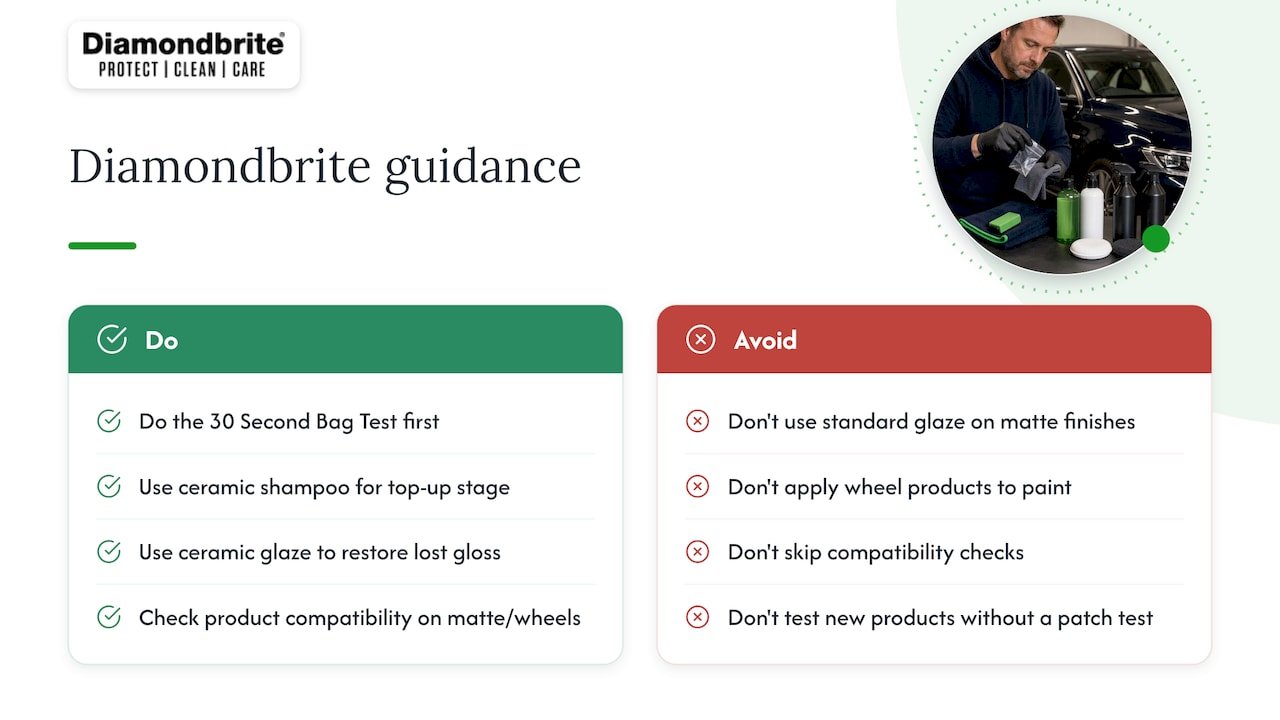
Diamondbrite’s own 30 Second Bag Test, detailed in its clay bar guidance, gives a quick way to feel contamination on paint before deciding whether claying is needed. Certain ceramic shampoos suit the top-up stage described above, while ceramic glazes suit restoring gloss on paint that’s lost some bite between full coating applications. Matte finishes and alloy wheels need gentler, matte-safe or wheel-specific products rather than standard glaze, so compatibility should be checked before applying anything to those surfaces.
Pro Tip: Test any new product on a small, hidden panel first, especially on matte paint, where the wrong polish can leave a permanent sheen.
Treating paint protection as one layer, not the whole answer
The real mistake isn’t choosing sealant over ceramic or vice versa, it’s expecting either to do a job neither was built for. A coating is one layer in a wider care routine, not a substitute for careful washing or impact protection where it matters. Weigh lifetime cost against upfront price rather than sticker shock alone, and reserve professional installation for cars where preserving value justifies it.
— Will
Try Diamondbrite’s ceramic range for your own maintenance routine
Certain ceramic glazes and shampoos fit neatly into the DIY routine covered above, built for owners who want to extend a coating’s life without booking in for professional detailing every time.
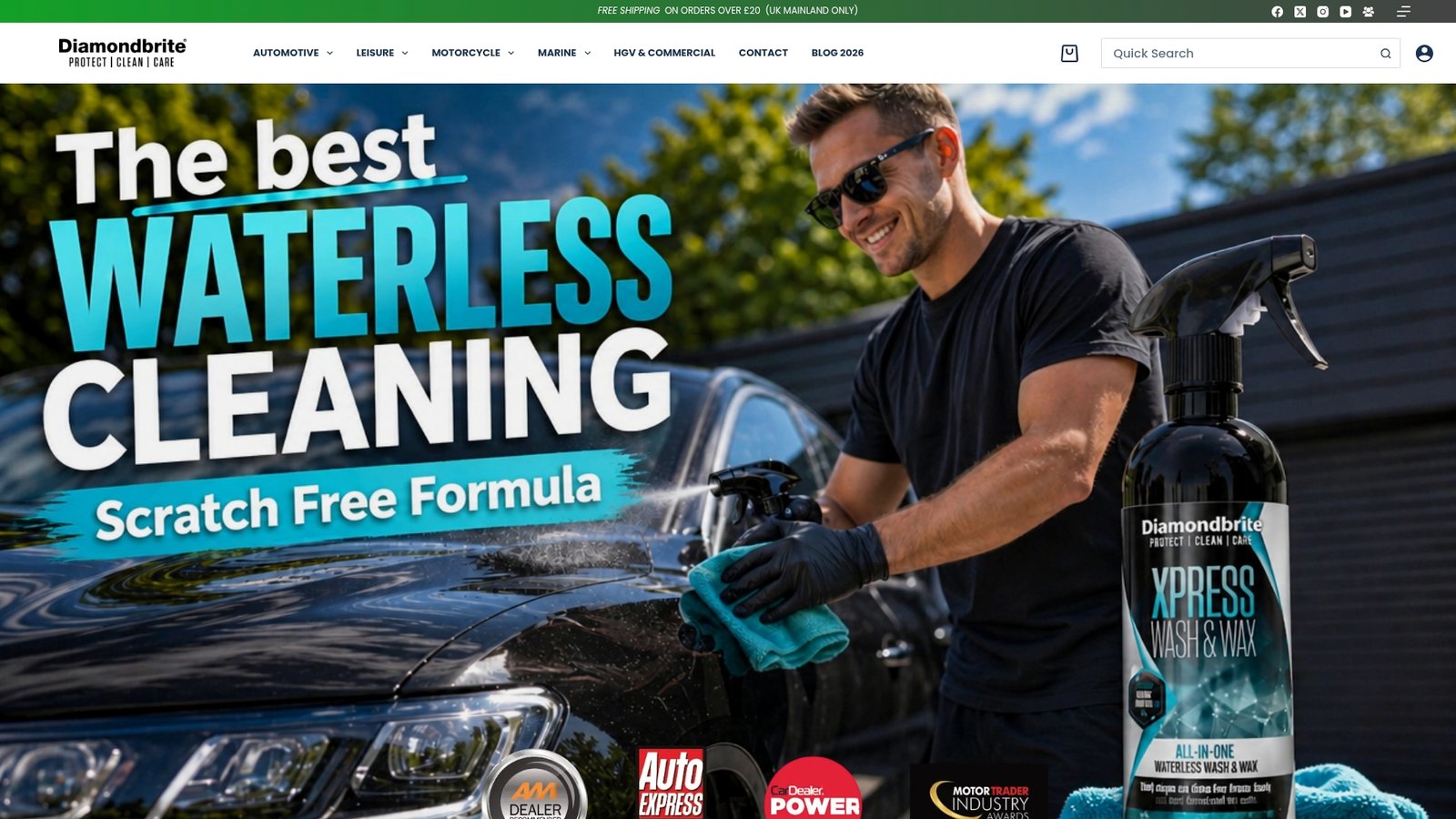
- Ceramic Glaze: suited to restoring gloss between full applications.
- Ceramic Shampoo: suited to regular top-ups that keep beading strong.
- Wheel and glass ranges: suited to the surfaces a paint sealant or ceramic coating doesn’t cover.
Users report noticeable improvements in shine and protection after switching to a dedicated ceramic maintenance routine.
If you’re weighing up where to start, browse the full Diamondbrite range or read the interior ceramic coating guide for a wider view of what a layered ceramic routine can cover beyond the paintwork.
Sources
- What is car paint protection and is it worth it? | Carwow
- Best ceramic coatings 2026 | Auto Express
- The pros and cons of paint protection film (PPF) for your car | RAC
FAQ
Is there anything better than ceramic coating?
Paint Protection Film offers impact protection that ceramic coatings don’t, since PPF guards against stone chips and deep scratches in ways no coating or sealant can. Many owners combine PPF on vulnerable panels with a ceramic top coat for both impact resistance and hydrophobic shine.
Is there a downside to ceramic coating?
The main downsides are cost and preparation: ceramic coatings need thorough decontamination, sometimes polishing, and strict curing conditions, and rushed curing reduces effectiveness. They also don’t protect against stone chips or deep scratches.
Can you apply sealant over ceramic coating?
Yes, a sealant can be layered over a cured ceramic coating to top up slickness and beading between full maintenance cycles. It won’t add the ceramic coating’s chemical resistance, so treat it as a short-term booster rather than a replacement.
Are car sealants worth it?
Sealants are worth it for owners who wash often and want a cheap, fast refresh, since tests show some sealants deliver strong beading and value in shorter trials. They suit frequent reapplication better than long-term, low-maintenance protection.