

A rainbow film on car glass is usually a thin layer of residue that a proper glass cleaner and a little polishing will lift. First work out where it sits. If it is on the inside, it is most likely a deposit from the interior. If it is on the outside, it is traffic film, wax or silicone. If it survives all of that, the glass surface itself may be etched, and that needs polishing rather than stronger chemicals.
TL;DR
- Check which side of the glass the film is on before you clean anything.
- Use an ammonia-free glass cleaner and a clean waffle-weave or microfibre cloth. Avoid abrasive pads.
- For stubborn outside film, use a dedicated glass polish or clay, then finish with a glass cleaner.
- Vinegar is not the answer for oily, outgassing film.
- If a haze affects your view of the road, get it corrected. Seriously affected visibility can fail an MOT.
Table of Contents
- Work out what the rainbow film actually is
- Step by step: removing rainbow film safely
- What to avoid on car glass
- If the rainbow effect stays
- Stop the film coming back
- Our perspective
- Keep glass and paint clear with Diamondbrite
- FAQ
- Sources
Work out what the rainbow film actually is
The fix depends on the cause, so spend two minutes on diagnosis.
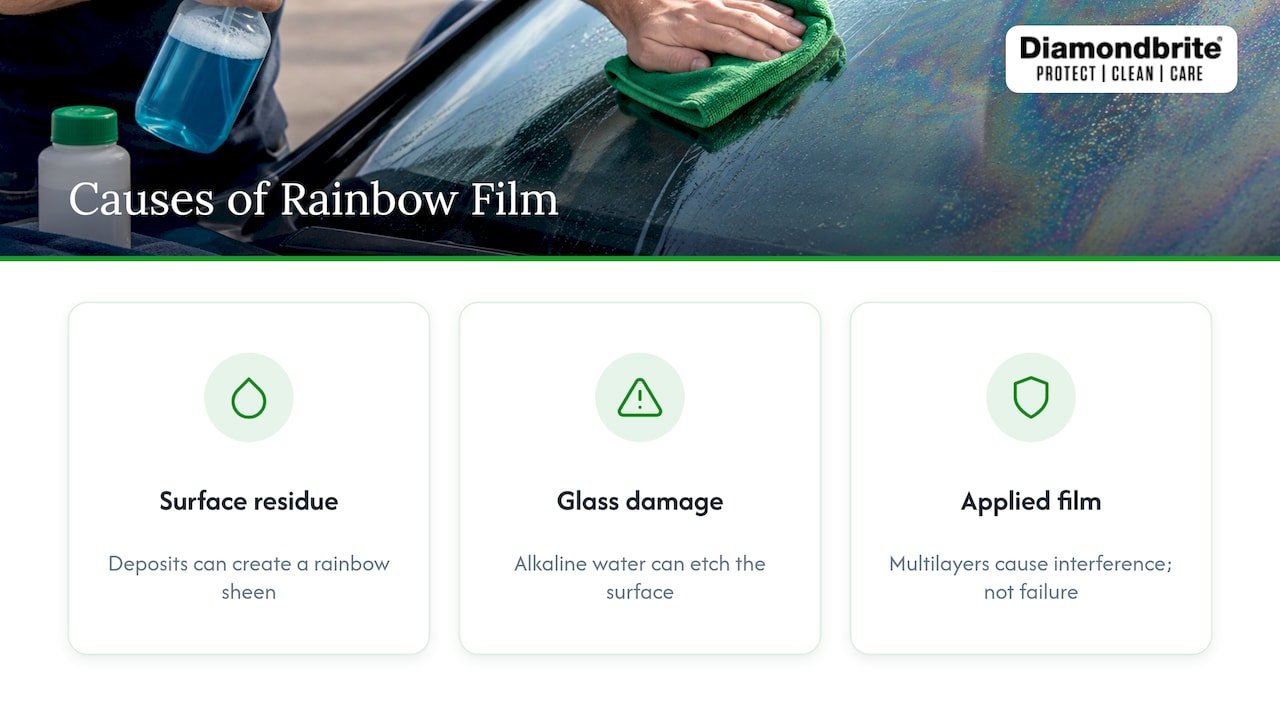
Residue on the surface. Plasticizers from dashboards and trim can slowly deposit on the inside of a windscreen, which is the usual cause of interior fogging. A thin film of this kind produces a rainbow sheen through light interference. On the outside, the culprits are traffic film, a “wash and wax” shampoo that has left a waxy layer, silicone and water-spot minerals.
Damage to the glass. Pilkington notes that strongly alkaline water can attack the glass and leave an oily or rainbow-looking stain that ordinary cleaning often cannot remove. The damage is limited to a few microns of the surface, which is why polishing can deal with it.
An applied film. If you have tinted or laminated film, the rainbow effect can be built in. 3M explains that the multilayer structure of window films causes light waves to interfere, and says this is not a sign of product failure or deterioration. It shows most under fluorescent lighting. If the iridescence is only in a tinted window and does not wipe away, you are looking at the film, not dirt.
Which side is it on?
It is often hard to tell. DetailingWiki suggests a simple trick: make your final wipe vertical on one side of the glass and horizontal on the other. Then you can see at a glance which side a smear is on.
Step by step: removing rainbow film safely
Work in the shade, on cool glass. Cleaners evaporate quickly in direct sun and leave streaks.
- Rinse and wash first. Rinse off loose grit before you wipe anything, or you will grind it into the glass, as MacMyths warns.
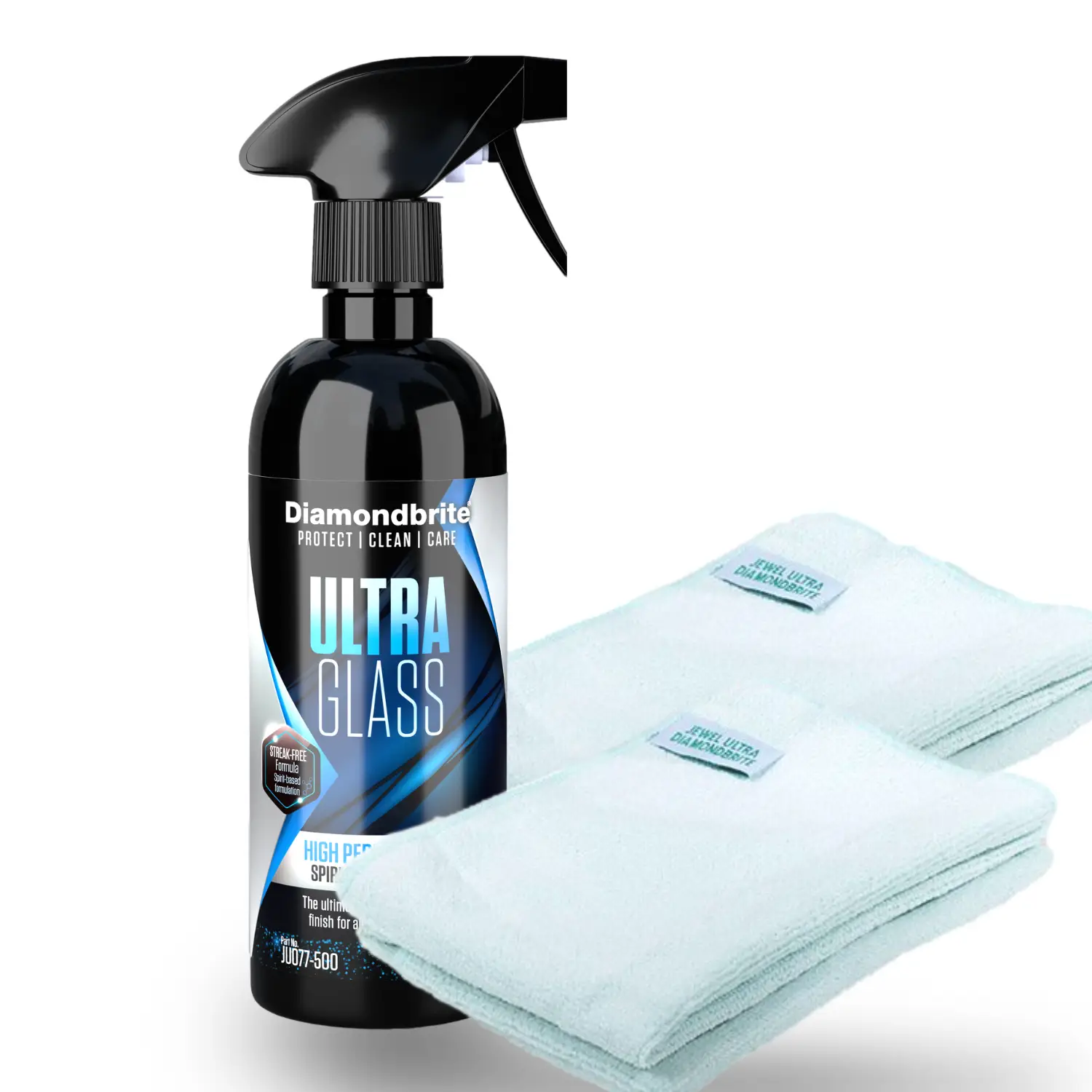
- Clean with an ammonia-free glass cleaner. Most car glass cleaners are IPA-based and lift oils well. Car Magazine’s testers applied products with a waffle-weave cloth and buffed off the excess with a suede microfibre cloth.
- Repeat on the outside with a spray glass cleaner. If a wax-style shampoo has left a waxy residue, DetailingWiki recommends using a spray glass cleaner on the outside too. A traffic film remover can help with accumulated road film, but keep it off rubber trim, wiper blades and sensitive finishes.
- Polish if it will not shift. A dedicated glass polish is made for this job. RUPES describes its Crystal Glass Polish as designed for fine polishing of windscreens, removing water spots and limestone and absorbing silicone and grease without scratching or hazing. You apply it by hand to cool, clean glass, polish a small area in a circular motion, and wipe the residue off straight away with a microfibre cloth. Our guide to polishing car glass safely covers the DIY steps and the temperature limit.
- Clay bonded contamination. If the glass feels grabby and cleaners do nothing, MacMyths describes claying as effective: wash and rinse, spray clay lubricant, glide the clay lightly in overlapping passes, fold it often, rinse, then finish with glass cleaner and a dry microfibre wipe.
- Finish with a clean, dry cloth. Wipe until the glass is crystal clear, then check from inside and outside in different light.
If you are also dealing with mineral deposits, see how to remove water spots from your car. For a full routine, our streak-free glass cleaning method goes through the cloths and technique in more detail.
What to avoid on car glass
Windscreen glass is tough, but it scratches more easily than people expect. DetailingWiki advises that scouring or abrasive pads, even plastic ones, are never used on glass. MacMyths adds paper towels and magic erasers to the list, because the coatings and micro-etching on the glass are not as tough as the glass.
A few other points:
- Razor blades can scratch glass and are a poor idea on anything with a coating or tint.
- Household glass cleaners often contain ammonia, which can damage tinting and interior components. Use an ammonia-free automotive product.
- Isopropyl alcohol at 70% is sometimes suggested for very stubborn residue, but the same source says it should never go on tinted windows.
What about vinegar?
Vinegar is the most common home suggestion, and it has limits. One glass-cleaning guide says acetic acid is essentially useless against outgassing film, because acid does not break the bonds that hold plasticizers to glass. Another UK source suggests a mix of 1 part white vinegar to 10 parts distilled water for stubborn film on interior glass, so it can help with light interior smears. Keep it away from tinted film and coated glass, and never mix it with bleach. For a proper rainbow film, a glass cleaner designed for the job will do more.
If the rainbow effect stays
When the haze remains after cleaning and a hard-water treatment, the minerals may be etched into the glass. At that point it needs polishing or professional correction. Do not keep going with stronger acid.
Please take it seriously if it affects your view, particularly at night or in low sun. GOV.UK’s MOT inspection manual classes a windscreen or window that is damaged or seriously discoloured and affecting the driver’s view as a Major defect. Where visibility through the swept area is seriously affected, it is a Dangerous defect. The law also requires glass to be maintained so it does not obscure the driver’s vision on the road. If you are unsure, ask a windscreen specialist or your MOT tester to look at it.
If you want more general upkeep advice, this practical windscreen care guide covers cleaning film and residue from the glass.
Stop the film coming back
- Clean the inside glass regularly, especially in new cars, where trim and dashboards release the most vapour.
- Wipe the dashboard with a suitable cleaner. Our guide to cleaning a car dashboard properly explains how.
- Rinse hard-water residue off promptly after washing. Water spots can etch if left.
- Use a pH-neutral wash that rinses clean. If you use a ceramic shampoo, our ceramic shampoo dilution guide shows how much to use per bucket.
- Consider a glass coating. Our page on ceramic coating on glass explains how it helps keep a windscreen beading and easier to clean.
Our perspective
We see the same pattern again and again: drivers reach for whatever is in the kitchen cupboard, then wonder why the haze comes back in a week.
Our view is that glass care works best as a routine, not a rescue. Clean the glass with the right product, keep the paint and trim in good condition, and add a protective layer so dirt has less to cling to. Ceramic-infused care is designed to build a durable shield, which makes the next clean quicker and gentler on the surface.
That is the thinking behind our range: cutting-edge ceramic products, easy to use, for everyday drivers as well as enthusiasts. A few minutes after each wash is a more cost-effective habit than a big correction job later.
Will
Keep glass and paint clear with Diamondbrite
Once your glass is clean, protect the rest of the car with the same care. Our ceramic-infused range covers cleaning, protection and detailing for cars, motorcycles, leisure vehicles and marine vessels, including glass and windscreen products, shampoos and ceramic glazes. Browse the full range at Diamondbrite.
If you maintain a ceramic coating, our guide to keeping your ceramic coating in top condition is a good next read.
FAQ
How do I get film off car glass?
Start with an ammonia-free glass cleaner and a clean waffle-weave or microfibre cloth. If the film remains, use a dedicated glass polish on cool glass, working a small area at a time. Avoid abrasive pads and razor blades.
Does vinegar remove rainbow film?
Not reliably. It is ineffective on oily outgassing film, though a diluted mix is sometimes used for light smears on interior glass. Keep it off tinted or coated glass, and use a proper automotive glass cleaner instead.
How do I remove the rainbow effect from glass?
First identify the cause. Residue comes off with cleaning, polishing or claying. An effect built into a window film is not dirt and will not wipe away. Etched glass needs polishing or professional correction.
Can glass be permanently stained?
Yes, in the sense that the surface can be etched. Strongly alkaline water can attack glass and leave a stain that ordinary cleaning cannot remove, although the damage is only a few microns deep and polishing can often address it.
Sources
- Ask Pilkington: rainbow stain on glass
- 3M: Iridescence Effect in Window Films
- Rainbow Film on Glass: Outgassing, Explained
- A guide to glass cleaning, DetailingWiki
- How To Clean The Film From Your Car’s Windshield, MacMyths
- The best glass cleaners tested, Car Magazine
- RUPES Crystal Glass Polish technical data sheet
- Solving Windscreen Streaking and Cleaning Problems, Mycarglass.co.uk
- MOT inspection manual: visibility, GOV.UK
- View to the front and windscreen obscuration, GOV.UK