

You prevent dye transfer on leather by keeping dye and leather apart, keeping the surface clean and dry, and maintaining the protective topcoat. In practice that means washing new denim before you wear it, putting a barrier between dark clothing and pale leather, and cleaning leather regularly so the finish stays in good condition. Light leather is the most exposed, but car seats, bags and sofas of any colour can pick up marks.
TL;DR
- Dye moves from dark, new or damp clothing onto leather, and pale or uncoated leather shows it first.
- Wash new denim several times before wearing it against light leather.
- Use a barrier, such as a towel, seat cover or jacket, when you can’t avoid contact.
- Keep leather clean and treated with a suitable protector, and patch test anything new in a hidden spot.
- Act fast on a fresh mark. Take valuable, aniline or heavily stained leather to a professional.
Table of Contents
- Why dye transfers onto leather
- Everyday habits that stop it
- Keep the protective finish in good condition
- If dye has already transferred
- Our perspective
- Looking after the rest of your car interior
- FAQ
- Sources
Why dye transfers onto leather
Most transfer is surface pigment rubbing off one material and settling on another. Moisture and friction make it worse. Cowmono’s care guide says moisture and friction together help dye move between surfaces. It suggests you avoid setting a wet bag on a pale sofa or leaving a damp strap pressed against clothes.
Three things raise the risk:
- Fresh, strongly dyed fabric. Raw or dark denim is the classic culprit. Leatherology calls dye transfer from denim, dark linings and printed materials the most common problem with white leather.
- Leather with little or no surface coating. Mimi Berry, a UK bag maker, notes that strong dyes from other clothing can transfer onto natural leather that often has no surface coating.
- Colour contrast. A mark that disappears on a dark seat stands out at once on cream, white or grey leather.
In a car the pattern is simple. You sit on the same seat every day, in the same jeans, often in damp winter weather. The bolster you slide over getting in and out takes the most friction, so it is usually the first to show a blue tint.
Everyday habits that stop it
The cheapest protection is behavioural, and it works for car seats, handbags and furniture alike.
Wash new denim first
Mimi Berry advises that new denim should be thoroughly washed and colourfast before it is worn with a new leather bag. A few washes, separately from other clothes, takes out the loose dye that does the damage. Treat any dark new garment the same way if it will touch pale leather.
Put something between the two
- Car seats: a clean towel, a seat cover or a washable throw on the driver’s seat protects light upholstery on days when you can’t avoid dark clothes.
- Bags: Leatherology suggests keeping light bags off your lap when you wear raw or dark denim. It also advises against storing a light piece pressed against a dark one.
- Sofas: a throw or cushion cover does the same job. Keep wet clothes and wet bags off pale seating.
Keep damp and leather apart
A wet coat on a cream seat is a recipe for a stain. Let clothes dry before you get in the car where you can, and leave leather items to dry naturally if they get wet.
Store leather sensibly
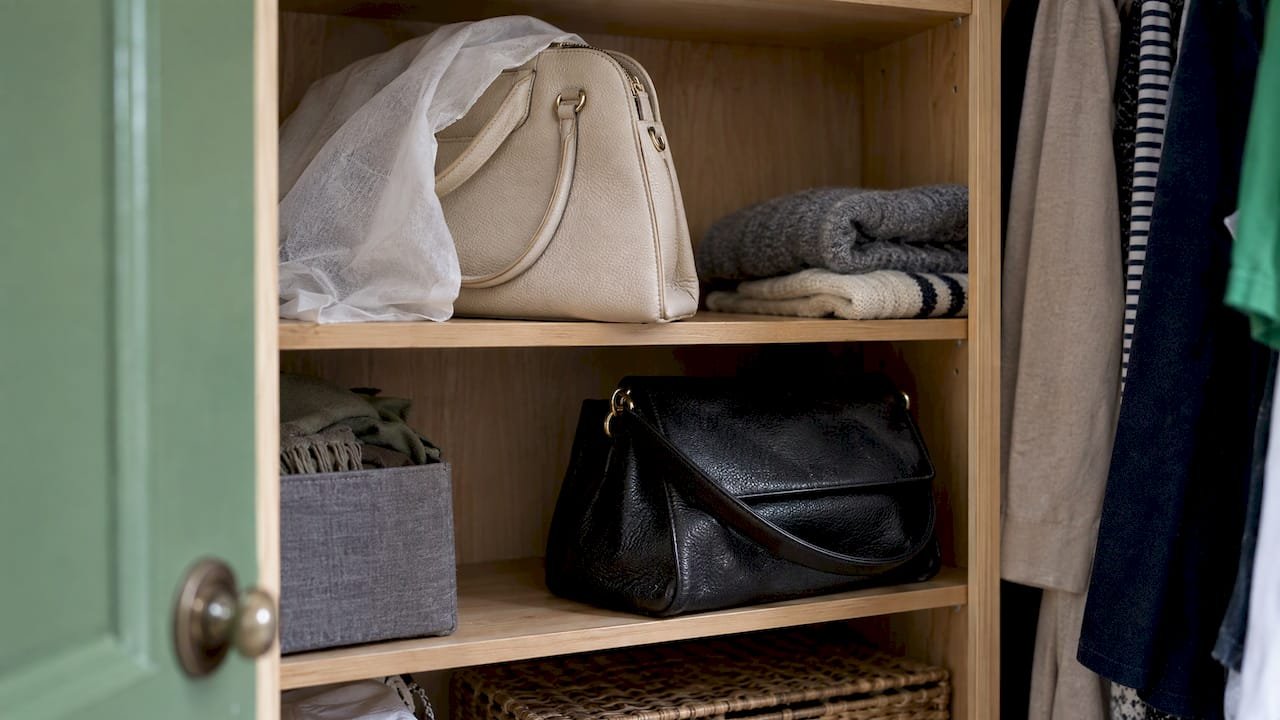
Don’t leave a light bag squashed against a dark one or against pale fabric for weeks. Give each piece some space, ideally in a breathable dust bag.
Keep the protective finish in good condition
Most car and furniture leather has a clear topcoat that does the real work of resisting dye. That coat wears over time, and oils and fats from skin soften it. Colourlock, a leather care brand, notes that body oils can plasticise the finish and increase how fast dye penetrates, so regular cleaning matters more than most people think.
A sensible routine looks like this:
- Vacuum or wipe off surface dust and grit.
- Clean with a product made for your type of leather, using a soft, lint-free cloth.
- Let the leather dry fully.
- Apply a leather protector or dye-barrier product designed for your leather, following its label.
- Repeat more often on light leather and high-contact areas, and less often on dark leather.
Leather protectors are usually applied on a schedule. Light or white leather generally needs treating more often than dark leather, because marks show sooner. Follow the maker’s interval on the label.
Test before you treat
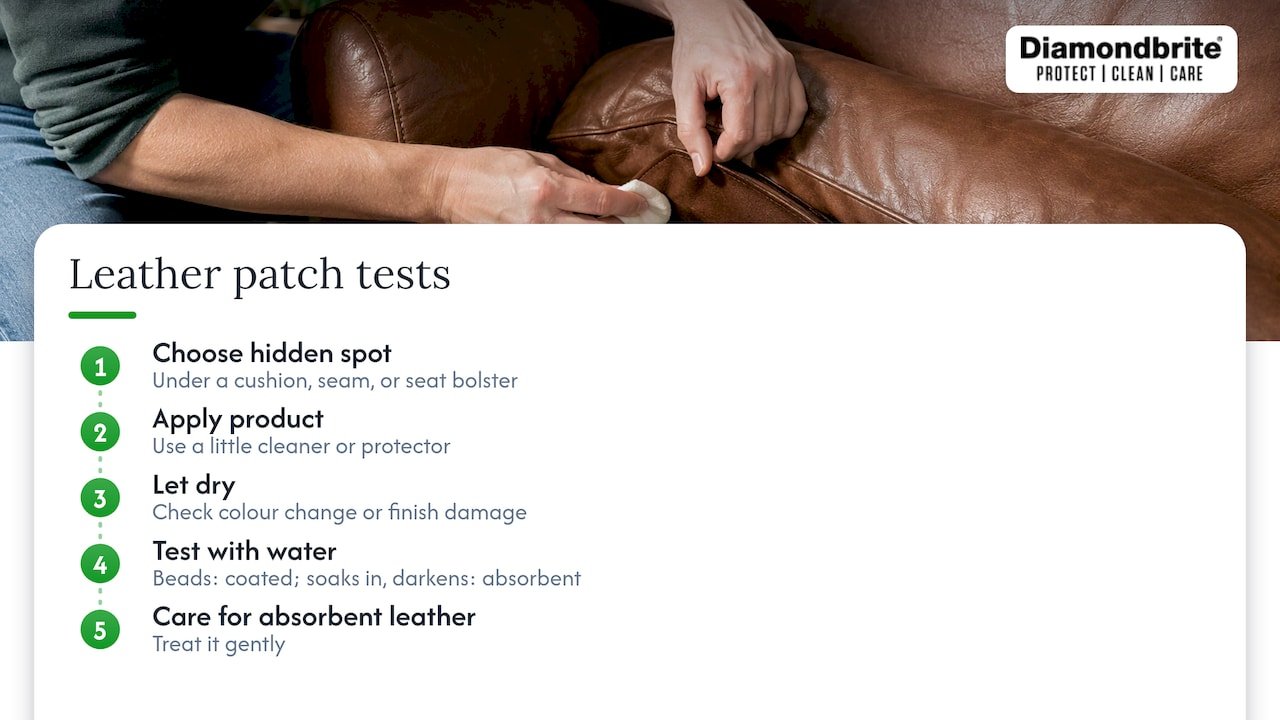
Before any new cleaner or protector goes on, do a patch test. Choose a hidden spot, such as under a cushion, inside a seam or on the underside of a seat bolster. Apply a little product, let it dry, and check for colour change or damage to the finish. You can also put one small drop of clean water on an inconspicuous spot. If it beads, the leather is probably coated. If it soaks in and darkens the leather, it is more absorbent, such as aniline, and more sensitive to moisture and stains. Treat absorbent leather gently.
If dye has already transferred
Speed helps. Leatherology notes that a fresh mark lifts far more easily than a set one, and that light leather needs the same routine as any other, just sooner.
- Start gentle. Use a cleaner made for your type of leather and a soft cloth. Work lightly, don’t scrub, and don’t rub a tacky surface.
- Avoid harsh household products. King Living’s UK care advice says never to use detergents, alcohol, soaps, shoe polish, wax, window cleaner, silicone, saddle soap or any product not designed for your leather type.
- Treat ink differently. Leatherology warns that ink is the hardest mark to remove and is most likely to set permanently. Blot gently with a dry cloth. Avoid rubbing alcohol, hairspray and acetone, which dissolve the finish and leave a pale spot.
- Know when to stop. If the mark stays after a couple of gentle passes, or the leather is aniline, suede, nubuck, antique, valuable or heavily stained, a professional leather cleaner is the safer route than more DIY.
For furniture, King Living also recommends professional cleaning every 12 to 18 months, which helps keep the finish in good order.
Our perspective
Most of the dye-transfer problems we hear about are really maintenance problems. Surfaces that are cleaned regularly, kept free of grit and protected properly tend to stay looking better for longer.
That is the thinking behind how we build our range. Our ceramic-infused products are designed to make regular care quick, so that keeping your interior in good order fits around a busy week rather than needing a full weekend. We also favour biodegradable, low-waste approaches wherever they do the job.
Our advice is to build a simple routine: clean, protect, repeat. Pair it with the habits above, such as washing new denim and using a barrier on days you can’t avoid dark clothes, and you have a durable shield against most day-to-day marks.
Will
Looking after the rest of your car interior
Leather seats are only one part of the cabin, and the same regular-care approach applies to the rest of it. If you are choosing what to keep in your car care kit, our Automotive Interior range covers interior cleaning and protection for cars, motorcycles, leisure vehicles and marine vessels, with ceramic-infused formulas designed for easy upkeep.
For more on keeping a cabin in shape, read our guides on APC versus interior cleaner, cleaning your dashboard properly and whether interior ceramic coating is worth it.
FAQ
Can you completely prevent dye transfer on leather?
You can cut the risk a great deal, though not to zero. Washing new denim, using a barrier on pale leather, keeping leather dry and maintaining the topcoat all help. Light and uncoated leathers stay the most vulnerable, so they need the most care.
Which leather is most likely to pick up dye?
Light leathers such as white, cream and blush show it first, because even slight colour is visible. Leather with little or no surface coating is also more exposed, as it has less protection between it and the dye.
Should I wash new jeans before sitting on light leather seats?
Yes. Fresh denim carries the most loose dye, and experts recommend washing new jeans several times, separately, before wearing them against light leather. Until then, put a towel or seat cover between you and the seat.
What should I do if the mark has already set?
Don’t scrub or reach for household solvents, which can damage the finish and leave a pale patch. Try a gentle cleaner made for your type of leather after a patch test. If it doesn’t shift, ask a professional leather cleaner, especially for aniline or valuable leather.