

You prevent bird dropping damage with three habits: park away from perches, lift droppings off quickly without rubbing, and keep a protective layer on the paint so deposits sit on top of it rather than on bare lacquer. No product makes paint bird-proof, but a ceramic-infused layer buys you time and makes clean-up easier. That is why we make ceramic glazes and shampoos for everyday car owners.
TL;DR
- Droppings can mark paint in a few hours, faster on a hot, sunny day.
- Soak first, then dab. Never scrape, scrub or reach for vinegar.
- Avoid parking under trees, wires and ledges where birds roost.
- A ceramic-infused layer helps deposits release more easily. Top it up on schedule.
- Light etching can often be polished out, but deep damage needs a bodyshop.
Table of Contents
- Why bird droppings harm paint
- Park smart first
- Removing a fresh dropping safely
- How a protective layer helps
- Build a routine that keeps up
- If the paint is already marked
- Our view
- Ready to protect your paint
- FAQ
- Sources
Why bird droppings harm paint
Droppings are a mix of uric acid, digestive enzymes, salts, fats and sometimes grit. The Telegraph reports that deposits left for hours, especially on a hot, sunny day, are much more likely to etch the surface.
Heat plays a part too. The same article describes research suggesting the damage is partly thermal. Sun softens and expands the lacquer, the dropping dries and hardens, and overnight the lacquer contracts around the deposit. The result is a dull ring or an imprint that looks like etching.
The timeline varies. One expert roundup on Yahoo Autos says that in cooler weather a dropping may take up to a day to stain, while on a hot summer day etching can appear within a few hours. It also notes that older or neglected paint is more vulnerable. A manufacturer’s owner’s manual says droppings may damage painted surfaces in just a few hours.
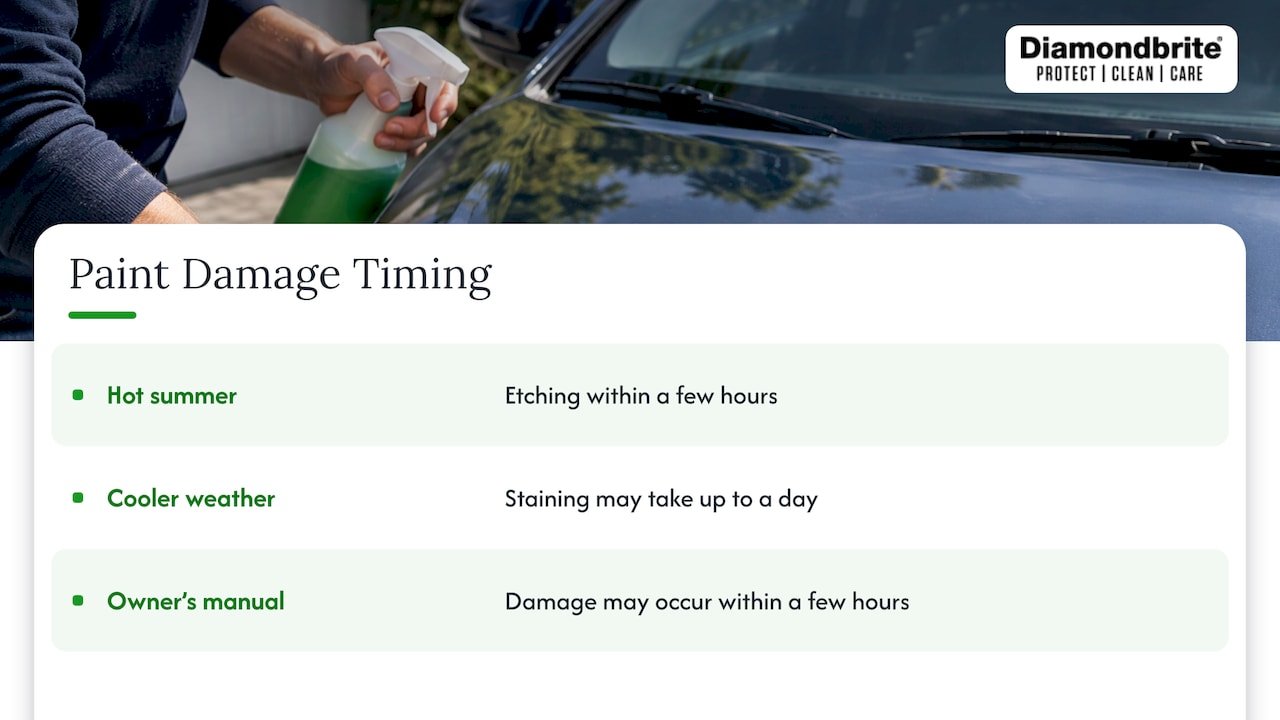
So the practical rule is to treat a fresh dropping as a job for today, not the weekend.
Park smart first
The easiest prevention costs nothing. The Telegraph’s advice is to avoid parking under trees, and a protective coating helps when you cannot avoid a perch spot.
A few habits make a real difference:
- Skip trees with dense branches, especially in berry season, and overhead wires or ledges where birds line up.
- Look up before you leave the car for a long stretch, such as a working day.
- Where you park regularly under the same hedge or tree, move to a different spot rather than hoping for luck.
- If you must park under cover of a roost, expect to wash more often.
Motorcycle and leisure vehicle owners should note that covers are only as clean as the surface beneath them. Wash the paint before putting a cover on, so grit does not get ground in.
Removing a fresh dropping safely
Speed matters, but so does gentleness. Wiping a dry dropping can drag grit across the lacquer and leave scratches that are worse than the original mark.
- Work in the shade if you can. Coventry Body Shop advises letting the panel cool and avoiding direct sunlight before you start.
- Soak the dropping. Carwow suggests car shampoo, waterless wash or quick detailer, with plain warm water in a pinch, left for a few minutes.
- Lay a wet cloth over dried deposits. Leave a soaked microfibre cloth on the area for five to 10 minutes, then dab gently rather than rub.
- Dry the panel and check it. Look at the paint in good light to see whether any mark remains.
- Reapply protection. Spray wax or sealant over the spot, as the same guide recommends.
The Telegraph also suggests keeping wet wipes in the glovebox and not scraping at dried debris.
What not to use
Household fixes can do more harm than the dropping. Carwow lists vinegar and methylated spirits as products that can etch or dull paint, flags bicarbonate of soda as too abrasive for clear coat, and says dish soap and glass cleaners strip protective layers. A proper car shampoo is the safer routine, and our ceramic shampoo is made for exactly this kind of wash.
How a protective layer helps
There are three broad levels of protection:
| Protection | What the Telegraph says | Notes |
|---|---|---|
| Traditional wax | Easy to apply and repels dirt | Needs topping up every few weeks or months |
| Ceramic coating | More effective and longer lasting than wax | Builds a durable shield on the paint |
| Protective film | Maximum protection | Costs more, needs professional fitting, still cheaper than a respray |
Film covers only the panels where it is fitted, and even then droppings should be washed off promptly.
The honest picture is that a coating does not make paint immune. It gives you more time and makes the dropping easier to lift. For most owners, a ceramic-infused glaze or shampoo is the sweet spot: you keep up a routine at home, with no need to book your car in. If you are weighing the options, our guide to sealant versus ceramic coating sets out how long each lasts. Our ceramic glaze guide explains what it does for the paint.
If you already have a coating, you do not need to strip it for a better result. Read how to keep gloss without waxing a ceramic coating. Owners with matte finishes should follow our matte paint protection advice, since polishing out a mark is not an option on matte paint.
Build a routine that keeps up
Protection only works while it is intact. A simple pattern:
- Weekly or fortnightly: wash with a pH-friendly shampoo using the two-bucket method, and check the roof, bonnet and boot lid, where droppings land most.
- After every dropping: soak, dab, dry, and top up protection on that spot.
- Every few months: refresh your glaze or sealant. A good sign you need to is when water no longer beads on clean paint. The Audi A3 UK care guide, for example, says to apply wax at least twice a year once water stops pearling off.
- Before winter: road salt and wet leaves add to the load. See our winter paint protection guide.
UV is the other enemy of paint, and a faded surface is less forgiving of stains. Our guide to preventing car paint fading covers that side, and the same thinking applies to a motorcycle’s paint in strong sun.
For a similar problem, read our advice on acting within hours to prevent bug etching. For the full cleaning routine, our bird droppings removal guide goes into more detail.
If the paint is already marked
Don’t panic. Once the dropping is off and the panel is dry, look at the mark from a few angles.
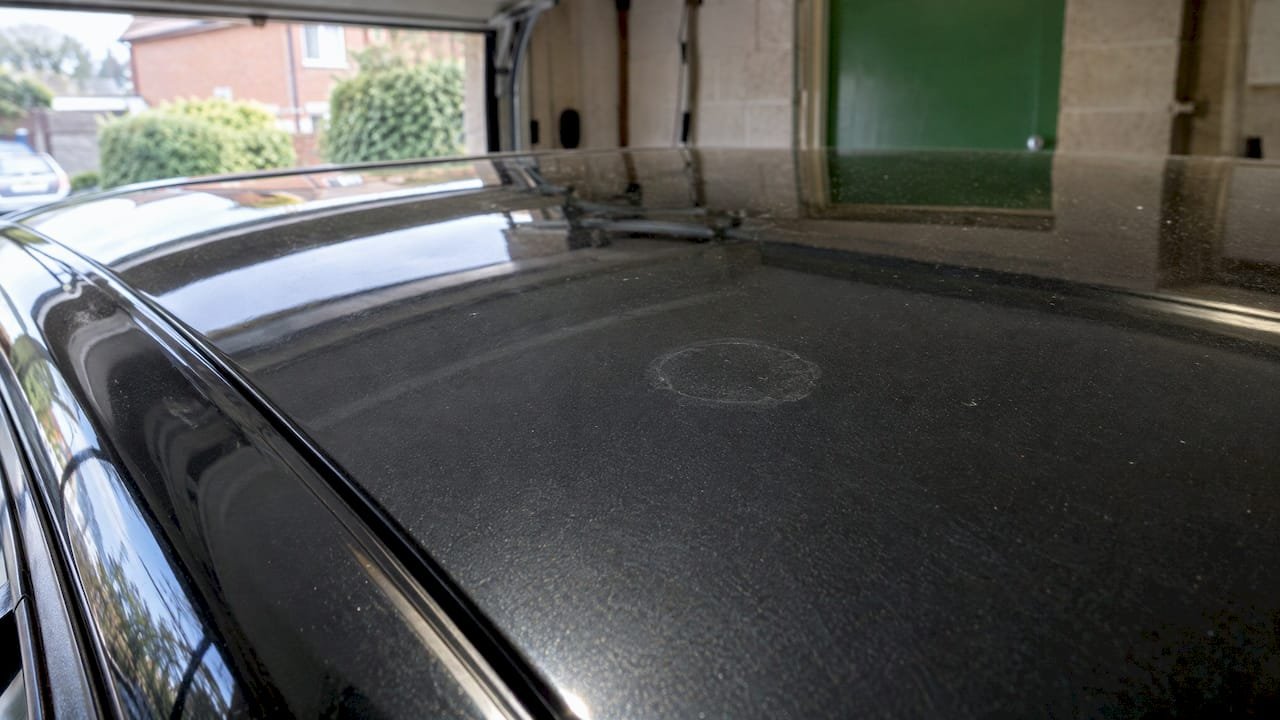
The Yahoo Autos roundup quotes detailers saying very light clear-coat etching can often be corrected with a light hand polish, deeper etching may need a polishing compound and pad, and severe cases may need machine polishing. A classic-car specialist there adds that aggressive rubbing will mar the paint, and that if the topcoat is badly affected, only so much can be done before wet sanding or repainting is needed.
The Telegraph reports a reader who was quoted more than £500 to respray panels damaged by droppings. That is the cost of leaving it. If the damage is evident or you can feel a rough patch, a bodyshop can assess whether the lacquer needs correcting or the panel needs repainting. Heating the area to let the lacquer flow again is something the Telegraph’s expert says to leave to professionals, as thin paint can be worn through.
Our view
We think bird droppings are the clearest case for a protection routine rather than a rescue job. You cannot control where a bird flies, but you can control what the paint looks like when it lands.
That is why we make ceramic-infused care products for cars, motorcycles, leisure vehicles and boats. A regular wash with a ceramic shampoo and a ceramic glaze on top builds a durable shield, so a dropping is a two-minute job rather than a worry.
Keep it simple: park sensibly, soak and dab, top up your protection. That is cost-effective and quick, and it suits a busy week.
Will
Ready to protect your paint
Our ceramic glazes, shampoos and packs are made for everyday owners who want a sparkling finish without a full day in the driveway. Browse the full range, from paintwork and wheels to motorcycle, leisure and marine care, on our shop.
FAQ
How long before bird poo damages paint?
It depends on heat and the state of your paint. On a hot, sunny day etching can show within a few hours, while in cooler weather it may take up to a day. Older or neglected paint is more vulnerable, so remove droppings the same day.
Does white vinegar get rid of bird poo?
It is best avoided. Carwow lists vinegar among products that can etch or dull paint. Soak the dropping with car shampoo, waterless wash or quick detailer and dab it away with a damp microfibre cloth instead.
Can ceramic protection stop bird droppings damaging paint?
No product makes paint completely bird-proof, but a ceramic layer gives you more time and makes cleaning easier. You still need to remove droppings promptly and keep the layer topped up.
Should I scrub dried droppings off?
Never. Scrubbing or scraping drags grit across the lacquer. Lay a soaked microfibre cloth over the area for five to 10 minutes, then dab gently and dry.
Sources
- How to prevent bird poo and other tree nuisances from damaging your car, The Telegraph
- How to Remove Bird Droppings Without Damaging Car Paint, Carwow
- Can Bird Droppings Damage Your Car Paint?, Yahoo Autos
- How to Prevent Bird Dropping Damage on Your Car, Coventry Body Shop
- Owner’s manual, bird droppings and paint
- Notes on cleaning and care of the Audi A3