

The safest pre-wash for a ceramic-coated car is a pH-neutral snow foam or a weakly diluted all-purpose cleaner, rinsed off thoroughly before you shampoo. The one rule that matters more than any product choice: never let a cleaner dry on the coating. Ceramic-safe foams and shampoos are built with this in mind, so you can clean confidently without stripping the protection you paid for.
TL;DR:
- Fresh dust or pollen usually needs only rinsing and shampoo, while dried insects, bird droppings, or road salt call for prewash first.
- Choose products near pH 6.5 to 7.5; dilute snow foam at 1:5 to 1:10 or mild all purpose cleaner at 1:10 to 1:50.
- Let prewash work for 3 to 8 minutes in shade, then rinse completely before contact washing; never allow foam or cleaner to dry.
- Wash weekly or every other week, decontaminate monthly, and give lower panels and wheel arches an extra prewash after winter driving.
Table of Contents
- What pre-wash does for a ceramic coating and why it matters
- When do you actually need a pre-wash?
- Choosing the safe chemistry: pH, dilution and dwell time
- Step-by-step safe pre-wash routine for ceramic-coated cars
- Common mistakes that harm ceramic coatings
- Diamondbrite’s role in a safe pre-wash routine
- Why we recommend a gentle pre-wash first
- Getting the right products for this routine
- FAQ
- Sources
What pre-wash does for a ceramic coating and why it matters
Pre-wash exists to do the dirty work before your mitt ever touches the paint. It lifts loose grit and softens bonded grime, so by the time you’re hand washing, you’re not grinding road dust into the clear coat underneath your ceramic layer.
Snow foam and all-purpose cleaners (APCs) do this differently. Foam clings to the surface as a lubricating blanket, encapsulating dirt so it slides off during rinsing. An APC works harder and more directly, breaking down specific residues like tar flecks or traffic film. Both approaches reduce the mechanical contact that causes swirl marks, which is really the whole point of ceramic protection in the first place.
- Snow foam softens and lifts grime without heavy scrubbing.
- APCs target stubborn residues that foam alone won’t shift.
- A good pre-wash preserves hydrophobic beading by avoiding abrasive contact.
When pre-cleaners are rinsed properly, they free contaminants from the coating’s pores without endangering the layer underneath.
When do you actually need a pre-wash?
Not every wash day calls for the same treatment. A light dusting of pollen or fresh road dust often comes off with a simple rinse and shampoo. Heavier road film benefits from a quick foam pass. Dried insects, bird droppings and road salt are a different story: these need a proper pre-wash before anything else touches the panel.
- Fresh dust or pollen: rinse and shampoo is usually enough.
- Light traffic film: a quick foam application before washing helps.
- Dried bugs, droppings or salt: these call for a dedicated pre-wash first.
A recommendation table from a detailing guide confirms this pattern: fresh dust needs no pre-cleaner, but dried insects and coated vehicles generally do. Most owners get on fine with a weekly or biweekly gentle wash, saving a more thorough decontamination for once a month. After winter driving, a double pass of pre-wash on the lower panels and wheel arches clears accumulated salt before it has a chance to sit.
Choosing the safe chemistry: pH, dilution and dwell time
Getting the chemistry right matters more than the brand on the bottle. Routine washing should stay close to pH-neutral, roughly 6.5 to 7.5, which is the range that protects coatings from being stripped during regular maintenance. Stronger alkaline or acidic products have their place, but only occasionally, and only when diluted correctly.
- Snow foam typically mixes at 1:5 to 1:10 through a foam cannon or lance.
- Light-duty APCs sit around 1:10 to 1:50 for routine pre-wash work.
- Stronger concentrates are reserved for targeted decontamination jobs only.
- Dwell time generally runs 3 to 8 minutes, never left to dry on the panel.
A dwell window of 3 to 8 minutes is the typical range detailing chemists recommend, giving the product time to work without risking it flashing dry in the sun. If you’re ever unsure about a new product, test it on an inconspicuous panel first and always work in the shade, since heat accelerates drying and increases the risk of marking.
Step-by-step safe pre-wash routine for ceramic-coated cars
Getting the order right protects both your time and your coating.
- Pre-rinse the whole car from top to bottom to remove loose grit before any chemical goes near the paint.
- Fill your foam cannon, foam lance or pump sprayer with your chosen pre-wash at the correct dilution for the job.
- Apply foam working top to bottom, covering the whole car evenly.
- Let it dwell for 3 to 8 minutes, keeping an eye on it so it never starts to dry.
- Give wheels and arches extra attention with a separate, dedicated brush, since these areas carry the heaviest grime.
- Rinse thoroughly from top to bottom before any contact wash begins.
- Hand wash using the two-bucket method with a pH-neutral shampoo, working panel by panel.
- Rinse again, then dry with plush microfibre towels and a ceramic-safe drying aid to lock in the beading.
Pro Tip: Keep a second, smaller brush just for wheels and arches, since wheel grime is abrasive enough to scratch paintwork if the same brush ever touches a body panel.
If you’re dealing with mineral deposits or watermarks, a quarterly decontamination using a mild acidic descaler can clear them, but this is an occasional step, not part of your regular routine. Stick to the pH-neutral default for weekly or biweekly washes and save anything stronger for when it’s genuinely needed.
Common mistakes that harm ceramic coatings
Most coating damage isn’t dramatic. It’s the small habits that add up over months.
- Washing in direct sun causes products to flash dry, leaving residue spots that etch into the surface.
- Letting foam or APC sit too long without rinsing risks the same drying problem, even in mild weather.
- Household detergents often carry aggressive surfactants and perfumes that strip lubricity and damage coatings over time.
- Automated tunnel brushes and dirty mitts introduce fine scratches that show up as swirl marks under sunlight.
The fix for all of these is straightforward: wash in the shade or early morning, rinse promptly, use dedicated pH-neutral products, and keep your wash kit clean between uses.
Diamondbrite’s role in a safe pre-wash routine
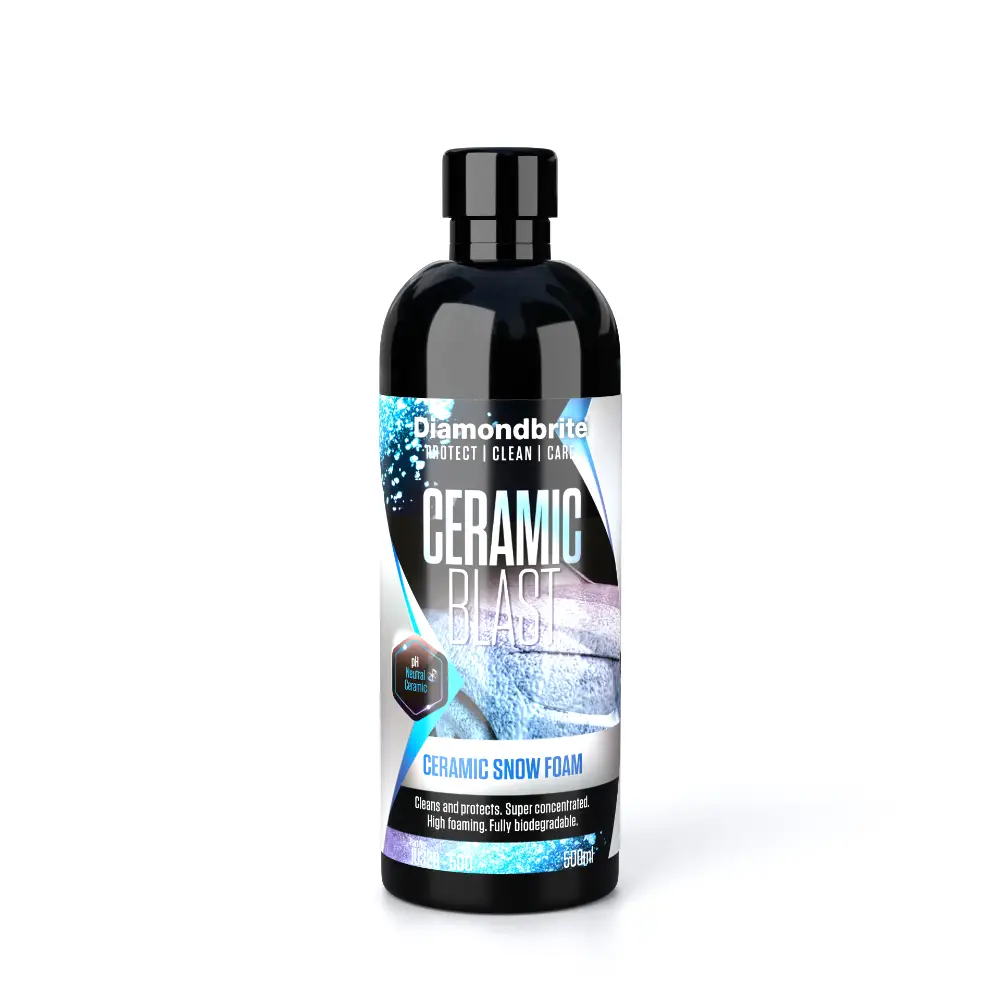
Our ceramic range is built around this exact sequence. Ceramic Snow Foam gives you the gentle, pH-neutral lift a pre-wash needs, clinging to panels long enough to loosen grime without demanding aggressive agitation. Ceramic Shampoo follows naturally in the two-bucket stage, maintaining the slickness that keeps your mitt gliding rather than dragging. Ceramic Glaze sits a step further along the maintenance cycle, intended as a periodic boost rather than a weekly product.
- Ceramic Snow Foam: suited to the dwell-and-rinse pre-wash stage.
- Ceramic Shampoo: designed for the routine panel-by-panel wash.
- Ceramic Glaze: intended as a periodic topper to refresh beading.
Many coating maintenance routines suggest refreshing beading performance every three to six months, which lines up well with how glaze fits into the cycle described above.
Why we recommend a gentle pre-wash first
In our experience, owners who commit to a proper pre-wash step see fewer swirl marks and longer-lasting beading than those who skip straight to shampoo. It’s a small addition to wash day that pays off every time you watch water sheet off the bonnet months later.
— Will
Getting the right products for this routine
Building a pre-wash routine around the right chemistry doesn’t need to be complicated, and we’ve built our ceramic range specifically to match the steps above without you needing to guess at dilutions or dwell times.
- Ceramic Snow Foam handles the pre-wash stage, formulated to stay gentle on coatings while still lifting grime.
- Ceramic Shampoo carries that same gentleness into the contact wash stage.
- Ceramic Glaze works as your periodic topper, keeping beading strong between full coating applications.
You’ll find the full ceramic range, along with our other automotive care products, on our shop, where product pages lay out exactly how each one fits into a wash day. If you’re also curious about keeping your wheels coated and streak-free, our guide on how to clean ceramic coated wheels walks through the same gentle approach for that trickier area of the car.
FAQ
What destroys ceramic coating?
Bird droppings, bug remains and road salt can etch or stain a coating quickly if they’re left to bake on hot panels, and the same risk applies to any cleaner left to dry before rinsing. Softening these contaminants promptly and rinsing with a neutral pH product reduces the damage significantly.
What polish should I use before ceramic coating?
Polishing choice depends on the paint’s condition and isn’t something a pre-wash routine covers, since polishing happens before a coating is applied rather than as part of ongoing maintenance. Once a coating is in place, routine care shifts to gentle, pH-neutral products rather than abrasive polishes.
What do detailers use for pre-wash?
Most detailers lean towards pH-neutral snow foams or lightly diluted APCs for routine pre-wash work, reserving stronger alkaline products for occasional decontamination jobs. Dilutions commonly sit around 1:5 to 1:10 for foam and 1:10 to 1:50 for light-duty APCs, with dwell times of 3 to 8 minutes.
How long should I wait before washing a ceramic coating?
Most coatings need a short curing period after application before their first wash, so it’s worth checking the specific product’s guidance rather than assuming a single standard. Once cured, a weekly or biweekly gentle wash routine, with monthly light decontamination, keeps the coating performing well over time.
Sources
- Car wash chemistry & dilution FAQ: pH, RTU, PIR & safe ratios — Find Your Detail
- How to wash and maintain a ceramic coated car — AutocareHQ