

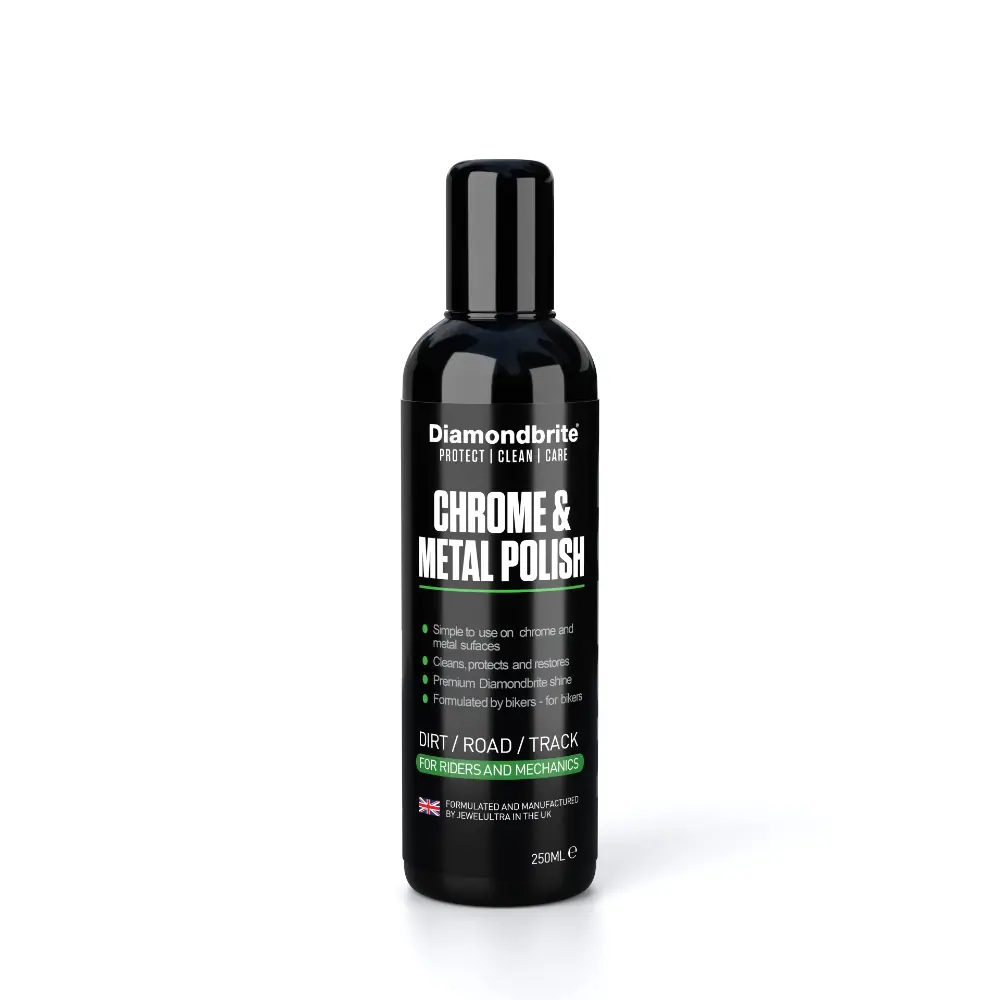
The best motorcycle chrome cleaner is a dedicated chrome polish used after a proper wash, on a soft microfibre cloth, followed by a protective layer. Chrome is a very thin plating over steel, so the aim is to lift grime and tarnish without wearing the plating down. Our Motorcycle Chrome and Metal Polish is a smooth cream made for exactly this job. It cleans, restores and shines chrome, aluminium and a range of other metal surfaces.
TL;DR
- Wash first with plenty of water and a motorcycle-safe shampoo. Never rub dry chrome with a rag or bare hands.
- Polish with a dedicated chrome polish in small sections, then buff with a clean microfibre cloth.
- Chrome itself does not rust. Rust appears on the steel underneath once the plating is breached, so protecting and drying matter as much as polishing.
- Avoid acidic wheel cleaners, household cleaners and gritty abrasives.
- Dry chrome after every wet or salty ride and apply a protective layer between polishes.
Table of Contents
- Why chrome dulls and “rusts”
- What to use, and what to avoid
- How to clean motorcycle chrome, step by step
- Dealing with spots of rust and pitting
- Keeping chrome clean through a UK winter
- Our view on chrome care
- Get the routine in one place
- FAQ
- Sources
Why chrome dulls and “rusts”
Chrome plating is a thin protective layer over steel. According to Devitt, once it breaks down, moisture reaches the metal underneath and rust sets in. Road salt, stone chips, garage condensation and neglected cleaning are the usual causes. Bennetts BikeSocial makes the same point: the chrome is not what rusts, the steel beneath is, wherever a chip or flaw lets water in.
That shapes the whole routine. Cleaning removes the grime that holds moisture against the surface. Polishing restores the shine. Protection keeps water and salt away from the plating. Skip any of the three and the finish suffers.
What to use, and what to avoid
Use products made for motorcycle or car surfaces. Honda UK advises that harsh detergents or chemical solvents can damage metal, paint and plastic. It also says to let the bike cool before washing and to avoid high-pressure water sprays.
Safe choices:
- A pH-neutral motorcycle wash
- A dedicated chrome polish applied with a soft microfibre cloth
- A separate clean microfibre cloth for buffing and drying
- A wax or sealant to finish
Things to keep away from chrome:
- Acidic wheel cleaners, which can pit and dull the surface
- Household cleaners and general-purpose scourers
- Abrasive sponges or anything gritty
- Dry wiping, which rubs debris into the plating
If your bike also has coated wheels, our guide to non-acid wheel cleaners explains why acid is the wrong choice around them too.
How to clean motorcycle chrome, step by step
1. Cool down and rinse
Let the bike cool, ideally in the shade. Rinse loose grit and road film off with a gentle flow of water, not a close-range pressure jet. Grit is what scratches chrome, so remove as much of it as you can before any cloth touches the surface.
2. Wash with a motorcycle shampoo
Use a clean microfibre mitt and plenty of soapy water. Motorcycle.com notes that water acts as a lubricant and lowers the risk of damage, and that wiping chrome dry or with bare hands can create swirls or rub debris into the coating. Our Motorcycle Bike Wash is made for the job, and our eight-step motorcycle wash routine covers the full wash from top to bottom. Rinse thoroughly afterwards: Honda UK warns that leftover detergent can corrode alloy parts.
3. Dry properly
Dry with a fresh microfibre cloth. Water left to evaporate leaves mineral deposits that encourage rust. Pay attention to clamps, trim edges and fork recesses, where water collects and sits.
4. Polish in small sections
Work a small amount of chrome polish onto a microfibre cloth and apply it in small circular motions, one section at a time. Buff off with a clean cloth the same way. This is the step that removes tarnish, fingerprints and light oxidation.
Our Motorcycle Chrome and Metal Polish goes on as a smooth cream, so it spreads evenly and buffs off without a fight. The same cream also suits aluminium parts such as engine casings and trim, so one tub covers most of the bright metal on the bike.
Check what you are polishing first. Jalopnik points out that some parts are plastic chrome, which scratches more easily. A fingernail tap tells them apart: metal chrome feels cooler and sounds metallic. On plastic chrome, use polish and a clean microfibre cloth only.
5. Protect the finish
Finish with a wax or sealant made for motorcycles. Motorcycle.com recommends natural carnauba pastes or synthetic waxes for chrome, and keeping it clean and rust-free before pitting starts. For quick top-ups between full washes, our Motorcycle Waterless Detailer is made for fast touch-ups on a bike that is already fairly clean.
Dealing with spots of rust and pitting
Surface spots appear where the plating has been breached, so treat them early. Wash and dry the area, then work a chrome polish over it gently and buff clean. Bennetts BikeSocial warns that chrome is so thin that aggressive polishing will eventually wear through it, so go gently and avoid anything coarse.
If chrome is flaking or peeling, polish cannot fix it, because the plating itself has failed. Bennetts lists removing the chrome, re-chroming it or buying a new part as the options. Devitt adds a safety point: corrosion on safety-critical components such as brake parts means you should not ride until the bike has been assessed by a qualified mechanic.
Keeping chrome clean through a UK winter
Salt is the biggest threat to a bike used in winter. Devitt advises washing regularly, especially after winter or salted-road rides, applying a protective wax or chrome sealant, and storing the bike in a dry garage under a breathable cover. It also suggests inspecting chrome routinely so surface rust is caught early.
A simple rhythm works well:
- After a wet or salty ride: rinse and dry the chrome the same day.
- Every few weeks in the riding season: wash, dry and polish, then add protection.
- Before storage: a full clean, polish and protective layer.
The same logic applies to the rest of the bike. Our guides on road salt protection and winter wash frequency explain why leaving salt on for days does so much harm. Footman James’s corrosion prevention guide puts it simply: corrosion needs oxygen, water and metal salts, and removing water and salt cuts it sharply. Storing the bike clean and dry, with a dehumidifier in a damp garage, helps.
Our view on chrome care
Most chrome damage we hear about comes from one of two habits: wiping a dusty bike with a dry cloth, or reaching for whatever cleaner is under the sink. Chrome rewards a gentler routine. Wash it, polish it with a product made for the metal, and leave a protective layer on it.
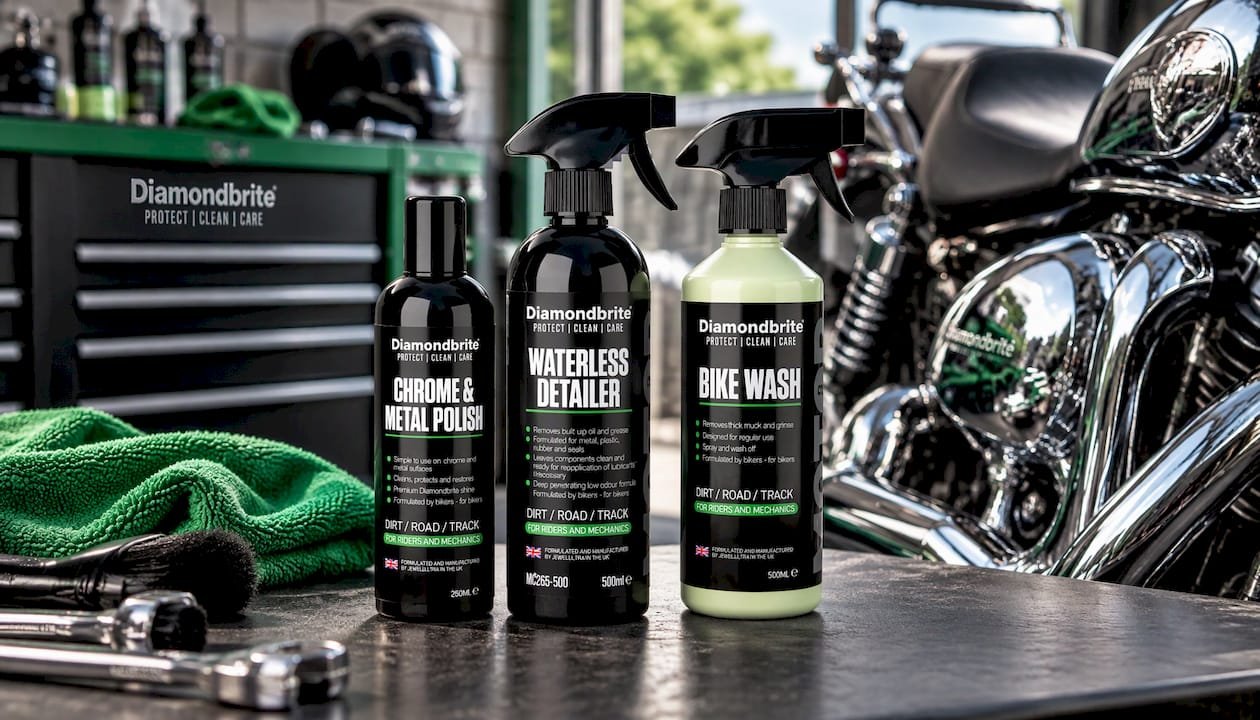
That is why we make chrome care a short routine rather than a project. A motorcycle wash, a chrome and metal polish that applies as a smooth cream, and a waterless detailer for quick touch-ups cover the whole job from first wash to the finishing wipe. Our aim is a routine you will actually keep up through the season.
The polish works hardest when it is part of a habit. Ten minutes after a wet ride does more for your chrome than a long session once the rust has set in.
Will
Get the routine in one place
If you want the whole job covered, start with our Motorcycle Chrome and Metal Polish, which cleans, restores and shines chrome and aluminium. Add the Motorcycle Bike Wash for the wash stage and the Motorcycle Waterless Detailer for quick touch-ups. You can see the whole motorcycle range at Diamondbrite.
If your bike has painted tanks and panels too, our guide to protecting motorcycle paint from UV damage fits neatly alongside this routine.
FAQ
Can I use car chrome cleaner on a motorcycle?
Yes, if it is made for chrome and is not gritty or acidic. Honda UK advises using only products made for motorcycle or car surfaces, because harsh solvents can damage metal, paint and plastic. Bikes also have plastic chrome and alloy parts, so check the label for the surfaces it suits.
How often should I clean motorcycle chrome?
Rinse and dry it after every wet or salty ride, and wash it regularly through winter. A full polish and protective layer every few weeks in the riding season, and again before storage, keeps it in good shape. Frequency depends on how much you ride and how much salt your roads see.
Why is my chrome rusting?
Chrome does not rust itself. Bennetts BikeSocial explains that rust forms on the steel under the plating where a chip or flaw has let moisture in. Washing off salt, drying thoroughly and keeping a protective layer on the chrome slows this down.
Can I use the same polish on aluminium parts?
Our Motorcycle Chrome and Metal Polish is made for chrome and a range of metal surfaces including aluminium. Polish small sections and buff with a clean cloth. Plastic chrome should only get polish and a soft microfibre cloth.
Sources
- Cleaning Your Motorcycle, Honda UK
- How To Protect Motorcycle Chrome, Motorcycle.com
- How to remove rust from chrome motorcycle, Bennetts BikeSocial
- How To Remove Rust from Motorcycle Chrome, Devitt
- 5 Of The Best Tips For Cleaning Chrome On A Motorcycle, Jalopnik
- Workshop Guide to Corrosion Prevention, Footman James