

Interior ceramic coating is a worthwhile investment for most UK car owners, particularly families, pet owners, and anyone who wants noticeably easier cleaning and longer-lasting cabin protection. Diamondbrite’s SiO2-based ceramic chemistry bonds to leather, vinyl, plastics, and fabrics to form a semi-permanent hydrophobic barrier. In real-world UK use, consumer-grade interior coatings typically last 6–12 months, while professional-grade coatings commonly perform for 2–3 years under typical conditions.
The three strongest reasons to coat your interior:
- Stain resistance — spills bead up and lift off rather than penetrating leather or fabric fibres
- UV and fade protection — dashboards, leather seats, and door cards resist the bleaching effect of British summer sun
- Faster, easier cleaning — treated surfaces need far less scrubbing, which also reduces the risk of abrasion damage over time
Table of Contents
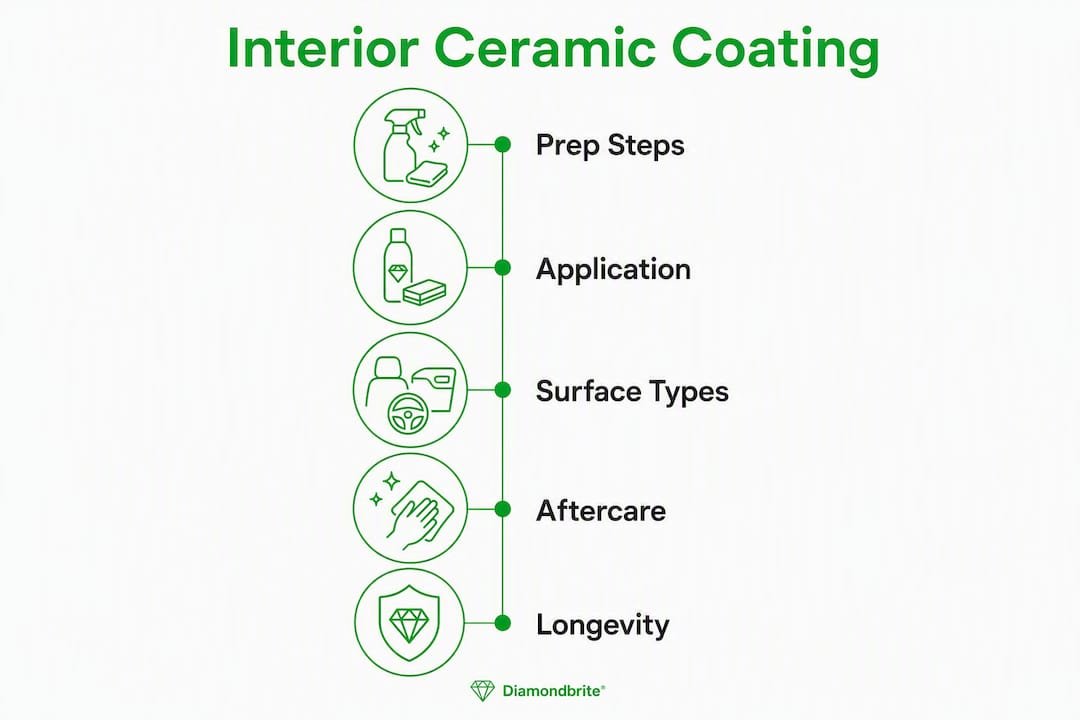
- What does interior ceramic coating actually do for your cabin?
- Which surfaces can you coat, and where should you be careful?
- How to apply interior ceramic coating: prep, steps, and DIY versus professional
- How long does interior ceramic coating last in UK conditions?
- What are the real downsides and safety considerations?
- How do you choose the right interior ceramic coating product?
- Diamondbrite interior products: what to use and how
- Key takeaways
- Why we believe interior protection matters as much as exterior care
- Diamondbrite interior ceramic protection: where to start
- Useful sources and where to find technical datasheets
What does interior ceramic coating actually do for your cabin?
Interior coatings are formulated differently to exterior paint coatings — they prioritise stain resistance, UV protection, and ease of cleaning rather than the hard, glass-like film you get on paintwork. The core mechanism is a semi-permanent oleophobic and hydrophobic barrier: oils, water, and water-borne contaminants cannot easily penetrate the treated surface, so they sit on top until you wipe them away.
In practice, that changes daily life inside the car in several ways:
- Coffee and drink spills bead up on leather and vinyl seats instead of soaking in and leaving a tide mark
- Muddy boot prints on carpets and footwells brush off more completely after drying
- Pet hair and dander release more easily from treated fabric seats during vacuuming
- Sunscreen and body oil transfer from skin to leather is dramatically reduced, which is one of the most common causes of seat discolouration
- Dashboard dust clings less aggressively to treated plastic and soft-touch surfaces
- UV-driven fading on leather and trim slows down, preserving colour and texture
Installers and owners consistently report reduced cleaning time and slower cabin fade as the two most noticeable real-world benefits. Preserved cabin condition also supports resale value, which matters if you plan to sell privately rather than part-exchange.
One honest caveat: coatings do not prevent mechanical tears, hide existing stains, or repair cracked leather. They protect what is already in good condition.
Which surfaces can you coat, and where should you be careful?
Most interior materials have a suitable ceramic product available, but formulation and preparation vary significantly by substrate. Applying the wrong product to the wrong surface, or skipping prep, is the most common reason owners are disappointed.
Leather and semi-aniline leather respond well to ceramic protection. Clean thoroughly with a pH-balanced leather cleaner first, then condition if the hide is dry. The coating adds a light satin finish and reduces oil transfer from skin and clothing. Avoid over-application: a thin, even layer bonds better than a thick one, and excess product can leave a slightly tacky residue. Always test in an inconspicuous area first.
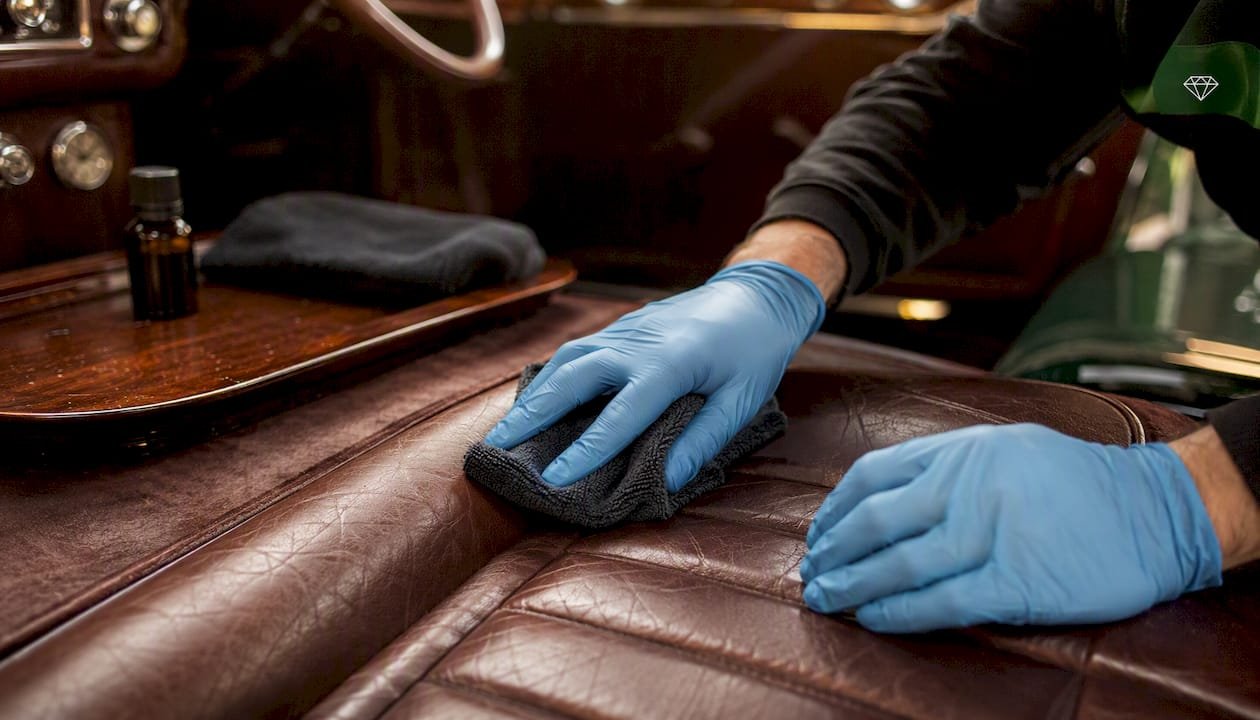
Vinyl and synthetic leather typically accept coatings well and often outlast leather treatments because the substrate is less porous. Longevity on vinyl tends toward the upper end of the range for soft surfaces.
Hard plastics and soft-touch trim benefit from reduced dust adhesion and faster wipe-downs. Take care around electronic ports, USB sockets, and speaker cones: apply product to the applicator rather than spraying directly, and keep coating well away from speaker grilles and membrane edges.

Fabrics and carpets require a textile-specific formulation that coats individual fibres rather than forming a continuous film. Performance is good for spill resistance but does not match the durability you get on leather or plastic. Expect more frequent reapplication on cloth seats.
Interior glass (windscreen, side windows, rear screen) benefits from hydrophobic treatment that makes rain and condensation bead and clear faster. The main caveat is wiper interaction: if your wipers are worn, a hydrophobic coating can cause judder or streaking. Replace worn blades before treating the windscreen.
Pro Tip: Keep ceramic coating away from airbag seam lines, tactile controls, and touchscreens. Airbag covers must deploy without resistance, and a coating film on a capacitive screen can affect sensitivity. Apply to the surrounding trim only, and use minimal product near any safety-critical component.
How to apply interior ceramic coating: prep, steps, and DIY versus professional
Preparation is the most important part of any interior ceramic application. The coating bonds to the substrate, not to dirt, grease, or old dressing. Rushed prep is the single biggest cause of poor results and short lifespan.
Step-by-step application
- Deep clean every surface — use a pH-balanced leather cleaner on seats and door cards, steam or hot-water extraction on carpets and fabric, and a glass polish followed by decontamination on interior glass.
- Degrease and prime — wipe all hard surfaces with an IPA (isopropyl alcohol) solution to remove any residual oils, waxes, or silicone dressings. This step is non-negotiable.
- Apply the coating — use a clean microfibre or foam applicator. Work in small sections with thin, even passes. Less product applied correctly outperforms a heavy coat every time.
- Buff and level — after the manufacturer’s stated flash time (typically 1–3 minutes), buff lightly with a clean microfibre cloth to remove any high spots.
- Cure — allow the recommended curing window before the surface contacts moisture or heavy use. Most interior coatings specify 2–12 hours; check the product datasheet.
Preparation typically consumes the majority of the job time, and inadequate prep reduces bonding and shortens the coating’s life.
DIY versus professional: which is right for you?
| Factor | DIY kit | Professional installation |
|---|---|---|
| Surface compatibility | Leather, vinyl, plastics, fabric | All surfaces including complex trims |
| Durability / claimed lifespan | 6–12 months (consumer grade) | 2–3 years (professional grade) |
| Ease of application | Moderate — strict prep required | Controlled environment, specialist tools |
| Typical UK cost | £20–£60 for a full interior kit | a few hundred pounds depending on vehicle size |
| Maintenance required | Light clean every 2–4 weeks; reapply at 6–12 months | pH-neutral maintenance; refresh at 12–24 months |
DIY kits are effective when prep is correct, but professional application is worth considering for new luxury interiors, complex multi-material trims, or when a warranty is needed for a lease return. A full DIY interior typically takes 3–5 hours including prep; a professional package on a large SUV can take a full day.
Safety and ventilation: always work in a well-ventilated space or with doors open. Wear nitrile gloves and avoid inhaling vapour from solvent-based prep products. Dispose of used applicators and solvent-soaked cloths according to your local council’s hazardous waste guidelines, as many contain VOCs that should not go into general household waste.
How long does interior ceramic coating last in UK conditions?
Consumer-grade interior coatings typically last 6–12 months; professional-grade coatings commonly perform for 2–3 years under typical UK use. Claims of 5–7 years assume near-ideal conditions that most daily drivers will not maintain.
Surface type makes a meaningful difference to how long you can expect protection to hold:
- Dashboard and hard trim: 18–24 months
- Leather seats: 12–18 months
- Vinyl surfaces: 12–24 months
- Cloth seats and carpets: 6–12 months
- Interior glass: 6–12 months
These surface-specific ranges come from EuroLuxe Detailing’s analysis and reflect guidance rather than guarantees. High-contact areas like driver’s seat bolsters and door pull handles will wear faster than low-contact surfaces like the headlining.
Aftercare that actually preserves performance
- Wipe surfaces with a pH-neutral interior cleaner every 2–4 weeks; avoid anything alkaline or solvent-based
- Blot spills immediately rather than rubbing, which can abrade the coating
- Use a UV-protective sunshade when parked in direct sunlight for extended periods
- Avoid silicone-based dressings on treated surfaces, as they can interfere with the coating’s hydrophobic layer
- Consider a maintenance top-up spray every 6 months on high-wear areas
The good news is that ceramic coating performance declines gradually rather than failing suddenly. A professional maintenance detail can often restore hydrophobic behaviour without a full reapplication, which saves both time and money. If you keep to a regular vehicle maintenance schedule, interior coating upkeep fits naturally into your existing routine.
What are the real downsides and safety considerations?
Ceramic coatings are protective, but they are not invulnerable and they are not a substitute for repair or replacement of damaged surfaces.
Practical limitations:
- Coatings offer limited resistance to mechanical damage: sharp objects, keys, and heavy abrasion will still scratch or cut treated leather and vinyl
- High-contact areas (seat bolsters, steering wheel, gear knob) wear the coating faster and need more frequent reapplication
- Some coatings produce a slight change in tactile feel, particularly on soft-touch plastics, which can feel marginally firmer or slightly shinier than the original finish
- Certain existing dressings or conditioners are incompatible with ceramic chemistry; always strip old product before applying
Safety precautions:
- Work in a ventilated space with doors and windows open
- Wear nitrile gloves throughout; avoid skin contact with uncured product
- Never spray directly onto or near airbag covers, speaker cones, or capacitive touchscreens
- Store unused product away from heat sources and out of reach of children
- Check the product’s Safety Data Sheet (SDS) before use for specific handling and disposal instructions
Pro Tip: Before coating any surface, apply a small amount to a hidden area (under a seat bolster, inside a door pocket) and allow it to cure fully. Check for any colour shift, finish change, or adhesion issue before committing to the whole interior.
On lease vehicles, check your agreement before applying any coating. Most lease contracts require the interior to be returned in its original condition, and while a well-maintained coating typically leaves no lasting change, it is worth confirming with your leasing company first.
How do you choose the right interior ceramic coating product?
Start with the substrate. Pick a formulation explicitly designed for the surface you are treating: leather, textile, plastic, or glass. Assuming an exterior paint coating will work on delicate cabin materials is one of the most common and costly mistakes.
Checklist for evaluating any interior ceramic product:
- Substrate compatibility — does the label explicitly state leather, vinyl, fabric, or plastic? Generic “interior” claims are a warning sign
- SiO2 content or polymer blend — SiO2 percentage is often used as a marketing figure; what matters more is cure time and solids content, which indicate real-world durability
- Cure time — shorter is not always better; a longer cure often indicates a more durable cross-linked bond
- Safety Data Sheet availability — any reputable product will have a downloadable SDS; if you cannot find one, look elsewhere
- Manufacturer’s prep recommendations — a product with no prep guidance is unlikely to perform as claimed
- Warranty or recoat policy — professional-grade products often include a recoat window; consumer products rarely do, so factor in reapplication cost
- UK availability and datasheet access — confirm you can obtain the product and its technical documentation without importing
Questions to ask a professional installer:
- Which specific product do you use, and can you share the datasheet?
- Do you offer a maintenance plan or top-up service?
- What prep process do you follow, and how long does it take?
When reading a datasheet, focus on cure time, solids content, and the SDS rather than the headline SiO2 percentage. A product claiming 90% SiO2 with no cure time listed tells you very little about how it will actually perform.
Diamondbrite interior products: what to use and how
For most UK owners, the practical starting point is a Diamondbrite interior ceramic bundle, which covers the primary cabin surfaces without requiring specialist equipment or professional training.
Diamondbrite’s interior range is designed around substrate-specific chemistry, which means each product is tuned to the surface it protects rather than being a one-size-fits-all spray:
- Ceramic leather protectant — for leather and semi-aniline seats and door cards; apply after cleaning with a pH-balanced cleaner, buff to a satin finish, and allow to cure before use
- Interior SiO2 spray — for hard plastics, soft-touch trim, and vinyl surfaces; apply with a microfibre applicator in thin passes, working panel by panel
- Fabric and textile treatment — for cloth seats, carpets, and headlinings; spray evenly, allow to penetrate the fibres, and blot any excess before curing
All Diamondbrite products come with application guidance, and technical datasheets are available on diamondbrite.shop for owners who want to check SDS information or substrate compatibility before purchasing.
Pro Tip: Schedule your interior ceramic application before summer. UV exposure is the primary driver of leather fade and dashboard cracking in UK cars, and treating surfaces in spring means the coating is fully cured and performing before the strongest sun arrives. Pairing interior treatment with an exterior ceramic session on the same day also reduces prep time, since the vehicle is already clean and decontaminated.
Key takeaways
Interior ceramic coating is most effective when applied to clean, undamaged surfaces with the correct substrate-specific formulation and maintained with pH-neutral products.
| Point | Details |
|---|---|
| Longevity by grade | Consumer-grade coatings last 6–12 months; professional-grade lasts 2–3 years in typical UK conditions. |
| Prioritise these surfaces | Leather seats, dashboard trim, and vinyl benefit most; cloth seats need more frequent reapplication. |
| DIY or professional | DIY kits cost a moderate amount and suit most owners; choose professional installation for luxury or lease vehicles. |
| Maintenance cadence | Clean with a pH-neutral product every 2–4 weeks and consider a top-up spray every 6 months on high-wear areas. |
| Diamondbrite recommendation | Diamondbrite’s substrate-specific interior range is available in the UK with datasheets and application guidance at diamondbrite.shop. |
Why we believe interior protection matters as much as exterior care
The detailing world has spent decades obsessing over paintwork, and rightly so. But the interior is where you actually spend your time, and it is the part of the car that degrades fastest under daily use. At Diamondbrite, we developed our interior ceramic range because we kept hearing from owners who had invested in exterior protection but were watching their leather crack and their dashboards fade within a few years.
Our formulations are developed in our Loughborough laboratory, and every product in the interior range goes through substrate-specific testing before it reaches the shelf. We are not interested in selling a single spray that claims to do everything; we are interested in products that actually work on the surface you are treating. If you have a complex interior or are unsure which product suits your vehicle, our team is happy to advise, and full datasheets are available on the website for every product we make.
Diamondbrite interior ceramic protection: where to start
Diamondbrite’s interior ceramic range gives you professional-grade cabin protection without the professional price tag. Whether you are protecting a family SUV from the inevitable coffee spills and muddy boots, or preserving the leather in a vehicle you plan to sell, the substrate-specific formulations do the work that generic sprays cannot.
The range covers leather, vinyl, hard plastics, fabrics, and interior glass, with clear application instructions and SDS documentation included. Bundles are available for owners who want to treat the full cabin in one session, and individual products suit those targeting specific surfaces.
- Substrate-specific chemistry for leather, vinyl, plastic, and fabric
- UK-formulated and tested, with datasheets available before you buy
- Suitable for DIY application with standard microfibre applicators
- Pairs naturally with Diamondbrite’s exterior ceramic range for a full vehicle treatment
Browse the full interior range and pick up your starter bundle at diamondbrite.shop today.
Useful sources and where to find technical datasheets
The sources below were used to inform this article. Before applying any ceramic product, check the manufacturer’s SDS and datasheet for your specific substrate.
- How long does ceramic coating really last in the UK? — Tidyride
- Ceramic coating for car interiors: leather, fabric, glass and trim — EuroLuxe Detailing
- Is ceramic coating good for car interiors? — Steel City Auto Spa
- Interior ceramic coating guide — JR Automotive
- Dashboard ceramic coatings: protect electronics and finish — Carology
- The truth about car ceramic coatings — On Track Detailing
- Is ceramic coating worth it? An honest guide for UK car owners — ED AutoCare
- Diamondbrite interior ceramic products, datasheets and bundles
For SDS documents and full technical datasheets on any Diamondbrite interior product, visit diamondbrite.shop and navigate to the individual product page.