

Yes, a hydrophobic car wash is worth using: it makes routine cleaning easier and, when paired with sensible technique, helps reduce wash-induced abrasion on your paintwork. The main payoff you will notice straight away is strong beading or sheeting, so water and grime lift off rather than cling on. Some car care brands offer ceramic-infused shampoos and glazes that fit neatly into this kind of routine.
TL;DR:
- Hydrophobic coatings improve water beading and sheeting, which helps water and dirt lift off more easily and decreases drying time.
- Ceramic coatings offer the longest-lasting protection, but can be masked by repeated shampoo layering, making it hard to gauge actual performance.
- Using a ceramic-enhanced shampoo weekly and reapplying spray sealants or boosters every three to six months maintains water repellency effectively for most owners.
- Proper washing routines, including pre-washing, two-bucket method, and gentle drying, protect hydrophobic layers and prevent common issues like streaking or residue buildup.
- Water-beading persists longer in cold weather, and patchy beading often results from shampoo residue, not coating failure, which can be fixed with decontamination and reapplication.
Table of Contents
- What ‘hydrophobic’ means for car surfaces: beading versus sheeting
- How hydrophobic products and coatings work
- Types of hydrophobic car wash products and when to use each
- Step-by-step hydrophobic-friendly wash routine
- Maintenance, longevity and knowing when to reapply
- Common problems and troubleshooting
- Diamondbrite guidance and owner experiences
- Comparing popular hydrophobic car wash products by price and type
- Choosing the best hydrophobic product for your vehicle and routine
- Environmental and safety considerations when washing your car
- When I reach for a booster versus a full coating
- Recommended Diamondbrite products and where to buy
- Sources
- FAQ
What ‘hydrophobic’ means for car surfaces: beading versus sheeting
Hydrophobic simply means water-repelling. On a treated bonnet, water pulls itself into tight, rounded beads rather than spreading out, because the surface energy is too low for water to cling flat. A hydrophilic surface does the opposite: think of an untreated windscreen in the rain, where water spreads into a thin sheet and drags dirt across the glass as it moves.
Sheeting is a related but distinct behaviour, usually seen on stronger coatings. Instead of forming static beads, water gathers into sheets that slide off the panel under their own weight, taking much of the loose dirt with it. This matters for drying: a car that sheets well dries faster and with fewer water spots, because less water is left sitting in isolated droplets that evaporate and leave mineral deposits behind.
There are trade-offs worth knowing before you judge a finish by its beading alone.
- Beading looks dramatic but can trap water in wheel arches and door shuts if you do not dry those areas properly.
- Sheeting is more practical day to day, since it clears water faster across large flat panels.
- Neither behaviour is a coating guarantee, since dirt, wax build-up and temperature can all change how water behaves on the same panel.
How hydrophobic products and coatings work
Two broad approaches sit behind most hydrophobic products. Wash-on polymer protectants, found in enhanced shampoos and quick detailers, deposit a thin, temporary film with each application, refreshing water repellency but wearing away within washes. Chemically bonded ceramic coatings work differently: they cure into the clear coat and form a harder, more durable layer that resists washing away rather than sitting on top waiting to be stripped.
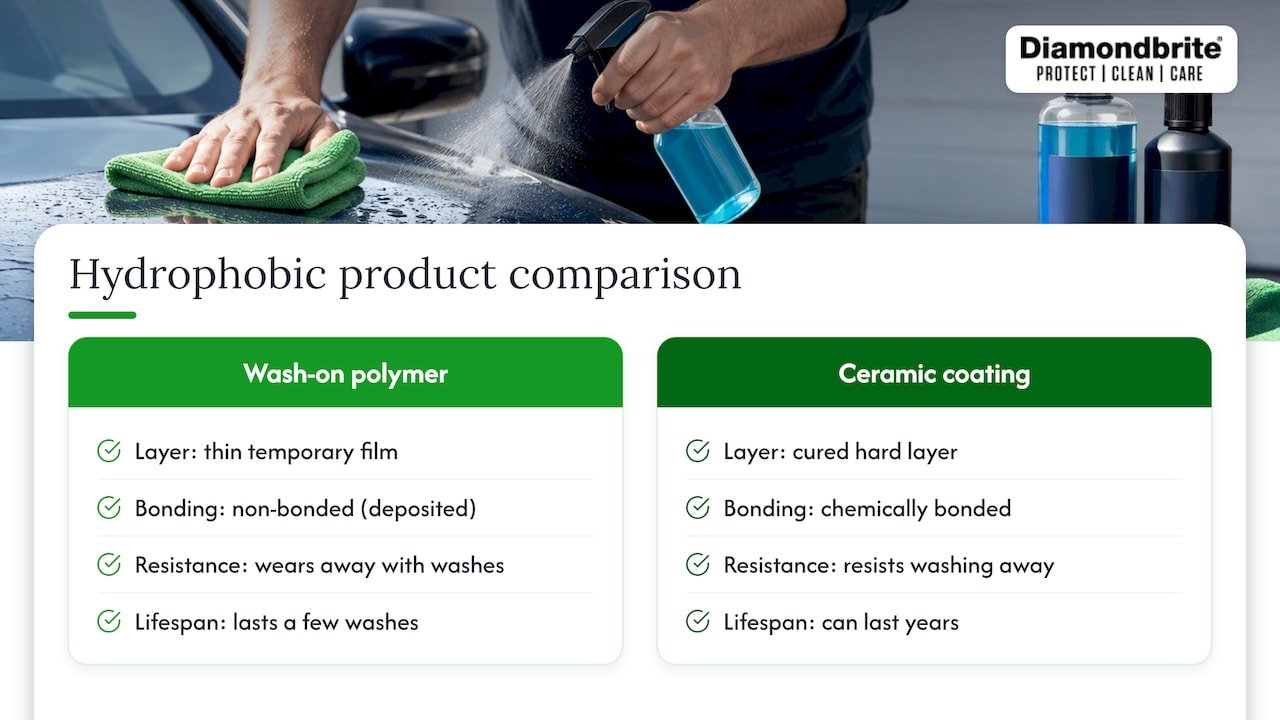
Both rely on the same underlying principle, low surface energy. A treated surface has fewer sites for water molecules to bond to, so water pulls itself into beads to minimise contact with the paint. Microscopic texture plays a part too: a smoother, filled surface gives water less to grip, which is part of why washing away embedded contamination before applying any product matters so much.
Lifespan varies enormously by product type and how the car is cared for. A quick detailer spray might last a couple of washes, while a professionally applied ceramic coating can last years, though frequency of washing, exposure to road salt and harsh chemicals, and how the car is dried all shorten or extend that window. Paint protection more broadly reduces cleaning friction, meaning dirt has less grip and less scrubbing is needed to shift it, which is one of the reasons detailing guidance links slicker surfaces to lower swirl risk.
Types of hydrophobic car wash products and when to use each
Not every hydrophobic product does the same job, and picking the wrong one for the wrong stage of your routine wastes money and effort.
- Ceramic-enhanced shampoos clean and top up water repellency in one step, ideal for weekly washes on a car with no separate coating.
- Rinse-on sealants are applied after washing and rinsed off, leaving a thin protective film that typically lasts a few weeks.
- Spray sealants and quick detailers are the fastest option, sprayed and wiped between washes to refresh beading without a full wash cycle.
- Paste waxes with hydrophobic additives give a traditional look and feel with a shorter lifespan than ceramic products, usually a matter of weeks.
- Professionally applied ceramic coatings offer the longest-lasting protection and the highest upfront cost, best suited to owners planning to keep a car for years.
One caution worth flagging: layering an enhanced shampoo repeatedly on top of a cured ceramic coating can build up a thin film that masks how the underlying coating is actually performing. If beading looks patchy or inconsistent, that stacked residue, rather than coating failure, is often the real cause.
Step-by-step hydrophobic-friendly wash routine
A good routine protects the hydrophobic layer you already have while cleaning effectively, and it does not need to be complicated.
- Pre-wash with snow foam or a pre-wash spray to soften and loosen dirt before anything touches the paint, cutting down on the physical contact that causes swirls.
- Rinse thoroughly from the roof down, clearing as much loosened grime as possible before the main wash begins.
- Wash using the two-bucket method: one bucket of shampoo solution, one of clean rinse water, with a grit guard in each to trap grit before it reaches your mitt.
- Work in sections, rinsing your mitt in the clean bucket between each panel, and wash from the top of the car downward since lower panels carry the most contamination.
- Choose a pH-neutral car shampoo, never washing-up liquid, since household detergents strip hydrophobic layers rather than preserve them; Which? testing found many effective shampoos need nothing more than a bucket and mitt, with no pressure washer required.
- Rinse the whole car again, then dry with a plush microfibre towel or a dedicated dryer, working with the water’s natural sheeting rather than dragging it across panels.
- Finish with a quick spray sealant if beading looks tired, giving a fast boost without a full reapplication.
Pro Tip: Keep a dedicated wheel bucket separate from your paintwork buckets: brake dust is abrasive enough to scratch paint if the same mitt touches both.
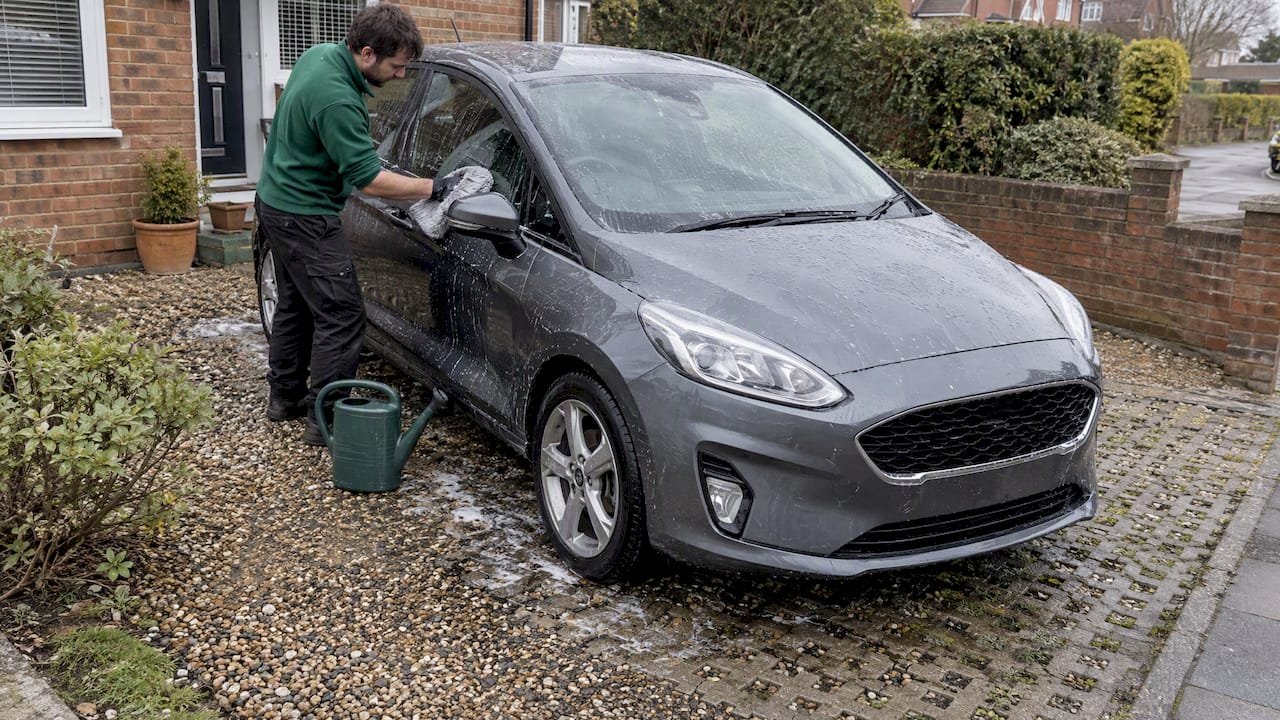
If you are washing under a hosepipe ban or simply have limited water access, you do not need to skip the wash altogether. Carwow’s guidance on washing during restrictions recommends a watering can for rinsing, pre-wash sprays to loosen dirt without a hose, and washing in smaller sections to cut total water use while still protecting the finish.
Maintenance, longevity and knowing when to reapply
Lifespan depends heavily on product type and how the car lives day to day. A wash-in ceramic shampoo tops up protection every time you use it, so its effect is really continuous rather than a one-off application with a countdown. Sealants and sprays tend to last weeks, waxes similarly, and professional ceramic coatings can run for years, though frequency of washing, road grime, harsh chemicals and abrasive cleaning all shorten that window.
A simple field test tells you where you stand: pour a cupful of water onto a clean panel and watch what happens. Tight, mobile beads mean protection is still active; water that spreads and clings in a flat sheet suggests it is time to reapply.
Reported beading behaviour varies with the weather. Owners frequently report that beads persist unusually long in cold conditions, which is normal seasonal behaviour rather than a sign the product has failed.
- Weekly washing with a ceramic-enhanced shampoo keeps a light protective layer topped up continuously.
- A booster application every three to six months suits owners relying on sealants or sprays rather than a bonded coating.
- Professional re-coating is worth considering once beading has visibly weakened across most panels despite regular boosting.
Common problems and troubleshooting
Most hydrophobic finish complaints trace back to one of three causes, and none of them need drastic correction.
- Persistent beading in cold weather is usually normal, not a fault, since lower temperatures slow evaporation and let beads sit longer on the surface.
- White mineral water spots come from hard water drying on the paint rather than being wiped away; a dedicated water spot remover or a mild vinegar-diluted solution usually lifts them, with polishing reserved for spots that have etched in.
- Patchy or inconsistent beading often points to residue build-up from repeated enhanced-shampoo layering rather than coating failure, so decontaminate with a clay bar, then reapply a single fresh layer of product rather than stacking more on top.
Streaking during drying is frequently just water evaporating unevenly rather than being lifted off. Switching to a proper drying towel and following the panel’s natural sheeting direction, rather than wiping against it, solves most of it.
Diamondbrite guidance and owner experiences
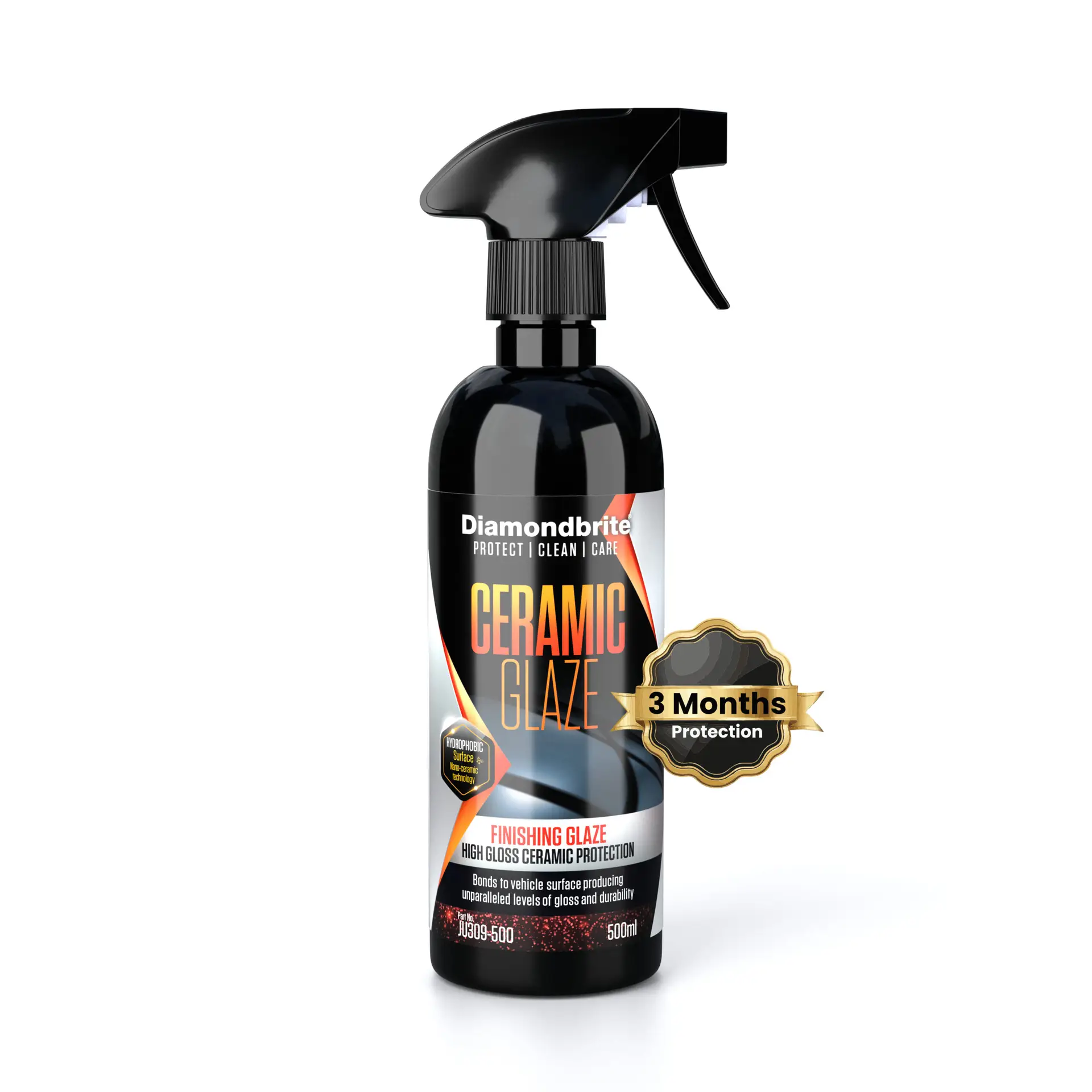
Certain ceramic shampoo products are designed for regular use to maintain beading between deeper treatments, while ceramic glazes can act as periodic boosters for cars that already have a base layer of protection. The advice mirrors what keen owners already practise, a proper pre-wash stage to lift grime before contact, the two-bucket method to keep grit out of the mitt, and a booster reapplication every few months rather than waiting for beading to disappear completely. None of this requires professional equipment, just consistency and the right products for each stage of the routine.
Comparing popular hydrophobic car wash products by price and type
Prices and formats vary widely across the category, and the difference usually reflects longevity rather than cleaning power. Entry-level spray sealants and quick detailers sit at the cheapest end, offering a fast top-up but the shortest lifespan. Ceramic-infused shampoos can cost a little more per bottle than standard car shampoo but replace your normal wash product entirely, so there is no separate step to add. Rinse-on sealants and hydrophobic waxes occupy the middle ground, a single application lasting several weeks. Professionally applied ceramic coatings sit at the top of the price scale, reflecting both the labour involved and the multi-year durability on offer. For most owners doing their own maintenance, the practical choice is a ceramic shampoo for weekly use and a glaze or sealant booster every few months, rather than jumping straight to a full professional coating.
Choosing the best hydrophobic product for your vehicle and routine
The right product depends less on brand and more on how you use your car and how much time you want to spend on it. A daily driver parked outdoors benefits most from a ceramic shampoo used every wash, since it maintains a light protective film without adding an extra step. A car that is garaged and driven occasionally can justify a longer-lasting sealant or wax, since the finish is exposed to fewer contaminants between applications. Motorcycles and leisure vehicles, which often sit unused for longer stretches, suit the same sealant-and-boost approach, protecting the finish through storage periods rather than relying on frequent washing to refresh it. Owners planning to keep a vehicle for several years and wanting the least frequent maintenance are the ones who get the clearest value from a professional ceramic coating, since the upfront cost is spread over a much longer protective life. Matching the product to how often you realistically wash the car matters more than chasing the strongest claimed durability figure on the label.
Environmental and safety considerations when washing your car
Where the water from your wash ends up matters as much as what you use to clean the car. Washing on a driveway or a permeable surface, rather than directly over a road drain, keeps shampoo and rinsed-off contaminants out of local waterways, since many drains run straight to rivers rather than through treatment. Choosing a biodegradable, pH-neutral shampoo reduces the chemical load in that runoff, and it is gentler on both your paintwork and any protective coating already on the car. During water restrictions, low-water techniques such as watering-can rinses and sectional washing, covered in Carwow’s hosepipe ban guidance, also cut down on chemical and water waste together. Gloves are worth wearing with stronger wheel cleaners or decontamination products, and it is always worth checking a product label before mixing anything, since combining unrelated cleaning chemicals can produce fumes you do not want in an enclosed space.
When I reach for a booster versus a full coating
For a daily driver, I stick with a ceramic shampoo and a spray booster every few months, since the upkeep is minimal and the results hold up well enough for everyday use. A show car or a vehicle you are keeping long term justifies the cost of a professional coating, since the durability pays for itself over years rather than months. For most readers washing their own car at weekends, a good shampoo routine plus periodic boosting is the sensible, low-effort choice.
— Will
Recommended Diamondbrite products and where to buy
If the routine above sounds like more decision-making than you fancy, Diamondbrite’s range is built to slot straight into it without guesswork over which bottle does what.
- Weekly washing: Ceramic shampoo can replace your normal car shampoo and top up water repellency with every wash.
- Periodic boosting: Ceramic glaze products can refresh beading every few months for cars without a full professional coating.
- Longer-term protection: for wheels, glass or a full ceramic coating enquiry, browse the wider Automotive Ceramic and Paintwork ranges to find the right starting point for your car.
Whichever stage you are at, matching the product to how often you actually wash the car will get you further than chasing the highest number on a label.
Sources
- What is car paint protection and is it worth it? | Carwow
- Best car wash kit 2026: car shampoos and wheel cleaners tested – Which?
- hydrophobic beading – PistonHeads forum
FAQ
How long does hydrophobic coating last?
It depends entirely on the product: spray sealants and quick detailers last a few washes, waxes and rinse-on sealants last several weeks, and professionally applied ceramic coatings can last years. Washing frequency, road contaminants and how the car is dried all affect how quickly protection fades.
What car wash shampoo should I use for a ceramic coating?
Use a pH-neutral, purpose-built car shampoo rather than washing-up liquid, since Which? testing found household detergents strip protective coatings while dedicated shampoos preserve them. A ceramic-infused shampoo, such as Diamondbrite’s Ceramic Shampoo, also tops up water repellency during the same wash.
What is the best shampoo for cars with ceramic coating?
A ceramic-enhanced shampoo designed to maintain an existing coating, rather than a generic gloss shampoo, keeps beading topped up without stripping the underlying layer. Diamondbrite’s Ceramic Shampoo is formulated for exactly this kind of maintenance wash.
What do owners say about ceramic wash and protect shampoos?
Owner discussion around ceramic-enhanced wash shampoos generally centres on how long beading holds between washes and how it changes with the seasons. Forum reports note that beading can persist noticeably longer in cold weather, which reflects normal seasonal behaviour rather than the product failing.
Why do water beads sometimes stay on my car for days?
Persistent beading, especially in colder weather, is a normal effect of slower evaporation rather than a sign of a problem. If beading looks patchy rather than uniformly present, a build-up of layered shampoo residue is a more likely cause than coating failure, and a clay decontamination followed by a fresh application usually resolves it.