

A glaze hides swirl marks by filling them. It does not remove them. Fillers, levelling agents and fine oils settle into the tiny scratches in your clear coat, so light catches the surface evenly and the paint looks deeper and wetter. According to Parkers, glaze fills and hides fine scratches and swirls rather than taking clear coat away. That makes it a quick, low-risk way to improve a dark car before a weekend out, as long as you know what it can and cannot do.
TL;DR
- Glaze is a temporary cosmetic filler. It masks light swirls and fine scratches but cannot fix deep scratches.
- Prepare the paint first: wash, clay and, if it needs it, polish. Then glaze, then protect.
- On its own a glaze may last only several weeks, so seal the result with a protective layer on top.
- Prevent new swirls with a better wash routine, or you will be glazing again in a month.
- Leave 24 hours before the next wash so the layers can settle.
Table of Contents
- What a glaze actually does to swirl marks
- Prepare the paint before you glaze
- How to apply glaze for the best finish
- How long does it last?
- What to put on top of a glaze
- Stop making new swirls
- Our view on glaze and ceramic care
- Build your routine with Diamondbrite
- FAQ
- Sources
What a glaze actually does to swirl marks
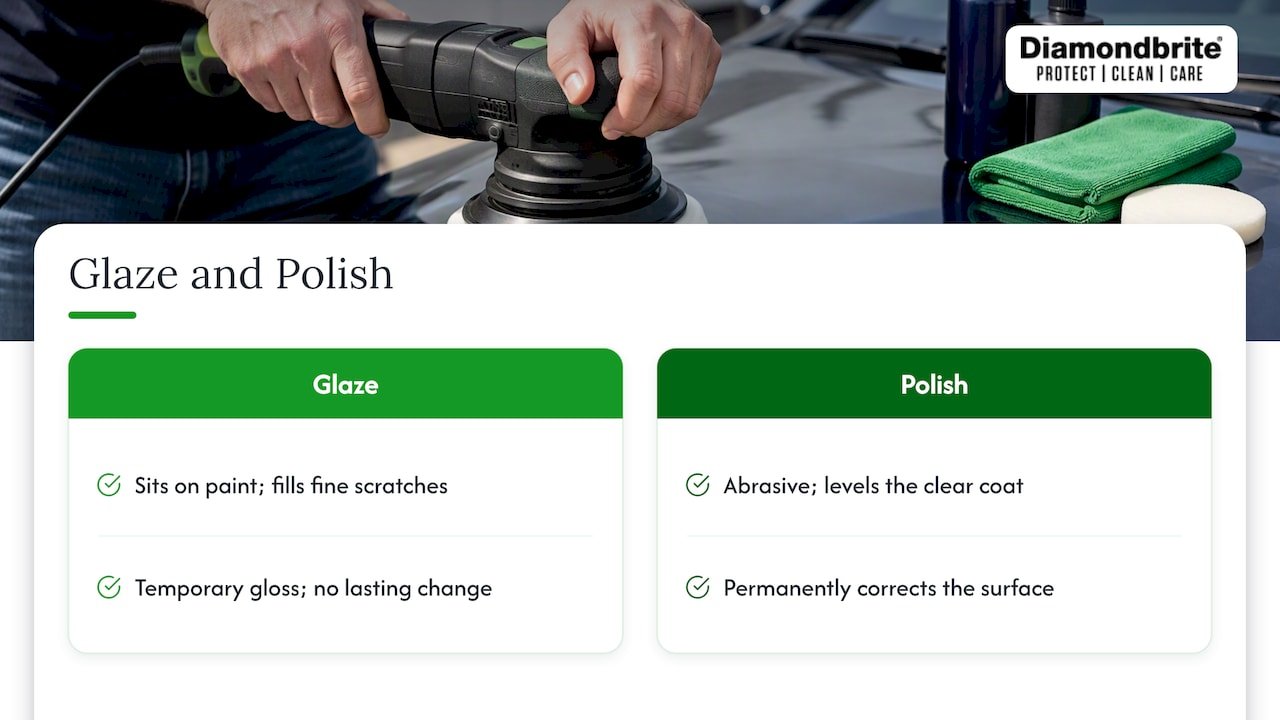
Swirl marks are a web of very fine scratches in the clear coat. They show most on black and other dark colours, especially under direct sun or a torch. A glaze contains micro-refined oils, fillers and levelling agents. They flow into those scratches and fill them, which is why the paint looks smoother and glossier straight away.
Polish works differently. It is an abrasive that permanently levels the surface, which is why it is the real fix. If you want the full comparison, we cover it in when to use glaze vs polish. Glaze sits on top of the paint and makes no lasting change to it.
What it can hide, and what it can’t
Glazes suit superficial defects: light swirls, hazing and fine marks. They will not disguise a scratch that has cut through the clear coat. A simple check is the fingernail test. If your nail catches in the scratch, a glaze will not hide it. That needs a different repair, and a bodyshop for anything down to primer.
Glaze also earns its place when the clear coat is thin and you would rather not take more off it. It is a gentle way to improve gloss in that case. Our guide to how to remove swirl marks from your paint explains when correction is the better route.
Prepare the paint before you glaze
A glaze can only fill what it can reach. Dirt and old wax stop it settling into the scratches and make it streak. Parkers describes the usual order: wash, clay and polish, then glaze, then wax or sealant. Polishing can be skipped when the paint is already in good condition.
In practice:
- Wash safely. Rinse off loose grit first, then wash with a quality shampoo. Our two bucket wash method keeps dirt away from the mitt.
- Do the wheels last. Wheel grit is the worst thing to drag over paint, so follow a sensible car wash sequence.
- Clay the paint if it feels rough after washing, so the glaze sits on bare, clean clear coat.
- Polish only if needed. If swirls are heavy, correct them first and glaze afterwards. The reasoning is in glaze after polish.
- Dry completely and work in the shade on a cool panel.
How to apply glaze for the best finish
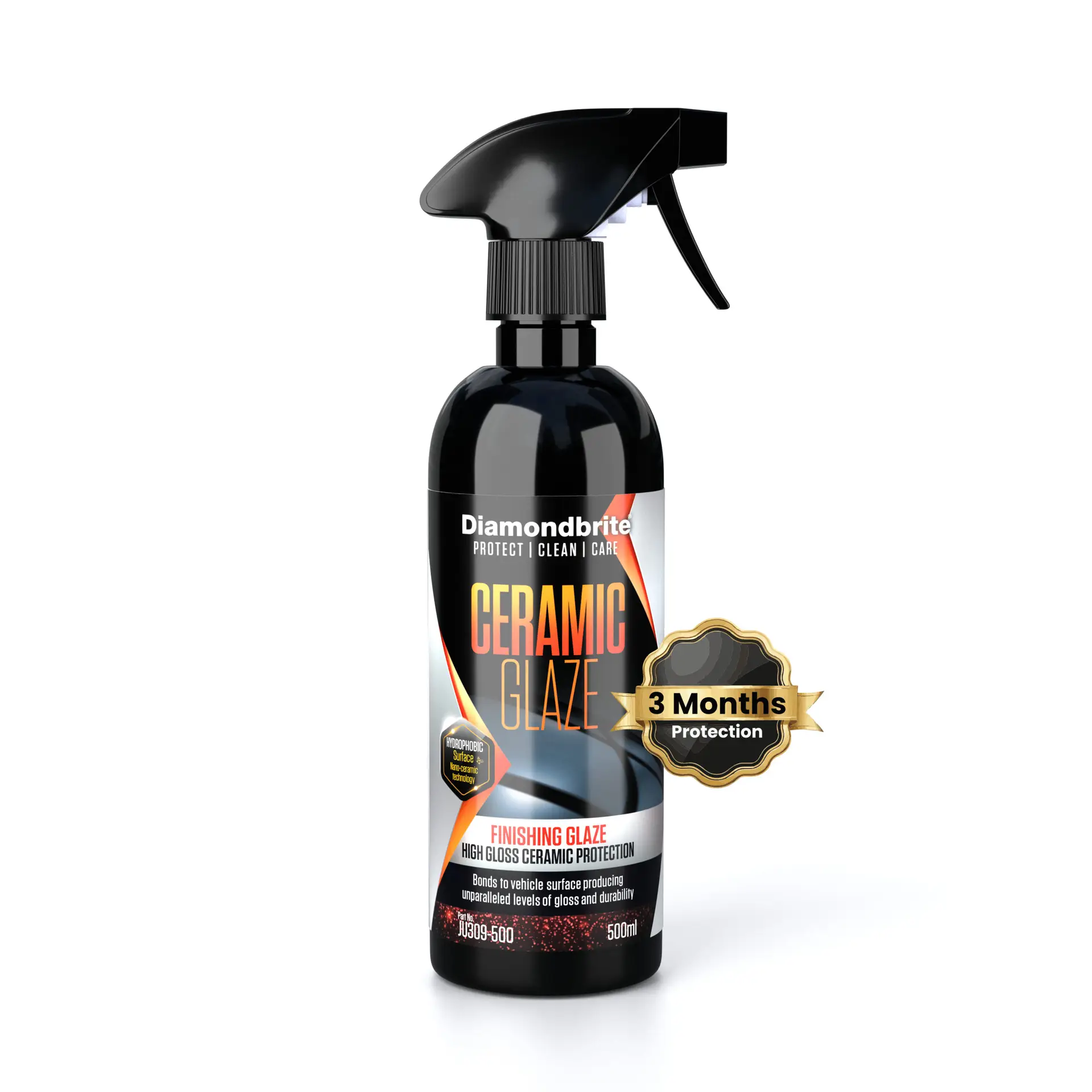
Work one panel or section at a time. You can apply by hand or with a dual-action polisher on a soft finishing pad.
By hand
Put a small amount on a foam applicator pad. Spread it thinly over a section about the size of a car bonnet quarter, working in small overlapping circles. Keep going until the product begins to haze, then wipe the residue off with a clean, dry microfibre towel. Flip the towel often.
With a dual-action machine
A few small dots on a finishing pad is plenty. Spread the product over the panel with the machine off, then run it on its lowest speed setting with overlapping passes until the glaze starts to haze. Wipe off with a fresh microfibre.
The common mistake is using too much. A thick layer is harder to buff off, leaves smears and does not hide any more swirls than a thin one. Check the panel from a couple of angles under good light, and always follow the directions on your product label.
How long does it last?
Not long. Parkers notes that on its own a glaze may last several weeks at most, and that exposure to the elements can remove it. Rain, strong shampoos and a lot of motorway miles all shorten its life. Wax over the top helps to prolong the gloss and shine.
That is why glaze works best as a finishing step, not as a standalone plan. For a UK car that sees road salt and drizzle for half the year, a protective layer on top matters even more. Our winter paint protection guide covers the colder months.
What to put on top of a glaze
Glaze is not protection. It is there for looks. Waxes usually protect better, and wax can generally be applied over a glaze. If you use a sealant, apply it after polishing and before waxing, and check the product instructions, because not every sealant is designed to go over a glaze.
If your car already wears a ceramic coating, do not assume a glaze belongs on it. Read our notes on polishing over a ceramic coating and wax over ceramic first.
After glazing and sealing, avoid washing the car for 24 hours so the layers can settle properly.
Stop making new swirls
Swirls come from dragging grit across the paint during washing, drying and wiping. Glazing over swirls you keep creating is a treadmill. Three habits break the cycle:
- Pre-wash first. Loosening dirt before a mitt touches it makes the biggest difference. See our 5 to 10 minute pre wash routine.
- Use two buckets and a clean mitt, with wheels kept separate.
- Dry gently. Blotting rather than dragging a towel is covered in preventing swirl marks without polishing.
Some owners also ask whether glaze can double as a drying aid. We look at that in glaze as a drying aid.
Our view on glaze and ceramic care
We think the best finish comes from a short, sensible routine rather than one miracle bottle. Glaze has a clear job: it improves gloss and softens the look of light swirls quickly, with very little risk to the paint.
Our ceramic-infused range is designed to make that routine easier. A ceramic glaze can be your finishing touch, and a ceramic shampoo helps keep the wash gentle, so the finish you have worked on looks good for longer. We design our products to be easy to use for everyday motorists as well as enthusiasts, and many customers tell us in their reviews that they notice a difference in shine.
Our advice is simple: wash carefully, glaze thinly, protect the result and top it up as needed. That is the cost-effective way to keep paint looking its best.
Will
Build your routine with Diamondbrite
If you want a glaze step that fits into an easy routine, start with our Ceramic Glaze and pair it with a ceramic shampoo. Read about what ceramic shampoo does for your paintwork or choose a pH neutral shampoo for coated cars.
Browse the full range for cars, motorcycles, leisure vehicles and boats at the Diamondbrite shop.
FAQ
Can a glaze hide all swirl marks?
No. It hides light swirls and fine scratches by filling them. Deeper scratches that have gone through the clear coat will still show, and they need polishing or a repair instead.
What is the difference between glaze and wax?
Glaze is there to fill and add gloss. Wax is a sacrificial protective layer. Waxes usually protect better than glazes, so most people apply wax over the glaze to lock in the look.
Why does car paint get swirls?
Swirls are fine scratches caused by grit being dragged across the paint when you wash, dry or wipe the car. Pre-rinsing, using two buckets and drying gently all reduce them.
Should I polish before I glaze?
If the swirls are noticeable, yes: polish first to level the paint, then glaze for extra depth. If the paint is already in good condition, you can often skip polishing and go straight from wash and clay to glaze.