
Short answer: not really. A conventional car glaze is made to be applied to clean, dry paint, left to haze and buffed off. A drying aid is a light lubricating spray used on wet paint as you dry it. They do different jobs, and swapping one for the other usually gives you streaks, smears or wasted product. This guide explains the difference, what a glaze is good for, and how to get a slick, spot-free dry.
(If you landed here looking for pottery or air-dry clay glaze, this page is about car paint only.)
TL;DR
- A traditional car glaze is a finishing film for clean, dry paint. It is not a spray for wet panels.
- A drying aid adds lubrication while you dry, which helps your towel glide and lowers the risk of marring.
- Glaze can hide fine swirls and boost gloss, but on its own it may last only weeks.
- Use the glaze after washing and drying, then top it with wax if you want the gloss to last longer.
- Check the label of any ceramic-infused product before using it on wet paint. Follow the maker’s directions.
Table of Contents
- What a glaze actually is
- What a drying aid does
- Why glaze and wet paint don’t mix
- What to do instead: a sensible drying routine
- Avoiding water spots and scratches
- Glaze, wax and ceramic: how they layer
- Motorcycles and leisure vehicles
- Our perspective
- Build your routine with Diamondbrite
- FAQ
- Sources
What a glaze actually is
In detailing, a glaze is a thin finishing layer designed to fill small imperfections, scratches and swirl marks so the paint looks deeper and glossier. Parkers describes glaze as filling small flaws without removing any clear coat, and notes that used alone it may last several weeks at most, with wax helping to prolong the gloss.
That last point matters. Glaze improves how paint looks. It does not correct the defects underneath, and it is not protection by itself. If you want to understand where it sits next to polishing, our guide on when to use glaze versus polish covers it in detail.
The word “glaze” is also used loosely. Some products sold under the name are oil-and-filler finishing films, while others are closer to ceramic-infused gloss enhancers. So the label on your bottle is the real answer, not the word on the front.
What a drying aid does
A drying aid is a spray you mist on a wet panel before the towel touches it. It does three things:
- Lubricates the surface, so the towel glides instead of dragging any leftover grit across the paint.
- Helps water sheet and lift, so you need fewer passes.
- Adds a little gloss or short-term protection, depending on the formula.
It is designed to be diluted by the water on the panel, wiped once and left clean. A glaze is the opposite: it is meant to be spread on a clean surface, worked in, and removed in a controlled way once it hazes.
Why glaze and wet paint don’t mix
The usual glaze method is simple. According to DetailingWiki’s application guide, you apply it to a clean, dry surface with an applicator, let it haze, then buff off with a microfibre towel. Every step assumes dry paint.
Put that on a wet car and the following can happen:
- The film is diluted unevenly, so you get patchy gloss.
- It smears rather than hazes, which makes buffing harder.
- You use far more product than you need, and that costs money.
- You can end up with residue in panel gaps, trim and around badges.
So if you are asking whether you can pour a glaze into your drying routine, the honest answer is that you would be using it against its design.
What to do instead: a sensible drying routine
Here is a routine that works whatever products you own.
1. Wash in the right order
Get wheels done first so brake dust and grit never reach the paint. Our wash sequence guide explains why order matters. Use a lubricating shampoo, and our ceramic shampoo overview explains what a ceramic-infused formula adds.
2. Rinse thoroughly
Leave no foam or grit behind. Anything left on the panel is what scratches during drying.
3. Remove most of the water without touching
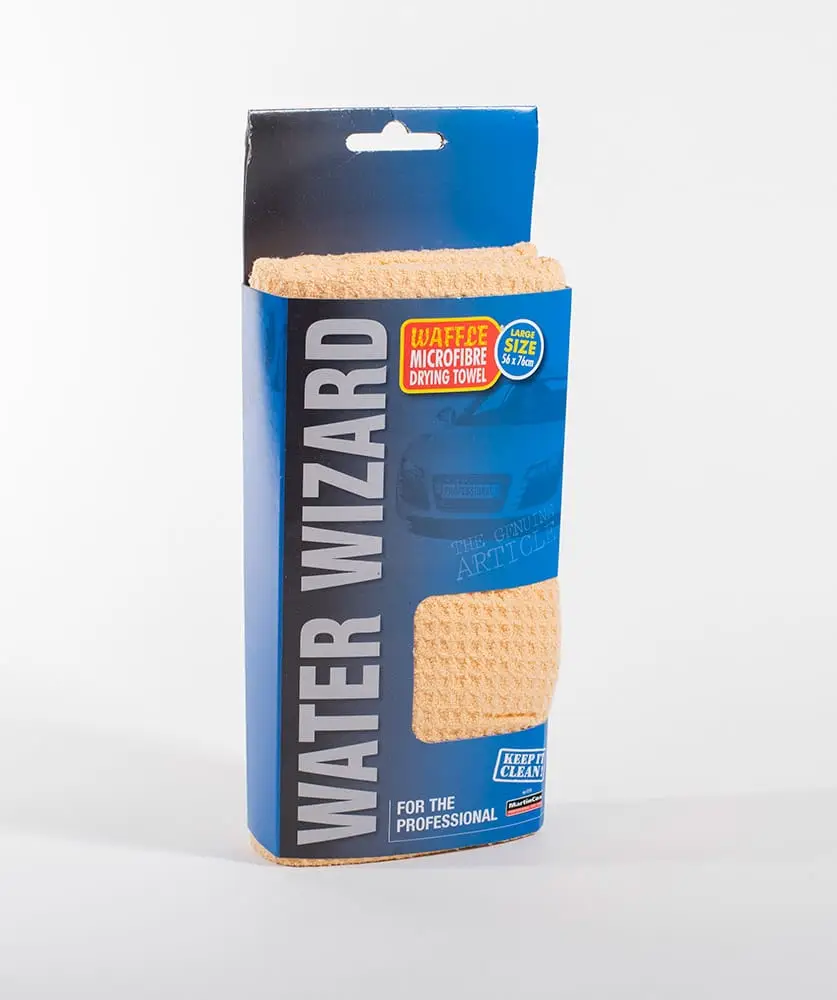
A filtered air dryer blows water out of mirrors, badges, grilles and seams, where drips otherwise run down later. If you are considering one, see our buyer’s shortlist for drying a car with air.
4. Mist a drying aid, one panel at a time
Spray lightly, then use a large, plush drying towel. Lay it flat, pull gently in one direction and lift it rather than scrubbing. Avoid doing the whole car at once, because product that dries before you wipe it can streak. The same panel-by-panel logic applies to spray and rinse coatings.
5. Glaze later, on a dry, clean car
If you want the extra depth a glaze gives, make it a separate step. Work it in thin coats, buff as directed, and leave a proper finish.
Avoiding water spots and scratches
A few habits make the biggest difference:
- Work in shade and out of strong sun, so water and product don’t dry before you wipe.
- Dry a panel at a time, starting with the roof and working down.
- Keep towels spotless. Wash them separately, and drop any towel that touches the ground.
- Use a fresh, dry side of the towel for the final buff.
- Use little product. More spray rarely means better results, and it can cause smearing.
If you already see fine swirls from past washing, a glaze can mask them for a while, but our guide to removing swirl marks covers lasting fixes.
Glaze, wax and ceramic: how they layer
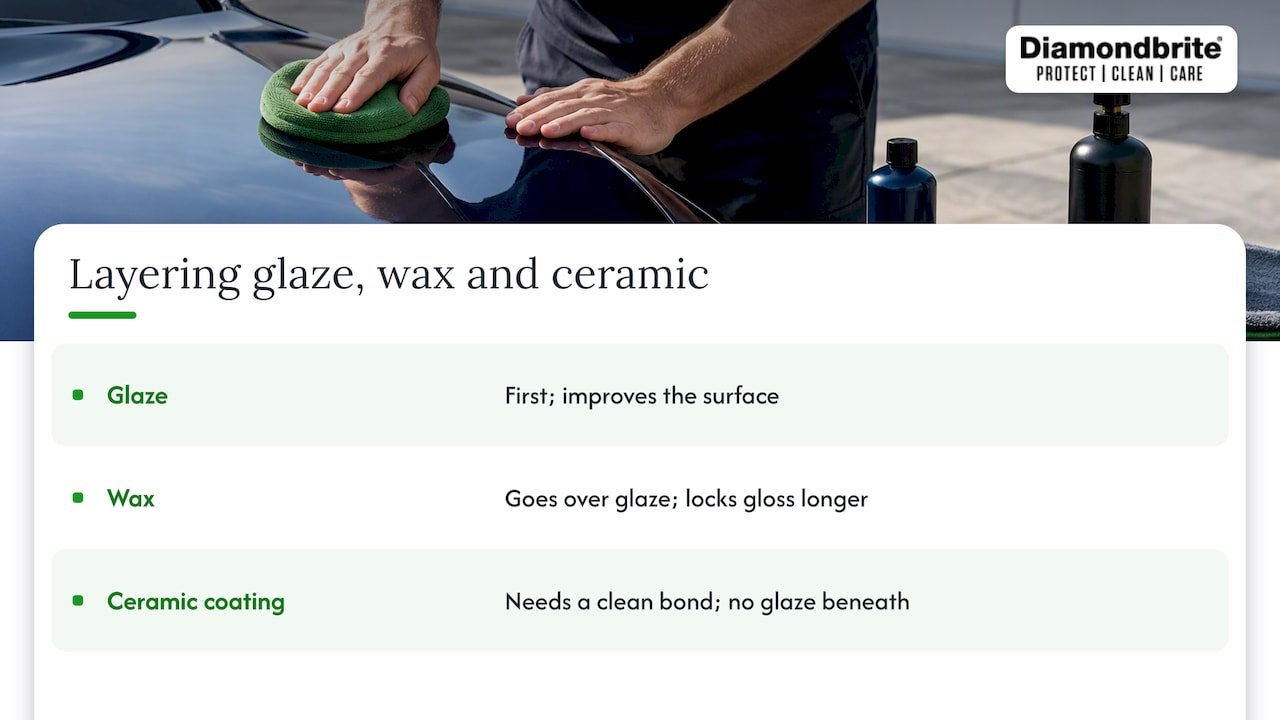
Order matters. Glaze goes on first to improve the surface, then wax can go over it to lock in the gloss for longer, as the Parkers article above also suggests. Be careful with ceramic coatings: a glaze is a filler-style layer, so it shouldn’t sit between the paint and a coating that needs a clean bond. Prepare the paint as the coating’s instructions say, and if you already have a coating, our guide on keeping gloss without waxing a ceramic coating shows how to maintain it. For a longer comparison, see sealant versus ceramic coating.
Motorcycles and leisure vehicles
The principle is the same: lubricate, use clean towels and don’t let product dry on the surface. The practical differences are size and detail. Bikes have many small nooks, exhaust parts, chain areas and hot surfaces, so keep any spray away from brakes, tyres, discs and seat surfaces, and let engines and exhausts cool before you start. On caravans and motorhomes, work panel by panel from top to bottom, and keep to smaller sections because large flat sides show streaks quickly. Always read the product’s directions for the surface type, including plastics, decals and gelcoat.
Our perspective
We hear this question because “glaze” is a confusing word. People see it on a bottle, assume it is a quick gloss spray, and use it in the wrong place. Our view is simple: pick the product for the job, then use it as intended. A wash product washes, a drying aid helps you dry, and a glaze or ceramic glaze finishes clean paint.
What we like about a ceramic-infused routine is that it keeps maintenance quick. You wash, dry gently, and top up gloss without needing a whole day’s work. That suits busy owners who want a sparkling finish without extra effort. Whatever you buy from us or anyone else, test on a small area first and follow the instructions on the bottle.
— Will
Build your routine with Diamondbrite
If you want a routine that fits together, our ceramic-infused car care range covers shampoos, glazes, snow foams, protection products and accessories for cars, motorcycles, leisure vehicles and boats. Start with the wash and finishing steps above, add what suits your vehicle, and you can build the kit one step at a time.
FAQ
Can I use car glaze as a drying aid?
Generally no. Conventional glaze is made for clean, dry paint and is buffed off after hazing. On wet panels it tends to smear and waste product. Use a product made for wet paint, and keep glaze as a separate step.
What do detailers use to dry cars?
Common tools are large, plush microfibre drying towels, a drying aid spray and an air blower for seams and badges. The aim is to remove water gently and avoid dragging grit over the paint.
Does glaze protect paint?
Only briefly. Glaze mainly improves appearance by filling fine flaws, and on its own it may last just weeks. Adding wax over the top can help the gloss last longer.
Is the pottery glaze advice the same?
No. Pottery and air-dry clay glazes are a different product category and have nothing to do with automotive paint. Don’t use them on a vehicle.