

No degreaser is safe on every plastic. Safety depends on what is in the bottle and what the plastic is made of. For car trim, the dependable choice is a water-based, low-solvent cleaner. Apply it to a cloth, test it on a hidden spot first, and never let it dry on the surface. Strong solvent degreasers are the ones that cause brittleness, staining and swelling.
Below, we explain how to tell the difference, how to clean grease and traffic film from plastic trim, and what to reach for instead of an aggressive degreaser.
TL;DR
- “Plastic safe” is not a guarantee. HSE guidance points you to the product label and Safety Data Sheet (SDS) to choose the least harmful option for the job.
- Solvent-based degreasers can harm soft-touch plastics, interior trim and delicate finishes. Use water-based cleaners for routine work.
- Spray onto a cloth, not the panel. Test on a hidden area. Never let the product dry.
- Traffic film usually comes off with a good wash and a gentle cleaner, so you rarely need a harsh traffic film remover.
- Protect cleaned trim afterwards so grime has less to cling to.
Table of Contents
- Why “degreaser” is such a loose word
- How to read the label before you buy
- What not to use a strong degreaser on
- A safe method for greasy or grimy plastic
- Traffic film without a harsh remover
- Degreaser alternatives for plastic
- Eco-friendly and non-toxic choices
- Our view: protect the plastic, then you need less degreaser
- Cleaning plastic inside the car
- Find the right products
- FAQ
- Sources
Why “degreaser” is such a loose word
A degreaser can be a mild surfactant solution or a hydrocarbon solvent that dissolves oil in seconds. They sit on the same shelf and carry the same word on the label. HSE notes that many cleaning and degreasing substances are harmful if misused, through skin contact, eye splashes or breathing in mist and vapour.
For plastic, the real risk is the solvent. Some solvents soften, dissolve or stress-crack plastic components. Stress cracking often shows up later, as fine cracks or brittleness weeks after the clean. That is why a trim panel can look fine when you finish and look worse next month.
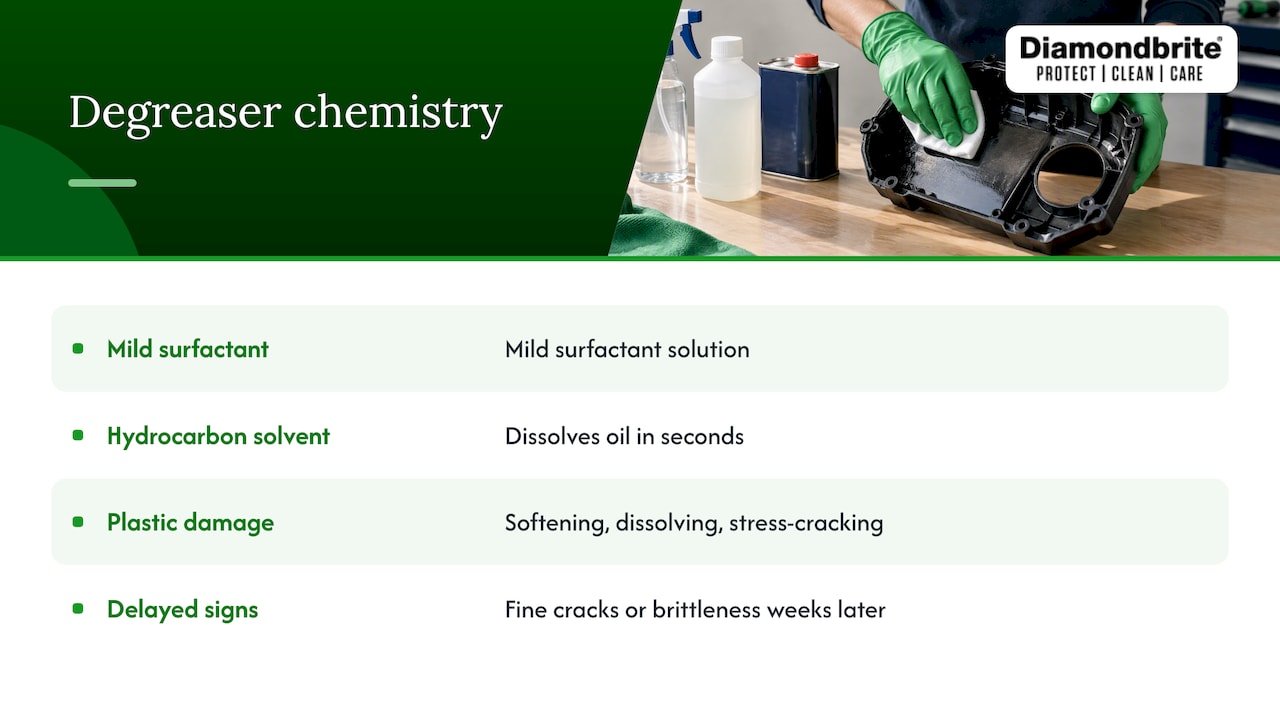
The practical rule: the more aggressive the grease cutting, the more cautious you should be around plastic and rubber.
How to read the label before you buy
Two minutes with the bottle saves a lot of regret.
- Look at the type. Water-based and solvent-free products are the safer starting point for trim. Heavy engine degreasers are usually solvent-based.
- Check the hazard pictograms. Flammable and skin-irritant warnings point to an aggressive formula. Manufacturer safety data for typical aerosol engine degreasers often lists hydrocarbon solvents, which is a signal to keep them off soft plastic and rubber.
- Find the SDS. Look at the “contains” list. If hydrocarbons or strong solvents appear, treat the product as one that must be rinsed off quickly, never left to soak.
- Match the product to the job. A cleaner made for automotive trim beats a generic workshop product for door cards, bumpers and dashboards.
What not to use a strong degreaser on
Keep high-strength solvent degreasers away from:
- soft-touch plastics and interior trim
- delicate or freshly treated painted surfaces
- rubber seals and gaskets that you do not plan to rinse straight away
- textured exterior trim that has faded and is already porous
HSE’s valeting guidance covers solvent-based valeting products and the controls needed when you use them. It also supports the simplest advice: use water-based or solvent-free alternatives where they do the job.
One warning about warm weather. Contact time matters as much as chemistry. A product that is fine for 30 seconds can cause swelling or spotting after five minutes in sun. Work in the shade, one section at a time.
A safe method for greasy or grimy plastic
This works for exterior trim, wheel arch liners, bumpers and engine bay plastics alike.
- Park in the shade and make sure the surface is cool.
- Rinse loose dirt first so you are not grinding grit into the plastic.
- Test. Dab a small, hidden spot and wait. Check for dulling, tackiness or colour transfer.
- Apply to a cloth or soft brush, not straight onto the panel. This stops overspray reaching paint, glass and nearby materials, and it gives you control.
- Agitate gently. Let the cleaner do the work.
- Rinse thoroughly and do not let the product dry. Dried residue is a common cause of permanent spotting.
- Dry with a clean microfibre.
If you work inside a car, ventilate. HSE says some cleaners contain solvents that need good ventilation in enclosed spaces, and prolonged skin contact can cause dermatitis. Wear gloves and avoid open buckets of solvent. A spray bottle gives you more control and lowers vapour exposure.
Traffic film without a harsh remover
Traffic film is the grey, oily layer of road grime that clings to lower panels, bumpers and trim. Many drivers reach for a strong traffic film remover (TFR), which is usually alkaline or solvent-based. You often do not need one.
- Start with a pre-wash, such as a snow foam, to loosen the film before you touch the surface.
- Follow with a proper two-bucket wash using a pH-balanced shampoo. Our guide to ceramic shampoo benefits explains how a ceramic-infused shampoo cleans while leaving the surface easier to wash next time.
- For stubborn film on plastic trim, use a diluted, water-based cleaner on a brush or cloth and rinse well.
A well-protected surface helps most. Film sticks less to a slick, coated panel, so each wash gets easier.
Degreaser alternatives for plastic
| Option | Best for | Plastic risk |
|---|---|---|
| Water-based all-purpose cleaner | Trim, bumpers, arches, door shuts | Low when diluted and rinsed |
| Ceramic-infused shampoo | Regular washing, light film | Low |
| Snow foam pre-wash | Loosening road film before contact | Low |
| Interior cleaner on a cloth | Dashboards, door cards | Low with testing |
| Solvent engine degreaser | Heavy engine bay grease only | High on soft plastic and rubber |
For small amounts of grease, you do not need a degreaser at all. Warm water, a suitable cleaner and a soft brush will do the job on most trim.
Eco-friendly and non-toxic choices
“Non-toxic” is not a regulated promise on a bottle, so read the SDS rather than the front label. What you can control is the type of chemistry. Water-based, biodegradable formulas are gentler on you, your drive and the plastic. They also let you avoid the harshest solvents. Waterless and low-rinse methods cut water use further for light dirt.
Our view: protect the plastic, then you need less degreaser
We see the same pattern again and again. A driver reaches for the strongest degreaser to fix tired, grey trim, strips what protection is left, and the plastic fades faster. Then it needs more cleaning.
Our approach is to clean gently with water-based, ceramic-infused products, then protect. A dedicated ceramic treatment on trim gives it a durable shield against UV and grime, so you can wash less aggressively. Our guides on ceramic on plastic trim and protecting vinyl and rubber go into how that works. If you have old wax stuck in the texture, see removing wax from plastic before you resort to anything harsh.
If you are unsure about a product, test it, rinse it, and choose the milder option. You can always step up. You cannot undo a cracked or bleached panel.
— Will
Cleaning plastic inside the car
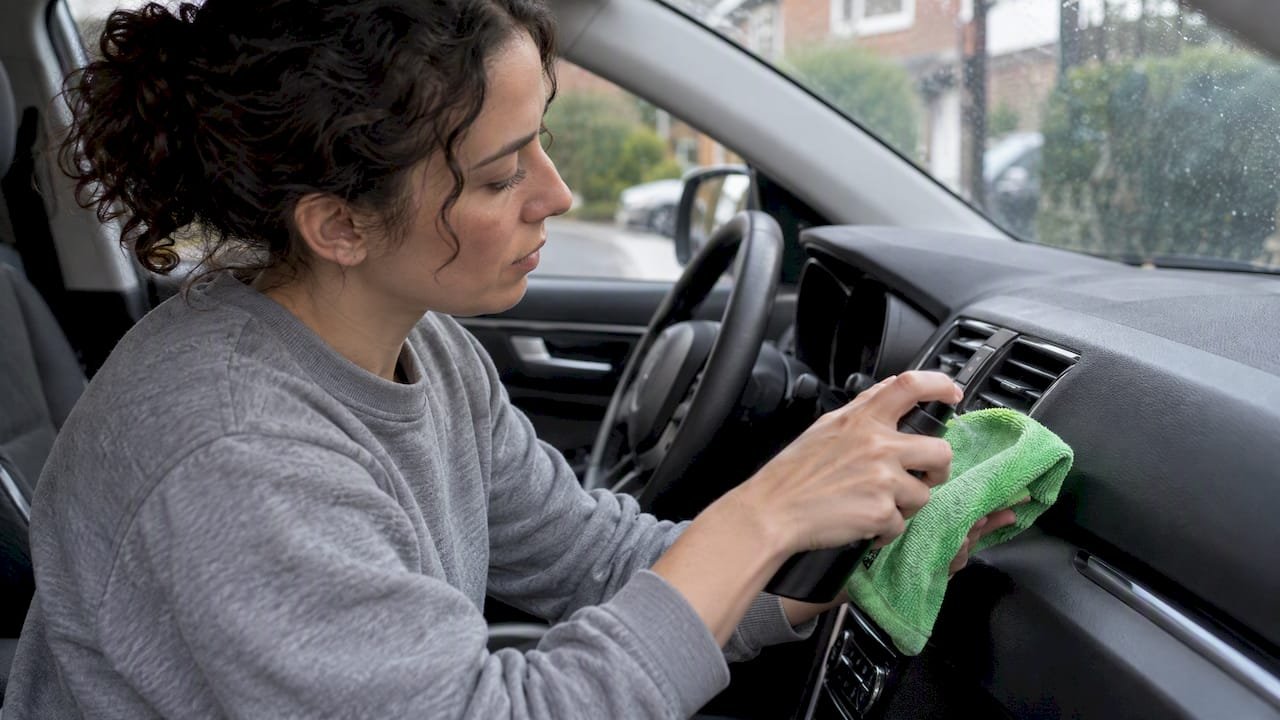
Interior plastics are usually softer and more sensitive than exterior trim. Skip engine degreasers entirely. Put a small amount of interior cleaner on a microfibre and wipe in sections. Our dashboard cleaning guide walks through the method, and interior ceramic coating explains how to make the next clean easier.
Find the right products
Our shop covers car, motorcycle, leisure and marine care, including interior, paintwork, wheel and glass ranges. Browse the Diamondbrite range to find water-based, ceramic-infused cleaners and protectants for your plastic trim.
FAQ
What degreaser is safe on plastic?
There is no single answer, because safety depends on the formula. A water-based, solvent-free cleaner is the safest starting point for car trim. Check the SDS, test a hidden spot and rinse before it dries.
Can you use an engine degreaser on plastic?
Only with care. Aerosol engine degreasers often contain hydrocarbon solvents that can discolour or soften plastic and rubber if left to dwell. If you must use one in an engine bay, keep contact short and rinse thoroughly. For routine cleaning, choose something milder.
What takes grease off plastic without damaging it?
A diluted water-based cleaner applied with a cloth or soft brush, followed by a thorough rinse. Work on cool surfaces in shade. For stubborn residue, repeat gently rather than switching to a stronger solvent.
What should you not use degreaser on?
Avoid strong solvent degreasers on soft-touch plastics, interior trim, rubber seals and delicate painted or coated surfaces unless you have tested them first. HSE recommends substituting solvent-based valeting products with safer alternatives where practical.
Sources
- Cleaning or degreasing substances including valeting, HSE
- Valeting of vehicles with solvent-based products, HSE