

The safe way to clean ceramic coated wheels is simple: pre-rinse to shift grit, wash with a pH-neutral shampoo using soft contact tools, decontaminate iron fallout only when it’s actually present, dry properly, and top up protection with a quick detailer. Skip any of that and you risk scratching the coating or stripping its hydrophobic finish long before its time.
Do this: use a low-pressure pre-rinse, a pH-neutral wheel shampoo, a dedicated soft wheel mitt, and a microfibre drying towel. Avoid this: acidic or high-alkaline wheel gels, stiff bristle brushes, and letting degreasers sit and dwell on the coating.
- Rinse before you touch the wheel with anything
- Wash with pH-neutral products only
- Use iron remover sparingly, not as routine
- Dry thoroughly rather than air-drying alone
- Never scrub dry dirt with a brush
Pro Tip: If your wheels start needing real scrubbing to look clean again, rather than a quick wipe-down, that’s usually your first sign the coating is wearing thin and due a top-up.
Table of Contents
- How do you clean ceramic coated wheels step by step?
- Which tools and cleaners are safe for coated wheels?
- What damages ceramic coating on wheels?
- Why does wheel preparation matter before coating?
- How often should you clean and top up ceramic-coated wheels?
- How do you apply Diamondbrite products to coated wheels?
- Where can you learn more about caring for coated wheels?
- Why most wheel-cleaning advice misses the point
- Keep the coating you’ve paid for working properly
- Sources
- FAQ
How do you clean ceramic coated wheels step by step?
Cleaning coated wheels properly is less about elbow grease and more about sequence. Get the order right and you protect the finish while doing less work.
- Pre-rinse first. Use a pressure washer or hose on a moderate setting to blast away loose grit, road salt and surface brake dust before any product or tool touches the wheel. This single step removes most of the abrasive risk from washing.
- Check for iron contamination. Embedded brake dust often shows as a gritty, orange-tinged film that won’t rinse off. Apply an iron fallout remover only when this is visible, leave it to dwell per the product’s instructions, then rinse thoroughly. Don’t use it as a default step every wash. This routine mirrors what Moses Detailing recommends for coated wheels.
- Two-bucket contact wash. Fill one bucket with a diluted pH-neutral shampoo and one with clean rinse water, both fitted with grit guards. Use a soft, dedicated wheel mitt for the faces and a soft spoke brush for the barrels and behind the spokes, rinsing your tool between dips. Working one wheel at a time stops product drying on the surface before you’re done.
- Rinse and dry. Rinse from top to bottom, then dry with a soft microfibre towel or an air blower. Leaving wheels to air-dry alone on a warm day invites water spots that etch into the coating over time.
- Top up protection. Finish with a hydrophobic quick detailer to refresh the coating’s beading behaviour and add a final layer of slickness before you move on to the rest of the car.
Detailing communities consistently back this exact sequence: pH-neutral shampoo and soft tools as the default, with harsher chemicals reserved for genuine need rather than habit.
Which tools and cleaners are safe for coated wheels?
The right kit matters as much as the technique. Stick to these and you’ll rarely put the coating at risk:
- Pressure washer on a fan or low-pressure setting, never a narrow jet held close to the surface
- Dedicated wheel mitts, kept separate from paintwork mitts to avoid cross-contamination
- Soft spoke brushes for tight areas behind the wheel face
- Microfibre drying towels or an air blower for the final dry
- pH-neutral wheel shampoo as your everyday cleaner
- Iron fallout remover, used only when embedded brake dust is visible
Professional guides list broadly this same kit for coated wheel care, including dedicated brushes, snow foam and pH-stable iron removers as standard.
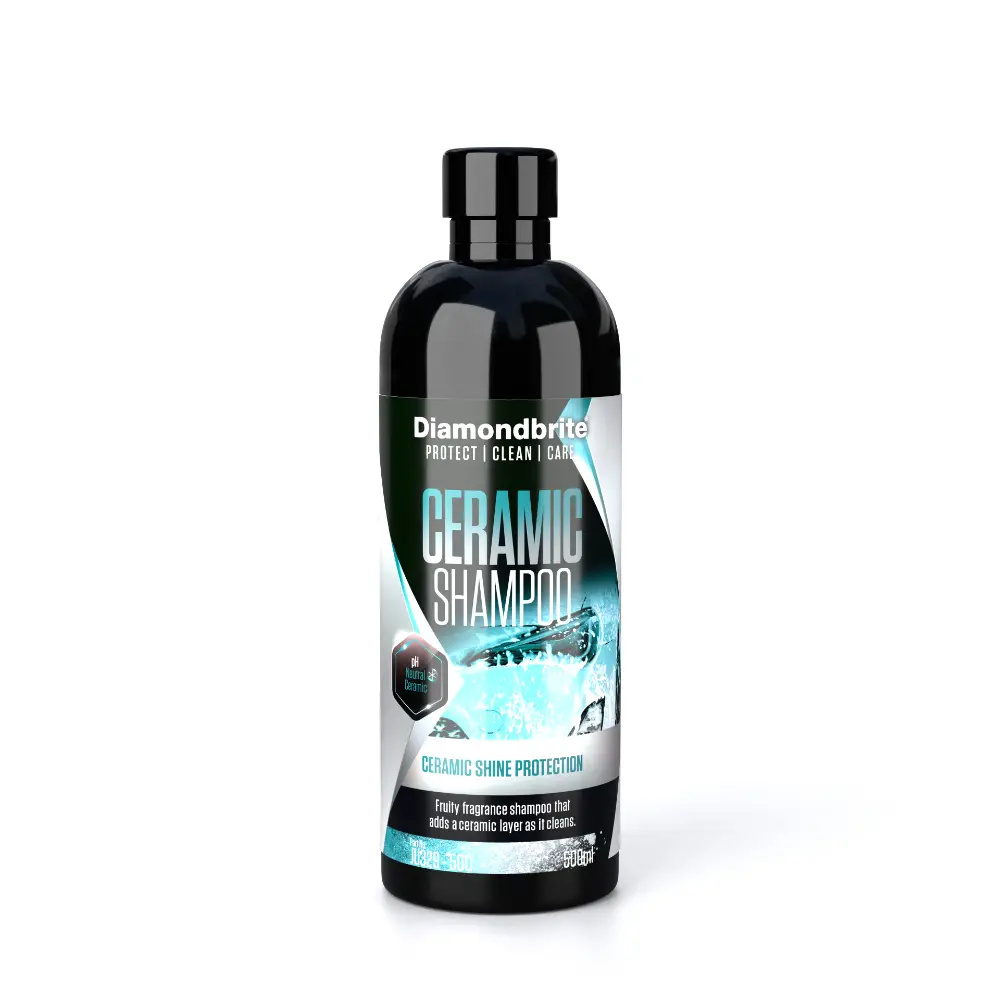
Diamondbrite Ceramic Shampoo fits neatly as your default wash product, Diamondbrite Quick Detailer handles the post-wash refresh, and Diamondbrite Ceramic Glaze works as your longer-interval top-up. Each has a clear role rather than overlapping jobs.
Pro Tip: Keep your wheel brushes and mitts entirely separate from anything used on paintwork, and rinse them in their own bucket with a grit guard. Cross-using tools is one of the quickest ways to drag brake dust particles into your bodywork wash.
What damages ceramic coating on wheels?
Most coating damage comes down to a handful of repeatable mistakes, not bad luck.
- Scrubbing with stiff or abrasive brushes instead of soft mitts
- Using strongly acidic or high-alkaline wheel cleaners, especially unbranded “industrial strength” gels
- Letting degreasers or tar removers dwell too long before rinsing
- Reaching for a clay bar on a coating that’s still performing well
- Coating over wheels with existing lacquer failure or corrosion, assuming the coating will hide the problem
Household washing-up liquid might look harmless, but many formulas sit well outside neutral pH and are designed to strip grease, not protect a coating. Using it regularly on ceramic-coated wheels can dull the hydrophobic finish faster than owners expect, even though it feels like a gentle, everyday choice.
None of these mistakes cause instant failure. They’re cumulative, which is exactly why they catch owners out. A coating applied over kerb rash or corrosion won’t fix either problem. As one detailing source on wheel refurbishment puts it, a coating seals in existing defects rather than solving them, so damage that’s there before coating stays there after.
Why does wheel preparation matter before coating?
A ceramic coating bonds to whatever surface you give it, flaws included. That’s why preparation isn’t optional; it’s the single biggest factor in how long the coating actually lasts.
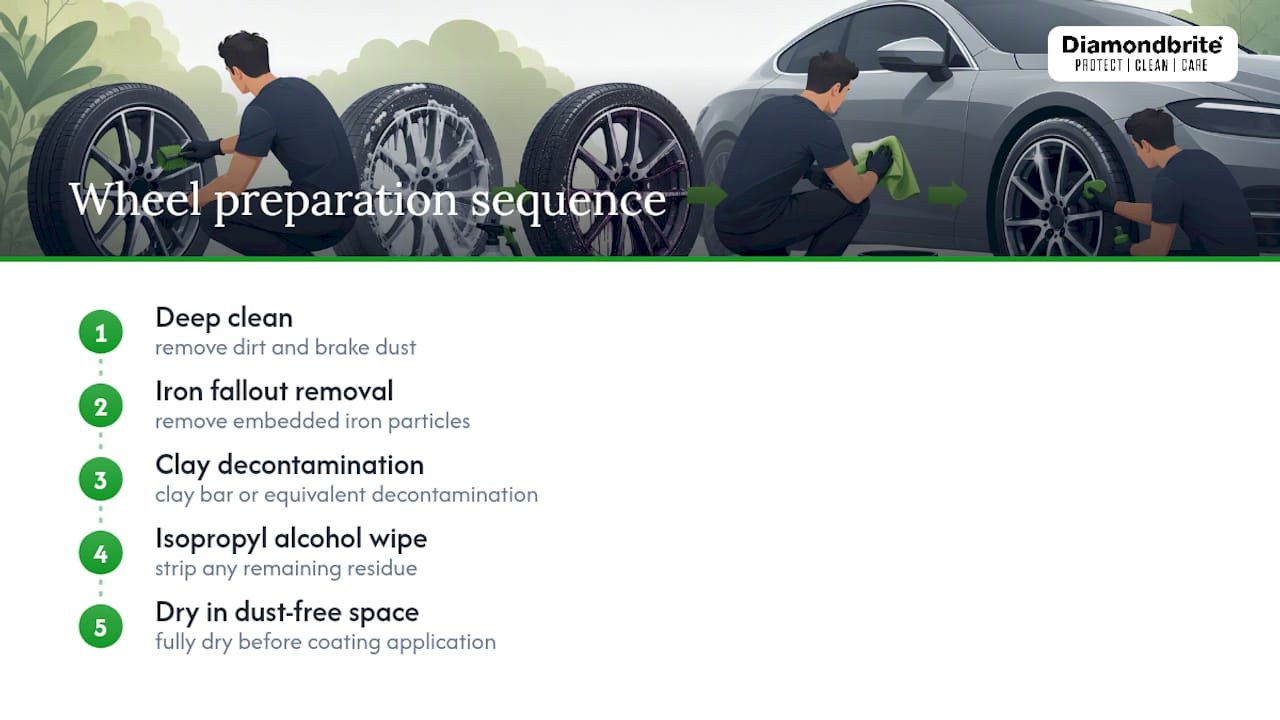
Before any coating goes on, wheels need inspecting for lacquer failure, corrosion, or kerb rash. Any of these need proper repair or refurbishment first, because coating over them simply locks the damage in. The recommended sequence runs: a deep clean, iron fallout removal, a clay or equivalent decontamination pass, an isopropyl alcohol wipe to strip any remaining residue, then a full dry in a dust-free space before application. Skipping steps in this sequence is the most common reason professional and DIY coatings underperform, since poor preparation is the leading cause of early coating failure.
Pro Tip: If your coating has lost its beading but the wheel surface still feels smooth and glassy, that’s usually contamination, not failure. A proper decontamination wash often brings the hydrophobic behaviour straight back without needing to recoat.
How often should you clean and top up ceramic-coated wheels?
Frequency depends on how you drive, not a fixed calendar date.
- Give wheels a light rinse weekly to keep grit from building up
- Run a full two-bucket wash every two to four weeks for a typical daily driver
- Wash more often through winter or if you do heavy braking commutes with high brake-dust output
- Use iron fallout remover only when you see a visible reaction or stubborn embedded dust, not on every wash
- Apply a quick detailer or spray glaze top-up every one to three months, depending on exposure
- Daily: nothing extra needed beyond normal driving
- Fortnightly to monthly: full contact wash
- Every one to three months: hydrophobic top-up or glaze refresh
Because wheel coatings face harsher thermal cycling from brake heat than body panels, they typically need topping up more often than paintwork. Treat it as ongoing maintenance rather than a one-off job, and you’ll get consistent performance rather than a slow, unnoticed decline.
How do you apply Diamondbrite products to coated wheels?
Working wheel by wheel stops the product drying onto the surface before you’ve rinsed it off, particularly on warmer days.
Once the wheel is dry, Diamondbrite Quick Detailer restores hydrophobic behaviour in seconds. Spray it on, wipe with a clean microfibre, and buff lightly. It’s the fastest way to bring back beading between full washes.
For longer-term protection, Diamondbrite Ceramic Glaze acts as your maintenance layer. Apply it to a clean, dry wheel, allow the recommended cure time before the wheel gets wet again, and reapply on the seasonal cadence covered above rather than after every wash.
Pro Tip: Apply glaze or detailer in the shade, never in direct sun on a hot wheel. Warm alloy surfaces cause products to flash off before you’ve had a chance to work them in properly.
Your wheel coating lasts longest when you match a pH-neutral wash routine to a realistic maintenance schedule rather than treating one clean as a permanent fix.
| Point | Details |
|---|---|
| Pre-rinse always | Remove loose grit before any brush or mitt touches the wheel to avoid scratching. |
| Stick to pH-neutral products | Acidic or high-alkaline cleaners strip hydrophobic behaviour faster than expected. |
| Use iron remover sparingly | Reserve it for visible embedded brake dust, not as a routine step every wash. |
| Prep before coating, not after | Repair corrosion or kerb rash first, since coating only seals existing damage in. |
| Top up on a schedule | Diamondbrite Quick Detailer and Ceramic Glaze restore protection between full recoats. |
Where can you learn more about caring for coated wheels?
- Ceramic coating for wheels and product durability | Chariotz
- Ceramic wheel polishing and coating guidance | Marios Wheel Repair
- Diamondbrite Online Shop
- Ceramic coating chemistry background | Regency Floats
Why most wheel-cleaning advice misses the point
Most guides treat wheel cleaning as a one-off skill to master, when it’s really an ongoing relationship with a product that degrades on its own timeline. Wheel coatings take more punishment than paint, thanks to brake heat and constant road grime, and pretending they’ll last as long as a bodywork coating sets owners up for disappointment.
The advice that gets skipped most often isn’t about washing technique; it’s about reading the wheel. Loss of beading doesn’t automatically mean the coating has failed. Often it just means the surface is contaminated and needs a proper decontamination pass, not a full recoat. Owners who jump straight to reapplying a coating waste money and product on a wheel that only needed cleaning.
If you take one thing from this article, prioritise preparation over frequency. A wheel that’s properly decontaminated and dried before every coat or top-up will outperform one washed twice as often with the wrong products.
Keep the coating you’ve paid for working properly
Diamondbrite gives you the exact products this routine calls for, without needing to hunt across different brands to build a compatible kit. Ceramic Shampoo, Quick Detailer and Ceramic Glaze are formulated to work together, so you’re not guessing whether one product will strip what another just applied.
That matters most for owners who’ve had a coating professionally applied and want to protect the investment rather than shorten its life through the wrong wash routine. If your everyday shampoo isn’t pH-neutral, that’s often the first thing worth changing, and Diamondbrite’s pH neutral car shampoo for ceramic-coated cars is built specifically for coated surfaces. Browse the full range at the Diamondbrite shop and put together a kit that matches the routine in this article, wheel by wheel, wash by wash.
Sources
- Ceramic coating for wheels | Chariotz
- How to clean ceramic-coated wheels? | Moses Detailing
- Ceramic wheel polishing & coating: How it works, durability, and when it’s worth it | Marios Wheel Repair
- Self‑healing ceramic coatings — Manchester University news
FAQ
What should you clean ceramic coated wheels with?
Use a pH-neutral wheel shampoo with a soft dedicated mitt or brush, following a pre-rinse to remove grit first. Iron fallout remover should only come out when embedded brake dust is visibly present.
What destroys ceramic coating on wheels?
Abrasive brushes, strongly acidic or high-alkaline cleaners, and degreasers left to dwell too long are the main culprits. Coating over existing corrosion or kerb rash also shortens coating life significantly, since the coating seals in damage rather than fixing it.
Can you use vinegar on ceramic coating?
Vinegar is acidic and sits outside the pH-neutral range recommended for coated wheels, so it isn’t a safe routine choice. Stick to a proper pH-neutral wheel shampoo instead.
Can you use fairy liquid on alloys?
Washing-up liquid isn’t formulated as a pH-neutral car care product and can dull a ceramic coating’s hydrophobic finish with regular use. A dedicated pH-neutral shampoo, such as Diamondbrite’s, is the safer long-term choice for coated alloys.