

If your boat’s ashore, jet-wash off the loose grime, treat waterline staining with a marine-grade gel, then compound, polish and seal. If it’s afloat, lift soft algae with plastic scrapers or soft brushes, or call in a diver for anything heavier, and check with the harbour master before you start. Either way, aim to clean every 4 to 8 weeks, more often if you’re moored somewhere fouling builds fast.
TL;DR:
- Regular hull cleaning every four to eight weeks prevents heavy buildup and prolongs the effectiveness of protective coatings.
- Ashore cleaning is more thorough and controlled, involving jet-washing, stain treatment, polishing, and sealing to achieve better results.
- Soft algae and light fouling can be removed in water using plastic scrapers and brushes, but heavier growth should be handled by divers or ROVs.
- Applying a ceramic coating after polishing, once the hull passes the water-break test, can significantly extend the time between cleans.
- Costs vary, but a typical lift-out and pressure wash for a 44ft boat can range around £455, with additional storage fees and longer jobs depending on hull condition.
Table of Contents
- Which method actually cleans a boat hull best?
- How do you clean a boat hull step by step when it’s ashore?
- Can you clean a boat hull while it’s still in the water?
- What does a haul-out cost and how long does it take?
- How do you restore shine and protect gelcoat after cleaning?
- What are the safety and legal steps before you start cleaning?
- A practical note on keeping up with hull cleaning
- Give your gelcoat longer between cleans
- Sources
- FAQ
Which method actually cleans a boat hull best?
The right method depends on where your boat is sitting and what’s growing on it, not on which product has the shiniest bottle. Here’s the shortlist that covers most situations you’ll actually face.
- Boat shampoo and a soft brush: your default for routine topside washing, safe on gelcoat and won’t strip existing protection.
- Oxalic-acid gel or a marine stain remover: purpose-built for mineral waterline marks and rust streaks that boat soap won’t touch. Apply as directed on the label and rinse thoroughly.
- Plastic scrapers, scouring pads or a diver/ROV service: for soft growth below the waterline, where metal tools risk scratching gelcoat.
- Pressure washing and compounding ashore: reserved for heavy oxidation, ingrained staining, or a hull that hasn’t seen attention in a season or two.
Diluted vinegar has a place too, but only a limited one. A mix of around 25 to 40% vinegar to water lifts light mineral deposits, but it won’t shift hardened barnacles or deep-set staining, and it can strip existing wax protection if you’re not careful where you apply it.
How do you clean a boat hull step by step when it’s ashore?
Ashore is where you get the best result, because you can control run-off, work methodically, and actually see what you’re dealing with. Follow this sequence and you won’t be redoing sections you’ve already covered.
- Gear up and set your work area. Gloves, goggles and overalls are the minimum; add a mask if you’re removing old antifouling coatings. Lay a tarpaulin or set up a bund to catch wash water and paint chips before you start.
- Jet-wash the whole hull first. This clears loose grime and algae so you’re not wasting stain remover on dirt that would’ve come off with water alone.
- Treat stains with an oxalic-acid gel or marine cleaner, following the dilution and dwell time on the label, then neutralise and rinse fully. Household bleach and generic domestic abrasives are best avoided; they can damage gelcoat where marine-specific formulas won’t.
- Polish in sequence, coarse to fine, working oxidation out with a compound before moving to a finer polish. A dual-action machine speeds this up on a hull of any real size; hand polishing works fine on smaller boats or awkward corners.
- Protect the finish with wax, a sealant, or a ceramic coating, applied once the surface is fully clean and dry.
Pro Tip: Before you polish or coat, run the water-break test. Splash clean water on the surface. If it beads up rather than sheeting flat, there’s still grease or wax residue and your new coating won’t bond properly.
Can you clean a boat hull while it’s still in the water?
Yes, and for light to moderate fouling it’s often the more practical option, provided you check harbour rules first. Long-handled soft brushes, plastic scrapers and scouring pads do the job without scratching gelcoat, whereas metal tools are a genuine risk below the waterline.
- Work the hull in two passes: clear the main forest of growth first, let the surface settle, then go back for the thin slippery film left behind. This second pass is what actually delays regrowth, rather than a single scrub.
- Minimise disturbed material drifting into the water, and hand heavier fouling, like established barnacles or mussels, to a diver or ROV service rather than forcing it off yourself.
- If you’re in the water yourself, treat it like any other dive: work with a buddy, mind your buoyancy near the hull, and stop if visibility drops.
What does a haul-out cost and how long does it take?
Budget for a half-day at minimum, and expect the bill to scale with hull size and how neglected the finish has become. A typical haul-out runs: lift the boat, cradle it securely, pressure wash, inspect the hull for damage or blistering, then compound and polish before relaunch.
A UK case study on a 44ft boat put the lift and pressure wash at around £455.40, with dry storage ashore costing roughly between £9 and £12 per day on top (Val Wyatt Marine).
For a boat in the 20 to 25ft range, professional cleaning typically takes around four hours covering jet wash, compound and polish, useful for gauging how much marina labour time you’re actually paying for.
- Ask your marina how waste water and paint residue are handled, since this affects both cost and compliance.
- Ask what’s included in the quoted price, jet wash alone is a different job to jet wash plus compound and polish.
- A professional is usually worth the price when oxidation has set in hard, or when you simply don’t have a free weekend.
How do you restore shine and protect gelcoat after cleaning?
Polishing works by cutting away the top layer of oxidised gelcoat to expose fresh material underneath, which is why grade matters. Start with a coarser compound on heavily chalked or dull patches, then step down to a finer polish for the final gloss.
Once the surface is level and clean, you’ve got three realistic options for protection:
- Paste wax: inexpensive and easy to apply by hand, but the shortest-lasting, typically needing reapplication every few months.
- Liquid sealant: longer-lasting than wax with less elbow grease, a reasonable middle ground for owners who want convenience.
- Ceramic coating: the most durable of the three, forming a harder, glossier barrier that sheds water and grime rather than letting them cling.
Pro Tip: Always polish before you coat, never after. A protective layer applied over oxidised gelcoat just locks the dullness in underneath it.
Owners who keep up a genuine lift-clean-restore cycle, rather than cleaning reactively, tend to find the hull stays cleaner for longer and runs more efficiently too, since a smoother hull meets less drag through the water.
What are the safety and legal steps before you start cleaning?
A few checks before you pick up a brush save you a fine, and keep the local marine environment intact.
- Check with the harbour or port authority first. Many require permission or a risk assessment before in-water cleaning, largely to reduce the spread of invasive non-native species.
- Collect and dispose of wash water and paint chips properly when working ashore, using a bund or filtration setup rather than letting run-off go straight into drains.
- Skip household bleach and harsh domestic abrasives, which can strip or damage gelcoat that marine-specific cleaners are formulated to protect.
- Wear proper PPE, gloves, goggles, overalls, and a mask when disturbing old coatings, especially if you’re working at height on a cradle.
A practical note on keeping up with hull cleaning
Realistically, most owners settle into a rhythm somewhere between four and eight weekly cleans, tightening that up if they’re moored in a fouling hotspot. The two-pass technique on soft growth is the one trick that genuinely pays for itself, a first scrape followed by a second light pass buys you noticeably more time before the next clean. Beyond that, it’s mostly about not cutting corners on permissions and waste handling. That part isn’t optional.
— Will
Give your gelcoat longer between cleans
A hull that’s freshly polished and bare is the easiest one to keep clean, and the hardest one to protect if you leave it unsealed. Ceramic protection creates a hydrophobic layer on gelcoat that encourages water, algae film and grime to slide off rather than bond to the surface, which means your next wash takes less scrubbing and less time. It won’t stop fouling altogether below the waterline, but above it and around the topsides, it noticeably cuts down on how often you need to break out the brushes.
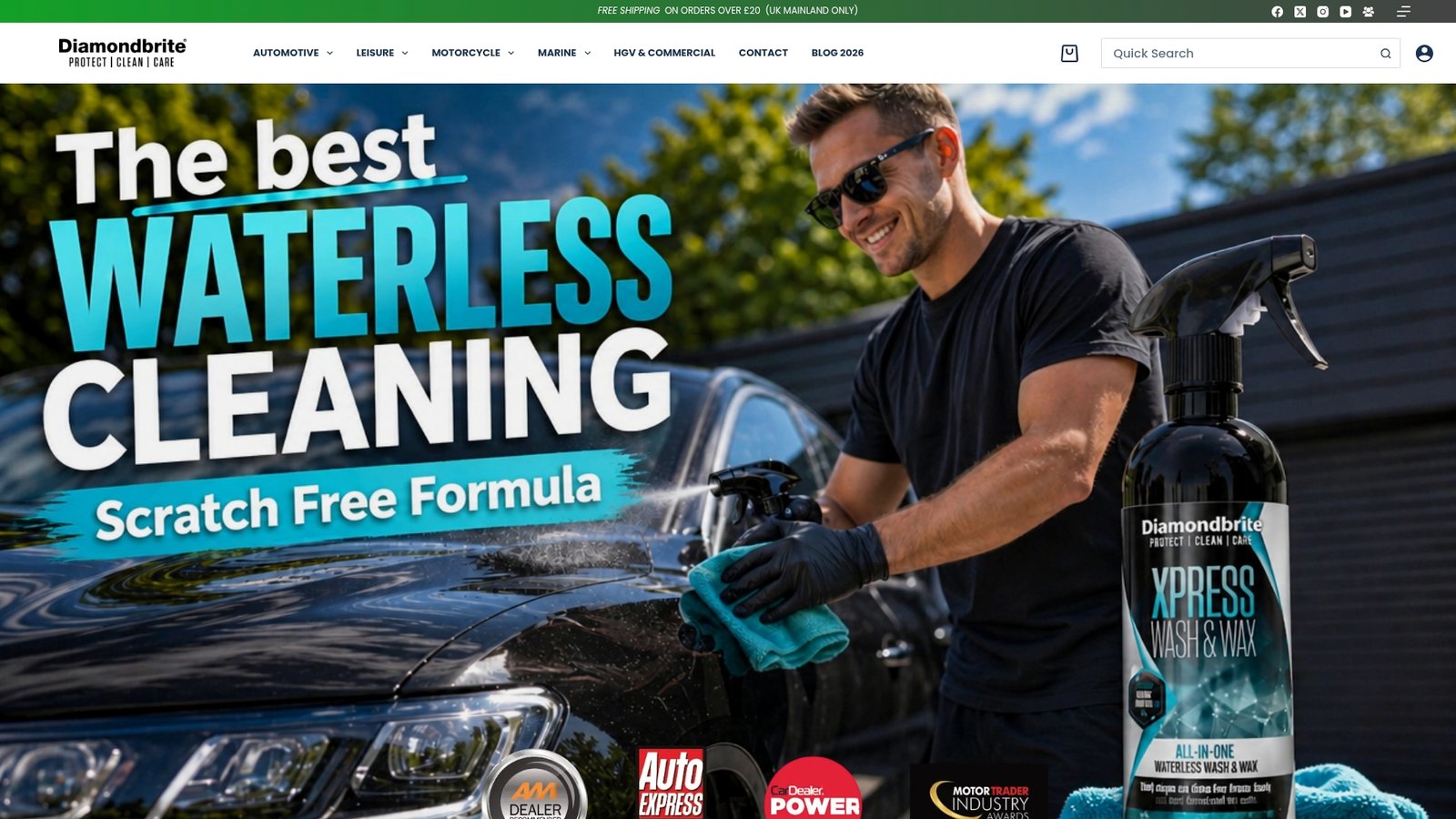
Timing matters here. Apply protection once your hull has passed the water-break test, clean, dry, and free of wax residue or polish haze, otherwise the coating won’t bond properly and you’ll be redoing the job sooner than planned. Diamondbrite’s gelcoat protection range is built for exactly this stage, applied straight after your polish and seal routine while the surface is at its most receptive. If you’re planning a spring restoration before the season starts, that’s the natural point to add it to your kit and get ahead of the next round of cleaning.
Sources
- HullScrub — Hull cleaning and services
- Val Wyatt Marine — How to clean a boat hull
- Practical Boat Owner — In-water hull cleaning: one sailor’s tips
- Peel Ports — Marine biosecurity information: hull cleaning
FAQ
How much does it cost to clean the hull of a boat?
Costs vary by boat size and yard, but a UK case study on a 44ft boat put the lift-out and pressure washing at around £455.40, with dry storage adding roughly £9.44 to £12 per day.
Will vinegar clean a boat hull?
Diluted vinegar, around 25 to 40% with water, works on light mineral deposits but won’t remove deep-set stains or hardened barnacles, and it can strip existing wax protection.
What is the best thing to clean a boat hull with?
Boat shampoo with a soft brush handles routine topside cleaning, while an oxalic-acid gel or marine stain remover deals with mineral waterline marks. Once the hull is clean and protected, a ceramic finish like Diamondbrite’s makes each future wash easier.
How often should a boat hull be cleaned?
Most vessels need cleaning every 4 to 8 weeks, with the shorter end of that range applying if you’re moored in waters where fouling builds quickly.
Do I need permission to clean my hull in the water?
Often yes. Many port authorities require permission or a risk assessment before in-water cleaning, largely to limit the spread of invasive species through disturbed fouling material.