

Ceramic shampoo boosts gloss, makes water bead and roll off your panels, and speeds up drying, all whilst giving light protection during a routine wash. It won’t replace a proper ceramic coating. Think of it as topping up your car’s defences between bigger jobs, not building them from scratch, with effects lasting days to weeks.
- Deeper gloss from a thin, even film left across the paint
- Hydrophobic beading that carries dirt away as it sheets off
- Faster, easier drying with fewer water spots
- Light, short-term protection layered onto whatever’s already on your paint
Choose a pH-safe formula, and it works whether your car is bare paint, waxed, or already ceramic-coated. Just don’t expect it to outlast a proper coating system.
Key Takeaways
Ceramic shampoo delivers real, test-verified gloss and beading benefits lasting days to weeks per wash, but it works as a maintenance top-up rather than a substitute for a bonded ceramic coating.
| Point | Details |
|---|---|
| Deposition, not bonding | SiO2 particles sit on the clear coat during washing rather than chemically curing into it. |
| Check the pH first | Choose a near-neutral formula (roughly pH 6 to 8) to avoid degrading existing coatings or waxes. |
| Match use to surface | Avoid gloss-boosting ceramic shampoo on matte paint or PPF unless it’s explicitly labelled safe. |
| Technique protects the gloss | Two-bucket washing and good lubrication prevent the swirl marks that undo the benefit. |
| Diamondbrite’s role | Its pH-neutral ceramic shampoo is designed as a coating-safe top-up wash for cars already protected with Ceramic Glaze or Advanced Ceramic systems. |
Table of Contents
- How does ceramic shampoo work?
- What are the measurable benefits of ceramic shampoo?
- What can’t ceramic shampoo do?
- How should you use ceramic shampoo safely?
- What do independent tests actually show?
- Does ceramic shampoo affect different paint types and surfaces differently?
- Are ceramic shampoo ingredients safe and environmentally sound?
- When should you actually reach for ceramic shampoo?
- Get pH-neutral protection built for coated cars
- Sources
- FAQ
How does ceramic shampoo work?
Ceramic shampoo carries tiny SiO2 particles suspended in the wash solution. As you work the suds across the panel, those silica particles settle into the microscopic texture of the clear coat and leave behind a thin hydrophobic film. That’s the sheen you notice as the panel dries, and it’s also what makes water bead rather than sheet flat across the surface.
This is deposition, not bonding, and the distinction matters more than most bottle labels let on. A professional ceramic coating cross-links chemically with the clear coat through a curing process that can take days and leaves a film measured in microns. Ceramic shampoo simply lays particles on top during the wash. There’s no cure time, no chemical bond, and no multi-year durability. It’s a maintenance layer, not a structural one, as Road Worthy Labs explains in its breakdown of how ceramic wash chemistry actually behaves against genuine coatings.
The other working part is lubricity. Formulators add polymers, often polyacrylates or modified silicone derivatives, that reduce friction between your wash mitt and the paint surface as you’re washing. Ingredient analysis of hybrid car shampoos confirms these lubricity agents work alongside the SiO2 payload to cut down on the fine scratching that builds up over repeated washes.
Here’s the sequence in practice:
- Suds carry SiO2 particles and lubricity polymers across the panel
- Particles settle into the clear coat’s surface texture during contact time
- The lubricant layer reduces drag, so grit slides rather than grinds
- Rinsing leaves a thin hydrophobic film that beads water as the panel dries
Pro Tip: Let the shampoo dwell for thirty seconds or so before you start agitating with the mitt. That short contact window gives the SiO2 particles more chance to settle before you’re moving them around.
What are the measurable benefits of ceramic shampoo?
Gloss improvement is the benefit you’ll notice first, and it’s a genuine optical effect rather than a placebo. The thin SiO2 film fills in microscopic imperfections in the clear coat, which lets light reflect more evenly instead of scattering. That’s why a freshly ceramic-washed panel looks wetter and deeper under direct light than the same panel washed with a standard shampoo.
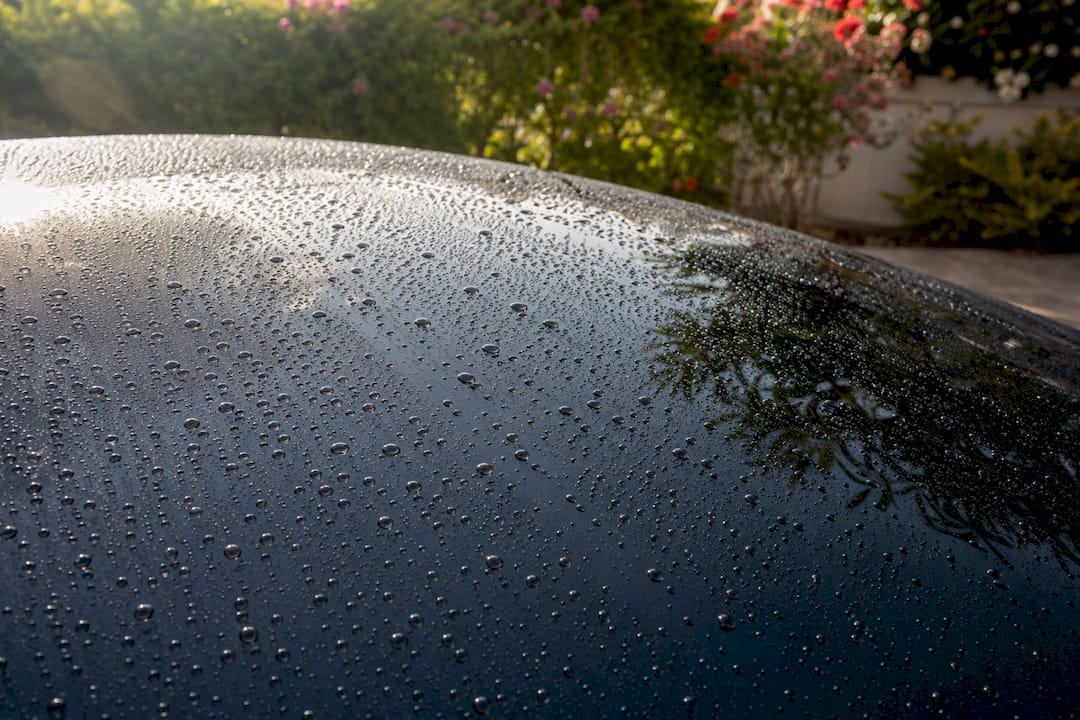
Beading is the second, and arguably more useful, benefit. Contaminants like road grime and bird droppings sit on top of a hydrophobic surface rather than soaking into it, which shortens the time they have to etch or stain the paint. Less contact time means less risk.
Group testing backs this up. Auto Express put multiple ceramic shampoos through beading and durability tests and found the effect was real and consistently measurable, though the panel’s coating fades within days to weeks rather than months.
The practical benefits stack up like this:
- Better light reflection gives a visibly deeper, wetter-looking finish
- Beading reduces dwell time for bird droppings, tree sap and road salt
- Added lubricity during the wash lowers the risk of fine swirl marks
- Faster sheeting means less time with a drying towel and fewer water spots
Comparative testing by Car and Driver found ceramic and hybrid shampoos genuinely sped up drying and added gloss, though the gap versus a good wash-and-wax routine was narrower than most marketing implies. That’s not a knock against the product. It just means you should judge it as a maintenance upgrade, not a miracle.
What can’t ceramic shampoo do?
Ceramic shampoo is a top-up, not a shield. It won’t stop stone chips, won’t resist bird dropping etching the way a cured coating can, and won’t survive weeks of motorway driving and daily rain the way a proper ceramic system does. Understanding where the line sits keeps expectations realistic.
- Longevity typically lasts a short period after washing, depending on wash frequency, weather exposure, and how much of the film survives each subsequent wash.
- It offers negligible chemical and scratch resistance next to a bonded coating, so don’t treat it as insurance against grit or acidic contaminants
- On matte paint or paint protection film, the added gloss can actually work against you, dulling the intended satin finish or leaving an uneven sheen
- High-pH cleaners and heavy decontamination steps (claying, iron removers, tar removal) will strip the thin ceramic film almost immediately, so save the ceramic wash for routine maintenance, not deep-clean days
If your car needs a genuine correction or long-term defence, that’s a job for a dedicated coating system rather than a bottle of shampoo. Diamondbrite’s matte paint ceramic coating guide is worth reading before you use any ceramic-labelled product on satin or matte finishes.
How should you use ceramic shampoo safely?
Getting the benefit without the risk comes down to three things: the right formula, the right technique, and the right frequency. Get those wrong and you’re either wasting the shampoo or, worse, damaging what’s already on your paint.
- Check the pH first. Look for a near-neutral formula, roughly pH 6 to 8. Formulation guidance from National Synthetics shows alkaline chemistries above pH 10.5 can hydrolyse SiO2 networks and strip existing waxes or sealants, undoing the very protection you’re trying to add.
- Use the two-bucket method. One bucket for clean, soapy solution, one for rinsing your mitt. This alone prevents most of the fine swirling that ruins an otherwise good ceramic wash.
- Keep the mitt loaded and the panel wet. Lubricity only works if there’s enough suds on the surface. A dry mitt on dry paint is how you introduce scratches, ceramic shampoo or not.
- Dry gently with a clean microfibre towel or use a blower, since the beading effect only helps if you’re not dragging grit across the panel as you dry.
- Match frequency to your car’s condition. On a coated car, alternate a ceramic wash with a plain pH-neutral wash to avoid excessive film build-up. On uncoated paint, use it whenever you want a quick lift in gloss and beading before an event or a long drive.
Pro Tip: If your beading starts looking patchy or water is sheeting unevenly, that’s your cue the film has worn thin. A dedicated paint cleaner or clay bar session will reset the surface before your next ceramic wash.
Isaac Pro Detailing’s guide to the first wash after coating is a useful reference if you’re establishing a maintenance routine on a newly coated vehicle.
What do independent tests actually show?
Editorial testing and formulation analysis both point the same direction: ceramic shampoo works, but within limits that marketing copy rarely spells out.
| Source | What was tested | Key finding |
|---|---|---|
| Auto Express group test | Beading behaviour and durability across multiple ceramic shampoos | Measurable gloss and beading improvement; protection fades within days to weeks |
| Car and Driver comparative test | Hybrid/ceramic formulas versus traditional wash+wax | Faster drying and added gloss, but a smaller practical gap than marketing suggests |
| National Synthetics formulation guide | pH effects on SiO2 coatings and waxes | Near-neutral pH (6 to 8) preserves coatings; pH above 10.5 risks hydrolysis |
The takeaway across all three: use ceramic shampoo as a genuine maintenance step, not a substitute for a coating. It rewards good technique and the right pH far more than it rewards an expensive bottle.
Does ceramic shampoo affect different paint types and surfaces differently?
Not every surface responds to ceramic shampoo the same way, and that matters more than most buying guides admit. On a car already carrying a bonded ceramic coating, the shampoo acts as a genuine top-up, refreshing hydrophobicity and gloss on a surface that’s built to accept it. Practitioners consistently report that beading looks more durable and consistent on coated paint than on bare paint, simply because the SiO2 film has a compatible base to sit on rather than raw clear coat.
Bare, uncoated paint still benefits, but the effect is shorter-lived since there’s no underlying coating to reinforce it.
Matte paint and paint protection film (PPF) are where you need to slow down. Standard gloss-boosting ceramic shampoos can leave a satin or matte finish looking patchy or unintentionally shiny in patches, since the whole point of matte paint is not having that reflective film. If your car wears a matte wrap or matte-specific coating, check the product is explicitly labelled safe for matte finishes before you use it. The same caution applies to PPF, which has its own surface chemistry and can react differently to lubricity polymers than clear-coated paint.
Motorcycle bodywork, caravans, and marine gelcoat all share the same underlying chemistry principles as car paint, but the exposure conditions differ. Marine surfaces face saltwater and UV exposure that’s considerably harsher than a daily driver sees, which is why a marine-specific approach, such as Diamondbrite’s marine ceramic coating guidance, tends to outperform a car-oriented ceramic shampoo used on a boat.
Are ceramic shampoo ingredients safe and environmentally sound?
Most ceramic shampoos are formulated to be biodegradable and free from the harshest solvents you’d find in old-style degreasing shampoos, but that doesn’t mean every runoff is harmless. Wash water carrying soap, SiO2 particles, and lubricity polymers still ends up in drains, and in many parts of the UK that runoff can reach watercourses if it isn’t directed to a proper drainage system.
Washing on a permeable surface, or directing runoff to a foul drain rather than a surface water drain, is the single most meaningful thing you can do to reduce environmental impact regardless of which shampoo you’re using. Waterless and rinseless ceramic washes reduce total water use and runoff volume considerably, which is worth considering if you’re washing frequently or live somewhere water use is restricted.
On the ingredient side, look for concentrated formulas. A shampoo that dilutes further per wash means less packaging waste and lower transport emissions per use, since you’re shipping less water and more active product. SiO2 and the polymer payloads used in ceramic shampoos aren’t classified as hazardous in the concentrations typically found in consumer products, but it’s still good practice to avoid pouring leftover concentrate directly down a drain and to store bottles away from children and pets, as you would with any cleaning product.
When should you actually reach for ceramic shampoo?
I’d recommend ceramic shampoo as a between-wash maintenance step on a car that already has some form of protection, whether that’s a wax, sealant, or a bonded ceramic coating. Used weekly to fortnightly, it keeps beading crisp and gloss topped up without doing any of the heavy lifting a proper coating handles.
Before you buy, run through a quick checklist: is it pH-safe (6 to 8), is it labelled compatible with your existing coating, and does the SiO2 or polymer concentration match what you’re trying to achieve? Practitioner experience backs this up consistently: ceramic shampoo performs best as a top-up over existing protection, not as a stand-alone defence on bare paint.
Get pH-neutral protection built for coated cars
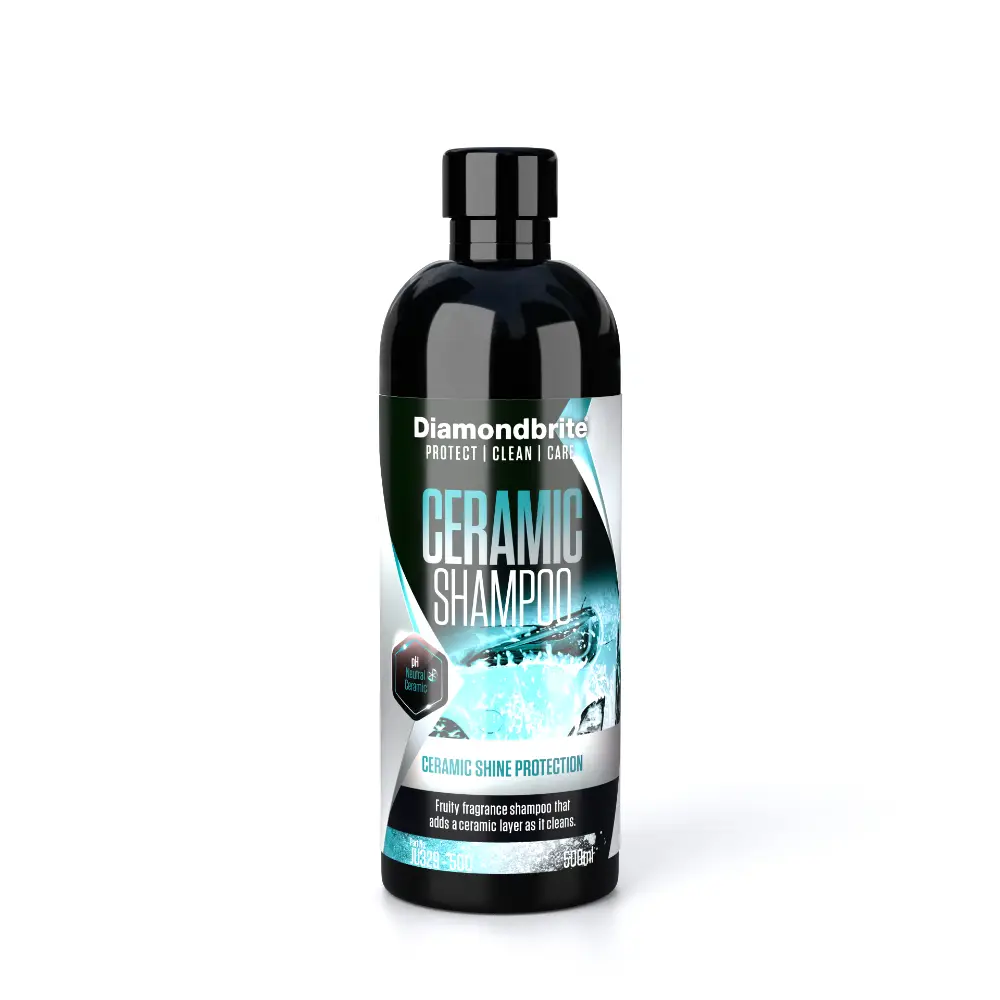
If you’ve read this far, you’ll know the checklist that matters: pH-safe, compatible with your existing coating, and formulated with a real SiO2 payload rather than a marketing label. Diamondbrite’s pH neutral car shampoo is built around exactly that brief, sitting in the 6 to 8 range that protects rather than strips whatever coating you’re running.
It’s formulated to work with Diamondbrite’s Ceramic Glaze and Advanced Ceramic systems, so you’re not layering an unknown chemistry over a coating you’ve already invested in. Whether you’re maintaining a factory-fresh finish or topping up a car that’s had a full ceramic treatment, this is the wash step that keeps beading sharp and gloss consistent between deeper maintenance sessions. Browse the full range, including glazes, snow foams, and finishing products, at the Diamondbrite shop and pick the combination that matches your car’s current protection level.
Sources
- Best ceramic car shampoos 2023
- Best car-wash soap for 2026, tested
- pH-balanced car shampoo: how it protects paint and coatings
- Car shampoo ingredients: what’s actually in the bottle
FAQ
What are the downsides of ceramic coating?
Ceramic coatings cost more upfront, need proper surface preparation and cure time, and offer no self-healing against stone chips or deep scratches despite what some marketing implies. They also demand pH-neutral maintenance products to avoid degrading the coating over time.
What is the best ceramic car shampoo in the UK?
There’s no single best option since it depends on your paint’s condition and existing protection, but a pH-neutral formula in the 6 to 8 range, such as Diamondbrite’s pH neutral car shampoo, is the safest starting point for coated cars.
Is ceramic wash worth it?
Yes, as a maintenance step. Testing from Auto Express confirms measurable gloss and beading gains, though the effect lasts days to weeks rather than months, so it’s worth it for upkeep, not as a coating replacement.
Is ceramic coating good for health?
Cured ceramic coatings themselves pose minimal ongoing health risk once fully hardened, though application involves solvents and fumes that require good ventilation and proper handling during the process itself.
How does ceramic shampoo differ from a traditional car shampoo?
Traditional shampoo simply cleans, whilst ceramic shampoo adds SiO2 particles and lubricity polymers that leave a thin hydrophobic film behind, giving you extra gloss and beading on top of the clean.