

Yes, you can apply a ceramic coating over PPF, provided you choose a film-safe formula and prepare the surface correctly. Done right, the combination gives you stronger hydrophobicity, easier washing and better chemical resistance than film alone. The main conditions to get right are the wait time after installation, the right product chemistry, and thorough decontamination before you coat.
TL;DR:
- Wait 48 to 72 hours after PPF installation before coating, so the adhesive can cure and the film can settle into position.
- Choose a coating or spray explicitly rated for flexible urethane film; rigid formulas may crack or craze, and the product data sheet should confirm compatibility.
- Wash, decontaminate, dry, and wipe each panel with IPA before application; test clay and solvent on a hidden edge if your film’s response is uncertain.
- Confirm the PPF warranty permits aftermarket topcoats before buying a product, and ask your installer to apply it if compatibility concerns arise.
- Maintain the finish with weekly ceramic shampoo washes, booster spray between washes, and a top up when water beading starts to flatten.
Table of Contents
- Why PPF and ceramic work together, not against each other
- What PPF and ceramic coating actually do
- When to coat and how to prepare the film first
- Choosing a ceramic formula that suits flexible film
- Applying ceramic coating over PPF, step by step
- What to expect and how to maintain the finish
- Warranty and compatibility: what to check first
- What practitioners and owner guides say about prepping film for coating
- DIY confidence versus calling in a professional
- Keeping your PPF protected with film-safe ceramic care
- FAQ
- Sources
Why PPF and ceramic work together, not against each other
PPF and ceramic coating solve different problems, which is exactly why pairing them makes sense. The film is a sacrificial urethane layer that absorbs stone chips, swirls and road debris, sometimes healing light marks with heat. Ceramic coating sits on top as a bonded chemical layer that repels water, resists UV damage and keeps contaminants from etching into the film’s surface, as trade guidance on PPF versus ceramic coating explains.
A common misconception is that one product makes the other redundant. In practice:
- PPF protects against physical damage; it does nothing to stop water spots or chemical staining.
- Ceramic coating protects against chemical and UV exposure; it offers no meaningful resistance to stone chips or deep scratches.
- Layering the two reduces staining, simplifies maintenance and helps stabilise the film against UV breakdown over time.
Treating them as a system, rather than a choice between one or the other, is what gets the best long-term result for your finish.
What PPF and ceramic coating actually do
Before deciding how to coat over film, it helps to know exactly what job each layer is doing:
- PPF is a thick urethane film, typically self-healing under heat, built to absorb impacts from stones and road grit.
- Ceramic coating is a thin, bonded chemical layer that creates hydrophobicity and adds a layer of UV and chemical resistance, as the same PPF and ceramic overview sets out.
- Neither product prevents dents, stops rust from the inside out, or replaces proper bodywork repair after serious damage.
Knowing these boundaries keeps expectations realistic. You are not buying invincibility, you are buying two complementary layers that each do one job well.
When to coat and how to prepare the film first
Timing matters more than almost anything else in this process. Installers generally recommend waiting 48 to 72 hours after film installation before applying any topcoat, giving the adhesive time to cure and the film time to relax into its final position.
Once that window has passed, preparation follows a familiar routine, adapted slightly for film:
- Wash the car thoroughly with a pH-neutral shampoo to lift loose dirt.
- Run a clay bar or a bag test over the film to check for bonded contaminants without risking drag damage.
- Dry fully, then wipe down with isopropyl alcohol (IPA) to strip oils and residue before coating.
- Pay close attention to edges, seams and overlaps, where contamination and poor adhesion are most likely.
If you are at all unsure how your specific film reacts to clay or IPA, your installer is the best first call.
Pro Tip: Test IPA and clay on a small, hidden panel edge first: film brands vary slightly in how they respond to solvents and mechanical contact.
Choosing a ceramic formula that suits flexible film
Not every ceramic coating is suited to PPF. Rigid, highly crosslinked chemistries that work beautifully on hard paint can crack or craze on flexible urethane film, which flexes with temperature and movement in a way paint does not. Film-safe products are formulated to flex with the substrate rather than fight it.
Look for:
- Products explicitly marketed as film-safe or flexible ceramic topcoats.
- Spray sealants designed for vinyl and PPF surfaces rather than general paint sealants.
- Flexible ceramic booster sprays intended for maintenance rather than permanent, hard coatings.
- A technical data sheet or vendor statement confirming compatibility with urethane film, not just paint.
Checking the data sheet before you buy takes a few minutes and avoids a coating failure you will notice within weeks rather than years.
Applying ceramic coating over PPF, step by step
The sequence matters as much as the product. A rushed application is the most common reason owners end up with high spots, streaking or patchy beading.
- Wash the vehicle fully to remove loose dirt and road grime.
- Decontaminate with a clay bar or bag test to lift bonded particles from the film.
- Dry completely, ideally with a clean microfibre towel rather than air drying.
- Wipe every panel with IPA immediately before coating to strip oils and residue.
- Apply the ceramic product panel by panel, following the manufacturer’s working time.
- Buff off excess, then allow the recommended cure time before the car gets wet.
Work in moderate temperatures, out of direct sun, and keep the area free of dust while the coating cures. The most frequent mistakes are applying too much product at once, using aggressive polishing pads on film, and neglecting edges and overlaps where coating tends to pool or skip.
Pro Tip: Coat door shuts and edges separately with a smaller applicator: these areas cure differently from flat panels and are easy to miss.
What to expect and how to maintain the finish
Once cured, a ceramic topcoat on PPF delivers tighter beading, easier washing and noticeably less staining from bird droppings, tree sap and road film. The film itself also gains some UV stabilisation, which helps it resist yellowing over time.
To keep both layers performing:
- Wash weekly with a dedicated ceramic shampoo rather than harsh degreasers.
- Use a booster spray between washes to refresh beading and gloss.
- Avoid strong acids, caustic wheel cleaners and abrasive polishes anywhere near coated film.
- Check beading performance every few months; flattening water is your cue to schedule a maintenance top-up.
A simple routine like this extends the life of both the coating and the film underneath it.
Warranty and compatibility: what to check first
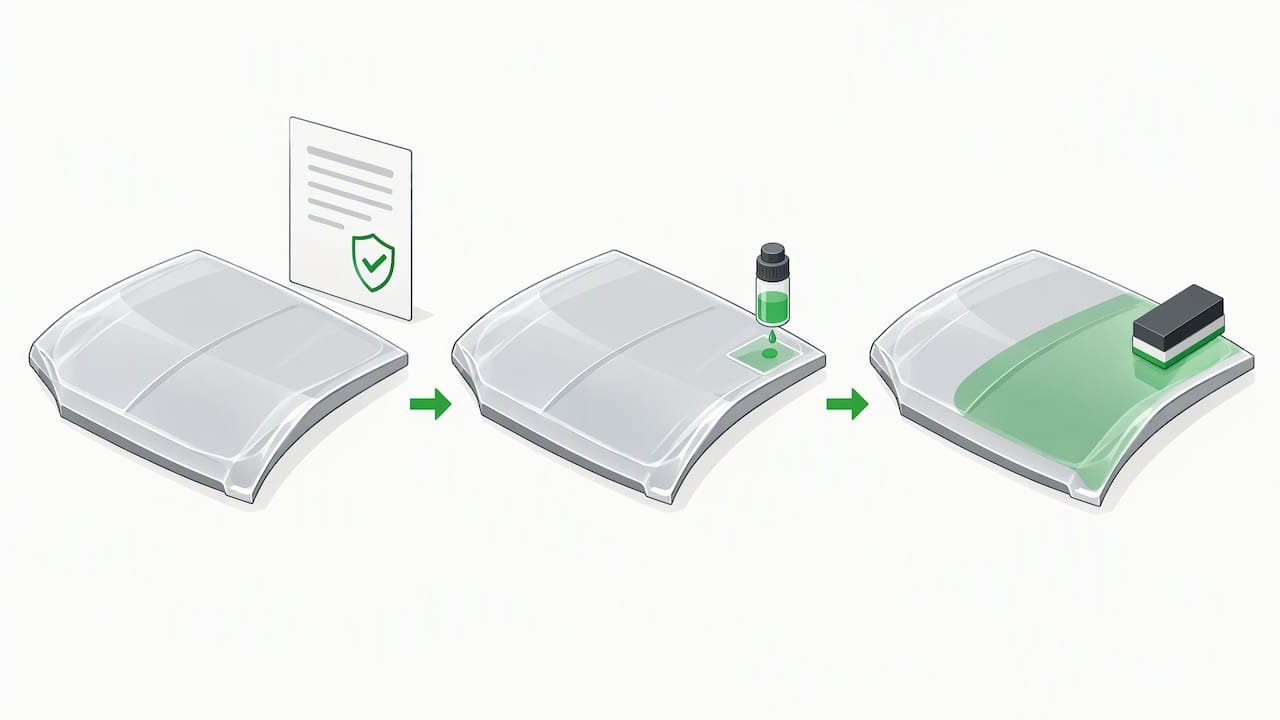
Before you coat, confirm your PPF warranty allows aftermarket topcoats. Most reputable installers are happy to confirm this in writing, and it is worth asking before you buy any product.
The main compatibility risk is applying a rigid, non-flexible coating that was never designed for film. The conservative approach is to test a hidden panel first or ask your installer directly.
- If your installer has concerns, stick to products explicitly rated for film.
- Alternatively, many installers will apply the topcoat themselves as part of the original job, keeping warranty cover intact.
What practitioners and owner guides say about prepping film for coating
Real-world reports on detailing forums are mixed when it comes to coating adhesion, particularly around existing coatings rather than fresh film. A widely referenced detailingworld thread shows some installers removing old coatings before fitting film, while others report successful work over properly prepared surfaces. The common thread is that preparation, not luck, decides the outcome.
Thorough decontamination and a careful bag test before any coating or film work consistently separate successful jobs from problem ones.
For owners working at home, our guides on running a 30-second bag test before clay-bar use and on polishing without stripping existing protection are useful references before you commit to a full-vehicle application. Testing a small, inconspicuous panel first, then checking adhesion and beading after a few days, is a sensible way to confirm compatibility before going further.
DIY confidence versus calling in a professional
Full-vehicle PPF and complex edge work are best left to a professional installer, as shown in this step-by-step application guide. DIY suits small patches and maintenance boosters. Weigh cost against a guaranteed finish and warranty cover.
— Will
Keeping your PPF protected with film-safe ceramic care
Once your film is installed and cured, ceramic care products give you a practical way to add hydrophobicity, easier cleaning and extra UV resistance.
For finish enhancement once your film has cured, our Ceramic Glaze builds a durable shield over the surface while staying sympathetic to flexible film. For ongoing upkeep, our Ceramic Shampoo refreshes hydrophobicity on every wash, and a booster spray between washes helps rebead water without another full application.
- Browse our full automotive ceramic range for glazes, shampoos and booster sprays suited to coated film.
- Check our interior ceramic coating guide if you are protecting the cabin as well as the exterior.
If you have already invested in PPF, adding the right ceramic product is a straightforward next step. Visit our shop to find the product that matches your maintenance routine.
FAQ
Can you apply ceramic coating on top of PPF?
Yes, provided you use a film-safe or flexible ceramic formula and follow the recommended wait time after installation, typically 48 to 72 hours. Proper decontamination and an IPA wipe beforehand are essential for good adhesion.
Can I have both PPF and a ceramic coating on my car?
Yes, PPF and ceramic coating are designed to work together rather than compete, with PPF handling physical impacts and ceramic coating adding chemical and UV resistance. Most detailers consider this combination a sensible approach to long-term finish care.
Should ceramic coating go on before or after PPF installation?
Ceramic coating goes on after PPF is fully installed and cured, not before. Coating bare paint first can interfere with film adhesion, so installers generally prefer a clean, uncoated panel before fitting film.
Is there a spray sealant suitable for use on PPF?
Yes, flexible spray sealants and booster sprays designed specifically for vinyl and film surfaces are widely available and safer than rigid, permanent coatings on flexible urethane. Checking the product’s technical data sheet for film compatibility before buying is the safest way to confirm it suits your PPF.
How do I check if a ceramic coating will damage my PPF?
Test a small, hidden panel first and watch for cracking, hazing or poor beading over a few days before committing to the whole car. Reviewing the manufacturer’s data sheet for flexibility and film compatibility, as recommended in trade guidance, is the more reliable check.
Sources
- PPF vs ceramic coating: UK guide (Terminax)
- Will PPF stick onto ceramic coat? (detailingworld forum thread)