
Ceramic glaze can go on a vinyl wrap. It adds a rigid outer layer that helps dirt, sap and road grime stay off the film, and it makes routine washing easier. The one thing to settle first is the finish: many ceramic products add some gloss, so a matt or satin wrap needs a small test patch before you coat the whole car. This guide covers what the glaze does for a wrap, how to prepare and apply it, and how to wash the wrap afterwards. Our ceramic range is built for exactly this kind of upkeep.
TL;DR
- Ceramic glaze protects the surface of the wrap. It does not repair the film or the adhesive underneath.
- Test on a hidden area first, especially on matt and satin films, because many ceramic products add gloss.
- Prepare the wrap with a gentle wash and a thoroughly clean, dry surface, then apply thin, even coats panel by panel.
- Wash with pH-neutral shampoo and clean microfibre. Avoid solvents, oil-based cleaners and abrasives.
- Check your film maker’s warranty terms and your installer’s advice before coating.
Table of Contents
- What ceramic glaze does for a vinyl wrap
- How a wrap differs from painted bodywork
- Matt, satin and gloss: test first
- Check the warranty before you start
- How to apply ceramic glaze to a wrap
- Washing and maintaining a coated wrap
- How long it lasts and when to top up
- Our view on ceramic care for wrapped vehicles
- Build your wrap care routine with Diamondbrite
- FAQ
- Sources
What ceramic glaze does for a vinyl wrap
A wrap is a printed or coloured vinyl film bonded over your paint. It takes the same sun, rain and grime as paintwork, but it cannot be polished back to life in the same way, so keeping the surface clean matters.
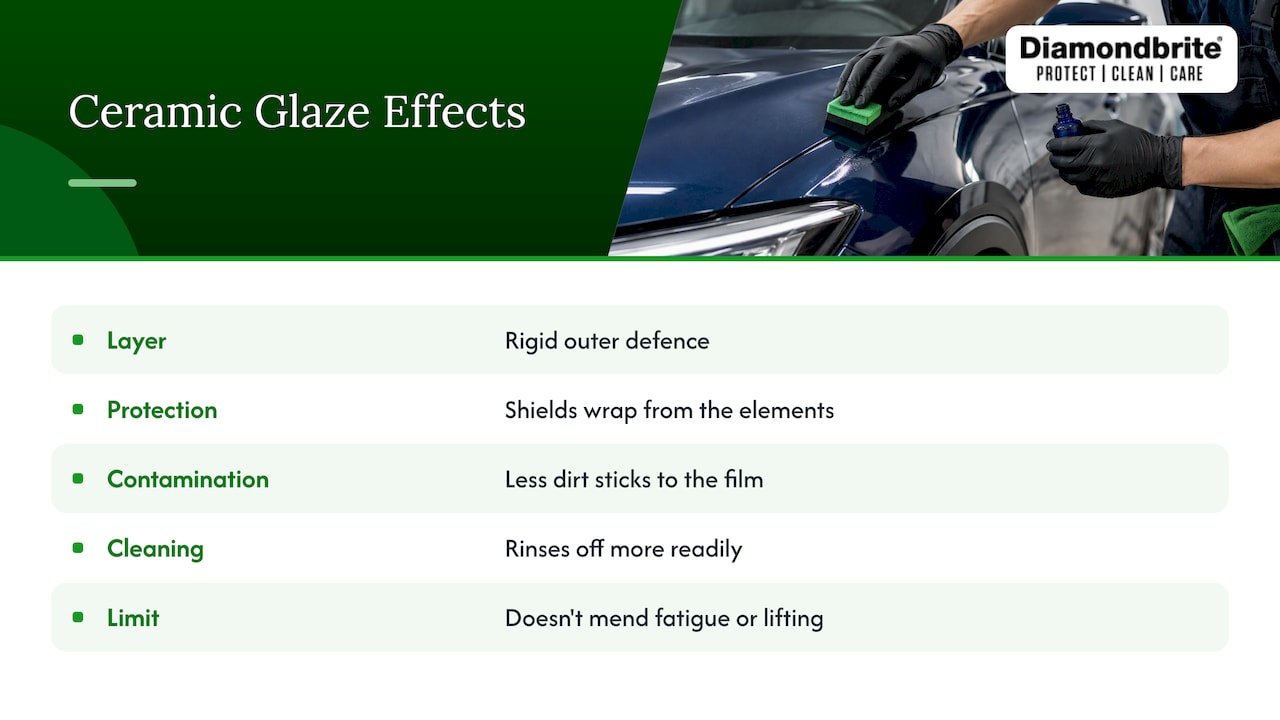
A ceramic layer works as a rigid outer defence. According to KPMF’s aftercare guide, it helps shield a wrap from the elements and reduces the chance of dirt, dust, pollen, tree sap, bird droppings, insect splatter and road grime sticking to the film. In daily use, that means contamination rinses off more readily and you spend less time scrubbing, which is the thing that wears a wrap down.
It is also worth being clear about what the layer is. A coating protects the exposed surface. As Sailifilm explains, it does not mend adhesive fatigue, edge lifting or changes beneath the film. So the best time to coat is when the wrap is fresh and well fitted, and then keep it topped up.
How a wrap differs from painted bodywork
The chemistry of a good ceramic product is much the same on both. The difference is in the substrate and the finish.
| Painted bodywork | Vinyl wrap | |
|---|---|---|
| Surface | Clear coat, can be machine polished | Vinyl film, gentle care only |
| Cleaning tolerance | Tolerates more correction | Vigorous cleaning and solvents can damage it |
| Finish risk | Usually gloss | Matt and satin films can gain sheen |
| Preparation | Wash, decontaminate, polish if needed | Wash gently and clean thoroughly, no abrasives |
Because a wrap cannot be corrected with polish, a gentle routine is everything. Our guide to applying ceramic glaze to paint and trim gives the technique in detail, and the same principles of thin coats and clean panels carry over to film.
Matt, satin and gloss: test first
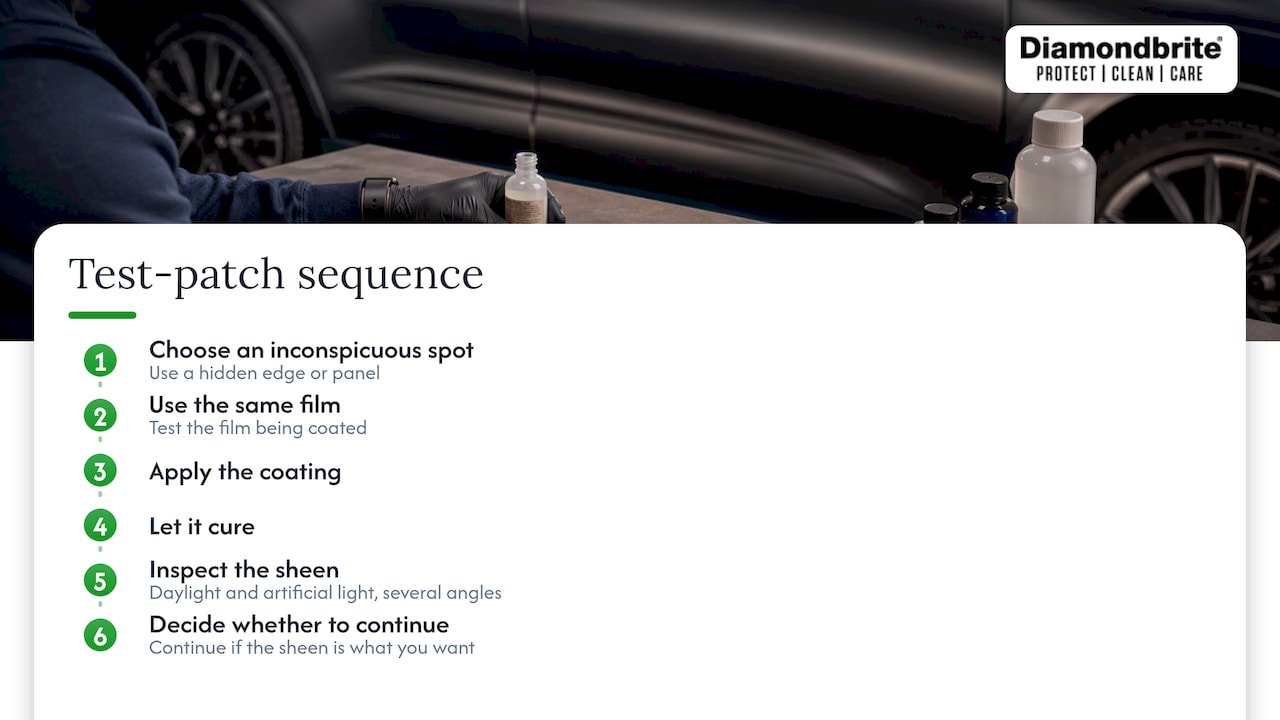
Gloss wraps are the simplest case, since extra depth and shine suit the finish. Matt and satin films are different. KPMF warns that many ceramic coating products will add some gloss, so take extra care and test before using one on any matt finish. It recommends trying a small area that is not easily noticeable.
A sensible test patch is a lower door shin, the inside of a bumper return or a panel edge that is hidden when the door is shut. Apply, leave it to cure, then look at it in daylight and under artificial light from several angles. If the sheen is what you want, carry on. If you want to keep the film exactly as it is, our guides to matte paint protection and ceramic coating on matte finishes cover how to keep a flat look.
Colour-change films, chrome, textured carbon and printed graphics can all behave differently, so run the test on the same film you are coating, not a spare offcut of another.
Check the warranty before you start
Film makers set their own care terms. Some warranties restrict products that contain solvents or distillates, and some manufacturers expect you to confirm that an unlisted treatment is suitable. Read your film’s current warranty and ask your installer for their advice in writing. It takes ten minutes and protects your cover.
How to apply ceramic glaze to a wrap
The routine is simple. Patience at each step is what gives an even finish.
- Wash gently. Use a pH-neutral shampoo, a soft mitt and plenty of water. Our two bucket wash method keeps grit off the surface, and the wash sequence keeps wheel dirt away from the film.
- Dry fully. Use clean microfibre and make sure water has gone from panel gaps, edges and seams before you coat.
- Remove tar and residue. Take tar spots off with a method that suits delicate surfaces. Our guide on removing tar safely shows the gentle approach.
- Work panel by panel. Apply a thin, even layer to one panel at a time. Thick coats are harder to level and can leave high spots, which show most on a flat finish.
- Level and buff. Follow the product’s directions on timing, then buff with a clean, dry microfibre. Swap to a fresh side of the cloth often.
- Let it cure. Keep the vehicle dry and out of harsh conditions for the time stated on the label, which is a matter of hours to a day for most ceramic products. Park under cover if you can.
Avoid coating in direct sun, on a hot panel or in damp air. And do not press hard along edges and seams, where film can lift. Always follow the instructions on your product’s label over any general timing.
Washing and maintaining a coated wrap
Coating a wrap does not change the basic rule that vinyl is not indestructible. KPMF’s film guidance says excessive or vigorous cleaning, solvents, oil-based cleaners and abrasives can damage it.
The same guidance recommends regular washing, ideally weekly or more often when the vehicle is exposed to dirt or pollutants, using a gentle pH-neutral shampoo, a soft cloth or sponge, a thorough rinse and drying with clean microfibre. That fits a ceramic routine well:
- Wash weekly, or after salty winter roads, bird droppings or a long motorway trip.
- Use a pH neutral shampoo and see our notes on ceramic shampoo frequency and dilution per bucket.
- Rinse first, so loose grit leaves before a mitt touches the film.
- Dry with clean microfibre, never a gritty towel.
- Deal with bird droppings and sap quickly, before they sit on the surface.
For a deeper look at the habit, read how to keep your ceramic coating in top condition. If you are choosing between a wax and a ceramic topper, why you do not need wax over ceramic explains it.
How long it lasts and when to top up
Durability depends on the product, the film, the weather and how you wash. Rather than trusting a headline figure, use what you can see. When water stops beading and sheeting, and dirt starts to cling again, the layer is thinning and a top-up is due. Keeping to a gentle wash routine stretches the time between applications. Our guide to topping up a ceramic coating shows how quick it can be on a clean, prepared surface.
Seasons matter too. In summer the film faces strong sun, so summer UV care is worth a read, and in winter, winter paint protection covers salt and grime.
Our view on ceramic care for wrapped vehicles
A wrap is an investment, and most of the damage we hear about comes from the cleaning, not the driving. Harsh washes, rough towels and rushed jobs are what dull a film.
That is why we design our ceramic-infused products around easy, regular maintenance. When a surface sheds dirt, you wash gently and less often, and that is the habit that keeps a finish looking sharp.
Our range covers shampoos, glazes, packs and snow foams, so you can build a simple routine: pre-wash, gentle shampoo, then a ceramic topper. Start small, test on a hidden spot, and take your time.
Will
Build your wrap care routine with Diamondbrite
If you want one place to start, our ceramic range includes ceramic glazes, ceramic shampoo, packs and snow foams, with cleaning and protection products for cars, motorcycles, leisure vehicles and marine vessels. Browse the full range at Diamondbrite and choose the products that suit your routine.
For the shampoo side of things, see what ceramic shampoo does for your paintwork.
FAQ
Can I use ceramic glaze on a matt or satin wrap?
Yes, but test first. Many ceramic products add some gloss, so try a small hidden area, let it cure and judge the result in daylight before coating the whole vehicle. KPMF’s aftercare guide gives the same advice for matt finishes.
Will ceramic glaze fix a lifting or damaged wrap?
No. A ceramic layer protects the exposed surface. It does not repair adhesive problems, edge lifting or damage under the film, so keep the wrap clean and address any lifting with your installer.
How often should I wash a ceramic-coated wrap?
KPMF suggests weekly washing, or more often if the vehicle meets a lot of dirt or pollutants. Use pH-neutral shampoo, a soft mitt and clean microfibre, and avoid solvents and abrasives.
Is this the same as pottery ceramic glaze?
No. Pottery glaze is a kiln-fired finish for clay. A car ceramic glaze is a liquid protective layer applied by hand to vehicle surfaces. Our article on ceramic glaze on glass explains the difference.