

Yes, used correctly, ceramic coating on glass repels water, cuts down on smearing and makes cleaning far easier. It won’t rescue chipped glass or replace worn wipers, and how long it lasts depends heavily on the formulation and how you drive. Products like those in a ceramic range fit neatly into a proper wash-and-maintain routine, provided you treat coating as an upgrade to good habits, not a substitute for them.
TL;DR:
- Ceramic coatings on glass improve water beading and sheeting, especially at high speeds, and reduce the effort needed for cleaning and removing ice.
- Proper surface preparation, including thorough washing, decontamination, and alcohol wipe-down, is crucial for the coating’s longevity and effective performance.
- The lifespan of a ceramic coating typically ranges from three to twelve months, influenced heavily by wiper wear, cleaner choice, and driving conditions.
- Owners should regularly inspect beading versus sheeting and conduct maintenance to maintain optimal water-repelling properties over time.
- The coating provides benefits mainly to drivers in frequent rain or coastal areas, but it cannot fix existing glass damage or worn wiper blades.
Table of Contents
- What ceramic coating on glass actually does to water and light
- Is ceramic glass coating worth it for your driving?
- How to prepare and apply ceramic coating to glass properly
- How long does ceramic coating on glass really last?
- Where Diamondbrite glass products fit your routine
- A pragmatic take on safety and expectations
- Get the right starter kit for glass ceramic coating
- Sources
- FAQ
What ceramic coating on glass actually does to water and light
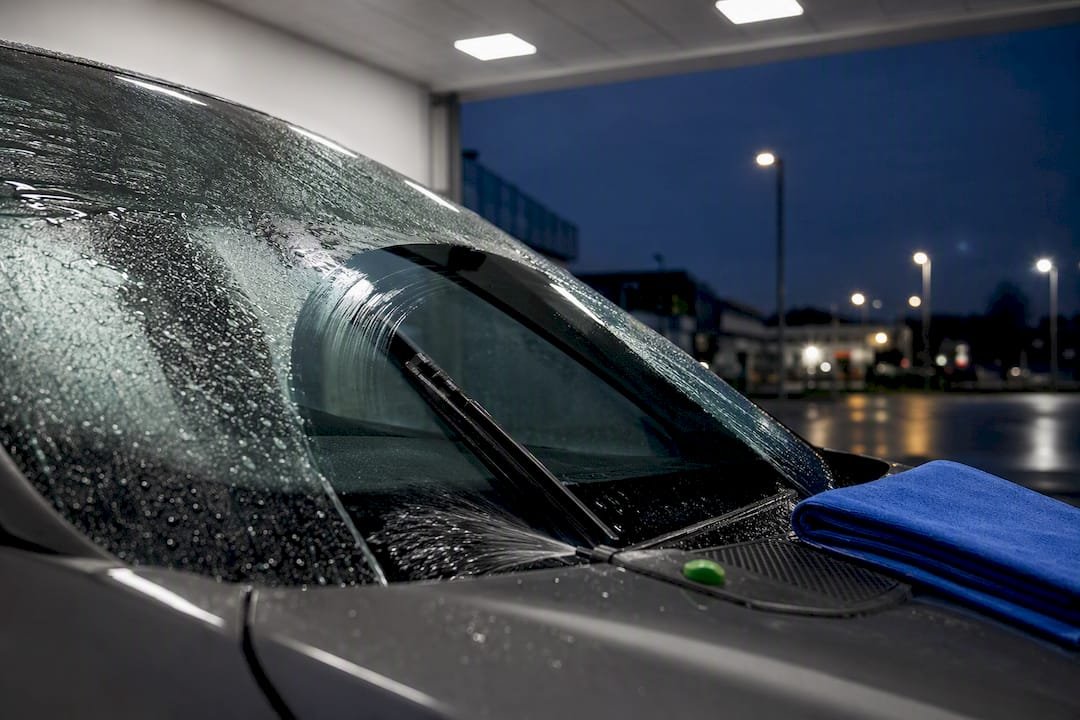
A ceramic coating on glass works by lowering the surface energy of the glass, which changes how water behaves on contact. Instead of spreading into a flat sheet, water pulls itself into tight beads that roll off at speed rather than clinging and smearing across your view.
That’s the science behind the benefit you actually notice: rain sheeting sideways off the windscreen at motorway speeds instead of pooling in front of the wipers. A controlled study on hydrophobic windscreen treatment found freshly applied coatings improved visual acuity in simulated rain by around 34%, with drivers reacting over a second faster to hazards. That’s a meaningful result, though the researchers only tested treatments at peak performance, not after months of wear.
The practical benefits show up in several places:
- Better beading and sheeting — water forms tighter droplets and clears faster in heavy rain.
- Easier cleaning — bugs, tar and light road grime release with less scrubbing.
- Reduced ice adhesion — frost and thin ice sheets lift away more easily on a coated surface.
- Improved night clarity — less water film means fewer light-scatter halos from oncoming headlights.
There are limits, though. Overapplied coating smears rather than beads, distorting your view exactly when you need clarity most. Coating also cannot fix pitted, hazy or chipped glass. It sits on top of the surface it’s given, imperfections included.
Is ceramic glass coating worth it for your driving?
Whether ceramic coating on windows and windscreens earns its place depends on how and where you drive, not just how much you want a shinier car.
You’ll get the most out of it if you fall into one of these groups:
- Motorway commuters who deal with spray from lorries and need clear vision at speed.
- Coastal or high-rainfall drivers facing frequent downpours and salt-laden air.
- Frequent long-distance drivers who value less wiper strain and fewer stops to clean the screen.
- Anyone tired of bug and tar build-up who wants an easier weekly wash.
It’s a poor fit if your glass already has chips, deep pitting or persistent haze; the coating won’t hide any of that and may highlight it under certain light. Split or perished wiper blades are another reason to hold off, since a hardened rubber edge will chatter across new coating and strip it prematurely.
Before buying anything, run through this checklist: inspect your wiper blades for cracking, check the glass itself for chips or scratches, test any product on a small section first, and budget for the ongoing maintenance rather than treating it as a one-off purchase.
How to prepare and apply ceramic coating to glass properly
Preparation decides whether a ceramic coating on glass lasts three months or barely survives one motorway trip through rain. Skipping steps here is the single biggest reason DIY applications fail.
The DIY sequence:
- Wash the glass thoroughly with a dedicated shampoo to lift loose dirt and grit.
- Decontaminate and compound the surface to strip old wax, silicone-based repellents and baked-on residue. This step matters more than most owners expect.
- Wipe down with isopropyl alcohol (IPA) on a clean microfibre cloth to remove any remaining oils. Skip this and new coating will bond unevenly, leading to patchy beading later.
- Apply the coating using the applicator supplied, working in small, overlapping sections rather than the whole screen at once.
- Allow the correct dwell time before buffing off, then let it cure fully before driving in wet conditions, avoiding direct sun and rain during the curing window.
Professional applicators follow a similar structure but add layers of control you can’t easily replicate at home: masking off trim and rubber seals, machine polishing to remove micro-contamination that a hand wipe misses, and inspecting the finish under raking light or headlights to catch smearing before it sets. Independent testing on a specific glass coating found that treated glass showed measurably higher scratch-induction pressure than untreated glass in one Autotrader-reported test, a useful illustration that formulation and process both affect the outcome, not just the product name on the bottle.
Pro Tip: If wipe-off leaves faint halos or streaks visible under headlights at night, stop and redo the prep stage. Layering fresh coating over old repellent residue is the most common cause of smearing, and it’s far easier to fix before the coating cures than after.
Whichever route you take, finish with a real-world test: run the washers and wipers at normal speed, then inspect the screen at night under streetlights or headlights. A static bead test on a dry panel tells you very little about how the coating performs in actual rain at 60mph.
How long does ceramic coating on glass really last?
Lifespan varies more than most marketing copy admits, and several factors drive that variation directly.
Formulation quality matters most. Laboratory-grade coatings using nano-oxide or polysiloxane chemistry can block a substantial share of UV-A light and hold up well under accelerated ageing tests, but these engineered systems sit well above what typical consumer glass repellents deliver. Wiper abrasion is the everyday enemy: every pass of an ageing blade works like light sandpaper on the coated surface, especially if grit gets trapped under the rubber. The cleaners you use afterwards matter too. Harsh ammonia-based glass cleaners strip hydrophobic coatings faster than a pH-balanced, coating-safe formula.
A few quick checks tell you where your coating actually stands:
- Bead versus sheet test — tight beading means the coating is still active; flat sheeting means it’s fading.
- Full wash cycle inspection — run washers and wipers, then check for smearing across the swept area.
- Night headlight check — look for light-scatter or haze that wasn’t there when the coating was fresh.
A TÜV-style test on a named liquid glass coating reported effective water dispersion at 50 km/h and easier ice removal, results specific to that formulation rather than a guarantee across every product on the market. Most owners find a booster treatment every three to twelve months keeps performance where it should be, depending on mileage and weather exposure. If smearing creeps back in, it’s usually contamination sitting under the coating rather than the coating itself failing, so a light compound and reapplication solves it faster than piling on another layer.
Where Diamondbrite glass products fit your routine
A workable ceramic coating routine needs three things working together: a clean starting surface, a coating that actually bonds, and a maintenance habit that protects the investment. Diamondbrite’s Automotive Glass & Windscreen range is built around exactly that sequence, pairing dedicated glass cleaners with a ceramic glaze designed for the prep-apply-maintain cycle rather than a single spray-and-forget product.
Owner guides built around this range generally recommend:
- Boosting beading performance every three to six months, matched to how often you’re driving in rain.
- Using a ceramic-infused shampoo for regular washes to avoid stripping the coating with harsh degreasers.
- Polishing sparingly, and only with products designed not to cut through an existing coat when removing light contamination.
Owners who follow that rhythm tend to report more consistent beading through winter, when ice release and clear night vision matter most.
A pragmatic take on safety and expectations
Ceramic coating on glass genuinely improves how water and light behave on your windscreen. It doesn’t improve on worn wipers, cracked glass or a driver skipping demisting on a foggy morning. Treat it as one part of a routine, test any product on a small area first, prep properly, and reapply on schedule rather than expecting a single application to last indefinitely. Get those basics right and the coating earns its keep every time it rains.
— Will
Get the right starter kit for glass ceramic coating
An approach to glass protection that skips the guesswork of mixing random products from different brands, with products designed to work as one system rather than fighting for space on the same windscreen. A sensible starter kit covers four items: a dedicated glass cleaner to strip old residue, a decontamination compound, the ceramic glaze itself, and a booster shampoo to extend beading between full reapplications.
Pair that kit with the wash routine and boosting schedule covered earlier, and you’ve got a system that holds its performance through a full British winter rather than fading after the first heavy frost. Check the full Automotive Glass & Windscreen range to see product details and put together the kit that matches your car and driving habits.
Sources
- The influence of hydrophobic windshield coating on driver visual performance (UMTRI/experiment)
- Ceramic coating lifespan (Autotrader summary)
FAQ
Does ceramic coating work on glass?
Yes. It lowers surface energy so water beads and rolls off instead of smearing, and independent testing has recorded measurable water dispersion at 50 km/h on treated glass. It won’t fix chipped or pitted glass, and results vary by formulation.
How long does ceramic coating last on glass?
Most consumer coatings hold noticeable beading for three to twelve months before needing a booster treatment, depending on wiper condition, cleaning products used and how often you drive in rain. Wiper abrasion and harsh ammonia-based cleaners are the biggest factors that shorten this window.
What is the best ceramic coating for glass?
There’s no single best option for every car, but a coating designed specifically for glass, applied with proper preparation, consistently outperforms an all-purpose paint sealant repurposed for the windscreen. Diamondbrite’s Automotive Glass & Windscreen products are built for this specific prep-apply-maintain workflow.
Is ceramic coating on windows worth it?
It’s worth it if you drive frequently in rain, live near the coast, or commute on motorways where spray builds up fast. It’s less worthwhile if your glass already has chips or haze, or if your wiper blades are worn, since neither of those problems gets fixed by a coating.