

Most retail ceramic sprays, glazes and shampoos need only a short period of time, typically from minutes up to a couple of hours before you can touch them again, and a full 24 to 48 hours before a proper wash. The simplest rule: buff within the product’s flash time if it asks for it, then keep water off the panel until that initial window has passed. Some ceramic brands build their glazes and shampoos around these short, forgiving timelines, and a gentle two-bucket wash afterwards helps keep protection intact.
TL;DR:
- Buff within the product’s flash time and keep water off the panel for at least one to two hours after application to prevent streaking and early washout.
- Temperatures, humidity, and surface conditions significantly influence curing times, with warmer and drier environments speeding up the process.
- Avoid abrasive cleaning methods like clay barring or machine polishing for at least one to two weeks to allow the coating to fully settle.
- Reapply or boost protection every few months with a spray-on product, and monitor for signs of wear such as reduced beading or gloss.
- Rain during the curing window can be managed by moving the vehicle under cover and checking for uneven beading before reapplying if necessary.
Table of Contents
- Typical cure and dwell times for retail ceramic products
- First 24 hours: immediate aftercare and actions to avoid
- When to wash or boost a retail ceramic coating
- Common mistakes and how to fix them
- A practical view on getting ceramic timing right
- How Diamondbrite’s ceramic range fits this timeline
- Key resources and Diamondbrite learning links
- FAQ
Typical cure and dwell times for retail ceramic products
Retail ceramic products are not all the same, and the wait time depends heavily on what you have bought. Instant-bead sprays tend to level and bond fastest, while leave-on glazes ask for a longer settling period before they meet water or road grime.
Here is roughly what to expect by product type:
- Instant-bead sprays: buff off or allow to flash within a short time window.
- Leave-on glazes and sealant sprays: leave for a short settling period before any water contact.
- Rinse-off ceramic shampoos: work almost immediately during the wash, with protection building as the panel dries.
Temperature, humidity and the surface temperature of the panel all affect how quickly a coating settles. A cold garage floor or a damp evening will slow things down, while a warm, dry afternoon speeds up flash time considerably. The amount of SiO2 solids in the formula also matters. Retail products deliberately carry lower solids and longer flash windows than trade-only options, which is part of why they suit DIY use so well. You do not need a controlled workshop environment. You need a dry panel, a reasonable temperature, and a bit of patience.
First 24 hours: immediate aftercare and actions to avoid
What you do in the first few hours after application matters more than anything that follows. Get this right and the coating settles evenly; rush it and you risk streaking or an early washout.
- Buff within the flash time. If the product calls for levelling, use a soft microfiber cloth and light, circular pressure rather than hard rubbing.
- Keep the car dry. Avoid rain, heavy dew, sprinklers, car washes and pressure washers until the initial dwell period has passed.
- Park somewhere sheltered. A garage or covered space beats an open driveway, especially if the forecast is uncertain.
- Watch the temperature. Avoid parking on very cold concrete or leaving the car in direct, intense sun straight after application.
- If it starts raining early, move the car under cover as soon as you can and check for streaking once it is dry rather than wiping while wet.
Pro Tip: Keep a spare microfiber cloth in the boot on application day, so a sudden shower does not catch you without a way to protect the finish.
When to wash or boost a retail ceramic coating
Once the initial dwell period has passed, the next question is when you can actually clean the car again. Retail ceramic layers are durable enough for regular use, but they still reward a gentle touch early on.
- A gentle hand wash is safe from about one to two days after application, using a two-bucket wash technique to avoid dragging grit across fresh protection.
- Hold off on decontamination, clay-barring or machine polishing for about one to two weeks, giving the coating time to fully settle before anything abrasive touches it.
- Stick to a pH-neutral shampoo for routine washes rather than anything stripping or heavily alkaline.
- Use a spray-on booster to refresh beading and gloss every few months depending on how much exposure the car gets.
Maintaining the coating properly is what makes the difference between a glaze that fades within weeks and one that keeps beading well into the next season.
Common mistakes and how to fix them
Most problems with retail ceramic products trace back to timing rather than the product itself. The good news is that nearly all of them are fixable without starting from scratch.
- High spots or streaking: usually caused by uneven buffing or too much product in one area. Re-buff gently with a clean microfiber cloth, or use an isopropyl alcohol (IPA) wipe to lift the residue before reapplying a thin, even layer to that patch only.
- Early washout from unexpected rain: dry the car fully, inspect for even beading, and reapply if the protection looks patchy or has clearly washed away.
- Over-aggressive correction: avoid heavy polishing or compounding to “fix” a coating issue, since this risks cutting into the clear coat rather than just removing the ceramic layer.
- Deciding whether to strip and start over: a booster or spot reapplication is usually enough for minor fading, while a full safe removal and fresh application suits a coating that has failed unevenly across the car.
Pro Tip: Test a small, hidden panel first if you are reapplying over an older layer, so you can see how the product behaves before committing the whole car.
A practical view on getting ceramic timing right
Most of the anxiety around ceramic coating timing comes from applying professional-grade expectations to a product that was never designed to need them. Retail glazes and shampoos are built to be forgiving. If you buff within the flash time and keep water off the panel for a couple of hours, you have done the hard part.
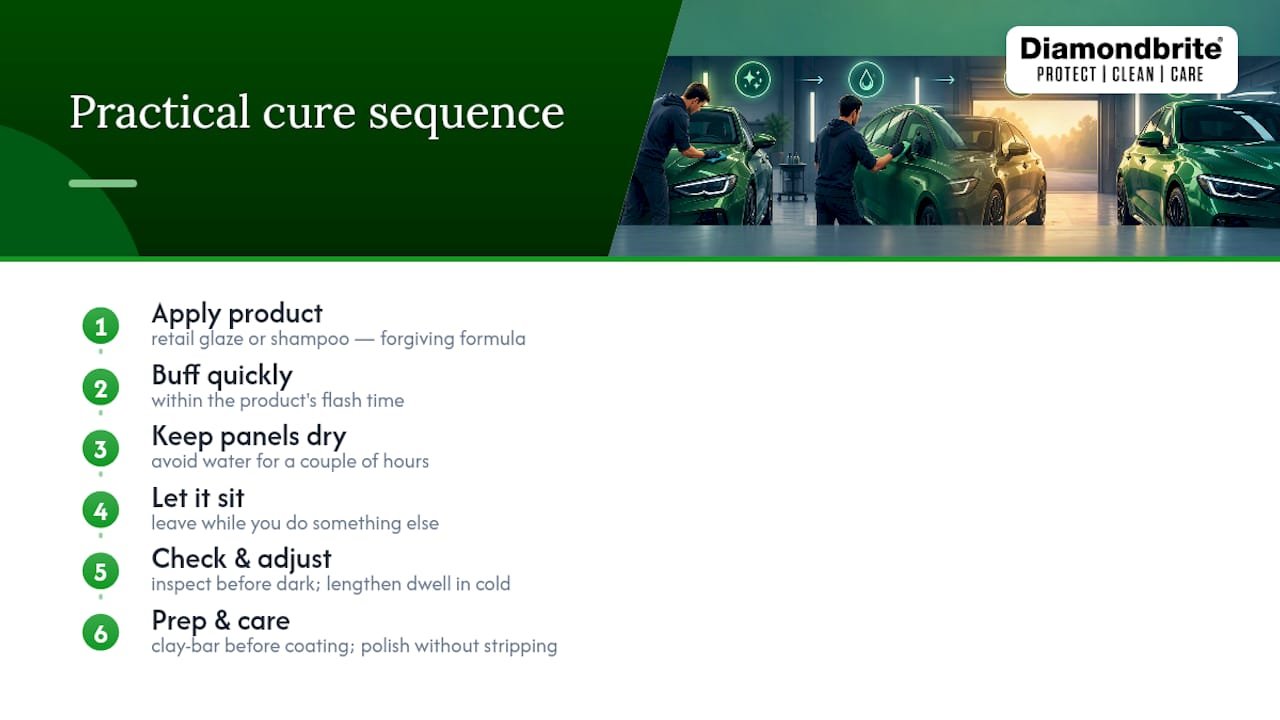
In practice, a Saturday afternoon in the garage is plenty of time: apply, buff, let it sit while you do something else, and check it before dark. Seasonal changes matter more than most people expect. A coating applied on a cold, damp evening in the UK will behave differently to one applied in warm July sun, so adjust your dwell time slightly rather than following the label to the minute.
If you are prepping the paint first, look at Diamondbrite’s guidance on clay-barring before ceramic coating and its notes on polishing without stripping the ceramic layer once it is cured. Both save you from undoing good work later.
— Will
How Diamondbrite’s ceramic range fits this timeline
Certain ceramic products are built around the timings covered above, so users are never guessing how long to wait. Some ceramic glazes suit the leave-on category, providing a settling window before water contact and a durable, glossy finish once cured. Ceramic shampoos work during the wash itself, topping up protection every time the vehicle is cleaned rather than requiring a separate dwell period.
- Ceramic Glaze: apply, buff within the flash window, then avoid water for the recommended dwell period.
- Ceramic Shampoo: use as part of your regular two-bucket wash to maintain beading between full glaze applications.
Some ceramic coatings and shampoos are designed for straightforward DIY use rather than workshop conditions, making them generally easy to apply correctly the first time. You can browse the full Diamondbrite range and check the exact application steps listed on each product page before you buy.
Key resources and Diamondbrite learning links
A few Diamondbrite pages go further into the steps this article touches on:
- Ceramic shampoo benefits: what the shampoo does for your paintwork between full glaze applications.
- Clay bar prep guide: how to prepare paint properly before your next application.
- Ceramic coating maintenance routine: how often to boost beading and gloss once the coating has settled.
FAQ
What happens if it rains during the curing window?
Move the car under cover as soon as possible and let it dry naturally rather than wiping it while wet. Once dry, check for streaking or patchy beading, and reapply a thin layer to any affected area if the protection looks uneven.
How often should I reapply a retail ceramic glaze?
This depends on exposure and wash frequency, but a spray-on booster every few months typically keeps beading and gloss topped up. A full reapplication is worth doing once beading noticeably weakens across most of the car.
How can I tell if the ceramic protection has worn off?
The clearest sign is water no longer beading tightly and instead sheeting or sitting flat on the paint. Reduced gloss and dirt sticking more readily to the surface are also good indicators that it is time for a booster or fresh application.
Do retail ceramic products need the same downtime as professional coatings?
No. Retail glazes, sprays and shampoos are formulated with lower solids and longer flash times specifically so they suit DIY use, needing only minutes to a couple of hours of initial dwell rather than an extended cure period. A gentle wash is generally safe within 24 to 48 hours.
Can I use a ceramic shampoo straight after applying a ceramic glaze?
It is best to wait until the glaze has completed its initial dwell period, usually up to 2 hours, before washing at all. After that, a pH-neutral ceramic shampoo used with a two-bucket wash is a safe way to maintain the glaze rather than replace it.