

The best car air vent cleaner is not one product but a small routine: a soft vent brush to lift the dust, a vacuum to take it away, and a car-safe interior cleaner on a cloth for the slats and surround. Our Small Interior Vent & Dash Brush and Ultra Clean All Purpose Interior Cleaner 500ml cover those two jobs. Below you will find the order to work in, the mistakes that push dust deeper, and how to tell a dusty vent from a smell that needs a garage.
TL;DR
- Work top to bottom and vacuum before you wipe, so dust is removed rather than pushed deeper into the vents.
- Use a soft-bristled brush on the slats, then wipe the plastic with a car-specific interior cleaner on a cloth, never sprayed into the vent.
- A stale or musty smell often traces back to the cabin filter, which is typically changed every 12,000 to 15,000 miles or yearly.
- A sweet, burning or petrol smell is a safety matter: stop driving and have the car checked.
- Finish with a quick wipe-over each time you wash the car so dust never builds up.
Table of Contents
- Why car vents get dirty so quickly
- What you need
- How to clean car air vents, step by step
- Quick routine for busy weeks
- What the smell is telling you
- Mistakes that make vents worse
- Our view on vent cleaning
- Get the kit together
- FAQ
- Sources
Why car vents get dirty so quickly
Air vents are narrow, gated and sit in the line of fire. Every time the fan runs, it pulls in fine dust and pollen and blows some of it across the slats. RAC Drive notes that dust gathers in those narrow gated areas and suggests getting in with a soft brush while a vacuum picks up as you go.
A wipe alone does not work well here. A cloth skims the front of each slat and leaves the dust sitting in the gaps, and sprayed liquid has nowhere to go. That is why vents look grey and furry even in an otherwise tidy car.
What you need
Keep the kit small:
- A soft, thin brush. Which? recommends a small brush with soft bristles so surfaces are not scratched. Our vent and dash brush is made for exactly this job.
- A vacuum with a crevice tool or dusting brush. Which? points out that suction alone is not always enough to shift dust from vents and controls, so you use the brush and the vacuum together.
- A car-specific interior cleaner. Which? advises a cleaner made for cars rather than harsh household chemicals, and Parkers says household products can be too harsh for car materials.
- Two clean microfibre cloths, one damp with cleaner and one dry for buffing.
If you have a motorcycle, camper or boat with small vents and switchgear, the same brush-then-wipe approach works on the tight plastic around dials and louvres.
How to clean car air vents, step by step
1. Start at the top of the cabin
Which? advises cleaning the interior from top to bottom so dust dislodged from the dashboard and vents does not land on footwells you have already finished. Do the vents before the carpets, not after. If you are tackling the whole dash, our guide to cleaning a car dashboard fits neatly around this step.
2. Brush each slat and vacuum as you go
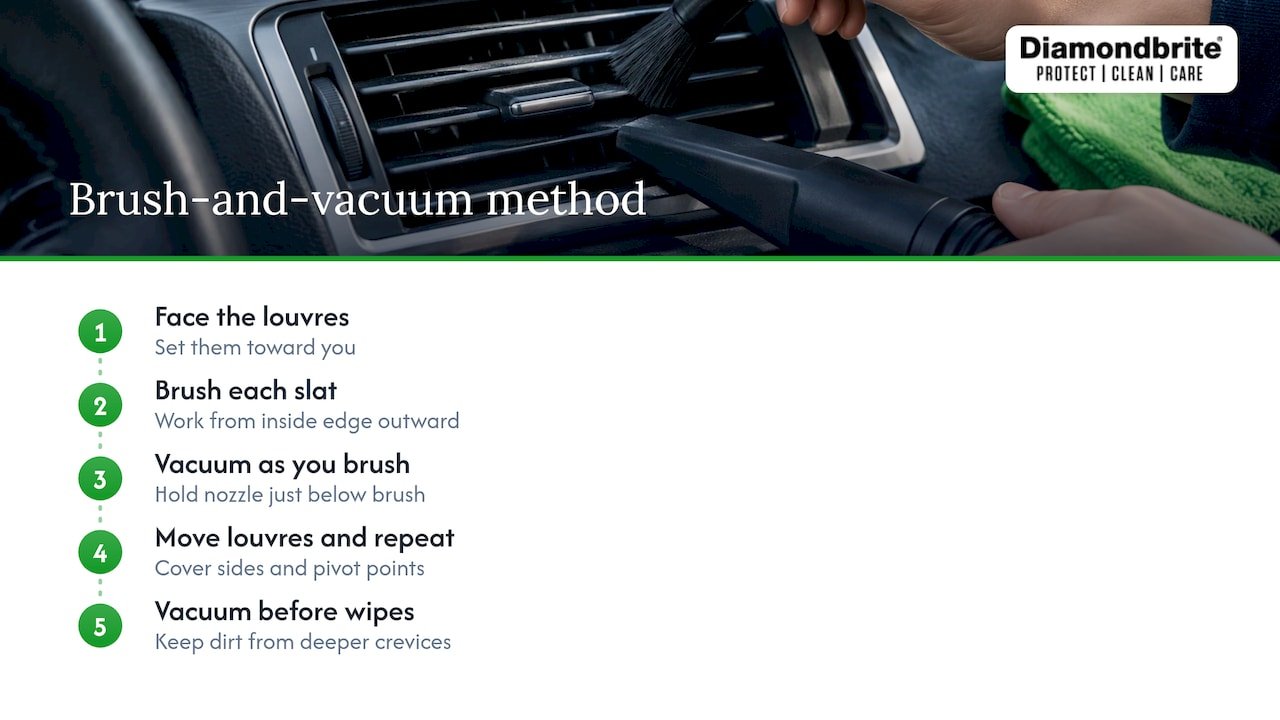
Set the vent louvres to face you, then run the brush along each slat, working from the inside edge outwards. Hold the vacuum nozzle just below the brush so the loosened dust is pulled away immediately. Vacuum before you use any wipes, as Which? advises, otherwise dirt is pushed deeper into the crevices.
Move the louvres through their full range and repeat. The sides of each slat and the pivot points are where most grime hides.
3. Wipe with interior cleaner on a cloth
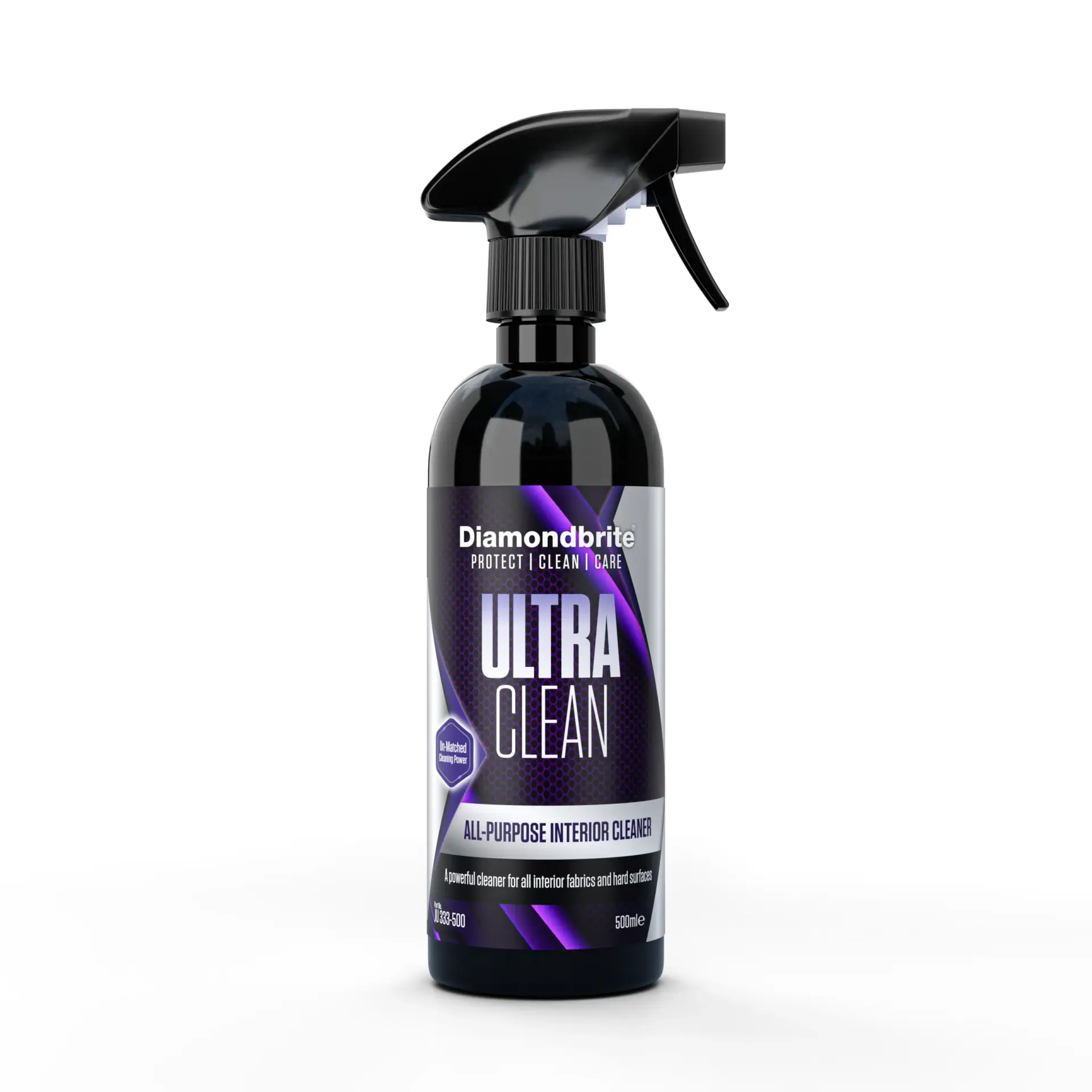
Spray Ultra Clean All Purpose Interior Cleaner onto the microfibre cloth, not the vent. This keeps liquid out of the ducting and away from the switches behind the dash. Wipe the vent surround, each slat face and the surrounding trim, then buff dry with the second cloth.
If you want to know how far you can take all-purpose cleaners on different plastics and fabrics, we explain it in our piece on using APC on a car interior safely.
4. Skip the shine
Parkers advises avoiding shiny or greasy cockpit-shine products on dashboards. They glare on the windscreen and attract dust straight back onto the vents. A clean, matt finish is the goal.
5. Finish with the cabin filter in mind
A clean vent with a clogged filter will still blow dusty, stale air. Garage specialists StayKool suggest replacing the cabin filter every 12,000 to 15,000 miles or yearly. Your handbook gives the exact interval and location for your model.
Quick routine for busy weeks
You do not need a full session every time. A two-minute version keeps vents tidy:
- Sweep each vent with the dry brush while the car is parked.
- Run a vacuum nozzle over the loosened dust.
- Wipe the surround with a cloth lightly dampened with interior cleaner.
Do it each time you wash the exterior and the vents never get the chance to clog.
What the smell is telling you
Cleaning the visible vent surfaces removes dust, but a smell can come from further inside the system. Treat the type of smell as a clue. Formula One Autocentres explain that musty or damp smells point to bacteria and mould in the vents, evaporator or filter, while burning or petrol smells indicate an electrical fault or fluid leak.
A sweet smell needs attention straight away. The same source warns that it can indicate a coolant leak containing toxic ethylene glycol. If you notice it, stop driving and have the system checked by a garage.
A stale or musty smell is where tidy habits help most:
- Find the source first. Parkers suggests looking for an old takeaway under a seat or damp carpets, cleaning the interior thoroughly, and only then using a car-specific air freshener.
- Switch the A/C off a few minutes before you arrive and leave the fan running, which AUTODOC UK says helps dry the evaporator.
- Check for damp. Mould that has taken hold in carpets or trim is a separate job, covered in our guide to stopping mould returning in UK cars.
For a broader approach, diagnosing the source of a car odour first will save you chasing a smell you have not located. And if a smell returns within a week of cleaning and you have already changed the filter, or you have allergy or asthma symptoms with the air con on, that is the point to book the system in with a garage, as StayKool advises.
Mistakes that make vents worse
- Spraying liquid straight into the vent. It runs into the ducting and onto electrics. Use a cloth.
- Using stiff bristles. Hard brushes scratch the plastic and leave visible marks on gloss black trim.
- Wiping before vacuuming. You smear fine dust into a film that is harder to remove.
- Masking a smell with fragrance. StayKool lists air fresheners among the things that do not fix the cause.
- Pouring bleach or harsh chemicals down the vents. The same source warns this damages plastics and electrics.
Our view on vent cleaning
We see vents as the part of the interior people forget until the sun hits them and every speck of dust shows. The fix is a small, tidy routine, not a heavy chemical.
That is why we make a dedicated brush with soft reach for the slats and pair it with an all-purpose interior cleaner for the surrounds. Brush, vacuum, wipe: three quick steps that keep the cabin fresher and the dashboard looking cared for.
If you look after the interior as often as the paintwork, you build a habit that costs very little and protects the look of your car for years.
Will
Get the kit together
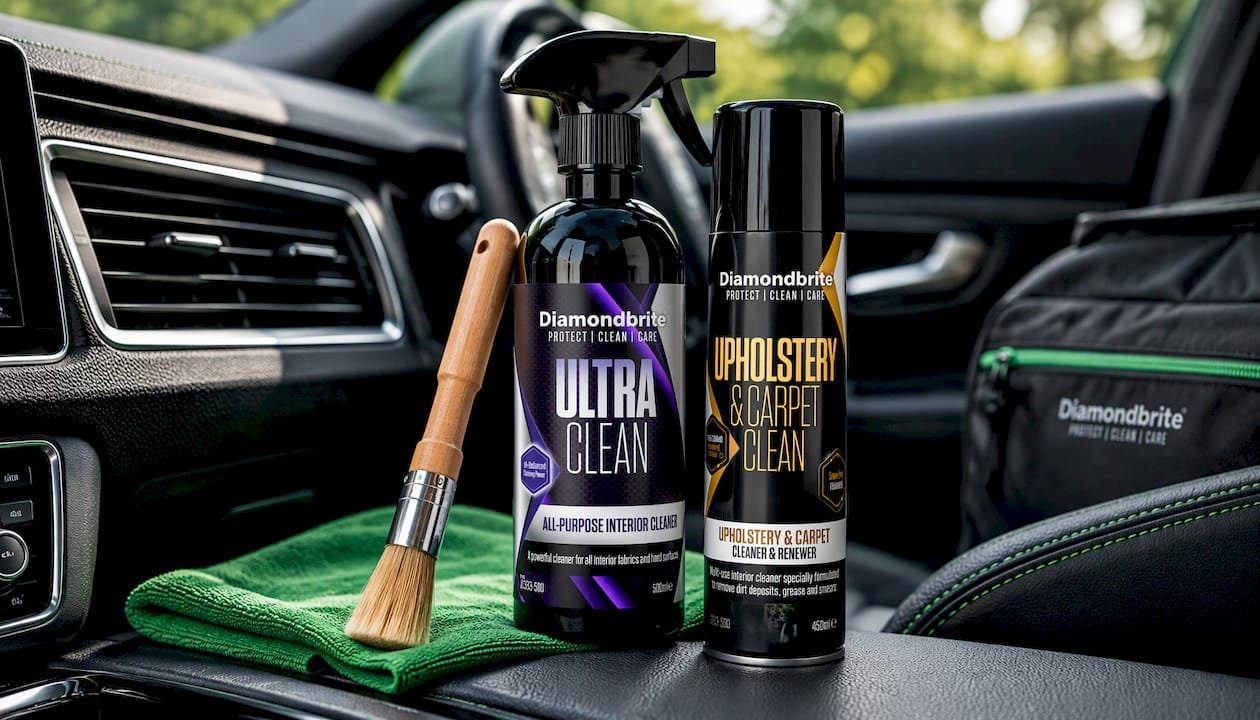
Our Small Interior Vent & Dash Brush is designed for vents, buttons and dash detail, and the All Purpose Interior Cleaner handles the surrounding plastics. If the carpets and seats need attention at the same time, the Upholstery and Carpet Cleaner 450ml completes the set. You can browse the full interior range at Diamondbrite.
FAQ
How often should I clean my car air vents?
A quick brush and vacuum each time you wash the car keeps dust from building up. A full wipe-down with interior cleaner every month or two suits most drivers. If you drive on dusty roads or with pets, do it more often.
Can I use a household cleaner on my vents?
It is better to use a car-specific interior cleaner. Which? and Parkers both advise against harsh household products, which can be too strong for car plastics and trim. Apply the cleaner to a cloth rather than spraying it into the vent.
What is the best brush for car vents?
Choose a small, soft-bristled brush that fits between the slats, as Which? recommends. Our Small Interior Vent & Dash Brush is made for vents and dash detail, and you can pair it with a vacuum nozzle to lift the dust away as you brush.
Why do my vents smell musty even after cleaning?
The cause is often moisture and microbial growth on the evaporator or a damp cabin filter, according to AUTODOC UK. Replace the filter, dry the system by running the fan before you park, and check carpets for damp. If it comes back within a week, have the system looked at by a garage.
Sources
- 7 tips for cleaning the inside of your car, Which?
- Top tips for cleaning your car, RAC Drive
- How to properly clean your car’s interior, Parkers
- Bad odours from car aircon vents, StayKool
- 5 reasons why your car air conditioning smells, Formula One Autocentres
- Why your EV air con smells bad and how to fix it, AUTODOC UK