
For fresh droppings, soften them immediately with a gentle stream of water or a quick detailer spray, then lift the residue with a folded clean microfibre cloth using a dabbing motion. Never rub. For dried or hardened deposits, lay a warm-water-soaked microfibre over the spot and leave it to dwell for several minutes before gently lifting the softened material away. Scraping dry deposits is the single most common cause of scratched paint and damaged surfaces.
- Fresh droppings: water or detailer spray, dab and lift, rinse clean.
- Dried droppings: soak, dwell several minutes, lift gently, never scrape.
- Health warning: for larger accumulations, wear rubber gloves, eye protection, and an FFP2/FFP3 or N95-style mask, and always dampen deposits before disturbing them.
Table of Contents
- Why bird droppings are a genuine health risk
- What to put in your bird dropping cleaning kit
- How to remove bird droppings from every common surface
- Tackling old, hardened, or potentially etched deposits
- Disinfecting surfaces and disposing of waste safely in the UK
- Practical steps to prevent future incidents
- How ceramic coatings reduce the risk and make cleanup easier
- When should you call a professional?
- Key takeaways
- Protect your car before the next dropping lands
Why bird droppings are a genuine health risk
Bird waste can carry pathogens including Salmonella, E. coli, Psittacosis, and Histoplasmosis. The greatest danger is not skin contact but inhalation: dried droppings crumble into fine dust that carries fungal spores and bacteria directly into the lungs. A few spots on a car bonnet carry low risk for a healthy adult. An attic floor covered in pigeon waste is a different matter entirely.
The golden rule is simple: always dampen deposits before disturbing them. Never sweep, brush, or dry-scrape dried droppings. Wetting the area first weighs down the particles and prevents them becoming airborne.
The NHS and UKHSA advise that people with weakened immune systems, pregnant women, and the elderly should avoid cleaning bird droppings entirely and seek professional help instead.
PPE checklist for typical household jobs:
- Rubber or nitrile gloves (chemistry-resistant for heavy work)
- Safety glasses or goggles
- Disposable apron for larger jobs
- FFP2 or FFP3 mask (or N95-equivalent) for any accumulation larger than a few scattered spots
- Wash hands thoroughly with soap and water after removing gloves
When to avoid DIY altogether: enclosed spaces with poor ventilation (lofts, barns, garages), very large accumulations, or any household with immunocompromised members. In those situations, call a specialist.
What to put in your bird dropping cleaning kit
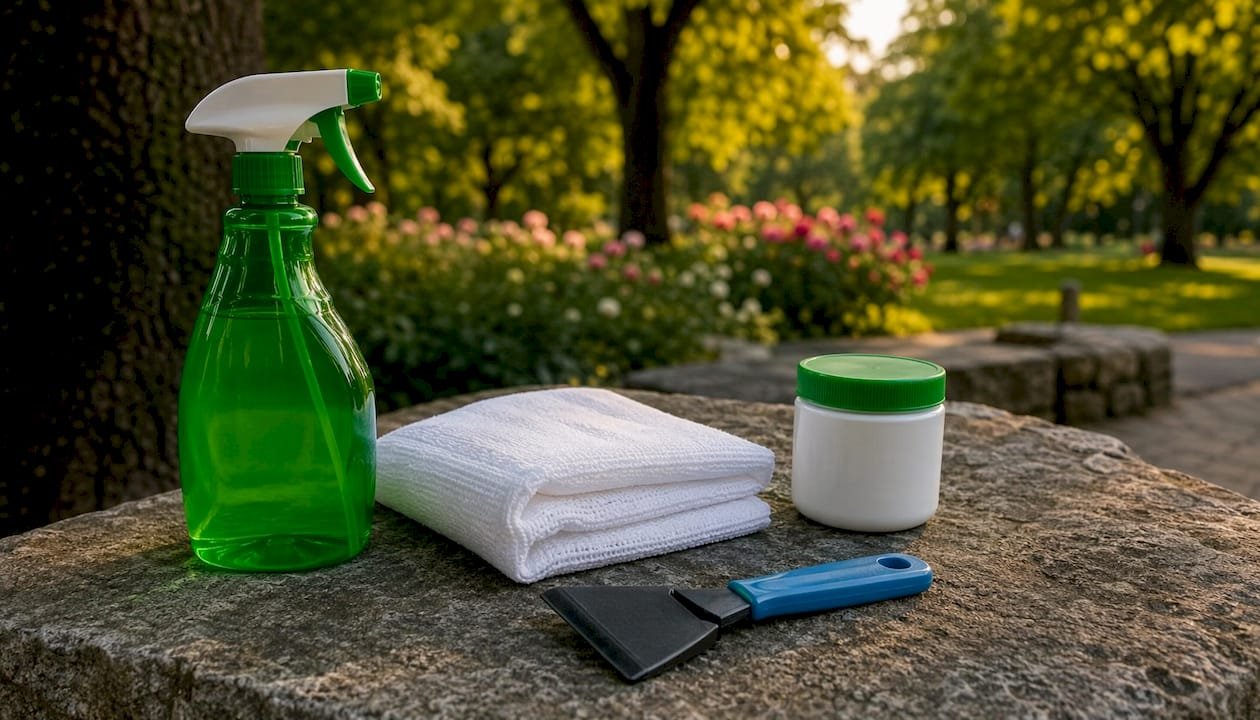
You do not need a cupboard full of specialist products. A compact kit covers the vast majority of situations across cars, fabric, hard landscaping, and roofs.
Core universal items:
- Microfibre cloths (automotive-grade, several)
- Soft-bristle nylon brush
- Plastic scraper or plastic putty knife
- Spray bottle
- Garden hose
- Bucket
- Rubber gloves, eye protection, mask
- Bin bags for contaminated waste
Surface-specific additions:
- Car paint: quick detailer spray or waterless car cleaner
- Fabric and upholstery: enzyme-based cleaner to break down protein matter
- Patio and stone: bicarbonate of soda (baking soda) for acid neutralisation, or a stone-safe commercial cleaner
- Chrome and metal trim: diluted white vinegar or specialist metal cleaner; keep vinegar away from painted panels
Items to avoid:
- Dry paper towels (rough enough to scratch automotive paint)
- Abrasive scouring pads
- Petrol or solvent on painted surfaces
- Household bleach on stone or unsealed surfaces
| Surface | Recommended cleaner | Key caution |
|---|---|---|
| Car paint | Quick detailer spray or warm soapy water | Never rub dry; use microfibre only |
| Glass/windows | 50/50 white vinegar and water | Avoid ammonia cleaners on tinted glass |
| Fabric/upholstery | Enzyme cleaner | Blot, do not rub; air dry fully |
| Concrete/stone | Baking soda paste or stone-safe cleaner | Test inconspicuous area first |
| Wood decking | Mild dish soap and warm water | Never scrape dry; test vinegar solution first |
| Gutters/roof tiles | Water and long-handled plastic scraper | Safety ladder, never lean on guttering |
Pro Tip: Keep a small bottle of quick detailer spray and two clean microfibre cloths in your car boot. That combination handles the vast majority of bird dropping emergencies safely, wherever you are.
How to remove bird droppings from every common surface
Car paint
Speed is everything on automotive paint. Uric acid, acidic with a low pH, and heat can etch clear coats within hours, so act as soon as you spot a dropping.
- Move the car into shade if possible.
- For fresh droppings: rinse gently with a garden hose (not a pressure washer at close range), then pat dry with a clean microfibre.
- For dried droppings: soak a microfibre in warm soapy water, drape it over the spot, and leave it to dwell for several minutes.
- Gently dab and lift from the edges inward. Use a clean section of cloth for each wipe.
- Rinse with clean water and dry immediately.
- Inspect in direct sunlight for etching or fine scratches.
- Apply a quick detailer spray or re-wax the area to restore protection.
Glass and mirrors
Spray generously with a 50/50 mix of white vinegar and water, or a dedicated glass cleaner. Allow it to soak for a minute, then wipe away with a clean microfibre. For stubborn dried spots, a plastic razor blade used at a shallow angle can help, but take care on tinted glass. Do not use glass cleaner on painted panels.
Fabric and upholstery
- Carefully scrape away any dry solids with a plastic scraper before wetting.
- Apply an enzyme cleaner to the stain and allow it to dwell per the product instructions.
- Blot with a clean cloth, working from the outside of the stain inward.
- Rinse with cool water and allow to air dry fully to prevent mildew.
Patio, stone, and concrete
Baking soda paste (bicarbonate of soda mixed with a little water to a thick consistency) neutralises the uric acid effectively. Apply generously, allow to sit for a period of time, then scrub with a stiff nylon brush and rinse thoroughly. A pressure washer on a low setting works well for larger areas. Always test a small hidden area first on unsealed or porous stone.
Wood decking
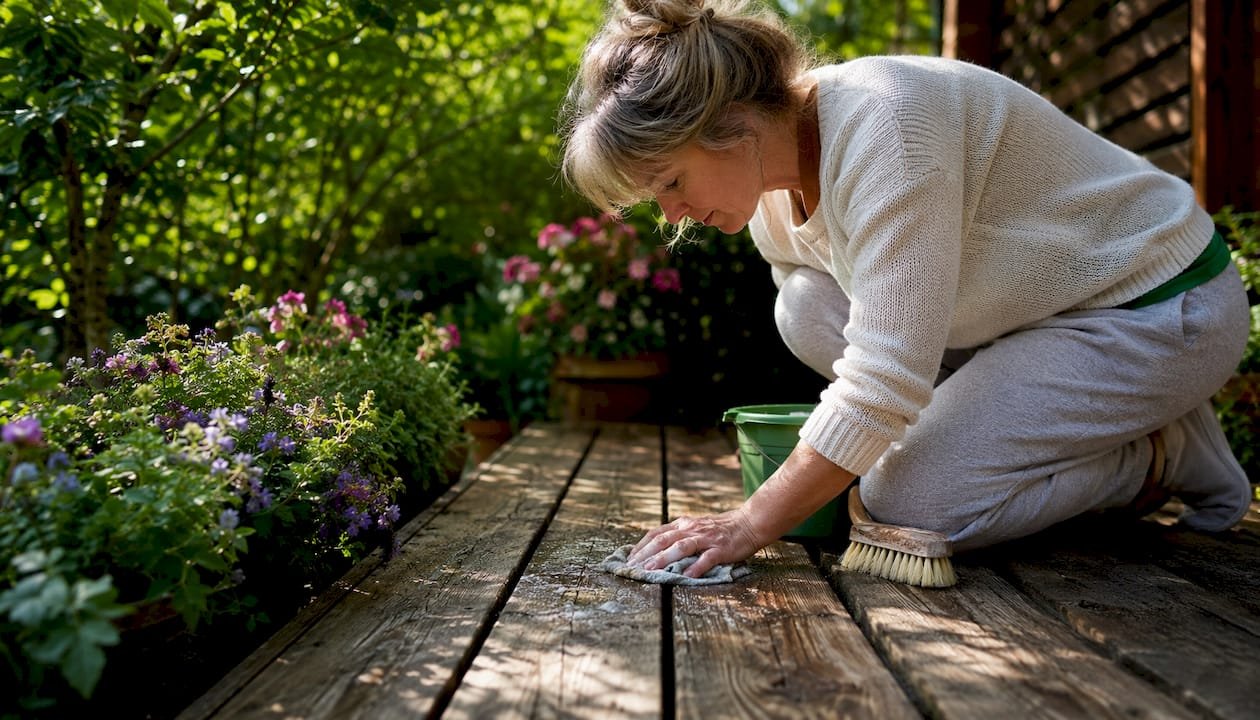
Soak a cloth in warm soapy water and lay it over the dropping for several minutes. Once softened, lift gently and wipe from the outside inward. A 50/50 vinegar-and-water solution can tackle residual staining; apply with a soft brush, scrub lightly, and rinse well.
Gutters and roof tiles
Work from a stable ladder with a spotter present. Use a long-handled plastic scraper to dislodge deposits, then flush with a garden hose. Avoid high-pressure washing directly at tile joints. If you suspect droppings have entered the loft space, treat it as an enclosed-space situation and consider professional assessment.
Pro Tip: On soft clear coat or freshly painted surfaces, use only a detailer spray and microfibre. Skip the scraper entirely and rely on dwell time to do the work.
Tackling old, hardened, or potentially etched deposits
Dried, baked-on droppings require patience rather than force. The hot-water-soaked microfibre method remains the safest starting point: soak the cloth, drape it over the deposit, and allow a full several minutes of dwell time. Repeat the dwell if the deposit has not fully softened after the first attempt.
Step-by-step for stubborn deposits:
- Soak a microfibre in hot (not boiling) water and lay it over the spot.
- Leave for several minutes; repeat if needed.
- Gently dab and lift with a clean section of cloth.
- If residue remains, apply a quick detailer spray, allow 1–2 minutes of dwell, then lift again.
- For automotive surfaces, a detailing clay bar can pull out embedded acid residue after the bulk has been removed.
- Rinse and dry the area, then inspect carefully.
What to expect after removal:
- Clean and glossy: you got to it in time.
- Dull or cloudy mark: this is likely clear-coat etching. A finishing polish applied with a foam pad may reduce or eliminate light etching.
- Deep depression or scratch that catches a fingernail: the damage has likely gone through the clear coat. At this point, professional paint correction or a panel respray is the realistic option.
Light etching that has only affected the top layer of clear coat can often be corrected with a finishing polish. Deeper erosion into the colour layer requires a professional detailer or body shop.
Disinfecting surfaces and disposing of waste safely in the UK
Removal is only half the job. Disinfection prevents residual bacteria from spreading, and proper disposal protects others.
Sanitising steps:
- Hard outdoor surfaces (patio, stone, driveways): apply a surface-safe disinfectant after cleaning, allow the recommended dwell time on the product label, then rinse thoroughly.
- Car paintwork: a diluted car shampoo wash followed by a clean water rinse is sufficient for typical spots; avoid harsh disinfectants on painted panels.
- Fabric and upholstery: wash at the highest temperature the care label permits after enzyme treatment.
Disposal guidance:
- Double-bag all contaminated cloths, gloves, and scraped waste in sealed bin bags.
- Place in your general household waste bin; do not compost bird droppings from unknown sources.
- Check your local council’s guidance if you have larger quantities, as some councils have specific advice for pest-related waste.
HSE guidance recommends that anyone who develops flu-like symptoms, chest pain, or breathing difficulties after cleaning bird droppings should seek medical attention and mention the potential exposure to their GP or NHS 111.
When to seek medical advice: if you experience respiratory symptoms, fever, or skin irritation after handling droppings, contact NHS 111 or your GP and mention the exposure. Histoplasmosis and Psittacosis are treatable when caught early.
Practical steps to prevent future incidents
Prevention saves time, money, and paint. A few straightforward habits reduce how often you are dealing with this problem.
Short-term deterrents:
- Remove or cover perching points near parked vehicles (wire, ledge spikes for buildings).
- Use decoy predators (plastic owls, hawk kites) sparingly; birds habituate to static decoys quickly.
- Keep bins covered and tidy garden feeders to reduce bird congregation near the car.
- Use a car cover when parking under trees or near roosting areas for extended periods.
Surface protection:
- Apply an automotive wax, polymer sealant, or ceramic coating to car paint; these create a barrier that prevents droppings from bonding directly to the clear coat and makes removal significantly easier.
- Reseal stone patios and wooden decking annually with an appropriate sealer to reduce acid penetration.
- Reapply automotive protection every 3–6 months for waxes and sealants, or per the product instructions for ceramic coatings.
Routine habits that help:
- Check your car regularly and remove droppings promptly rather than waiting for a full wash.
- Keep a quick detailer kit in the boot for on-the-spot treatment.
- Wash the car regularly to remove acid residue before it accumulates.
Pro Tip: Apply any protective coating during dry, mild weather immediately after a full wash and decontamination. Applying over a dirty or damp surface reduces bonding and shortens the protection’s lifespan.
How ceramic coatings reduce the risk and make cleanup easier
A ceramic coating does not make your car bird-proof. What it does is act as a sacrificial barrier that reduces how firmly droppings bond to the surface and buys you more time before etching begins. The combination of uric acid, digestive enzymes, and physical hardening is what causes damage; a coating intercepts that process at the surface level.
How ceramic protection works in practice:
- Hydrophobicity: water and contaminants bead and roll off rather than sitting and soaking in.
- Chemical resistance: the ceramic layer absorbs the initial acid attack rather than the clear coat beneath.
- Hardness: a harder surface is less susceptible to the micro-abrasion caused by gritty particles in droppings.
Diamondbrite products worth considering:
- Ceramic Glaze: provides a durable protective layer over the clear coat, reducing bonding and simplifying removal.
- Ceramic Shampoo: maintains and refreshes the hydrophobic properties of an existing ceramic layer with each wash.
Simple application overview:
- Wash the car thoroughly and allow it to dry completely.
- Decontaminate the paintwork (clay bar or decontamination spray to remove bonded contaminants).
- Apply Ceramic Glaze per the product instructions, working panel by panel.
- Buff to a finish and allow the recommended cure time before exposure to water.
- Maintain with Ceramic Shampoo at each subsequent wash.
Pro Tip: On a ceramic-coated car, fresh droppings often wipe away with a damp microfibre in seconds because they have not bonded to the paint. Dwell times are shorter and the risk of scratching during removal is markedly lower.
When should you call a professional?
Most bird dropping situations are manageable at home. A few are not, and recognising the difference protects both your health and your property.
Clear signs you need a specialist:
- Extensive accumulations in enclosed or poorly ventilated spaces (lofts, barns, crawlspaces).
- Any situation where droppings may have entered an HVAC or ventilation system.
- Visible etching through the clear coat into the colour layer of car paint.
- Immunocompromised individuals, pregnant women, or elderly people in the household.
- Accumulations covering more than a few square feet, particularly if the waste has been building for months.
Large accumulations in enclosed spaces require hazmat-level PPE, controlled removal, and remediation of fungal spores. This is not a job for a domestic vacuum and a pair of washing-up gloves.
What professionals do differently:
- Full respiratory protection and disposable coveralls.
- Controlled wet-removal to prevent spore dispersal.
- Specialist disinfection and, where needed, fungal remediation.
- For vehicles: paint correction using machine polishers and professional compounds, or panel respray for deep damage.
Indicative UK cost ranges (broad guidance only; always get written quotes):
- Domestic bird dropping clean-up (external surfaces): typically £100–£300 depending on scale and access.
- Professional paint correction for etching: the cost per panel depends on severity and extent depending on severity.
- Full panel respray at a body shop: the price per panel can vary widely depending on the work required.
Pro Tip: When hiring a pest or biohazard specialist, check that they hold relevant accreditations (BPCA membership for pest controllers, or a CHAS/SafeContractor certificate for general contractors). Ask for a written scope of work and confirmation of their waste-disposal procedure.
Key takeaways
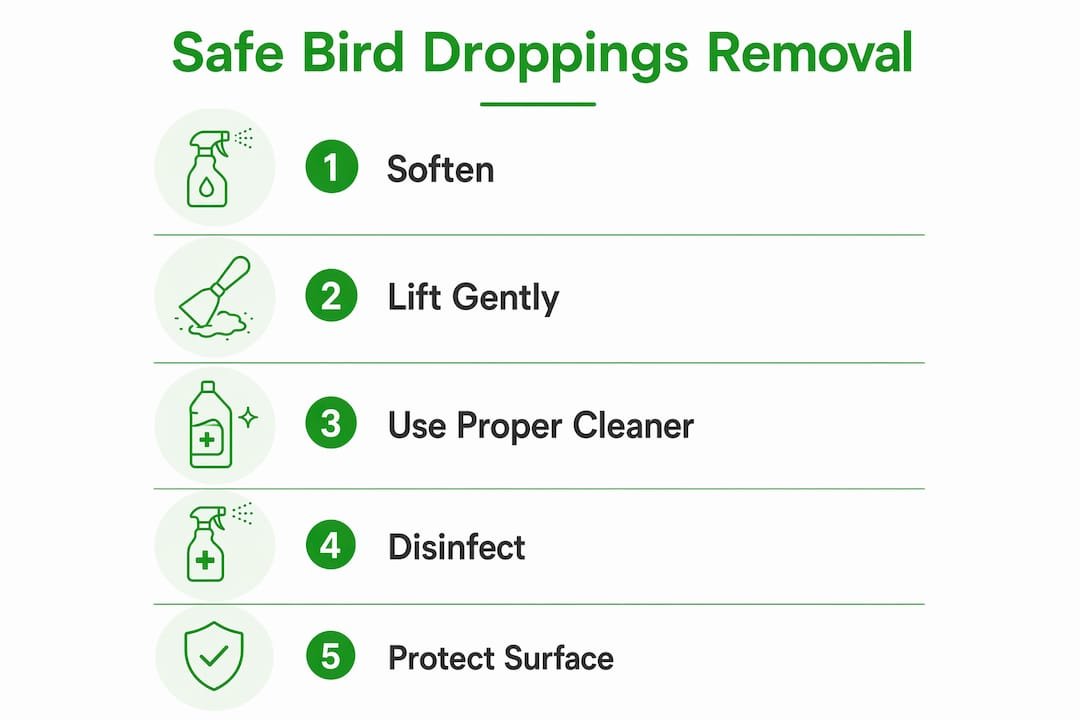
Bird droppings removal done correctly comes down to one principle: soften first, lift gently, never rub, and protect the surface afterwards to make the next incident easier to handle.
| Point | Details |
|---|---|
| Soften before you touch it | Dampen fresh or dried droppings before any wiping; dwell time of several minutes prevents scratching and etching. |
| PPE is not optional for larger jobs | Wear rubber gloves, eye protection, and an FFP2/FFP3 mask; always dampen deposits to prevent airborne spores. |
| Dispose of waste responsibly | Double-bag contaminated cloths and waste; place in general household waste and check local council guidance for larger quantities. |
| Act fast on car paint | Uric acid, acidic with a low pH, can etch clear coats within hours in warm weather; a quick detailer kit in the boot is your best insurance. |
| Diamondbrite ceramic protection | Diamondbrite Ceramic Glaze acts as a sacrificial barrier that reduces bonding and makes removal faster and safer. |
Why quick action and the right protection genuinely change the outcome
The gap between a two-minute wipe-off and a £400 paint correction bill is almost always timing. Droppings that sit overnight in summer sun undergo thermal cycling that physically embeds the deposit into the clear coat. By the time you notice the cloudy mark, the damage is already done. What frustrates me about most advice on this topic is the focus on cleaning products rather than on the window of opportunity. The product matters far less than acting within the first hour.
The other underappreciated point is that protection is not just for car enthusiasts. A ceramic coating or a good polymer sealant is genuinely practical for any driver who parks outdoors regularly. It does not eliminate the problem, but it changes the nature of it: a coated car gives you time, and time is what prevents expensive repairs. Diamondbrite’s ceramic range is a straightforward, accessible way to build that protection into your regular wash routine without needing professional application.
Protect your car before the next dropping lands
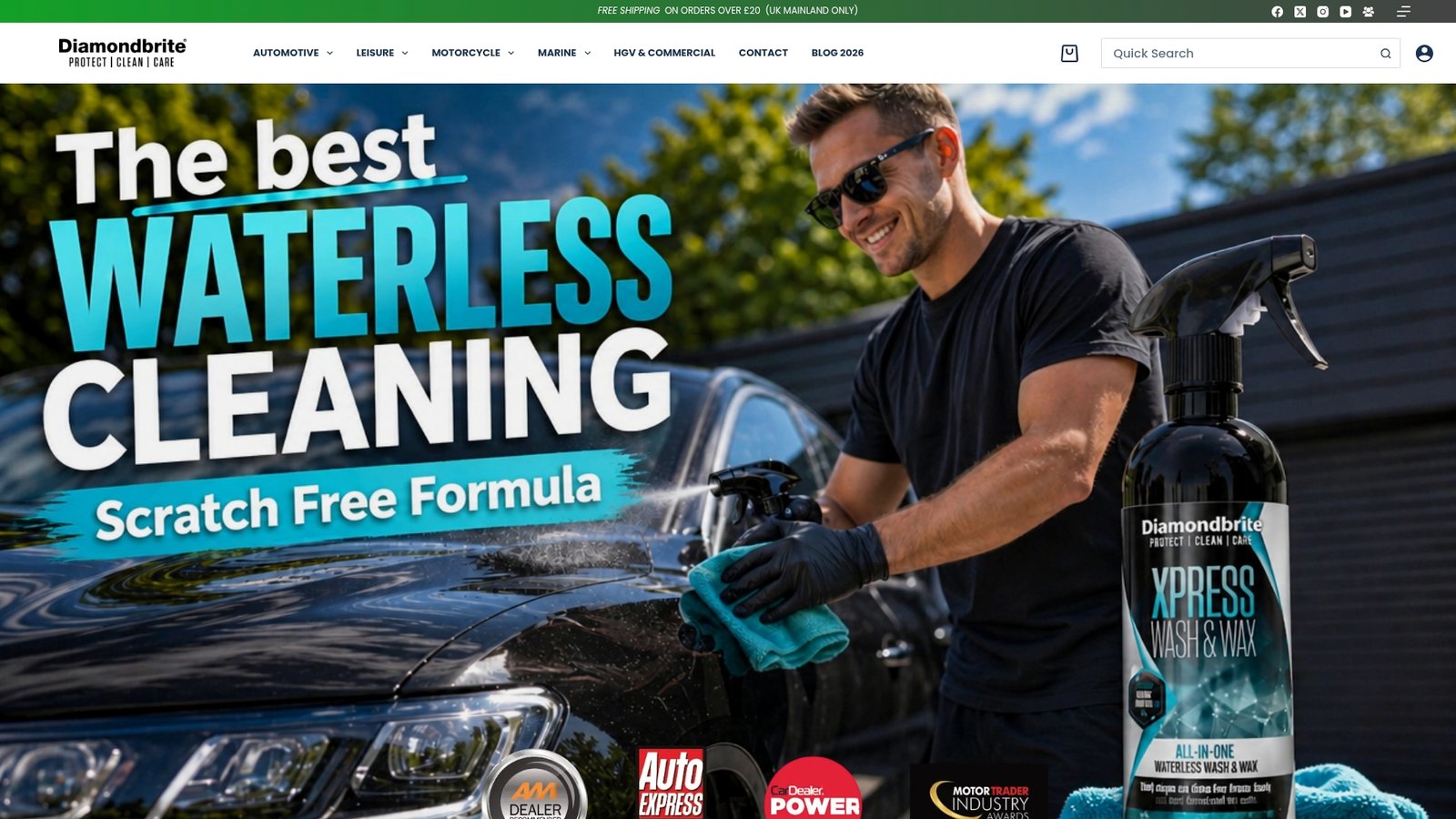
Diamondbrite’s ceramic car care range is built around exactly this problem: giving your paintwork a durable, hydrophobic barrier that reduces how much damage bird droppings can do and how much effort it takes to remove them. Ceramic Glaze lays down a protective layer that intercepts acid before it reaches the clear coat. Ceramic Shampoo maintains that barrier with every wash, so your protection does not fade between applications. For on-the-spot emergencies, a waterless wash or quick detailer from the Diamondbrite range provides the lubrication you need to lift droppings safely without scratching. Visit the Diamondbrite shop to find the right products for your vehicle, and always test on a small area first if you are trying a new product on your paintwork.
Useful sources and further reading
- How to Clean Up Bird Droppings Safely — Covers PPE requirements, surface-by-surface methods, and disposal guidance including the dampening rule.
- How to Remove Bird Poop From Car: Pro Detailer Guide — Detailed automotive techniques including the soak-and-dwell method and etching assessment.
- Why Bird Droppings Damage Car Paint — Explains the etching mechanism and when professional paint correction is needed.
- How to Remove Bird Poop From Car Without Scratching the Paint — Step-by-step guide with a useful situation-by-situation time reference table.
- How to Clean Bird Poop From Any Surface — Practical surface-by-surface methods including DIY cleaning recipes.
- UK Health Security Agency (UKHSA) — UK public-health guidance on zoonotic diseases and exposure risks.
- Health and Safety Executive (HSE) — UK workplace and domestic health guidance relevant to biological hazard exposure.
- Diamondbrite Online Shop — Ceramic glazes, shampoos, waterless washes, and protective detailing products for cars, motorcycles, and leisure vehicles.