

For most UK owners, automotive protection means a layer on the paint that takes the daily punishment so the paint itself does not. A ceramic-infused protectant, applied at home and topped up with a ceramic shampoo, gives that layer lasting strength without a day in a workshop. Diamondbrite’s ceramic range is built for exactly that routine, for cars, motorcycles and leisure vehicles alike.
TL;DR
- Paint protection is a sacrificial layer over the clear coat: it takes the sap, bird droppings, UV and road film instead of your paint.
- Waxes last weeks to months, sealants a few months, and ceramic coatings one to several years.
- Preparation decides the result: wash, decontaminate, dry, then apply to clean paint.
- Ceramic needs light maintenance, such as a ceramic shampoo, to keep its water-beading finish.
- Fresh protection before winter is the sensible time to act.
Table of Contents
- What automotive paint protection actually does
- Wax, sealant or ceramic: how they differ
- How to choose a protectant
- How to apply a protectant
- Keeping the finish protected
- Perspective
- Build your routine with Diamondbrite
- FAQ
- Sources
What automotive paint protection actually does
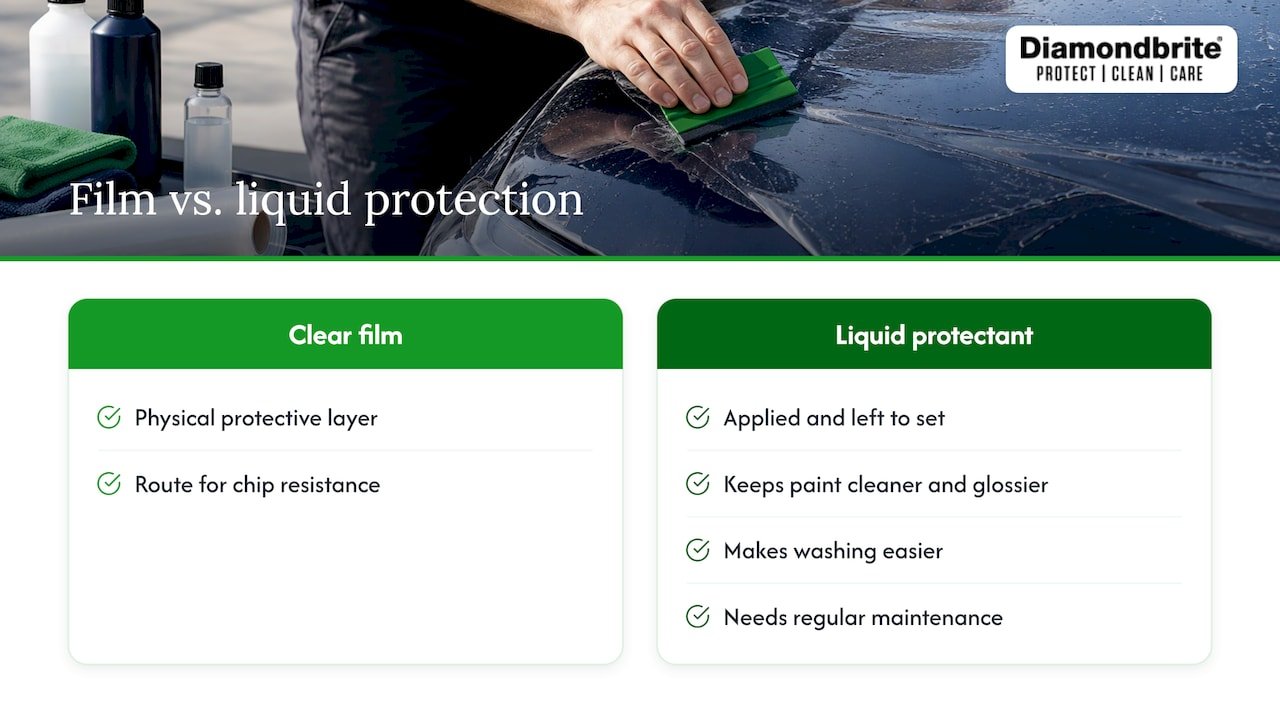
Paint protection is a coating that sits over your paintwork as a protective layer. According to What Car?, it shields paint from stone chips, tree sap, bird droppings and fading. It can be a physical film or a liquid that is applied and left to set. It does not stop heavier damage such as parking scuffs and dents.
That is worth knowing before you buy. A liquid protectant keeps paint cleaner, glossier and easier to wash. A clear film is the route for chip resistance. For everyday owners, a liquid protectant that you maintain regularly is the practical choice.
Wax, sealant or ceramic: how they differ
The three main liquid options differ mainly in how long they last and how they bond.
| Type | How it works | Typical lifespan |
|---|---|---|
| Wax | Sits on the surface, good water beading | Paste two to four months; liquid up to a year |
| Polymer sealant | Synthetic layer, spread and buffed | Generally 4 to 6 months |
| Ceramic | Forms a chemical bond with the clear coat | One to several years |
The figures come from a peer-reviewed 2025 review, which also notes that ceramic coatings form covalent bonds with the clear coat and cure in 24 to 48 hours. Parkers describes ceramic products as bonding strongly, with longevity and UV protection as their strengths.
Cost matters too. Auto Express puts DIY wax and sealants at around £20 to £70 and DIY ceramic coatings at around £50 to £100. Because ceramic lasts longer, you apply it less often. For a closer look at the trade-off, read our sealant versus ceramic coating comparison and our ceramic coating cost guide.
How to choose a protectant
Three questions settle it.
- How much time do you have? If you want something quick after each wash, a ceramic-infused product is the efficient route. Spray-on ceramics go on straight after washing, like a quick detailer.
- How long do you want it to last? Weeks suit a weekend enthusiast who enjoys waxing. Months to years suit busy drivers.
- What is the paint like? Older paint needs more preparation, so see our guide to ceramic coating on old paint.
If you ride a motorcycle or look after a caravan, motorhome or boat, the same logic applies. Smooth, hydrophobic paint and gelcoat are far easier to rinse clean after a trip.
How to apply a protectant
Preparation does most of the work. Parkers’ ceramic application guide follows this order:
- Wash thoroughly. Use snow foam and shampoo to lift grit before you touch the paint. A ceramic shampoo suits this step, and our guide covers ceramic shampoo on non-coated paint.
- Dry the car with clean microfibre.
- Decontaminate. Clay removes bonded grit that washing leaves behind. Our 30-second bag test shows whether you need it.
- Polish if needed to remove swirls, because a coating locks in whatever is under it.
- Apply in small sections, working cross-hatch, then buff residue with a microfibre towel.
- Let it cure. The guide suggests 12 to 24 hours indoors. See the cure time guide for what to expect.
For a ceramic glaze on paint and trim, follow our how-to for applying ceramic glaze. For wax, Parkers advises small overlapping circles on clean, dry paint, out of full sun, then buffing off once it hazes.
Keeping the finish protected
Protection only works while it is intact. A ceramic coating is maintained by topping up with a sealant or ceramic spray, and the hydrophobic layer makes the car easier to dry. In practice:
- Wash regularly with a ceramic shampoo rather than harsh detergents.
- Use a snow foam before contact washing to reduce swirl marks.
- Top up periodically instead of re-coating.
Our ceramic coating maintenance guide goes through the routine, and you can keep gloss going for months without layering wax on top.
Timing helps as well. The Parkers test team deliberately tested waxes in sub-10°C conditions, and they recommend fresh protection before winter, when rain, snow and road dirt are hardest on paint.
Perspective
Most paint damage comes from ordinary life: sun, rain, bird mess and road film, rather than one dramatic event. That is why we think the best protection is the kind you will actually keep up.
Our ceramic-infused range is designed around that idea. A ceramic glaze builds a durable shield, and a ceramic shampoo helps you maintain it with every wash. The result is a sparkling finish you can look after in a Sunday morning, with no workshop visit and no complicated routine.
Whether it is a daily driver, a motorcycle or a motorhome, we would rather you spend your time driving than polishing.
Will
Build your routine with Diamondbrite
Our range covers paintwork, ceramic, wheels, glass, interior, motorcycle, leisure and marine care, so one order can cover the whole job, from the shampoo to the finishing protection.
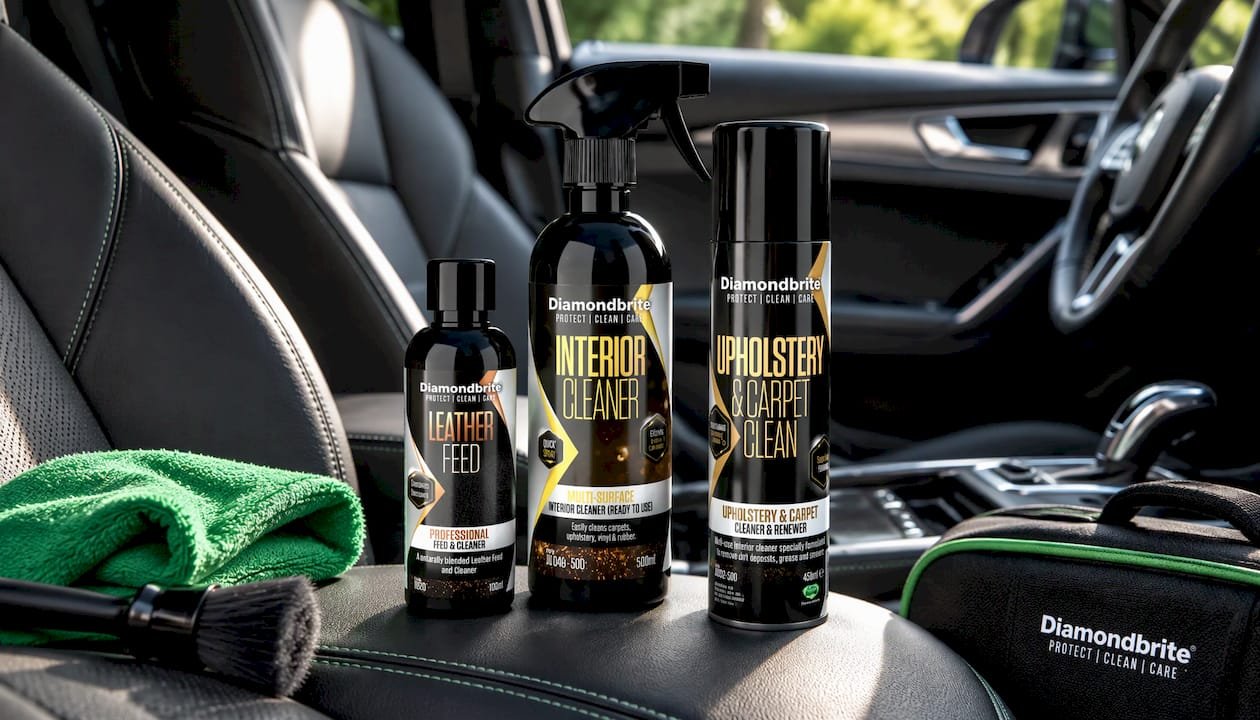
See the full range at Diamondbrite, and learn what a glaze does in our guide to ceramic glaze benefits.
FAQ
How long does paint protection last?
It depends on the type. A peer-reviewed review reports paste waxes at two to four months, polymer sealants at four to six months, and ceramic coatings at one to several years. Preparation and regular washing affect all of them.
Is a ceramic coating better than wax?
Ceramic bonds to the clear coat and lasts longer, so you apply it less often. Auto Express notes its hydrophobic layer resists dirt, bird lime and stains. That makes it a strong fit for busy owners.
Does paint protection stop scratches and chips?
Liquid protectants make paint easier to clean and shield it from UV, sap and bird mess, but Parkers says only a fitted film fully protects against chips. Regular safe washing keeps swirl marks down.
When should I apply protection?
Before winter is a sensible time, as road dirt and wet weather are at their hardest on paint. Apply to clean, dry paint out of direct sun.
Sources
- What is paint protection and is it worth it? | What Car?
- Parkers’ paint protection guide for DIYers
- Development of Car Coating Materials over the Past Decade
- Car paint protection, films and ceramic coatings explained | Auto Express
- The best ceramic coating for cars 2026 | Parkers
- The best car wax tested by Parkers 2026
- The best ceramic coating kits | Car Magazine