

The fastest way to clear misted glass is to switch on the air conditioning, set it warm, aim the vents at the windscreen and turn recirculation off. Anti fog car windows treatments help too, but only as a supporting layer once the glass is clean and the cabin itself is dry. They’re not a fix for leaks or a soggy footwell. If fog keeps returning despite doing everything right, something mechanical is probably to blame, and it’s worth getting that checked before it becomes a bigger repair.
TL;DR:
- Proper glass and cabin preparation, including thorough cleaning and maintaining a dry interior, is essential for anti fog treatments to work effectively.
- Switching on warm air with the air conditioning and turning recirculation off are crucial steps to quickly clear misted windows while driving.
- Anti fog sprays only improve visibility if the glass is clean and free of grease, especially from off gassing plastics or residual cleaning products.
- Persistent fogging despite correct HVAC use indicates possible mechanical issues like leaks, blocked drains, or a failing heater core that require professional diagnosis.
- Regular use of moisture-absorbing tools and avoiding damp materials inside the car can significantly reduce long-term fogging problems.
Table of Contents
- Quick fixes to clear fog now
- Do anti fog treatments actually work? the science and the limits
- How to prepare and apply an anti fog treatment properly
- Keeping moisture out for the long term
- When fogging means something’s actually wrong
- Expert perspective on glass prep and protective care
- What most fog advice gets backwards
- Where to buy the products that make this routine work
- Sources
- FAQ
Quick fixes to clear fog now
You don’t need a workshop or a fancy gadget for this, just the controls already on your dashboard. Here’s the sequence that works, in the order that actually matters:
- Switch on the air conditioning, even in winter. The AC compressor pulls moisture out of the air passing over the evaporator, working as a dehumidifier rather than just a cooler, and running it with warm air aimed at the windscreen clears mist fastest.
- Turn the temperature up, but keep the AC on. Warm air raises the glass temperature above the cabin’s dew point, which stops condensation forming in the first place.
- Turn recirculation off. Recirculated air just keeps trapping the same moisture inside the cabin. Fresh air from outside is almost always drier.
- Set the fan to medium or high and direct it at the windscreen, then split some airflow to the side vents and switch on the heated rear screen if you have one.
- If you’re stationary and it’s still misted, crack a window an inch or two to let the moisture escape faster, then wipe the glass with a dry microfibre cloth once it’s stopped fogging.
Never set off until the windscreen is completely clear. Driving with even a partially misted view is a genuine hazard and, in the UK, can also land you with a driving offence if visibility is compromised.
Do anti fog treatments actually work? the science and the limits
Anti fog sprays and wipes work by leaving a thin film on the glass that changes how water behaves when it lands there. Instead of tiny droplets scattering light and turning the surface milky, the treated layer either spreads the moisture into a flat, transparent sheet or resists it from beading at all. Either way, visibility holds up better than on bare glass.

They genuinely reduce how often and how badly your windows mist over, but only when the glass is clean and the cabin is reasonably dry. No coating survives contact with a greasy film left by cleaning products, off gassing plastics, or cigarette smoke. And no spray can compensate for a soaked carpet, a leaking seal, or coolant vapour drifting through the vents.
Condensation itself comes down to physics: it forms whenever glass temperature drops below the cabin air’s dew point, and that gap is shaped heavily by how your HVAC system manages humidity and airflow. Treat anti fog products as one part of a system, not a standalone cure.

How to prepare and apply an anti fog treatment properly
Most anti fog failures come down to poor prep, not a weak product. Getting this right takes ten minutes and makes a real difference to how long the coating lasts.
- Clean the glass thoroughly with a proper automotive glass cleaner or isopropyl alcohol; household glass cleaners often leave a residue that stops anti fog products bonding properly.
- Wipe away every trace of oily film, especially near the dashboard edge where off gassing plastics deposit a haze over time.
- Dry the glass completely with a clean microfibre cloth before applying anything, since trapped moisture beneath a coating undermines its grip.
- Test the product on a small corner first, particularly on tinted windows, where some solvent based sprays can affect the film.
- Apply in thin, even coats rather than one heavy layer, buffing gently with a fresh cloth as directed on the packaging.
- Reapply on the schedule the product recommends, typically every few weeks for sprays and less often for longer lasting wipe on treatments.
Pro Tip: Apply anti fog treatment to the inside of the glass only, and do it on a dry, mild day. Damp air during application traps moisture under the film before it’s had a chance to cure properly, and you’ll be reapplying within days instead of weeks.
Keeping moisture out for the long term
Anti fog products only earn their keep if the cabin around them stays dry. Chase the moisture at its source and the glass has far less to fight.
- Remove wet items straight away, dry mats outside the car rather than leaving them to steam gently on the heater.
- Pop a small desiccant bag or a rechargeable dehumidifier in the footwell during wet weeks; it’s a cheap habit that pays off fast.
- Regularly check your cabin air filter as a clogged one can blow recycled damp air back into the cabin instead of expelling it.
- Clear sunroof and door drains occasionally, as blocked channels let water pool where it shouldn’t and slowly release moisture into the cabin.
- Avoid using recirculation as your default setting; save it for genuinely bad air outside, not as a habit.
- Wipe interior glass regularly with a dedicated cleaner to shift the invisible film that off gassing plastics and vapours leave behind, which otherwise gives condensation something to cling to.
Small, boring habits like these do more for long term clarity than any single product on the shelf.
When fogging means something’s actually wrong
Persistent fog despite doing everything correctly usually points to a fault, not bad luck. Watch for a greasy film that returns within minutes of wiping, a sweet chemical smell through the vents, or water visibly pooling under the mats. A greasy film paired with that sweet smell often signals a leaking heater core, which needs professional diagnosis rather than another can of anti fog spray. A garage will typically check the cabin filter, clear blocked evaporator or sunroof drains, and regas the air conditioning if it’s lost its dehumidifying punch. If you notice fumes or a chemical smell, don’t just drive with the windows cracked. Get it looked at, since some of what you’re breathing in could genuinely harm you.
Expert perspective on glass prep and protective care
Clean glass holds anti fog treatment better than glass with even a light film of road grime or wax haze. Diamondbrite’s approach to polishing car glass safely stays under 70°C to avoid stressing the surface, and that same careful prep removes the microscopic imperfections that give condensation somewhere to grip. Fewer anchor points for moisture means treatments last longer and clarity holds up better between reapplications.
What most fog advice gets backwards
Most guides treat anti fog spray as the headline fix and HVAC technique as an afterthought. That’s the wrong order. Airflow and temperature control do the heavy lifting every single time you drive, and no coating on the market compensates for a driver who leaves recirculation on out of habit or ignores a soaked boot liner for a fortnight.
Where the conventional advice really falls down is prep. Plenty of people spray a product straight onto glass that’s still got a faint film of dashboard off gassing or old cleaning residue on it, then wonder why it stopped working after four days. The spray isn’t the problem. The surface underneath it is.
If you take one thing from all this, prioritise the dry cabin and the clean glass before you even think about which product to buy. Get those two right and almost any decent anti fog treatment will outperform expectations. Get them wrong and even the best product on the market will underdeliver, then get blamed for it.
— Will
Where to buy the products that make this routine work
Once your glass is properly prepped, the right products keep it that way. A dedicated glass cleaner lifts the invisible film that undermines anti fog coatings, while ceramic shampoo keeps the rest of the car’s exterior free from the grime that eventually finds its way onto interior glass via hands, clothes and shoes.
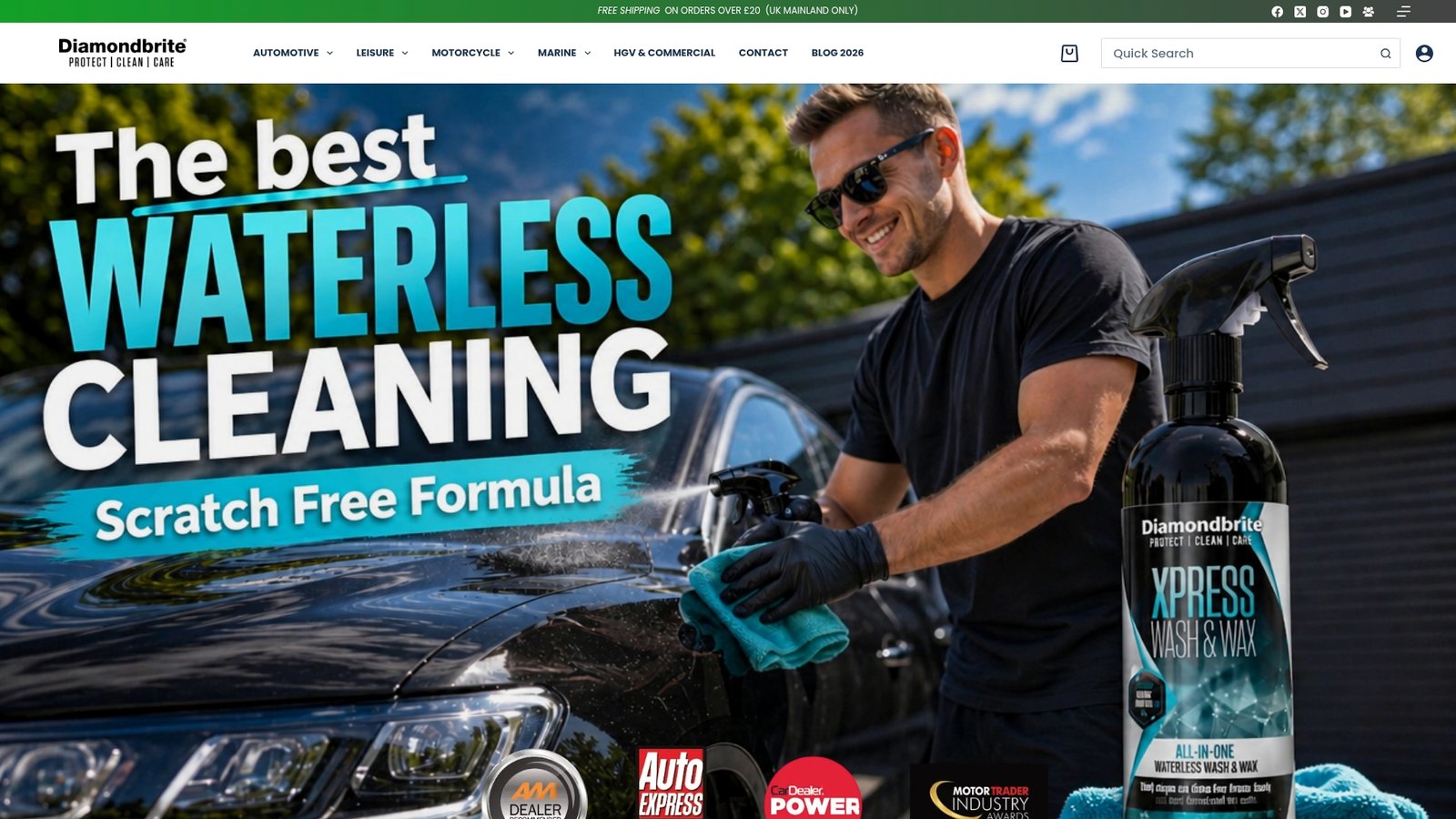
Working glass prep into a wider maintenance routine, alongside a ceramic glaze for the paintwork, means less time cleaning and more time actually seeing where you’re going. Diamondbrite’s online shop stocks the full range, from glass cleaners to ceramic protection packs, so you can build a kit that covers both visibility and finish without guessing what belongs together. Start with the glass cleaner if fogging’s your main gripe right now, then build outward from there.
Sources
Guidance in this piece draws on MOT Checker’s demisting advice, Halfords’ condensation guide, CarXplorer’s fogging causes breakdown, and an academic review of windscreen defogging physics.
FAQ
How Do I Stop Car Windows Fogging Up?
Switch on the air conditioning with warm air aimed at the windscreen, set the fan to medium or high, and turn recirculation off so moist cabin air can escape.
What Is the Best Anti-Fog Treatment for Car Windows?
The most effective treatments are applied to clean, dry glass and reapplied on a regular schedule, since no coating performs well over residue, oily film, or a damp cabin.
What Is the Best Anti-Mist Spray for Car Windows?
Look for a spray designed specifically for glass rather than a general household product, and always apply it to the inside surface after a thorough clean with an automotive glass cleaner.
Does Anti-Fog Coating Actually Work?
Yes, anti fog coatings genuinely reduce misting when the glass is clean and the cabin is dry, but they can’t fix leaks, soaked carpets, or a faulty heater core.
Why Do My Car Windows Keep Fogging Up Even With the Heater On?
Persistent fogging despite correct HVAC use often points to a blocked cabin filter, clogged drains, or trapped moisture under mats, and occasionally a leaking heater core that needs professional attention.