

The best way to protect motorcycle paint from UV is to layer your defences. Keep the bike out of direct sun where you can, use a UV-resistant cover when you can’t, and put a durable protective layer such as a ceramic coating on the paint itself. Then keep that layer clean. Each step is simple, and together they build a durable shield that keeps colour and shine for longer.
TL;DR
- UV light slowly breaks down paint, leading to colour change, chalking and, over time, flaking.
- A UV-resistant cover is the first line of defence for a bike parked outside, even for short stops.
- A protective layer on the paint, such as ceramic coating, adds a barrier that makes cleaning easier. Film is another route.
- Matte paint needs products made for matte finishes, so check before you apply anything.
- Gentle, regular washing keeps any protection working properly.
Table of Contents
- What UV actually does to your paint
- Step one: shelter and cover the bike
- Step two: add a protective layer to the paint
- Protecting matte paint
- How to apply protection for lasting results
- Keeping the protection working
- Our perspective
- Ceramic care for your bike from Diamondbrite
- FAQ
- Sources
What UV actually does to your paint
Sunlight is more than heat. The short-wavelength, non-visible part of sunlight is responsible for much of the damage. A UK testing laboratory explains that UV radiation breaks down the surface molecular structure of materials, which shows up as colour change, chalking and flaking. The same source notes that paints and varnishes can lose flexibility and become brittle.
On a motorbike this shows up in familiar ways:
- Dark colours turn dull and lighter, and the lustre fades.
- Clear coat looks hazy or chalky.
- Exposed plastics and rubber age faster than the tank and fairings.
British summers are shorter than Mediterranean ones, but a bike that lives outside, or sits on a driveway all day, still takes a steady dose of UV. Fading is gradual, which is why prevention beats repair.
Step one: shelter and cover the bike
The simplest protection costs nothing: park in a garage, shed or shade when you can. When that isn’t possible, use a cover.
Motorcycle News advises that UV can damage and degrade paintwork and plastics. It recommends a weatherproof cover for shelter from rain and sun, or a protectant that forms a film over the bike. MoreBikes adds that UV-resistant covers are treated to block UV rays and that covering should be a regular habit, even for short stops.
A few practical points:
- Choose a cover labelled UV-resistant and sized for your bike.
- Put it on a clean, dry bike. Grit trapped underneath can mark the paint.
- Let the bike cool and dry fully before covering it.
Step two: add a protective layer to the paint
A cover only helps while it’s on. A coating protects the paint every hour of the day. The main options differ in how they work and how long they last.
| Option | What it does | Typical longevity |
|---|---|---|
| Polish or wax | Adds a sacrificial layer that helps reflect UV | Short term, needs regular reapplication |
| Ceramic coating | Bonds to the paint, resists UV and oxidation, repels water, makes washing easier | 2 to 5 years, per one manufacturer’s guide |
| Paint protection film (PPF) | Physical layer that guards against scratches and UV | 5 to 10 years, per the same guide |
Wax and polish are a familiar starting point, and a good wax and polish routine is worth building into your seasonal care. Ceramic coating goes a step further: the coating bonds to the paint and brings strong hydrophobic behaviour, so rain beads off and dirt rinses away with less effort.
If you’re weighing the options for your own bike, our guide to sealant versus ceramic coating explains the difference between weeks and years of protection. If your bike already has film fitted, see how to apply ceramic coating over PPF.
Protecting matte paint
Matte finishes need extra thought. Their appearance comes from a surface that scatters light, so anything that adds gloss or fills in that texture changes the look. Traditional waxes and glossy polishes aren’t suited to them.
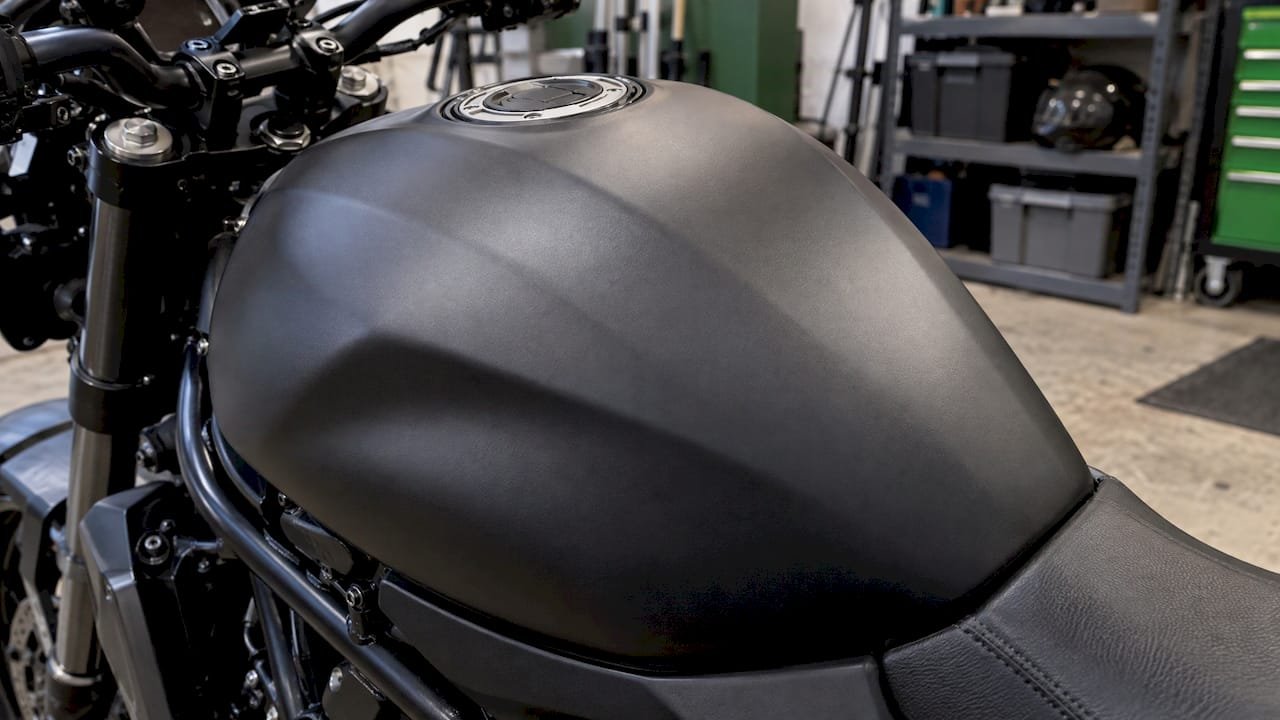
Before you buy, choose a product designed for matte surfaces, and read the label. Our matte paint protection guide covers how to preserve the finish, and the matte ceramic coating owner’s guide goes through what to expect on UK bikes.
How to apply protection for lasting results
Whatever you choose, preparation decides the outcome. A typical routine looks like this:
- Wash thoroughly. Use a pH-balanced shampoo and clean mitts, and rinse wheels and lower areas first so grit stays off the paint. Our 8 step motorcycle wash routine is written for UK riders and designed to protect ceramic coatings.
- Dry gently with clean microfibre.
- Decontaminate and prepare the surface. Older paint needs a little more care, as covered in ceramic coating on old paint.
- Apply in the shade, on a cool panel, one section at a time, following the product’s instructions.
- Allow the cure time stated on the product before getting the bike wet or riding in rain.
Work panel by panel and avoid applying in direct sun. Product that dries too fast is harder to level evenly.
Keeping the protection working
A coating isn’t a one-off. Regular washing stops road film and bird droppings from sitting on the surface and keeping UV and moisture close to the paint. Ceramic shampoo is made for exactly this job, and our piece on ceramic shampoo benefits explains how it supports a coated finish.
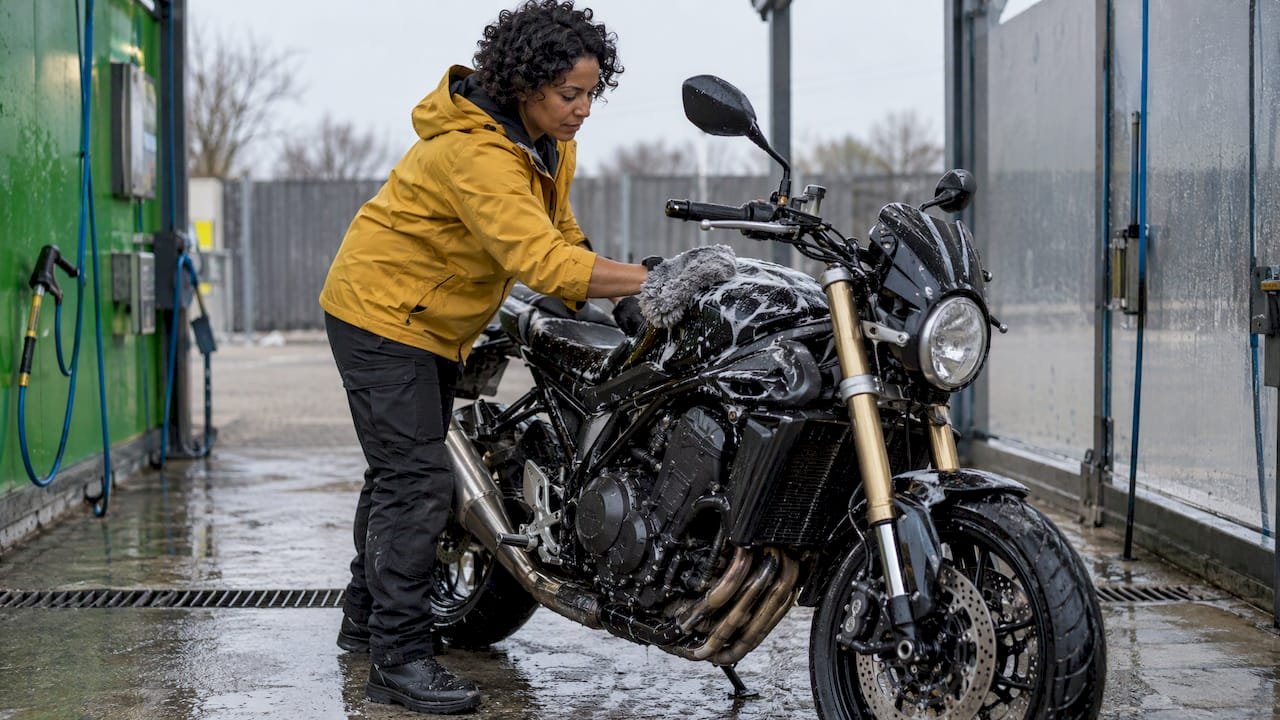
When the water stops beading as sharply, a top-up restores it. You can top up your ceramic coating in under an hour without starting again. Our guide on wax over ceramic also explains how to keep gloss between treatments.
Our perspective
We built Diamondbrite around a simple idea: protecting paint shouldn’t take a whole weekend or a professional workshop. Riders want a bike that looks good, and they want to spend their time riding.
That’s why we favour ceramic-infused care. Our ceramic products are designed to build a durable layer of protection against the everyday environmental factors that fade and age paintwork, including sunlight. Used with a good cover and regular washing, it’s a cost-effective routine that fits a busy week.
We also care about doing it responsibly. Easy-to-use products, less effort per wash and a routine you can sustain are what keep a finish looking its best year after year.
Will
Ceramic care for your bike from Diamondbrite
If you’re ready to give your paint a protective layer, our Motorcycle range and Paintwork range bring together ceramic-infused shampoos, glazes and cleaning products designed for easy home use. They suit riders who want a sparkling finish without a complicated process.
Browse the full selection at Diamondbrite and build a care kit that fits your bike.
FAQ
Is it okay to leave a motorcycle in the sun?
Occasional sun won’t ruin paint, but repeated exposure adds up. UV is what drives fading and chalking, so shade, a UV-resistant cover and a protective coating all reduce the effect. Covering the bike even for short stops is a sensible habit.
Does ceramic coating protect against UV?
Ceramic coatings are described as offering high UV and oxidation resistance, along with water-repelling properties and easier cleaning. They add a protective layer to the paint rather than replacing sensible habits like covering the bike. Our ceramic products are designed to help protect against environmental fading.
Can I use the same protection on matte paint?
Not usually. Choose a product made for matte finishes so the surface texture stays even. Our matte paint protection guide explains what to look for.
How often should I reapply protection?
That depends on the product and how the bike is stored and ridden. Ceramic coatings are quoted at roughly two to five years, while polishes and waxes are short term. Watch for water no longer beading, then top up.