
Yes, you can use ceramic shampoo on paint that has no ceramic coating. Ceramic-infused shampoo is designed for any clean, painted finish, whether that is fresh from the dealer, waxed, sealed or simply bare. On uncoated paint it cleans the surface and is designed to leave a light, slick, water-repellent layer behind, so each wash adds a little protection instead of only removing dirt.
That is the short version. Below you will find what to expect, how to wash step by step and how to get the most from every bucket.
TL;DR
- Ceramic shampoo is made for regular washing and suits uncoated paint as well as coated paint.
- It is a maintenance product: it cleans and is designed to top up slickness and beading. It is not a replacement for a full coating.
- Wash in the shade, rinse first, use two buckets and a clean mitt, and dilute as the label says.
- Repeat washes build up the effect, so a fortnightly routine works better than an occasional big clean.
- Shop the range at Diamondbrite.
Table of Contents
- What ceramic shampoo does on uncoated paint
- Ceramic shampoo vs a standard shampoo vs a coating
- How to wash uncoated paint with ceramic shampoo
- Getting better beading on bare paint
- Does it work on wax, sealant or matte paint?
- Washing at home: keep it tidy
- Our view on ceramic shampoo
- Build your wash kit with Diamondbrite
- FAQ
- Sources
What ceramic shampoo does on uncoated paint
A ceramic coating is a separate, applied layer that bonds to the paint. Ceramic shampoo is something different: a wash product with ceramic-infused ingredients. Our formula is designed to rinse dirt away and leave a very thin film that helps water bead and slide off.
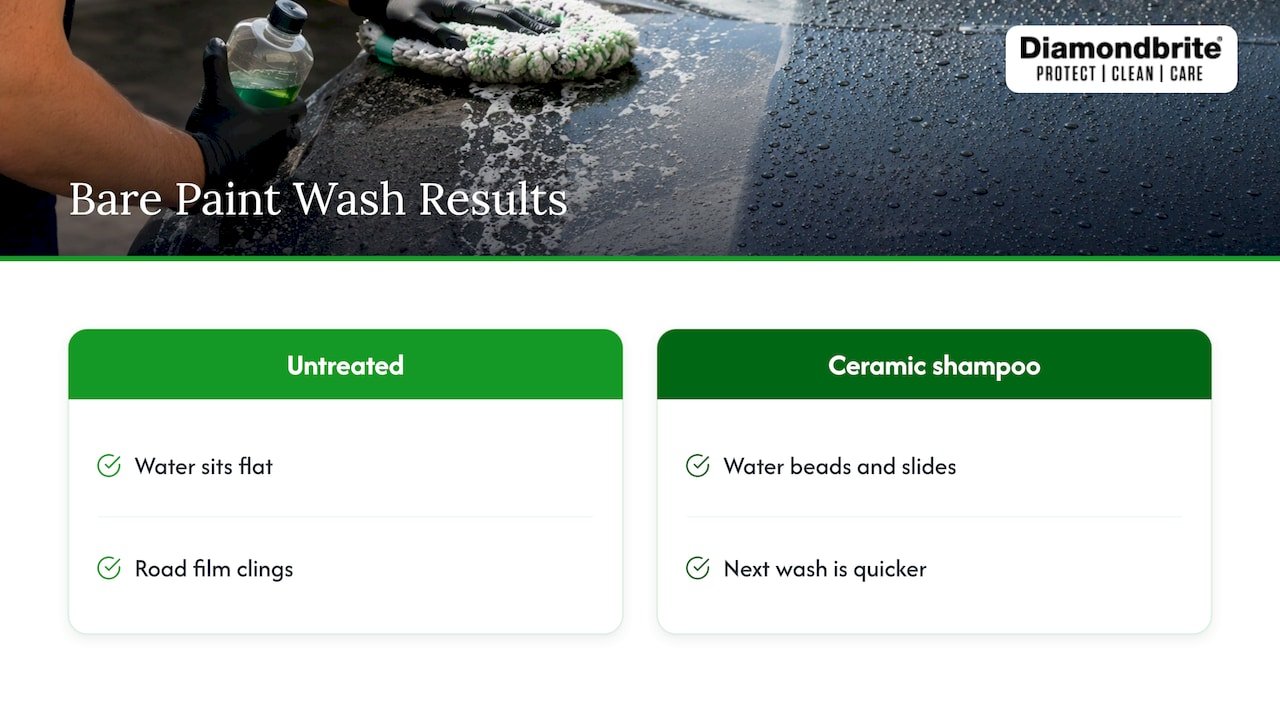
On bare paint, that film is the point. Untreated clear coat is porous at a microscopic level, so road film clings to it and water sits flat. A shampoo that leaves a slick layer makes the next wash quicker and gives you a visible change in how water behaves. If you want the background, our guide to ceramic shampoo benefits for your paintwork goes through it in more detail.
What to expect, and what not to expect
Expect a cleaner, glossier-looking car with noticeably tighter water beads after a few washes. Do not expect the multi-year hardness of a professionally applied coating. Think of ceramic shampoo as the regular care step that keeps paint looking its best between more involved treatments.
Ceramic shampoo vs a standard shampoo vs a coating
| Standard shampoo | Ceramic shampoo | Applied ceramic coating | |
|---|---|---|---|
| Main job | Clean | Clean and leave a light protective layer | Long-term protective layer |
| Works on uncoated paint | Yes | Yes | Needs prepared paint and application |
| Effort | Wash only | Wash only | Prep, application, curing |
| Effect builds with repeat use | No | Designed to | Maintained by washing |
If you already have a coating, a pH-neutral wash is the right choice for upkeep, and our page on pH neutral car shampoo for ceramic-coated cars covers that. If you do not, ceramic shampoo gives you a head start with no extra steps.
How to wash uncoated paint with ceramic shampoo
A good result comes mostly from technique. Most swirl marks come from dragging grit across the paint, not from the shampoo.
- Pick your spot. Work in shade with cool panels. Hot paint dries soap before you can rinse it.
- Rinse thoroughly. Use a hose or pressure washer to knock off loose grit. A pre-wash foam helps further, and our 5 to 10 minute pre-wash method explains why it matters.
- Wheels first. Wheels carry the heaviest grit, so clean them before the paint. Our wash sequence guide shows the order that keeps wheel dirt off your bodywork.
- Mix the shampoo. Follow the label, or see how much ceramic shampoo to use per bucket. More soap does not mean more protection, only more rinsing.
- Two buckets. One holds shampoo, one holds clean water for rinsing the mitt. The two bucket wash method is the simplest way to avoid swirls.
- Wash top to bottom. Use straight lines, not circles, and rinse the mitt after each panel.
- Rinse and dry. Rinse from the top down while the surface is still wet, then dry with a clean microfibre towel.
For streak-prone dark paint, the spray and rinse panel by panel approach is worth a look.
Getting better beading on bare paint
The layer from a shampoo is thin, so a few habits make it count.
- Wash regularly. Because the effect builds with repeat use, a consistent routine does more than occasional deep cleans.
- Start from clean paint. If the paint feels rough after washing, bonded contamination may be blocking the effect. Our guide on whether to use a clay bar and do a 30 second bag test shows how to check.
- Dry properly. Leaving water to evaporate leaves mineral spots, which is a particular problem in hard-water areas of the UK.
- Add a booster when you want more. Ceramic glaze can add depth and help hide fine swirls, and you can read how it works in our glaze and swirls guide.
If you want to go further than washing, how to apply ceramic glaze to paint and trim is a straightforward next step.
Does it work on wax, sealant or matte paint?
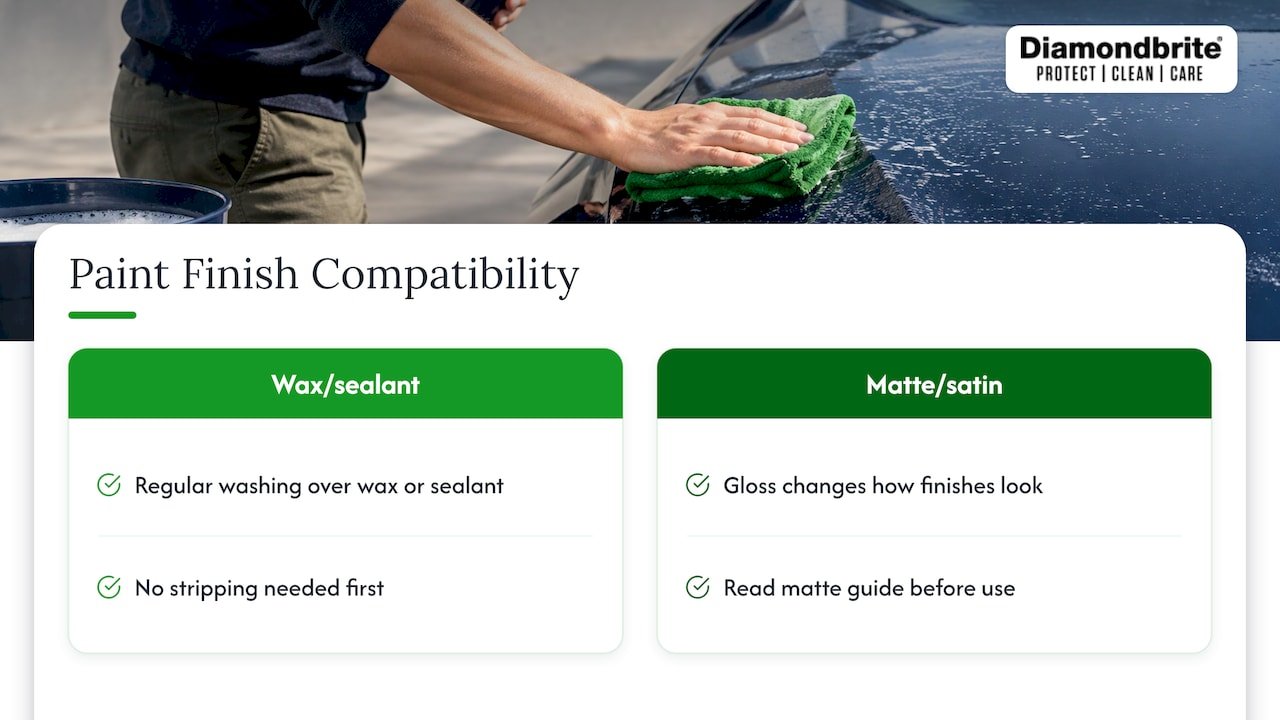
Ceramic shampoo is designed for regular washing over existing wax or sealant, so you do not need to strip anything first. If you plan to keep waxing, our guide to keeping gloss without waxing a ceramic coating explains how the layers sit together.
Matte and satin finishes need extra thought, because anything that adds gloss changes how they look. Read our matte paint protection guide before using any gloss-enhancing product on those finishes.
Washing at home: keep it tidy
Wash water carries soap, oil and brake dust. Environmental guidance on vehicle cleaning stresses keeping wash run-off away from surface water drains, which usually lead straight to watercourses. At home, wash on a lawn or gravel where water can soak in, or use a measured amount of shampoo and avoid sending suds down the road gully.
Our view on ceramic shampoo
We built our range for people who want their car to look good without turning every weekend into a project. Most of the drivers we hear from do not have a coating. They have a family car, a commuter or a motorbike, and they want a wash that leaves something behind.
That is why we focus on ceramic-infused shampoo. It fits the routine you already have, it works on the paint you already own, and it is designed to build a durable shield wash after wash. Add a glaze when you want more depth, and a snow foam when you want a gentler pre-wash.
Our customers consistently tell us the biggest difference is how easy the next wash becomes. That is the sort of cost-effective, practical benefit we aim for.
Will
Build your wash kit with Diamondbrite
If you are starting from uncoated paint, a ceramic shampoo, a snow foam and a ceramic glaze cover cleaning, pre-wash and finishing in one coherent range. We also make care products for motorcycles, leisure vehicles and marine use, so one brand can look after everything on your drive.
Browse the full range, including packs, at Diamondbrite, and see our ceramic coating maintenance guide if you later decide to move up to a coating.
FAQ
Is ceramic shampoo safe on paint without a coating?
Yes. It is designed as a regular wash product for any clean painted surface. It cleans the paint and is designed to leave a thin, slick layer that improves water behaviour. Use it with soft mitts and clean water, as you would any shampoo.
Will ceramic shampoo protect my paint like a coating?
It is not a replacement for a full coating, which is a separate applied layer. Ceramic shampoo is a maintenance product that adds light protection and slickness with each wash. Many owners use it as a simple starting point, then add a glaze for extra depth.
How often should I use it?
As often as you normally wash, which for most UK drivers is every one to two weeks. Because the effect is designed to build over repeat washes, regular use works better than occasional use. In winter, wash more often to remove road salt, as our winter paint protection guide explains.
Do I need to remove wax first?
No. You can wash over existing wax or sealant. If paint feels rough after a wash, deal with contamination first rather than stripping the old layer.