

Yes, you can use an all-purpose cleaner (APC) inside your car, but only on the right surfaces, properly diluted, and applied to a cloth rather than sprayed at the trim. Hard plastics, door cards and rubber mats cope well. Leather, screens, switchgear and delicate fabrics need a gentler, surface-specific product. Here is how to get a clean cabin without leaving marks, residue or damage.
TL;DR
- An APC suits hard, non-porous interior surfaces such as plastics and mats. Keep it off leather, Alcantara, screens and electronics.
- Dilute to the job: a lighter mix for routine cleaning, a stronger one for greasy marks. Always follow the label.
- Spray onto a microfibre cloth or soft brush, never straight onto trim, then wipe away every trace.
- Open the doors, ventilate well and wear gloves and eye protection.
- For seats, screens and everyday dashboard upkeep, a dedicated interior or fabric cleaner is the better tool.
Table of Contents
- What an APC does inside a car
- Where APC is safe and where it is not
- How to dilute APC for interior use
- How to apply APC without residue or damage
- Ventilation and safety when cleaning inside a vehicle
- When to choose a dedicated interior cleaner instead
- Our perspective: clean with the right tool, then protect
- Build a simple interior care kit
- Ready to stock your interior kit?
- FAQ
- Sources
What an APC does inside a car
An APC is a general cleaner for hard surfaces. It is built to loosen grime, finger marks, scuffs and light grease so you can wipe them off. That makes it handy in a cabin, where one product can tackle door pull marks, kick plates, boot liners and footwell mats.
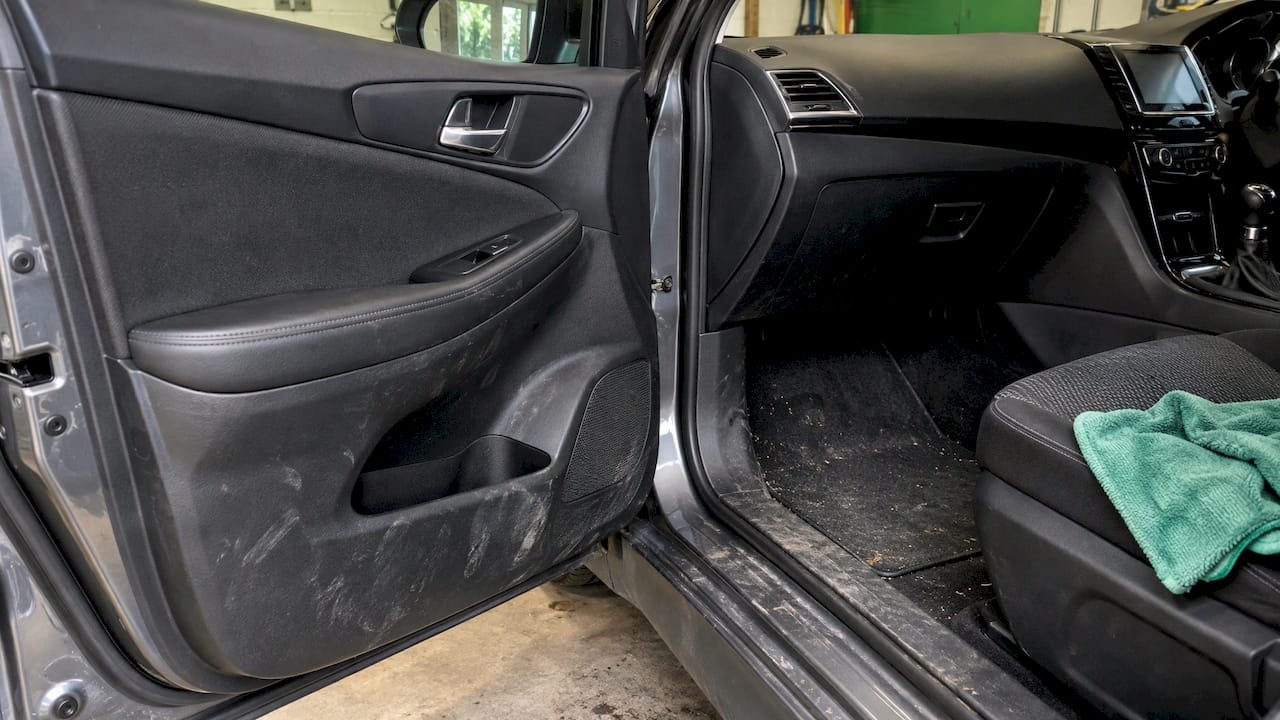
The catch is the word “general”. Interiors mix hard plastics, soft-touch coatings, dyed leather, textiles, glass and electronics. An APC that is perfect on a rubber mat can dull a soft-touch panel or strip the finish from a leather seat. Strength matters too. Alkaline APCs break down grease and oil faster but are riskier on sensitive materials, while neutral ones are milder and gentler but slower on heavy grime, as T&H Car Care’s guide to APCs explains.
Where APC is safe and where it is not
| Interior surface | APC? | What to do |
|---|---|---|
| Rubber and carpet mats | Yes | Diluted, agitate with a brush, wipe or rinse off |
| Hard plastic door cards, kick plates | Yes | Spray onto a cloth, wipe, dry |
| Boot liner and sills | Yes | Slightly stronger dilution is fine |
| Fabric seats and headliner | Rarely | Use a fabric cleaner |
| Leather | No | Use a dedicated leather cleaner |
| Alcantara and suede | No | Use a gentle, suitable cleaner |
| Infotainment and instrument screens | No | Barely damp microfibre only |
| Switchgear and electronics | Careful | Cloth only, wrung out well |
The pattern is simple: the more porous, dyed, soft or electronic the surface, the less suited an APC is to it. If you are unsure, test on a hidden spot such as under a seat or inside the glovebox lid, and read the product label first.
For steering wheels and nap materials, see our guide to cleaning an Alcantara steering wheel. For hard trim, our page on a degreaser that is safe on plastic covers what to use and what to avoid.
How to dilute APC for interior use
The label always wins, because concentrations differ widely between products. As a worked example, Car Magazine’s test of a water-based APC found it could be diluted to 1:100 for lighter interior cleaning of plastics, fabric and carpet, while 1:50 lifted grease marks more effectively without leaving greasy residue.
A practical rule of thumb:
- Start weak. Begin with the mildest dilution your label allows. You can always step up.
- Match strength to the soil. Light dust and finger marks need little. Greasy handprints, scuffed sills and ground-in mat dirt justify a stronger mix.
- Never go stronger than the label. Too strong a dilution is a common cause of dull, tacky or stained trim.
- Mix fresh, label the bottle. A clearly marked spray bottle stops a strong boot-liner mix ending up on the dashboard.
How to apply APC without residue or damage
Technique matters more than the product. Follow these steps:
- Work in the shade on a cool cabin. Heat makes the cleaner evaporate quickly and leave streaks.
- Vacuum first so you are not turning loose grit into mud.
- Spray the cloth, not the surface. Overspray on switches, screens or stitching is how most interior damage happens.
- Agitate gently. A soft detailing brush helps with textured plastic and seams.
- Wipe off straight away with a clean, dry microfibre cloth. Do not let the cleaner dry on the surface.
- Finish with a light wipe using a cloth dampened in plain water if the trim feels slightly tacky.
- Leave the doors open to let the cabin air out.
On screens and switchgear, wring the cloth out well so it is damp rather than wet. Many screen makers advise against ammonia and strong solvents because they can harm anti-glare coatings, so a barely damp microfibre is the safe choice there.
If you are cleaning salt-marked carpets after winter, our guide to removing salt stains from your car interior goes through the process step by step.
Ventilation and safety when cleaning inside a vehicle
A car cabin is a small, enclosed space, so fumes build up fast. The Health and Safety Executive’s valeting guidance notes that concentrations may be high inside vehicles, and advises leaving all doors and the sunroof wide open for good ventilation. It also recommends eye protection and suitable gloves for hands and forearms, replaced or cleaned regularly. The same page warns that cleaning products can harm through skin contact, splashes in the eye or breathing in mist and vapour, and that some give off flammable vapour.
The HSE’s separate guidance on valeting with solvent-based products goes further: solvents used inside cars can lead to a lack of breathing air, and it advises swapping to solvent-free products where possible and using good general ventilation. Single-use nitrile gloves are acceptable. This guidance is written for workplaces, but the sensible habits apply just as well on your driveway. A protective coatings checklist for fleet vehicles shows the same care-first mindset applied to larger vehicle fleets.
Keep these points in mind:
- Never mix cleaners, and never combine an APC with strong acids or oxidisers.
- Keep sprays away from heaters, cigarettes and anything that can spark.
- Wear gloves and eye protection, especially when spraying overhead surfaces such as the headliner area.
- Stop and get fresh air if you feel dizzy or your eyes or throat are irritated.
When to choose a dedicated interior cleaner instead
An APC is a strong all-rounder, but it is not always the right tool. Reach for a surface-specific product when:
- The soiling is light. For regular dashboard and trim upkeep, a purpose-made interior cleaner is gentler and quicker. Our comparison, APC vs interior cleaner, helps you choose.
- You are cleaning fabric. Textile seats, carpets, headliners and Alcantara want a fabric cleaner rather than the treatment you would give hard plastic.
- There is leather. Use a dedicated leather cleaner on a microfibre cloth, because harsher products can strip the finish.
- The contaminant is specialist. APCs have limits. Car Magazine’s tester found the APC degreased wheels but could not lift iron fallout, so specialist cleaners suit specialist contaminants.
Once the cabin is clean, you can think about keeping it that way. Our piece on interior ceramic coating looks at whether protection inside the car is worth it for UK owners.
Our perspective: clean with the right tool, then protect
We build our range around the idea that car care should be effective, efficient and kind to the surfaces you want to keep looking good. Our products are ceramic infused and designed to make upkeep easier, so you spend less time scrubbing and more time enjoying the drive.
When it comes to interiors, we think the best results come from matching the product to the surface. A degreaser or general cleaner earns its place on mats, boot liners and tough scuffs. For the parts you touch every day, a dedicated interior product is simpler and gentler, and it is exactly why we offer separate interior, glass and cleaning lines rather than one bottle for everything.
Our customers tell us they value ease of use, and that is how we design. Dilute sensibly, use a cloth rather than a soaking spray, keep the cabin ventilated, and build a small kit you can rely on. Do that, and a durable, sparkling finish is well within reach.
Will
Build a simple interior care kit
You do not need a shed full of bottles. A sensible kit looks like this:
- A cleaner for hard surfaces, diluted to suit the job
- A dedicated interior cleaner for dashboards and door cards
- A leather or fabric cleaner, depending on your seats
- A glass cleaner for a clear, streak-free finish
- A handful of clean microfibre cloths and a soft brush
- Nitrile gloves and eye protection
Our guide to streak-free car glass completes the picture, because interior glass is often the last job and the one that shows every mistake.
Ready to stock your interior kit?
Diamondbrite offers interior and exterior cleaning agents, glass cleaners, polishes, degreasers and surface protectants for cars, motorcycles, leisure vehicles and marine use. If you want a cleaner, calmer way to look after your cabin, browse the Automotive Interior range and pick the products that suit your surfaces.
If you also look after paintwork, our ceramic range and loyalty promotions are on the same shop, so one order can cover the whole vehicle.
FAQ
Can I use APC on a car dashboard?
Often yes on hard plastic, but dilute it properly, spray it onto a microfibre cloth and wipe off straight away. Avoid soft-touch coatings you are unsure about without testing a hidden spot first. For routine upkeep, a dedicated interior cleaner is usually the gentler choice.
Is APC safe on leather seats?
No. Use a dedicated leather cleaner on a microfibre cloth instead, because a general cleaner can strip the finish. If your car has Alcantara or suede, choose a product made for those materials too.
Can I spray APC on the infotainment screen?
No. Never spray cleaner directly onto screens, switches or electronics. Use a barely damp, well-wrung microfibre cloth, as many screen makers warn against ammonia and strong solvents that can damage anti-glare coatings.
How much should I dilute APC for the interior?
Follow the label first. As one example, a water-based APC tested by Car Magazine worked at 1:100 for lighter cleaning and 1:50 for grease marks. Start weak and only strengthen the mix if the soiling demands it.