

The safest way to clean a motorhome roof is from a stable ladder or platform, with a soft brush, a cleaner made for leisure vehicles and no high-pressure water. The best result comes from finishing with a protective layer, so algae and black streaks release more easily at the next wash. Our Leisure range is made for owners who want that routine to be quick and repeatable.
TL;DR
- Chock the van, use a wide-based stepladder on level ground and clean the roof in reachable sections. Do not stand on the roof unless the manufacturer confirms it can take your weight.
- Use a soft brush or microfibre mitt and a cleaner made for motorhomes. Skip household cleaners and high-pressure jets.
- Clean the roof first, because its dirt runs down the sides. Work on a cool, cloudy, calm day.
- Clean at least twice a year, and protect the roof afterwards so the next clean is easier.
Table of Contents
- Why the roof deserves the first hour
- Get safe access first
- Choose the right tools and cleaner
- The step-by-step method
- Algae, lichen and black streaks
- Pressure washers: leave them in the shed
- How often to clean the roof
- Protect the roof so the next clean is easier
- What we recommend
- Ready to stock up
- FAQ
- Sources
Why the roof deserves the first hour
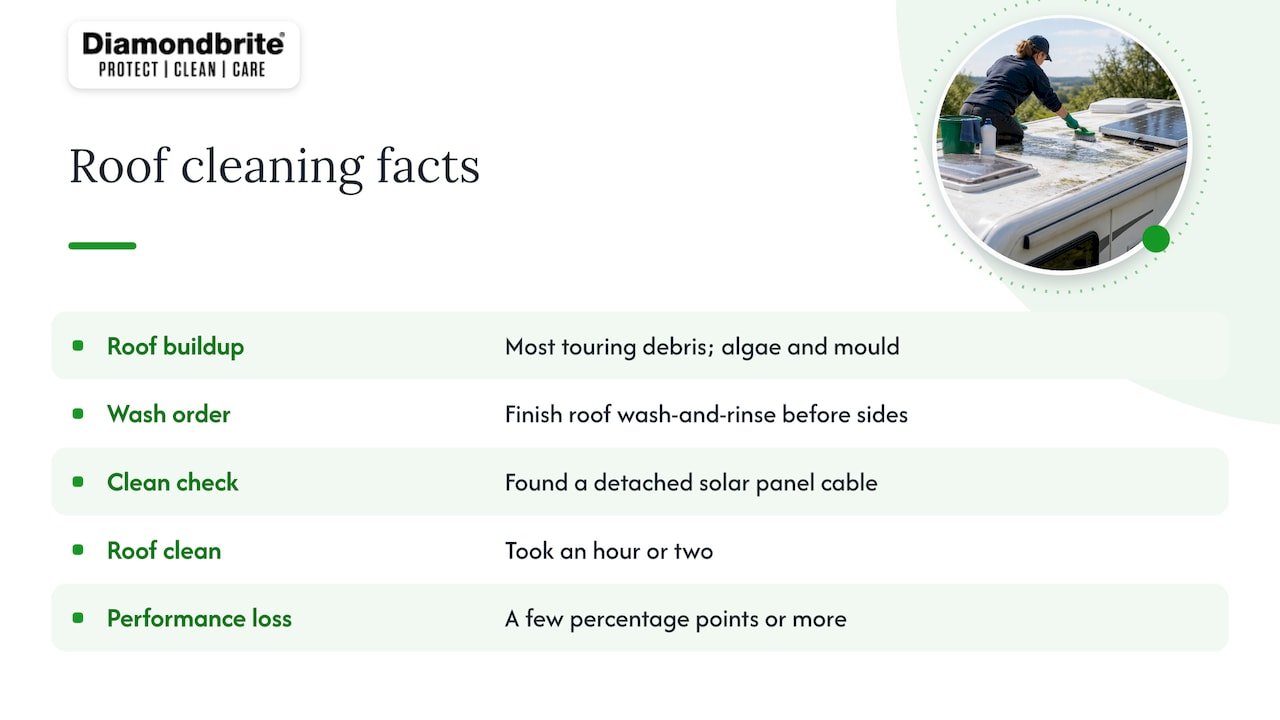
The roof collects most of the debris from touring, and it is where algae and mould tend to grow, according to The Caravan Club’s exterior cleaning advice. That dirt then runs down the walls. Out & About Live says to start with the roof and finish its full wash-and-rinse before you move to the sides, so you do not wash the walls twice.
A clean roof is also a chance to check it. Practical Motorhome describes a detached solar panel cable found this way, and says a full roof clean took an hour or two. It also says a dirty solar panel can lose a few percentage points of performance or more.
Get safe access first
Most roof-cleaning accidents start with the ladder, not the brush. Before you pick up a cloth:
- Park on level ground with the handbrake on and the wheels chocked.
- Use a large stepladder with a wide base. Practical Motorhome suggests protecting the roof edge with foam or pipe lagging.
- Clean in sections you can reach comfortably, then move the ladder. Leaning and stretching is how people fall.
- Keep three points of contact (two feet and a hand), have a helper steady the ladder and never stand on the top step. Caravan Guard’s video guide notes that it is often a hinge, not a step.
- Wear non-slip footwear and safety glasses, and avoid wet, windy or icy conditions.
Resist the temptation to walk on the roof. Camperbuyer points out that roofs are often curved, slippery when wet and not built for a person’s concentrated weight. A small crack or weakened seal can let moisture in and lead to damp. A work platform is safer than a ladder for higher areas, so use one if you have access to it.
Choose the right tools and cleaner
You need very little:
- A stepladder, hosepipe and bucket of warm water
- A long-handled soft brush, ideally with a hose attachment, for the middle of the roof
- A short-handled soft brush or paintbrush for solar panels, vents and fixings
- A microfibre mitt rather than a sponge. Practical Motorhome explains that sponges can rub dirt back into the surface and cause micro-scratches.
- A large microfibre cloth or a water blade for drying
- A cleaner made for caravans and motorhomes
The Caravan Club advises using only products designed for caravans or motorhomes, because household cleaners could do more harm than good. Caravan Guard says washing-up liquid can be corrosive. If you have used it by mistake, apply polish straight away.
Check your handbook too. Out & About Live notes that some manufacturers rule out certain cleaning devices, which can affect the warranty.
The step-by-step method
- Pick your day. Cloudy and calm is best, because the wash will not dry before you finish each step. A professional valet quoted by Caravan Guard works one side at a time when it is sunny or windy.
- Park with a slight slope. Dirty water then drains off the roof. You can use levelling ramps to raise the front.
- Soak the roof. A gentle rinse softens the dirt. Keep the water away from vents and rooflights.
- Do the edges of fittings first. Open rooflights and wipe around their edges with a microfibre cloth and diluted cleaner. Use a small brush under solar panels and around fixings.
- Wash the main surface. Apply the diluted cleaner with horizontal strokes, working from the back to the front, repositioning the ladder as you go.
- Rinse thoroughly. Take extra care around vents, lights and solar panels.
- Dry. A large microfibre cloth or blade stops streaks and water marks.
If you use a wax-based product, Camplify advises cleaning solar panels separately with warm soapy water, because wax can block the UV light they need.
Algae, lichen and black streaks
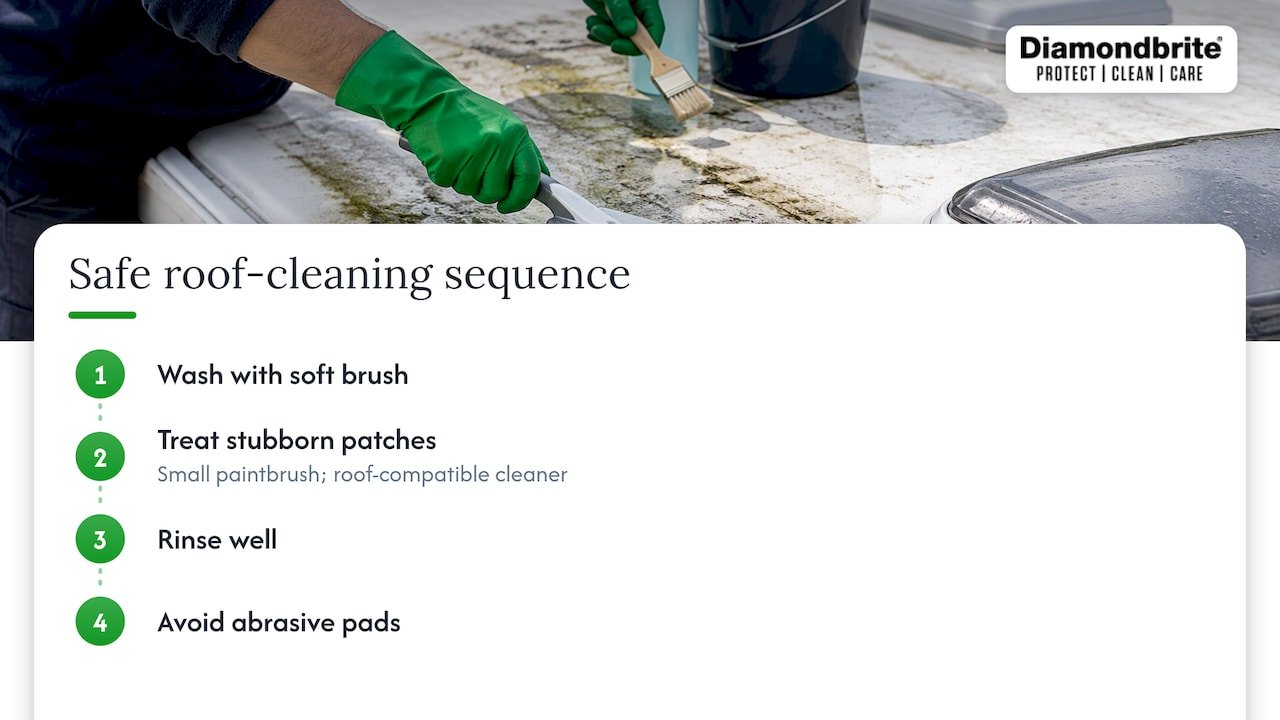
Green film and black streaks build up fastest on roofs that sit outdoors or under trees. Wash with a soft brush first. Work stubborn patches with a small paintbrush and a cleaner suited to your roof material, then rinse well, rather than scrubbing hard. Never use abrasive pads on the surface.
Our separate guide to removing black streaks safely covers the technique in more detail. The principles apply to a motorhome as well. If you want the sides done in the same session, follow the complete exterior routine.
Pressure washers: leave them in the shed
A jet is the most common way to damage a roof. Practical Motorhome says never to use a pressure washer or high-pressure hose, because it can damage sealant and force water inside. The Caravan Club advises avoiding one unless its pressure is adjustable, as it could damage window seals. A soft brush on a hose does the job without the risk.
How often to clean the roof
Camplify suggests at least twice a year, and once at the start and once at the end of the season if the van lives outside, sits under trees or is used a lot. After a trip under trees or on dusty roads, a hose-down helps.
Winter lay-up makes the spring clean harder. The Camping and Caravanning Club says an uncovered motorhome stored in the open will build up grime and algae, especially on the roof, and that spring cleaning may need several careful stages to avoid grinding grit into the paintwork. It also suggests using the clean to inspect seals and joints.
Protect the roof so the next clean is easier
Cleaning removes the dirt. Protection decides how quickly it comes back. A protective layer on a clean surface makes water, dirt and algae wash away more readily, which is why the winter-care guidance above recommends applying one after cleaning.
Our approach is ceramic-infused care. The Automotive Ceramic and Leisure lines on our shop cover vehicles from cars to leisure vehicles. If you own a motorhome, our guide to motorhome ceramic protection explains costs and maintenance.
What we recommend
We built Diamondbrite around a simple idea: car care should be effective, cost-effective and kinder to the environment. Ceramic-infused formulas build a durable shield, and our range includes waterless wash options for when a full wash is not practical.
For a leisure vehicle owner, the roof is the hardest job to get to and the easiest to put off. That is why we think the smart routine is a gentle, careful clean followed by protection, so the next clean takes less time and less effort at the top of a ladder.
Our customers range from everyday motorists to enthusiasts, and those with motorcycles, leisure vehicles and boats. Our Leisure range is there for the owners who want a sparkling finish without a weekend of work.
Will
Ready to stock up
If you are planning a roof clean, our Leisure range and wider shop bring ceramic-infused cleaning and protection products together in one place for cars, motorcycles, leisure vehicles and marine vessels. Loyalty-programme promotions run regularly.
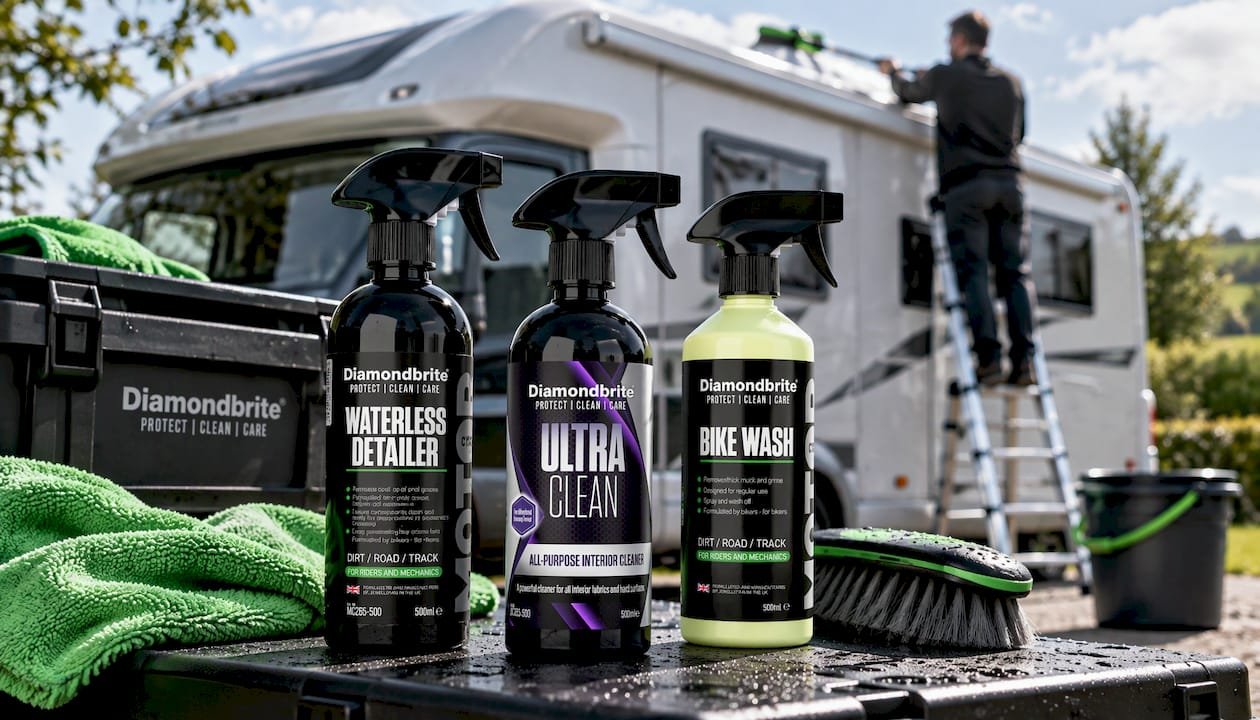
Browse the range, choose what suits your vehicle and follow the manufacturer’s guidance on the label.
FAQ
Can I use washing-up liquid on my motorhome roof?
It is best avoided. Caravan Guard says washing-up liquid can be corrosive, and recommends polishing straight away if you have used it. A cleaner made for motorhomes in warm water is the safer choice.
Can I stand on the roof to clean it?
Only if the manufacturer confirms the roof is load-bearing. Most are not designed for it, and a crack or weakened seal can let water in. Work from a stable ladder or platform with a helper instead.
Is a pressure washer safe on a motorhome roof?
It is not recommended. Camplify warns that water can get past seals, sealant or roof vents even on a low setting. A soft long-handled brush with a hose gives a good result without that risk.
How do I stop algae coming back?
Clean thoroughly, dry the surface and apply a protective coating. The Camping and Caravanning Club recommends this after cleaning before winter, as it helps water, dirt and algae run off. Regular washing at the start and end of each season also keeps build-up manageable.
Sources
- Motorhome roof cleaning: a step-by-step guide, Practical Motorhome
- Caravan exterior cleaning, The Caravan Club
- Motorhome cleaning: all you need to know, Out & About Live
- Video: How to clean your motorhome roof, Caravan Guard
- Motorhome Cleaning, Caravan Guard
- How to clean a motorhome roof, Camplify
- How to safely clean the roof of your motorhome, Camperbuyer
- A Guide to Winterising a Motorhome, The Camping and Caravanning Club