
The best boat interior cleaner is the one matched to the surface you are cleaning: vinyl, carpet, trim or glazing each need different handling, and the wrong product does more harm than the dirt. Start with a gentle interior cleaner, warm water and a soft brush, and keep harsh solvents away from seating. We make upholstery, carpet and interior cleaners for exactly this kind of routine, and the sections below show how to use them well.
TL;DR
- Choose by material (vinyl, carpet, wood, plastic), not by the stain in front of you.
- Avoid household cleaners, abrasives, solvent cleaners and power washers on vinyl: they can discolour or damage it.
- Dry cushions thoroughly before covering the boat, because damp upholstery invites mildew and pink staining.
- Caravan windows are usually acrylic: no ammonia or alcohol, and use a damp microfibre cloth.
- Never pressure wash a caravan roof, and never stand on it to clean it.
Table of Contents
- What a boat interior cleaner has to deal with
- Cleaning boat upholstery without damaging it
- Carpet, trim and cabin glass
- A simple order of work
- Caravan windows: what to use and what to avoid
- Caravan roofs: gentle, from a safe position
- Our approach to interior care
- Get the right cleaner for the job
- FAQ
- Sources
What a boat interior cleaner has to deal with
A boat cabin is a small space with a lot of different materials: vinyl seating, carpet, plastic trim, varnished wood, stainless fittings and gelcoat. Add salt, body oils, sun cream, damp and sometimes mildew, and one bottle has plenty to do.
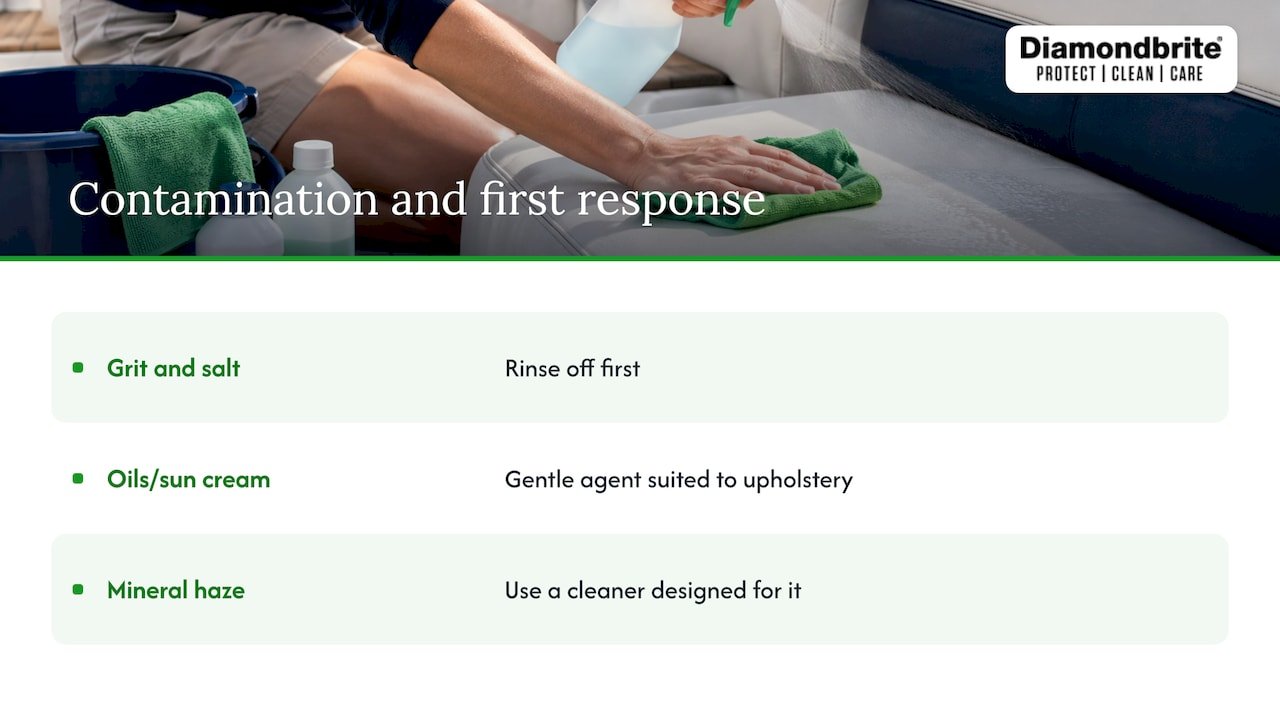
That is why the choice starts with the surface. Grit and salt need rinsing off first. Body oils and sun cream need a gentle cleaning agent that suits the upholstery. Mineral haze from hard water needs a cleaner designed for it, not harder scrubbing. Match the product to the material and the contamination, and most jobs become simple.
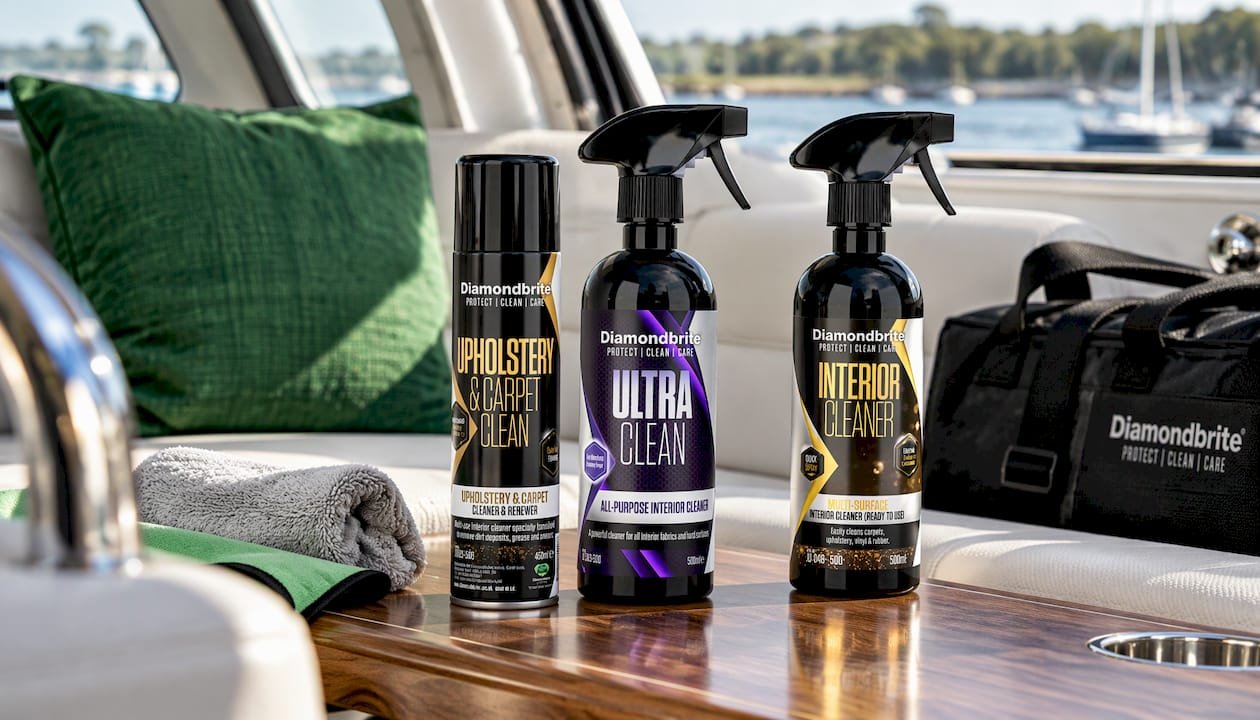
A multi-purpose interior cleaner is a sensible first choice for a regular wipe-down of cabin surfaces. Our Ultra Clean all-purpose interior cleaner 500ml and Universal Interior Cleaner are made for that everyday job. Our Upholstery and Carpet Cleaner 450ml covers fabric seating and cabin carpet.
Cleaning boat upholstery without damaging it
Vinyl is the most common boat seating, and it is easy to ruin with the wrong product. The boat maker MasterCraft warns that household cleaners, powdered abrasives, steel wool and solvent cleaners can damage and discolour vinyl, and that dry-cleaning fluids and lacquer solvents strip printed pattern and gloss. It also cautions that a power washer can generate around 3,500 PSI, enough to harm the surface.
A safe routine looks like this:
- Brush off loose grit. Dry grit scratches when you wipe, so remove it first.
- Use a soft brush and warm, soapy water. This is the routine MasterCraft recommends after each outing.
- Apply your interior cleaner to the cloth or surface and work in small sections, following the directions on the label.
- Rinse thoroughly. Leftover residue attracts dirt and leaves a film.
- Dry the cushions properly. MasterCraft notes that upholstery stored damp under a cover is prone to mildew.
If you see stubborn pink marks, they are usually dyes produced by micro-organisms, a type of fungus, rather than ordinary dirt. They are another reason to keep cushions dry and clean them regularly.
Protecting vinyl after cleaning
Clean vinyl stays supple longer when it is protected. MasterCraft cautions that silicone-based protectants can draw the plasticiser out of vinyl, leaving it hard, brittle and eventually cracked, so check the label of anything you apply. We cover the routine in our guide to keeping UK boat vinyl flexible.
Carpet, trim and cabin glass
Carpet. Use a dedicated upholstery and carpet cleaner, work it in gently and avoid soaking the carpet through to its backing. Open hatches and ventilate afterwards so it dries fully.
Plastic and laminate trim. A damp cloth with a mild all-purpose interior cleaner is usually enough. Avoid anything abrasive that dulls the surface.
Varnished wood. Keep strong degreasers away from it, as they can strip the finish. A mild cleaner on a soft cloth, then a dry cloth, is the safer approach.
Salt exposure. If your boat lives on the coast, salt will find its way inside as well as outside. Our saltwater protection guide for UK boat owners explains how to keep it in check, and the hull has its own routine in our guide to cleaning a boat hull.
A simple order of work
Work from the top down and from the dry to the wet. Remove cushions and loose items, vacuum or brush out grit, clean hard surfaces first, then upholstery and carpet last. Leave the cabin ventilated until everything is dry. A quick wipe-down after each trip takes minutes and stops grime from setting, which means deeper cleans are rarer and easier.
Caravan windows: what to use and what to avoid
Many readers who look for a boat interior cleaner also look after a caravan or motorhome, so here is the short version for the glazing.
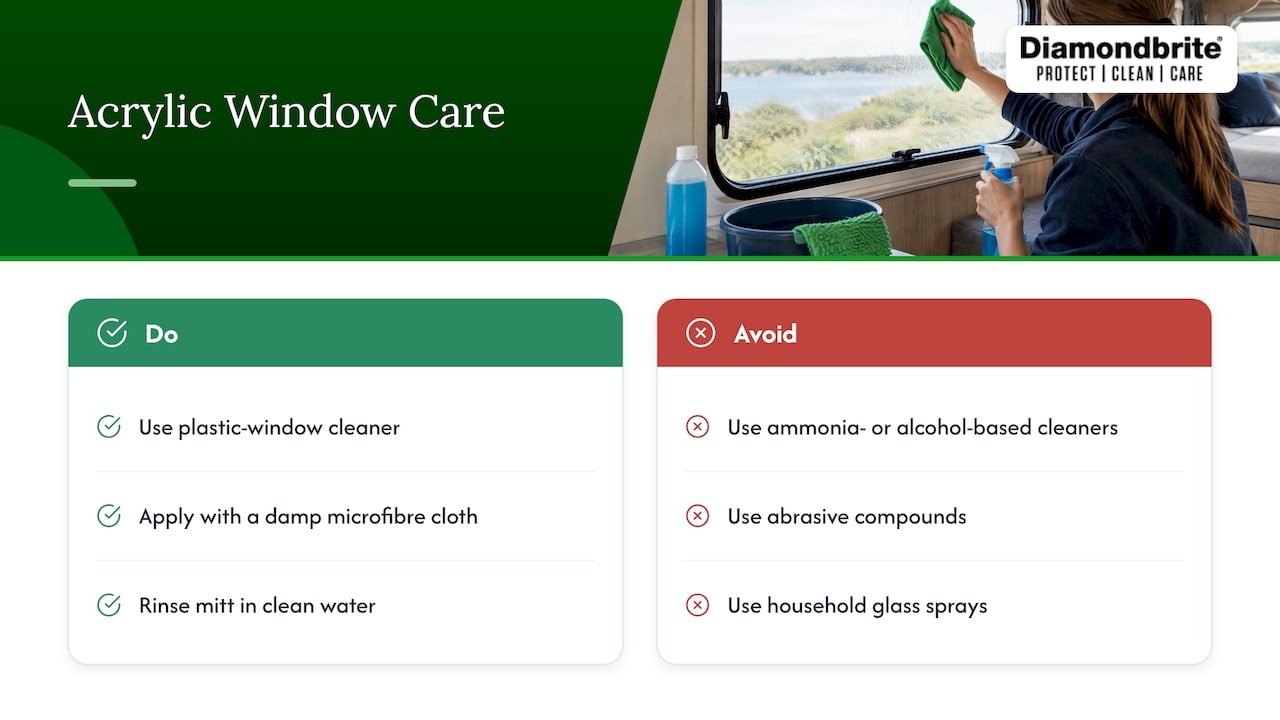
Most caravan windows are acrylic or similar plastics that scratch easily. Practical Caravan advises avoiding ammonia- or alcohol-based cleaners and abrasive compounds, and applying a cleaner with a slightly damp microfibre cloth. Ordinary household glass sprays often contain ammonia, which can leave acrylic cloudy for good.
The Caravan Club says caravan windows are delicate and susceptible to scratching, so use a cleaner designed for plastic windows with a microfibre cloth. It also describes a two-bucket method: one bucket for the soapy wash and one of clean water to rinse the mitt, so you do not rub grit into the plastic.
For the paintwork and panels around the windows, see our caravan exterior cleaning routine, and for marks below them, how to remove black streaks from a caravan.
Caravan roofs: gentle, from a safe position
The roof is the best place to start, because you rinse from the top down. Practical Caravan explains that rinsing with plenty of water stops dirt being ground into the surface, which can cause micro-abrasions in the top coat over time. Use a soft brush and soapy detergent after soaking the roof, and treat rooflights as you would the windows.
Safety matters more than speed up there:
- Do not use a pressure washer or high-pressure hose. Practical Caravan says they can damage sealant or force water inside.
- Do not lean or stretch from a ladder. Clean in sections and move the ladder each time.
- Caravan Guard recommends working from a platform rather than a ladder where you can, and checking that any product suits your particular vehicle.
Once the roof is clean, a wax polish or ceramic sealant can help keep it cleaner for longer.
Our approach to interior care
Most interior damage we hear about comes from using the wrong thing on the wrong surface, not from too little effort. A strong cleaner on vinyl, a soaking on carpet, a power washer on a seal: each one is avoidable.
That is why our range is built around simple, repeatable routines. Our interior cleaners, upholstery and carpet cleaner and wider marine and leisure lines are designed so a regular tidy takes minutes, not an afternoon. We want you to enjoy the boat or caravan, not dread the clean-up.
Little and often wins. A quick wipe after each trip, a proper clean each season, and properly dried cushions will keep an interior looking sparkling for years.
Will
Get the right cleaner for the job
For a regular boat or caravan interior clean, start with our Ultra Clean all-purpose interior cleaner for hard surfaces, and our Upholstery and Carpet Cleaner for seating and carpet. You can browse our marine, leisure and interior lines at diamondbrite.shop.
FAQ
What is the best cleaner for boat upholstery?
Choose one that suits the material, and use it with a soft brush and warm water. For vinyl, avoid household cleaners, abrasives and solvents, which can discolour it. For fabric seating, an upholstery and carpet cleaner used without soaking the foam is the right type.
Can I use a pressure washer inside or on my boat seats?
Not on upholstery. MasterCraft notes that a power washer can generate around 3,500 PSI and damage vinyl. A soft brush, warm soapy water and a thorough rinse are enough for routine cleaning.
Why do my boat seats have pink stains?
Stubborn pink marks are usually dyes produced by micro-organisms, a type of fungus. Regular cleaning and thoroughly drying cushions, especially before covering the boat, helps prevent them.
What is safe to use on caravan windows?
Use a cleaner made for acrylic or plastic windows with a slightly damp microfibre cloth. Avoid ammonia, alcohol and abrasive compounds, which can cloud or scratch the surface.
Can I pressure wash a caravan roof?
No. A pressure washer can damage the sealant and force water inside. Use a soft brush, soapy water and plenty of rinsing, and work from a stable platform rather than standing on the roof.