
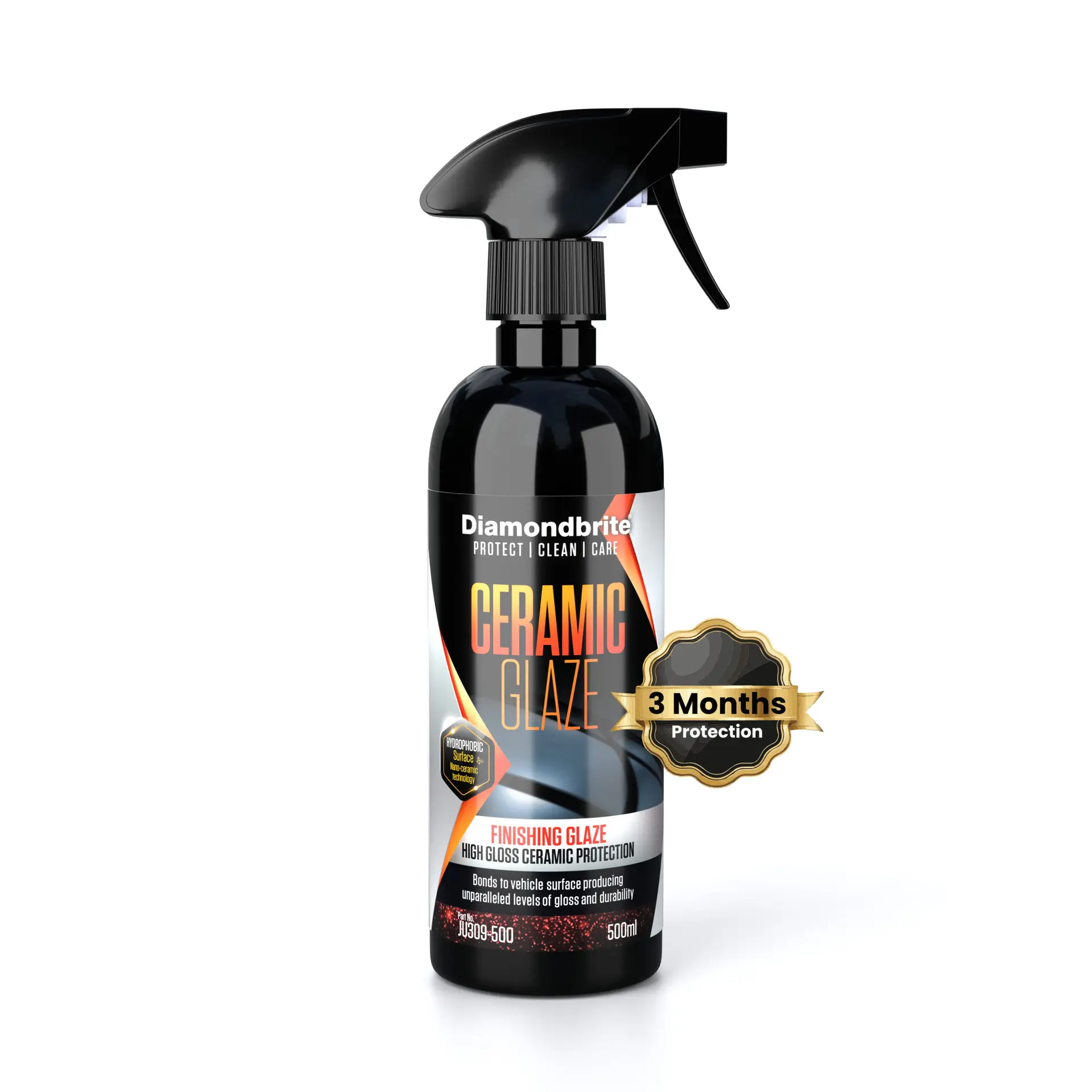
The two do different jobs. Paint protection film (PPF) is a physical barrier against stone chips. Ceramic coating is a slick, water-repellent layer that adds gloss and makes washing easier. If your main worry is chips on the bonnet, PPF is the answer. If you want lasting shine and a car that cleans easily, ceramic is the sensible place to start, and it is where our ceramic glaze comes in.
TL;DR
- PPF is a clear, self-healing film that guards against rock chips and gravel. Ceramic coating is a liquid polymer that bonds to the clear coat for gloss, water beading and easier cleaning.
- One UK guide from 2025 estimates PPF at around £1,000 for a whole car, and professional ceramic coating at about £500 for a small car, rising to around £2,000 for a larger one.
- You do not have to choose. Many owners film the impact-prone panels and keep ceramic care on the rest of the paint.
- For everyday gloss and easy washing on cars, motorbikes and leisure vehicles, ceramic-infused products are the simpler, more affordable route.
Table of Contents
- What each one actually does
- Side by side
- What it costs in the UK
- Which one fits your situation
- Can you ceramic coat over PPF?
- Looking after each
- Our view
- Start with ceramic care
- FAQ
- Sources
What each one actually does
PPF is a transparent, self-healing film fitted over all of the paintwork or selected panels. It forms a barrier against rocks, gravel and other damage. It is cut and fitted by an installer, panel by panel.
Ceramic coating is a liquid polymer that bonds to the clear coat (the glossy top layer of your paint). The same guide says it protects against road debris, UV rays and weather, repels water, adds gloss and makes cleaning easier.
So one is armour and the other is a slick, glossy shield. Neither replaces the other.
Side by side
| PPF | Ceramic coating | |
|---|---|---|
| What it is | Transparent self-healing film | Liquid polymer bonded to clear coat |
| Best at | Stone chips and impact | Gloss, water beading, easy washing |
| Fitting | Cut and fitted panel by panel | Applied to clean, prepared paint |
| Typical UK cost (2025 estimate) | Around £1,000 whole car, around £350 front only | About £500 small car, up to around £2,000 larger vehicle (professional) |
| Look | Protects, adds little gloss on its own | Deep gloss and strong water repellency |
Parkers, the UK motoring publisher, frames it the same way: drivers chiefly worried about stone chips should consider PPF, while ceramic coating’s water-repellent properties make dirt easier to wash off.
What it costs in the UK
The figures below come from a March 2025 UK guide, so treat them as a rough 2025 guide and get fresh quotes:
- PPF: around £1,000 overall, or around £350 for front coverage.
- Professional ceramic coating: about £500 for a small car, up to around £2,000 for a larger vehicle.
Vehicle size and model, and the installer, all move the price, and London can cost more than Liverpool or Glasgow. For ceramic, the cost is mostly labour and professional-grade product, which is why owners look at doing it themselves. We break down the budget in our guide to ceramic coating cost in the UK.
Which one fits your situation
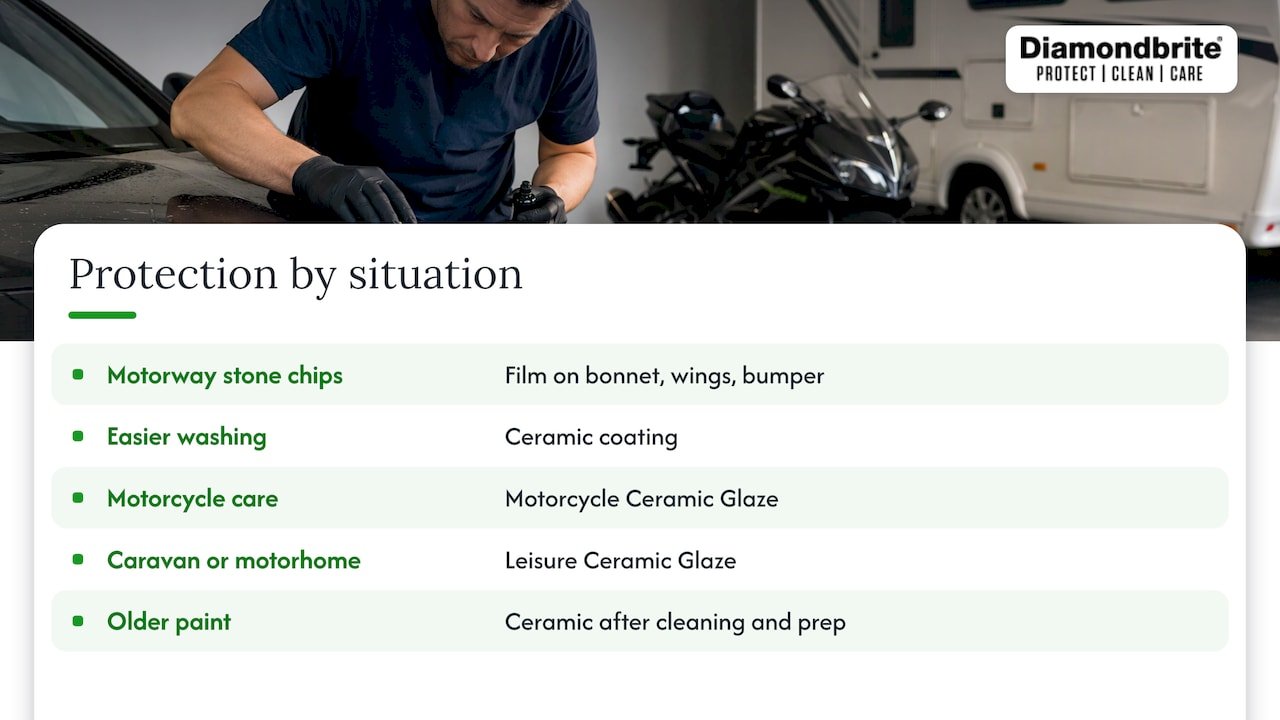
You drive a lot of motorway miles. The front end takes the stone strikes. Film on the bonnet, wings and bumper is the targeted answer, and front-only coverage costs less than a full car.
You want a car that looks sharp and washes easily. Ceramic is built for this. Water beads and runs off, and dirt releases more readily at wash time. It suits busy owners who want the car clean with little effort.
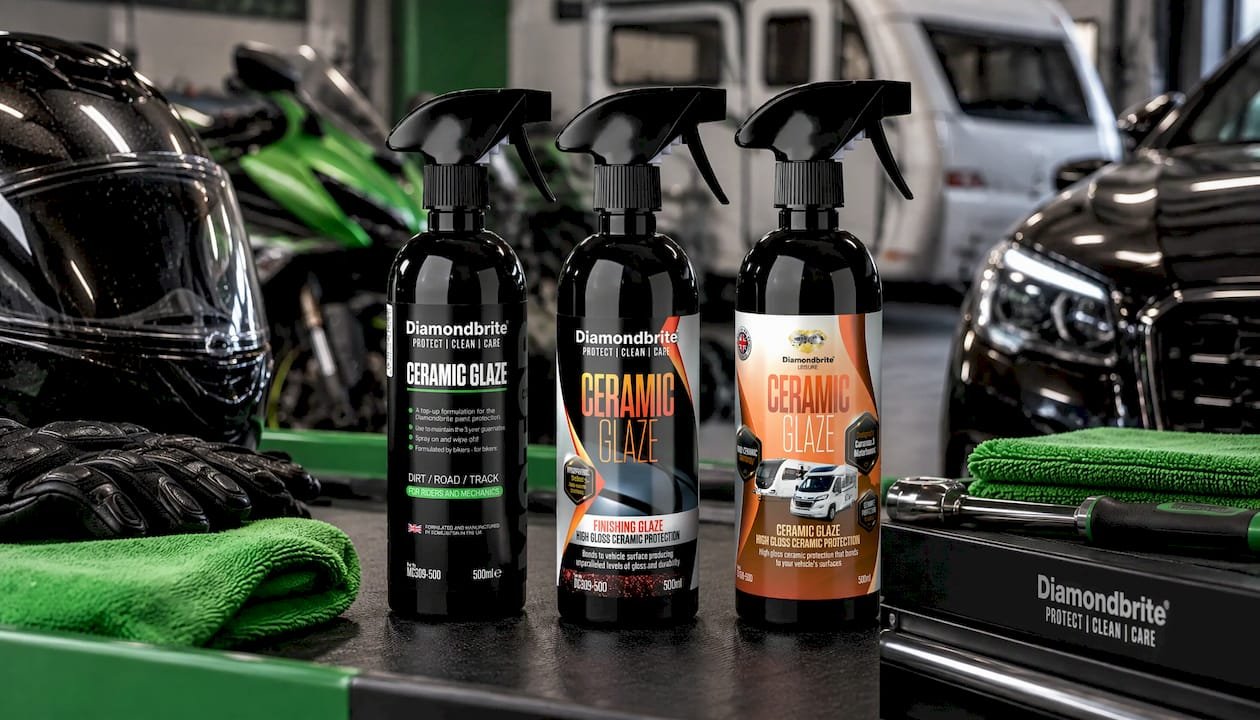
You ride a motorcycle. Tanks, fairings and mudguards benefit from gloss and easy cleaning after wet rides. Our Motorcycle Ceramic Glaze is made for that.
You own a caravan or motorhome. Large, flat panels show dirt and weather staining. Our Leisure Ceramic Glaze is designed for leisure vehicles, so cleaning between trips is quicker.
Your paint is older. Ceramic can still be applied, provided the paint is properly cleaned and prepared first. See ceramic coating on old paint for how to prepare it.
Can you ceramic coat over PPF?
Yes, in many cases. The usual approach is to film the panels most exposed to chips and then apply a compatible ceramic product over the film and the paint around it, so the whole car washes and looks the same. The two points to get right are film compatibility and timing: newly fitted film needs time before anything goes on top. Our guide to ceramic coating over PPF covers the wait and the compatibility check.
Looking after each
PPF can yellow over time, can show dirt lines at the edges where coverage is partial, and loses protection with age, according to the same UK guide. Ceramic coating must go on to clean, prepared paint, and it is less effective than film against deeper cuts and abrasions. Good prep matters; a clay bar bag test tells you in seconds whether the paint needs decontaminating first.
After that, ceramic care is a routine of gentle washing and periodic topping up. Our guide to keeping your ceramic coating in top condition sets it out, and if you are weighing a sealant against ceramic, this comparison shows the difference in durability.
Our view
Most owners we speak to want the same thing: paint that looks good and is quick to clean. That is where ceramic care earns its place. It builds a durable shield of gloss, water beading and easier washing, without a big bill or a day in someone else’s workshop.
Film is a fine answer for a specific problem, chips on the front panels. But the everyday work, the washing, the shine and the weather, is ceramic territory. Our ceramic-infused range is designed to make that part simple for cars, motorbikes, leisure vehicles and boats.
Start with the paint you can see every day, keep it clean, and top up the protection as you wash.
Will
Start with ceramic care
If gloss, water beading and easier cleaning are what you are after, our Ceramic Glaze is the place to begin. It sits alongside ceramic shampoos, snow foams and packs, plus ranges for wheels, glass, interiors, motorcycles, marine and HGVs, all on diamondbrite.shop.
You can also read what ceramic glaze does for your paint before you order.
FAQ
Is PPF better than ceramic coating?
It depends on the job. PPF is the stronger choice against stone chips and physical impact. Ceramic coating is the choice for gloss, water repellency and easier washing. Many owners use ceramic for the whole car and film only where chips are likely.
Can I use both on the same car?
Yes. A common approach is film on the front panels and a compatible ceramic product over the film and the rest of the paint. Allow the film its settling time first, as covered in our ceramic over PPF guide.
How much does PPF cost in the UK?
A March 2025 UK guide estimated around £1,000 for a whole car and around £350 for front coverage. Size, model, installer and region all change the price, so get a current quote.
Does ceramic coating stop scratches and chips?
Not deep ones. Ceramic gives a harder, slicker surface that helps with light marks and wash-induced wear, but film is the option designed for stone chips. Ceramic’s strength is gloss, UV and weather resistance, and easy cleaning.