
The thicker the foam, the better the clean: it is the most repeated belief in car washing, and it is wrong. A thick white blanket looks brilliant on social media, but only the thin layer touching the paint does any work. What decides the result is the formula, how it is diluted, how long it sits and how well you rinse. Get those right and you can use a modest foam and still lift the grime safely, whether you are washing a car, a motorbike or a caravan.
TL;DR
- Foam thickness is a look, not a measure of cleaning power. Parkers’ testers found no cleaning benefit to foam that thick.
- Only the layer in contact with the paint cleans. A foam that clings, then slides off gently, is the one to aim for.
- Snow foam is a pre-wash that loosens the top layer of dirt. It does not replace a careful contact wash.
- Judge a product by its dilution, pH and how easily it rinses, not by the size of the bottle or the height of the foam.
Table of Contents
- Myth 1: thicker foam cleans better
- Myth 2: snow foam can wash the car for you
- Myth 3: a bigger bottle is better value
- What actually drives a good result
- A quick way to judge your foam
- Where Diamondbrite fits
- Our view
- FAQ
- Sources
Myth 1: thicker foam cleans better
Snow foam works by coating the panel, sitting for a few minutes and loosening dirt so it can be rinsed away. The chemistry does that, not the volume of air in the bubbles. Parkers says thick foam needs a more powerful pressure washer and more product, and that a thickish foam which clings well but slides off gently is preferable.
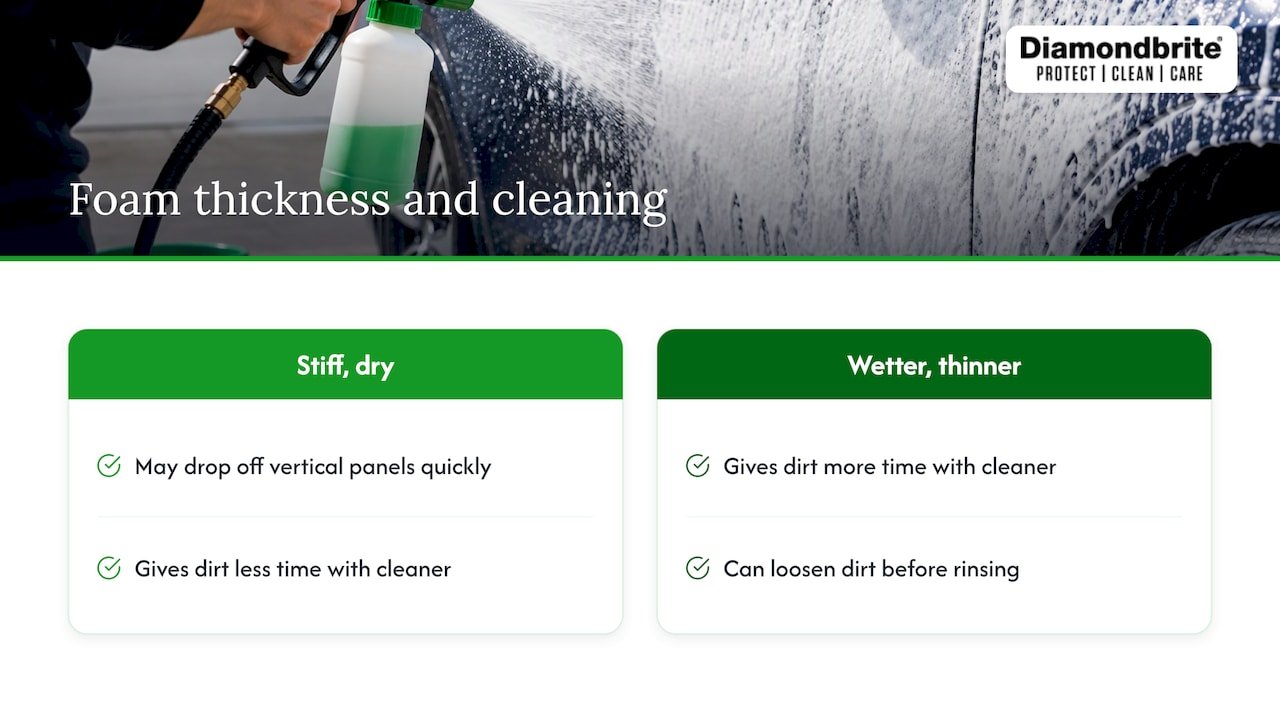
There is a practical reason too. A very stiff, dry foam can drop off a vertical panel quickly, so the dirt gets less time with the cleaner than it would with a wetter, slightly thinner mix. Foam that looks like shaving cream is not necessarily foam that is working.
The independent evidence points the same way. In a UK snow foam test, Autocar judged foaming ability as a thick foam that rinses off easily. One product in that test produced a thinner foam than expected and was still called an amazing dirt shifter. Looks and performance are separate things.
Myth 2: snow foam can wash the car for you
Snow foam is essentially a weaker shampoo that foams with water and air. It coats the car, sits for several minutes and loosens dirt, and it is designed as a pre-wash supplement rather than a full replacement for contact washing. Parkers’ experts add that expecting strong detailing performance from it is a bit of a stretch, because its job is to lift the top layer of dirt so the wash that follows is easier and more successful.
That is exactly where it earns its place. Removing the coarse grit before a mitt touches the paint reduces the chance of marring. If you want the full routine, our guides to the two bucket wash method and to stopping swirl marks with a short pre-wash show how the two stages fit together.
If you wash weekly, it is also worth knowing when foam is optional. Our comparison of snow foam and shampoo for UK car owners covers when each earns its time.
Myth 3: a bigger bottle is better value
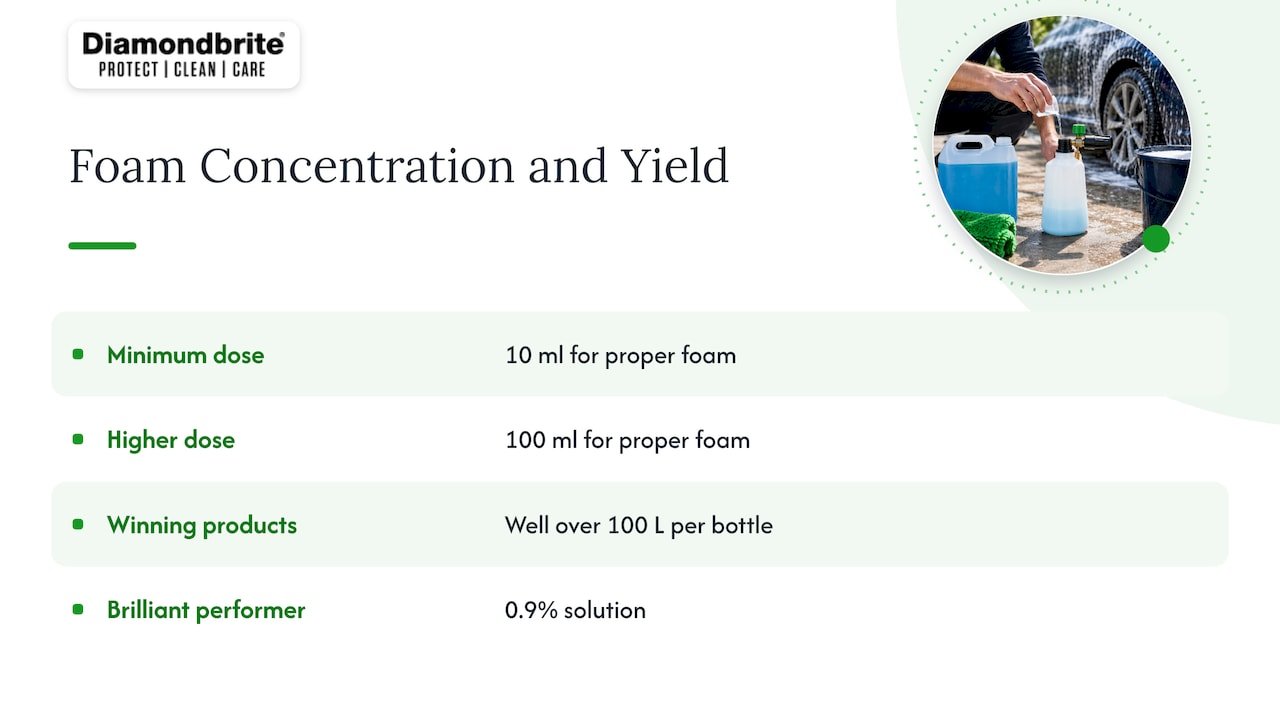
Concentration varies enormously. Parkers notes that one product needs as little as 10ml to make a proper foam, while another needs 100ml. A large bottle of a weak formula can cost more per wash than a small bottle of a concentrated one.
The same Autocar test shows how far one bottle can stretch: the winning products produced well over 100 litres of foam from a single bottle, and one brilliant performer worked from a super-diluted 0.9% solution. So compare the recommended dilution and the number of washes per bottle, then divide the price by that.
What actually drives a good result
Three things matter far more than the look of the foam.
Dilution
Too weak and the foam runs off without loosening much. Too strong and you waste product and make rinsing harder. Follow the maker’s ratio, then adjust slightly for your lance and water hardness. Our guide to snow foam ratios for UK car owners shows how to get a clinging mix quickly. For the bucket stage, see car shampoo dilution and ceramic shampoo dilution per bucket.
Dwell time
The foam needs a few minutes to soften dirt, but it should never be allowed to dry on the paint, especially in sun or wind. Wash in the shade where you can, and work panel by panel on warm days. There is a full breakdown in how long to leave snow foam on your car.
pH and rinsing
A cleaner that sits at an extreme end of the pH scale can harm paintwork, which is why Autocar checked pH levels as part of its test. Choose a pH-neutral formula for routine washing, and rinse from the top down so no residue is left in shut lines, around mirrors or on trim. This matters just as much on a motorbike, where chrome, black plastics and brake areas collect residue.
A quick way to judge your foam
- Mix to the recommended ratio, not to “as thick as possible”.
- Apply from the bottom up so the foam doesn’t streak.
- Watch whether it clings for a few minutes and then slides down slowly, taking dirt with it.
- Rinse top down while the foam is still wet.
- Check the finish: if the panel feels smooth and rinses with the water sheeting off, the foam did its job, however thick it looked.
No pressure washer? A thick lather isn’t essential, and there are sensible ways to pre-treat a vehicle without one. See foaming your car without a pressure washer. If you are choosing a product, our pre-wash guide for UK owners lays out what to look for.
In winter, road salt makes regular washing more important than ever. Our advice on winter wash frequency explains why two weeks can be too long.
Where Diamondbrite fits
We make ceramic-infused car care products for cars, motorcycles, leisure vehicles and marine use, including ceramic shampoos, snow foams and packs. Our range runs from paintwork and wheels to glass, interior and accessories, so you can build a routine around the stages that matter: pre-wash, contact wash and protection.
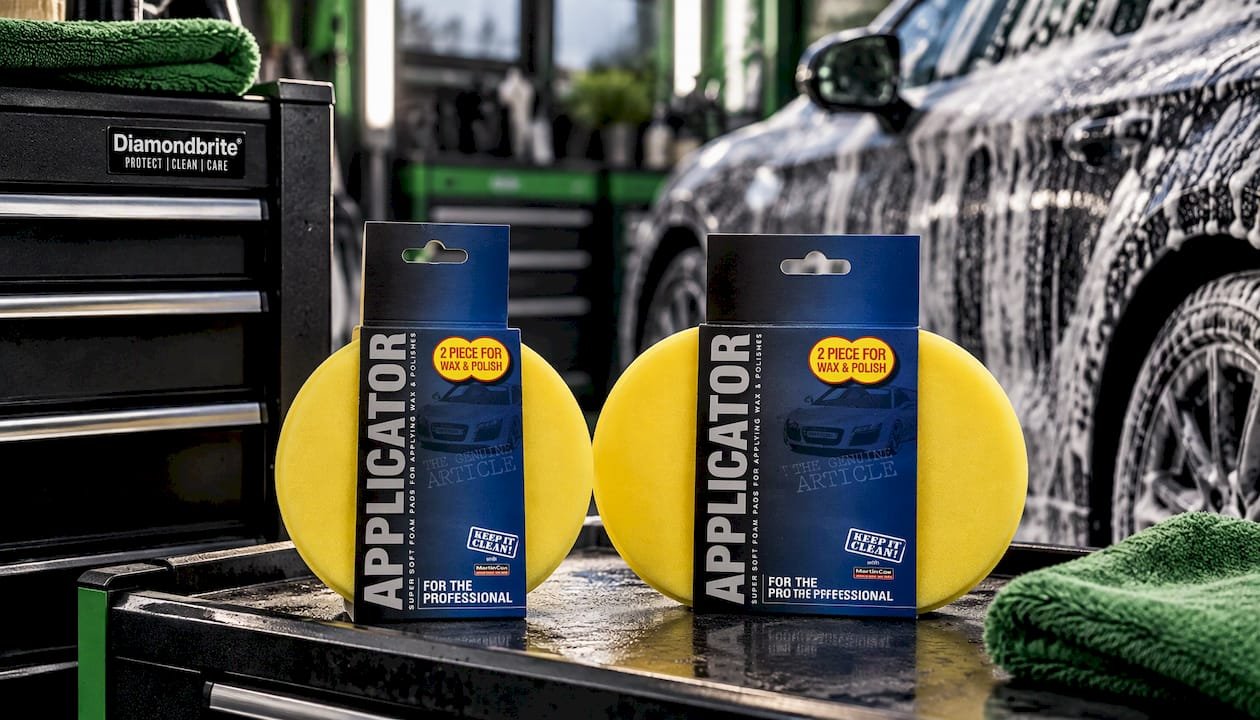
If you want to put a clean wash routine together, browse the full range at Diamondbrite. For the contact stage, our professional foam applicators in a double pack are a handy addition.
Our view
We think the foam-thickness obsession distracts people from what protects their paint. A wash is a sequence: loosen the dirt, lift it away gently, then leave a surface that stays cleaner for longer.
That is why we build our range around ceramic-infused formulas for each stage, from snow foam and shampoo to glazes and protection. Foam should do its job and rinse away easily, and the shine and protection come from the care that follows.
Our customers range from everyday drivers who want a quick, effective wash to enthusiasts, motorcyclists, caravan and boat owners. For all of them, the routine matters more than the lather: right dilution, sensible dwell time, a thorough rinse, then protection.
Will
FAQ
Does thicker snow foam clean better?
No. Only the thin layer touching the paint cleans, and very thick foam can need more product and more pressure to produce. Parkers’ testers found no cleaning benefit to foam that thick. Aim for a foam that clings and then slides off gently.
Can I skip the hand wash if I use snow foam?
No. Snow foam is a pre-wash that loosens the top layer of dirt, and it is not a replacement for a contact wash. Use it first, then wash with a mitt and a shampoo to remove the film that foam leaves behind.
How do I know if I’m using the right amount of product?
Start with the ratio on the label, since concentration varies widely between products, from around 10ml to 100ml per foam fill. Adjust a little for your equipment, and judge by how the foam clings and rinses, not by its height.
Can I leave snow foam to dry?
No. Keep it wet and rinse before it dries, particularly in warm or windy conditions. Work in the shade and in sections, and rinse from the top down.