

Glass cleaner and glass polish do different jobs. A glass cleaner lifts everyday dirt, road film and fingerprints without touching the glass itself. A glass polish is a thick liquid with very light abrasives, used when marks have bonded to the surface and cleaner no longer shifts them. For most weekly care, cleaner is the answer. Polish is the occasional deeper step, and it should always be followed by a proper clean.
TL;DR
- Use glass cleaner for routine washing, inside and out. It is the least aggressive option, so start there.
- Use glass polish only for stubborn bonded marks, such as water spotting or wiper haze, that cleaner will not move.
- Always clean polish residue off thoroughly before sealing or coating the glass.
- On tinted film, choose a non-ammonia cleaner and a soft cloth, and skip scouring pads.
- Vinegar is a household stopgap. A dedicated car glass cleaner is the better everyday choice.
Table of Contents
- What glass cleaner does
- What glass polish does
- Glass polish vs cleaner at a glance
- A simple way to decide
- Why you must clean after polishing
- Tinted windows: take extra care
- Glass cleaner vs vinegar
- Common mistakes
- Our view on glass care
- Keep your glass clear with Diamondbrite
- FAQ
- Sources
What glass cleaner does
A glass cleaner is a liquid made to dissolve and lift surface contamination: traffic film, insects, hand grease, dashboard vapour and dust. It does not cut into the glass. That is why it is safe to use often.
Inside the car, the film on a windscreen is mostly oil and dust, which is why oil-shifting cleaners work well there, as Urban Jungle explains. Outside, a good car shampoo wash removes most of the grime before a cleaner is even needed.
The DetailingWiki glass guide recommends the gentlest route first: wash the exterior glass, then use a spray glass cleaner if shampoo has not been enough. It also warns that over-saturating the glass with cleaner can cause streaking. A light mist and a clean, dry microfibre cloth do better than a soaking.
If streaks are your main frustration, our streak-free car glass method walks through the technique.
What glass polish does
Glass polish works differently. According to the DetailingWiki guide, polishes are thick liquids containing very light abrasives. You apply them with light pressure in overlapping circles, let them cure, then buff them off. Because they abrade very slightly, they can level off or remove marks that sit in or on the surface, rather than just lifting dirt away.
Typical reasons to polish:
- Hard water spots that have dried and bonded to the glass
- Light wiper haze or a hazy film cleaner will not shift
- Glass that no longer sheets or beads water evenly after months of grime
Polish can also leave a chalky residue on rubber window surrounds, so mask or wipe these as you work. Our guide to polishing car glass safely covers the DIY steps in more detail, and the water spot removal guide helps you judge whether spots need polishing at all. For a rainbow-like film, see how to remove rainbow film from car glass.
Glass polish vs cleaner at a glance
| Glass cleaner | Glass polish | |
|---|---|---|
| Main job | Lifts grime, oil and fingerprints | Removes bonded marks with light abrasion |
| Texture | Thin liquid, usually a spray | Thick liquid |
| How often | Whenever the glass looks dirty | Occasionally, when cleaner fails |
| Pressure | Light wipe | Light pressure, overlapping circles |
| After use | Buff dry | Buff off, then clean thoroughly |
| Risk to surrounds | Low | Can leave chalky residue on rubber |
A simple way to decide
Work up the ladder, and stop when the glass is clear.
- Wash the exterior with car shampoo. Often that is enough.
- Use a glass cleaner on any remaining film, inside and out.
- Polish only the marks that remain, such as dried-on water spots or wiper haze.
- Clean again after polishing so no residue is left behind.
- Protect the glass once it is truly clean.
The order matters. Polishing glass that is merely dirty wastes effort and product, and it adds abrasion the glass did not need.
Why you must clean after polishing
If you plan to seal or coat your glass afterwards, the DetailingWiki guide advises removing every trace of polish first. Leftover polish can interfere with the product that follows and weaken its bond. In practice, that means a glass cleaner pass after polishing, then a dry wipe.
Once the glass is spotless, a coating can keep water beading for months. Our guide to keeping a windscreen beaded with ceramic coating explains what to expect, and ceramic glaze on glass clarifies how a car glass coating differs from the pottery meaning of the word.
Tinted windows: take extra care
If your windows carry applied tint film, the rules tighten. LuxTint warns that film, particularly on the inside of the car, is more vulnerable than factory glass to ammonia, abrasive pads and aggressive scrubbing. Its advice is to use a tint-safe cleaner, spray the cloth rather than the window, wipe in straight lines, and avoid ammonia, scouring pads, paper towels and stiff brushes.
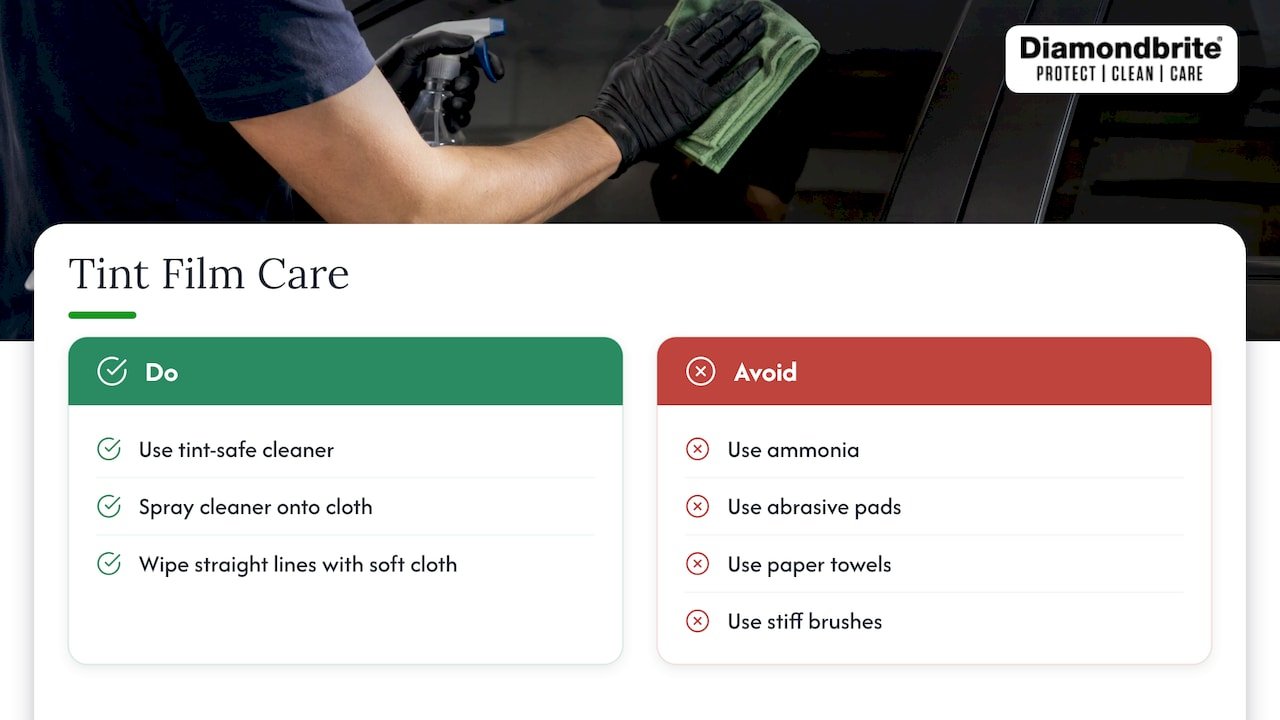
Tintfit’s aftercare guide agrees: mild, non-ammonia cleaner, soft non-abrasive cloths and no harsh scrubbing. Glass polish is not for the film itself. If you are unsure whether your tint is applied film or privacy glass tinted in the factory, check with your tint fitter or vehicle handbook before polishing.
Glass cleaner vs vinegar
Many drivers ask whether a bottle of vinegar can replace a glass cleaner. Vinegar is acidic and sits in most kitchens, so it is tempting. Some home mixes do exist: Urban Jungle suggests a water, alcohol and a few drops of vinegar blend for a deep interior clean, with alcohol doing the work on oily film.
The catch is the rest of the car. Auto Express notes that vinegar can damage paintwork, and says a car glass cleaner is the best choice for glass. Drips run onto paint, trim and rubber, and a purpose-made glass cleaner is formulated to be used around them. If you have a protective coating on your paint, keeping acidic household liquids away from it is sensible, and a dedicated cleaner removes the question.
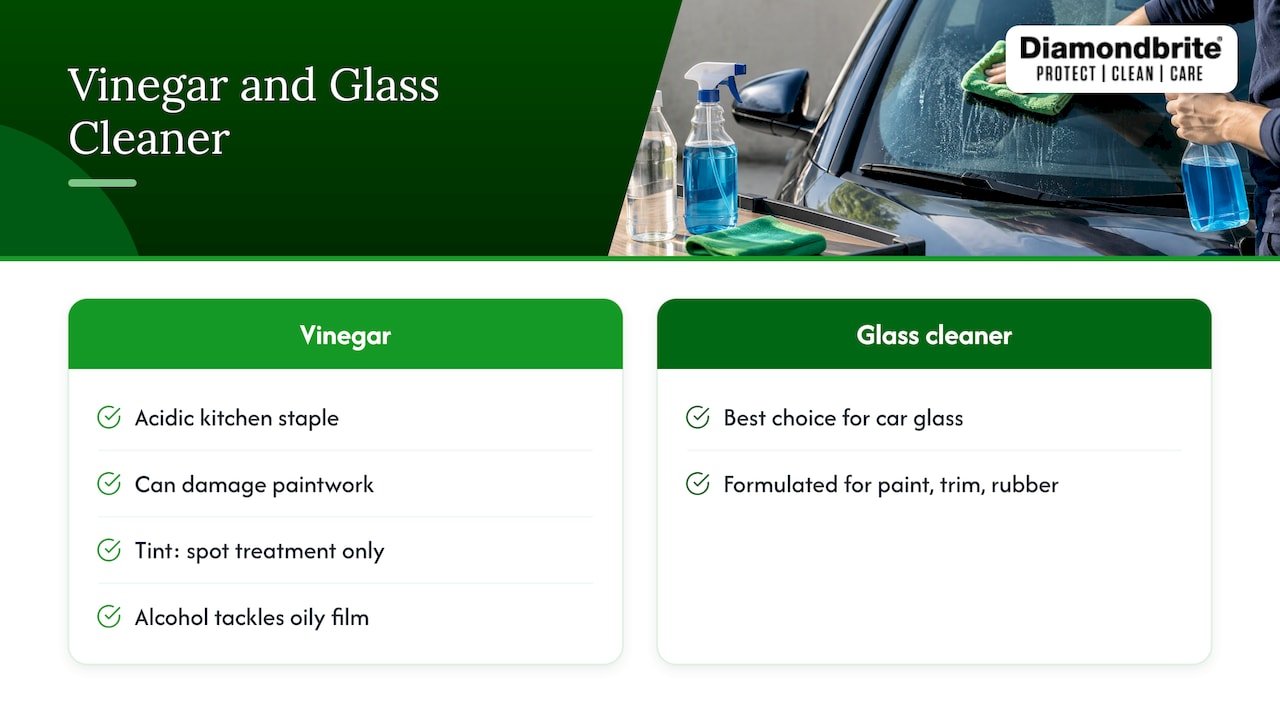
For tint, Tintfit mentions a little vinegar in water for tough stains or adhesive residue, applied gently with a soft cloth. That is a spot treatment, not a routine.
Common mistakes
- Polishing as a first resort. Start with shampoo and cleaner.
- Using too much cleaner. Over-saturating causes streaks.
- Skipping the final clean. Polish residue gets in the way of any sealant.
- Using ammonia or scouring pads on film. Applied tint is more delicate than glass.
- Letting polish dry on rubber seals. Wipe it off as you go.
Our view on glass care
Most glass problems we hear about are not polish problems. They are routine problems: a film that builds up because the glass is only cleaned when it looks bad, then a cleaner is blamed for streaks it did not cause.
Our advice is to treat clean glass as part of a regular car care rhythm, alongside the wash. Cleaner on a schedule, polish rarely, and protection once the surface is truly clear. We build our ceramic-infused range around easy, repeatable care, so keeping your car looking sharp does not turn into a weekend job.
Will
Keep your glass clear with Diamondbrite
Our Automotive Glass & Windscreen range sits alongside our wheel, paintwork, interior and ceramic lines, so you can look after the whole car in one place. If you run a ceramic-infused care routine on your paint, matching it on your glass keeps the whole vehicle looking consistent. Browse the range at diamondbrite.shop.
FAQ
What is glass polish for?
Glass polish is for marks that cleaner cannot remove, such as bonded water spots or light wiper haze. It contains very light abrasives and is worked in with light pressure, then buffed off. Clean the glass thoroughly afterwards.
Can I use glass polish instead of glass cleaner?
No, they do different jobs. Cleaner handles everyday dirt and is gentle enough for regular use. Polish is a deeper step for the occasional stubborn mark and should be followed by a clean.
Is vinegar as good as a car glass cleaner?
A dedicated car glass cleaner is the better everyday option. Vinegar can harm paintwork if it drips, and a purpose-made cleaner is designed for use around trim and rubber. On tint film, use a non-ammonia, tint-safe cleaner.
Can I use the same cleaner on tinted windows?
Only if it is ammonia-free and suitable for film. Spray the cloth rather than the glass, wipe in straight lines and use a soft cloth. Avoid scouring pads, paper towels and stiff brushes.