

How long a plastic trim sealant lasts depends mostly on its chemistry. Dressings and simple sealants typically give weeks to a few months. A ceramic-infused trim coating, applied to clean, bare plastic, is the route to protection that runs from 12 to 24 months on a UK car. Preparation and aftercare decide whether you reach the top of that range. This guide explains why trim fades, what each type of product can realistically deliver and how to get the longest life from one application.
TL;DR
- Oil-based dressings and basic sealants usually fade from the trim within weeks to a few months, especially with regular washing.
- Ceramic trim coatings are the long-life option: our own guide to ceramic on plastic trim is built around 12 to 24 months.
- Longevity is decided by preparation: old wax, silicone and road film must be removed so the coating can bond.
- A coating preserves the condition of the plastic on the day you apply it, so protect trim while it is still dark.
- Wash with a pH-friendly shampoo and avoid harsh degreasers to keep protection working.
Table of Contents
- Why plastic trim fades in the first place
- How long each type of protection lasts
- What shortens the life of trim protection
- Protect trim before it fades, or restore it first
- A simple routine to reach 12 to 24 months
- Our view on trim protection
- Ceramic trim care from Diamondbrite
- FAQ
- Sources
Why plastic trim fades in the first place
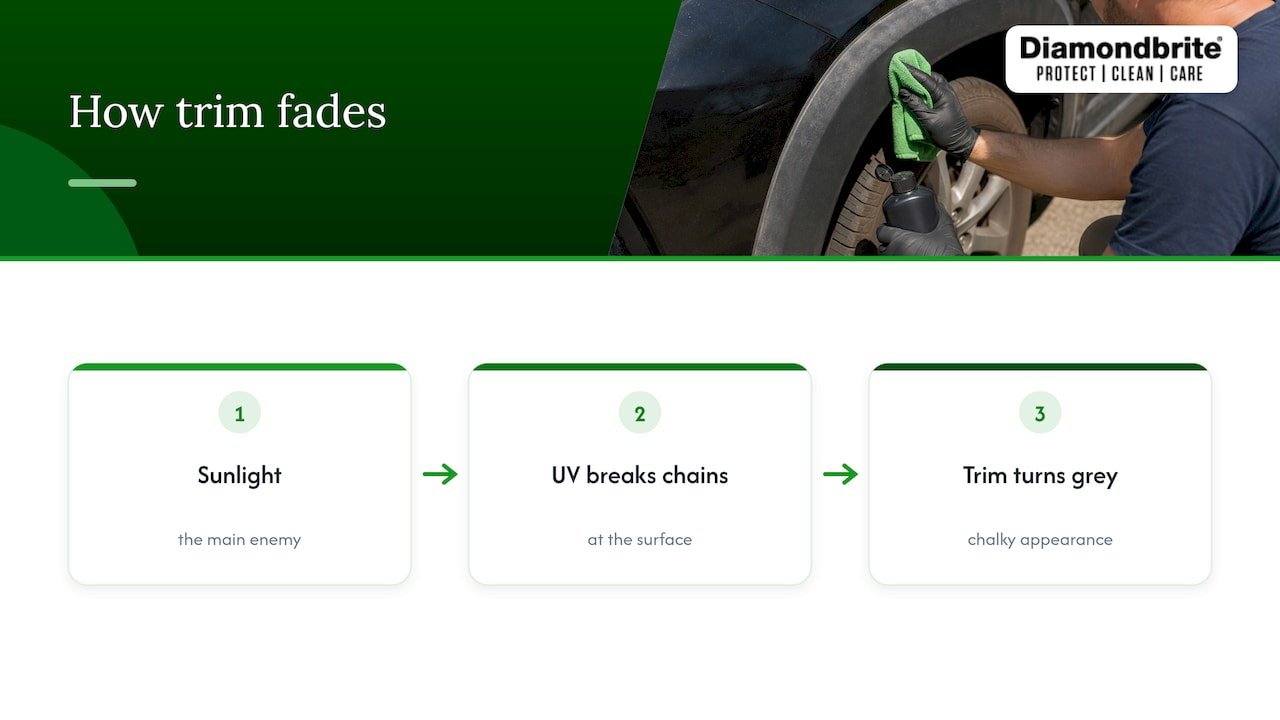
Most exterior trim on modern cars is moulded from polypropylene or similar plastics, with carbon black and stabilisers added at the factory. Sunlight is the main enemy. UV energy breaks down the polymer chains at the surface, and the plastic turns chalky grey. Detailing guides explain that trim is porous and sits low on the car, so it collects road grime, brake dust and UV all at once.
Two things follow from this. First, fading is surface damage, so a good protective layer slows it down. Second, the damage builds quietly. By the time the trim looks grey, you are restoring rather than protecting, which is harder and shorter-lived.
UK conditions add their own pressures: road salt and grit in winter, wet roads that throw dirt up onto lower trim, and a few hot summer weeks with surprisingly strong UV. If you want the seasonal side, our guides on summer UV protection and winter paint protection cover both.
How long each type of protection lasts
The word “sealant” covers very different products. This is what you can expect from each kind, assuming a clean surface and normal UK driving.
| Type of product | Typical life on trim | What affects it most |
|---|---|---|
| Oil or silicone dressing | Days to a few weeks | Rain, washing, heat |
| Polymer sealant | Weeks to a few months | Shampoo strength, sun exposure |
| Dye-based trim restorer | Several weeks to months | Wear, wash frequency |
| Ceramic-infused trim coating | Up to 12 to 24 months | Preparation, cure time, aftercare |
The figures for the first three are general ranges, not guarantees. Manufacturers of trim-specific coatings describe several months up to around one to two years, depending on the product, climate exposure and how the car is washed. That wide spread is the honest answer to the keyword: the product type sets the ceiling, and your routine sets where you land beneath it.
Why ceramic lasts longer
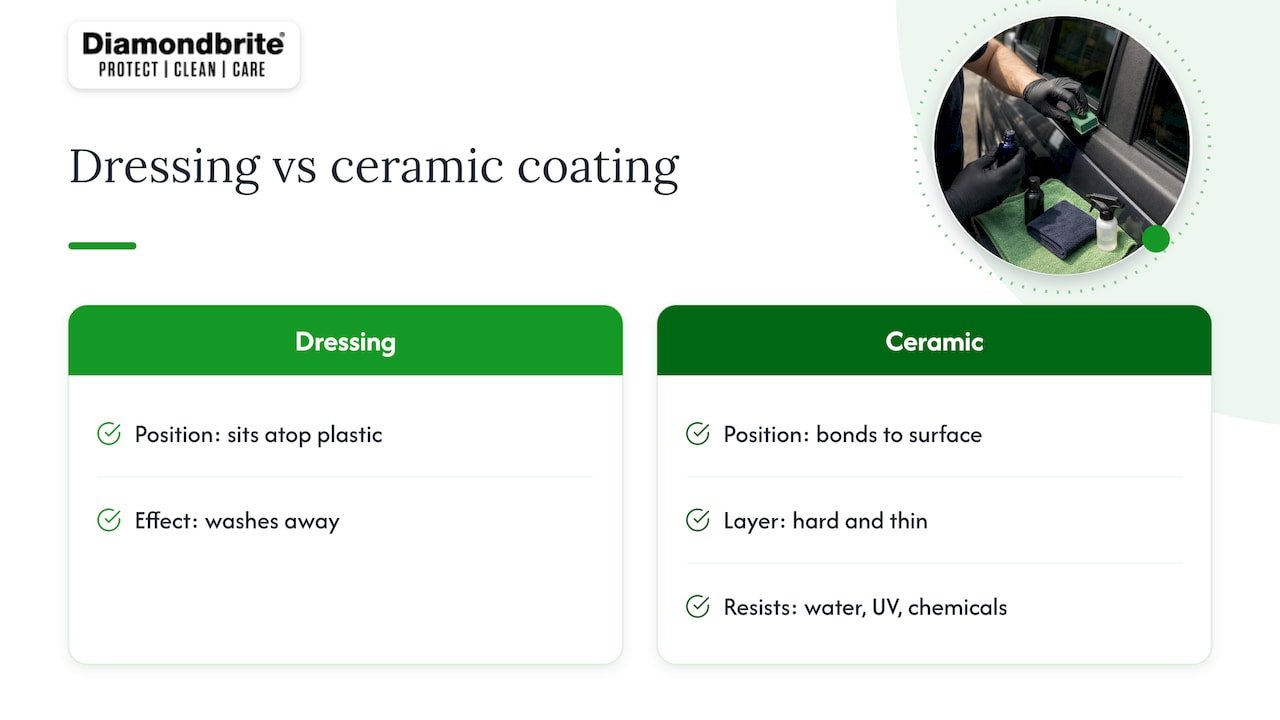
A dressing sits on top of the plastic and washes away. A ceramic coating is designed to bond to the surface and form a hard, thin layer that resists water, UV and chemical contact. That is why it is the choice for owners who would rather do the job once than top up every month. For the wider comparison of short-term and long-term protection, see our guide on sealant versus ceramic coating.
What shortens the life of trim protection
Most early failures come from the same handful of mistakes.
- Applying over old product. Wax, silicone dressing and polish residue stop a coating bonding. This is the most common reason a coating beads for a month and then disappears. Our guide on how to remove wax from plastic trim shows the clean-up.
- Aggressive degreasers. Strong solvents can dry the plastic out and leave it patchy. Choose a cleaner that is safe on plastic.
- Skipping cure time. Coatings need a window with no water contact. Product instructions commonly specify around 12 to 24 hours, so apply on a dry day and park under cover.
- Thick application. More product does not mean more protection. A thin, even coat levelled and buffed within the flash time works best.
- Harsh washing. High-alkaline shampoos and stiff brushes wear the layer. A gentle ceramic shampoo maintains it rather than stripping it.
Protect trim before it fades, or restore it first
A ceramic layer does not dye or repaint plastic. It keeps the plastic in the state it was in when you applied it. So the timing matters:
- Trim still dark: the best time to coat. Clean, decontaminate, apply, and you lock in the factory look.
- Trim lightly faded: a thorough clean often brings back more colour than you expect, and then you can coat.
- Trim chalky grey: restore the colour first, then protect it, so the coating has something worth preserving.
This is how to prevent plastic trim fading: act early, and treat protection as part of the routine rather than a rescue job.
A simple routine to reach 12 to 24 months
- Wash and rinse the trim with a pH-friendly shampoo, using a soft brush in the textured areas. Our wash sequence keeps wheel grit away from paint and trim.
- Strip old products with a cleaner that suits plastic, and rinse thoroughly.
- Dry completely. Moisture trapped in textured plastic weakens bonding. Allow extra time after rain.
- Apply thinly with an applicator, not straight from the bottle, working in light cross-hatch passes.
- Buff off any excess once it flashes, following the product’s instructions.
- Let it cure away from water for the period the instructions give.
- Maintain gently. Regular washes with a ceramic shampoo keep the surface slick and easy to clean.
Rubber seals and vinyl benefit from the same care, as set out in our guide to protecting vinyl and rubber.
Our view on trim protection
We hear the same story from owners again and again: they dress the trim, it looks great for a fortnight, and then it rains and they are back where they started. That is not a failing of the owner. It is what a surface dressing is designed to do.
Our approach to car care is built on ceramic-infused products that build a durable shield and make upkeep easier. On trim, that means doing the preparation properly once, applying a thin coat, and then maintaining it with a gentle ceramic shampoo instead of reapplying every few weeks.
Whether you drive a hatchback, ride a motorcycle or look after a caravan or boat, the logic is the same: protect the plastic while it is still dark, and keep it clean. That is cost-effective, and it keeps your vehicle looking its best for far longer.
Will
Ceramic trim care from Diamondbrite
If you want protection measured in seasons and years rather than weeks, our ceramic-infused range covers the whole routine: shampoos, glazes, cleaners and protectants for cars, motorcycles, leisure vehicles and marine vessels. You can browse the full range at the Diamondbrite shop.
For a closer look at the method, start with our guide to ceramic on plastic trim and add the shampoo that keeps the finish performing.
FAQ
How long does plastic trim sealant last?
It varies by type. Dressings and simple sealants tend to last from days to a few months, while ceramic trim coatings are designed for 12 to 24 months. Preparation, cure time and washing habits move you up or down within those ranges.
How do I stop plastic trim fading?
Clean the trim thoroughly, remove old wax and silicone, and apply a ceramic coating while the plastic is still dark. Then wash with a gentle shampoo. Protection applied early keeps the factory colour far better than restoration later.
Can I put a sealant over an old dressing?
It is best not to. Residue from dressings and wax blocks a proper bond, so the new layer fails early. Strip the surface with a plastic-safe cleaner first, then apply the coating to bare, dry trim.
Does the same method work on motorcycle and caravan plastics?
Yes, the principle is the same: clean, strip, dry, apply thinly and let it cure. Motorcycle fairings, mudguards and caravan trim face the same UV and weather, so the same routine applies.