

Water-based dressings give a satin to gloss finish, spread easily and are kinder to rubber and plastic, so they suit routine use on most cars and motorcycles. Solvent-based dressings usually give a higher gloss and can last longer, but they feel oily if overapplied and are more likely to sling onto your paintwork. If you want the look to last months rather than weeks, a ceramic trim coating is a different category altogether, and we cover it below.
TL;DR
- Water-based: satin to gloss, less greasy, easy to apply and clean up, lower sling risk, moderate durability.
- Solvent-based: usually higher gloss and often longer lasting, but an oily feel if overapplied and a higher chance of sling.
- Never let dressing reach tyre treads, pedals or driving controls, because it can reduce grip.
- A dressing sits on the surface and wears off. A trim coating bonds to the surface and is applied far less often.
- For most owners, a water-based dressing for regular use and a ceramic coating for long-term trim protection is the sensible pairing.
Table of Contents
- What the two types actually are
- Water vs solvent dressing at a glance
- Durability and what testing shows
- Sling, grip and the safety checks
- Dressing vs trim coating: what is the difference?
- Which should you choose?
- How to apply dressing without streaks or sling
- Where our ceramic care fits
- Our view
- FAQ
- Sources
What the two types actually are
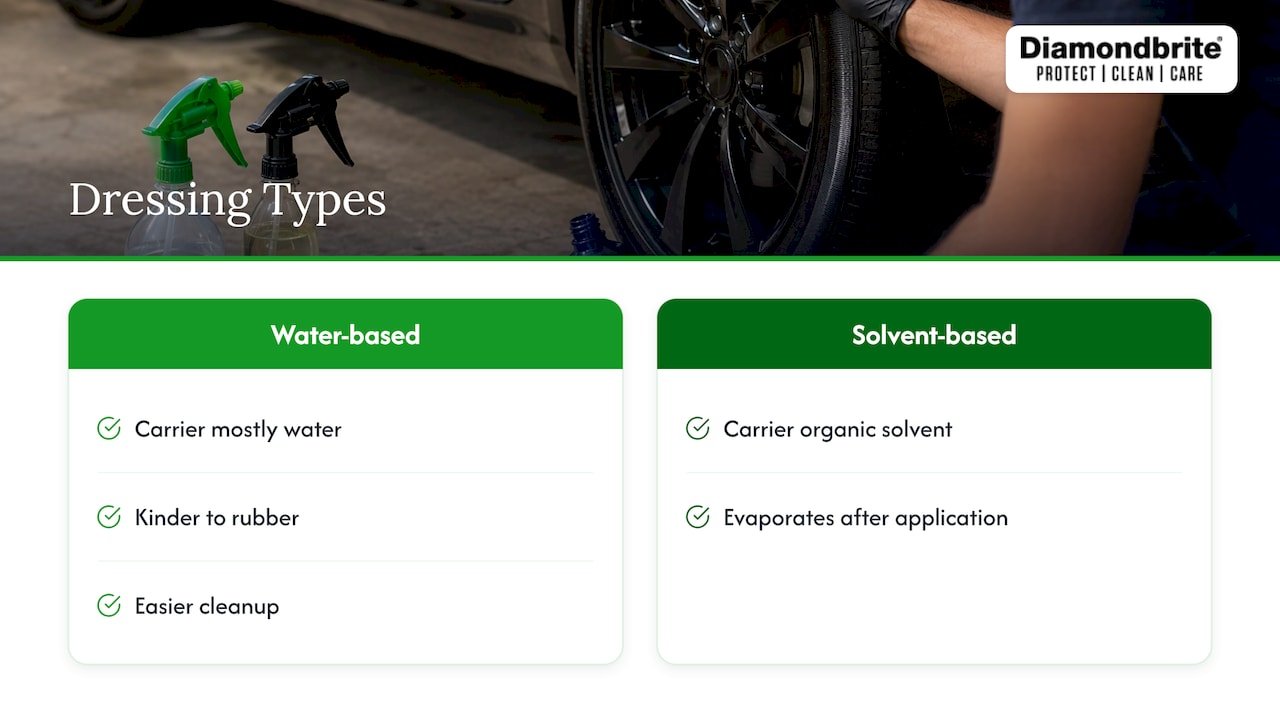
A dressing is a liquid or gel that you wipe or spray onto tyre sidewalls and exterior trim to darken them and add sheen. The difference is the carrier, the liquid that spreads the active ingredients. In a water-based dressing the carrier is mostly water. In a solvent-based one it is an organic solvent that evaporates after application.
That single choice drives everything you notice: how glossy the result is, how it feels, how long it lasts and how much ends up on your paint. A formulation specialist describes the decision as a balance of gloss, drying time, viscosity, durability and compatibility with rubber and plastic. Water-based formulas are preferred for routine use because they are kinder to rubber and easier to clean up.
Water vs solvent dressing at a glance
The comparison below follows the same specialist’s side-by-side table, in plain terms.
| Water-based | Solvent-based | |
|---|---|---|
| Finish | Satin to gloss | Usually high gloss |
| Feel | Less greasy | Oily if overapplied |
| Durability | Moderate | Often longer lasting |
| Application | Spreads and cleans up easily | Needs more controlled application |
| Sling risk | Lower | Higher |
No type wins on every line. Solvent products reward careful application with a deeper shine, while water-based ones forgive a quick, imperfect job. If you are a busy owner who washes weekly and wipes a dressing on in two minutes, the forgiving option is usually the better fit.
Durability and what testing shows
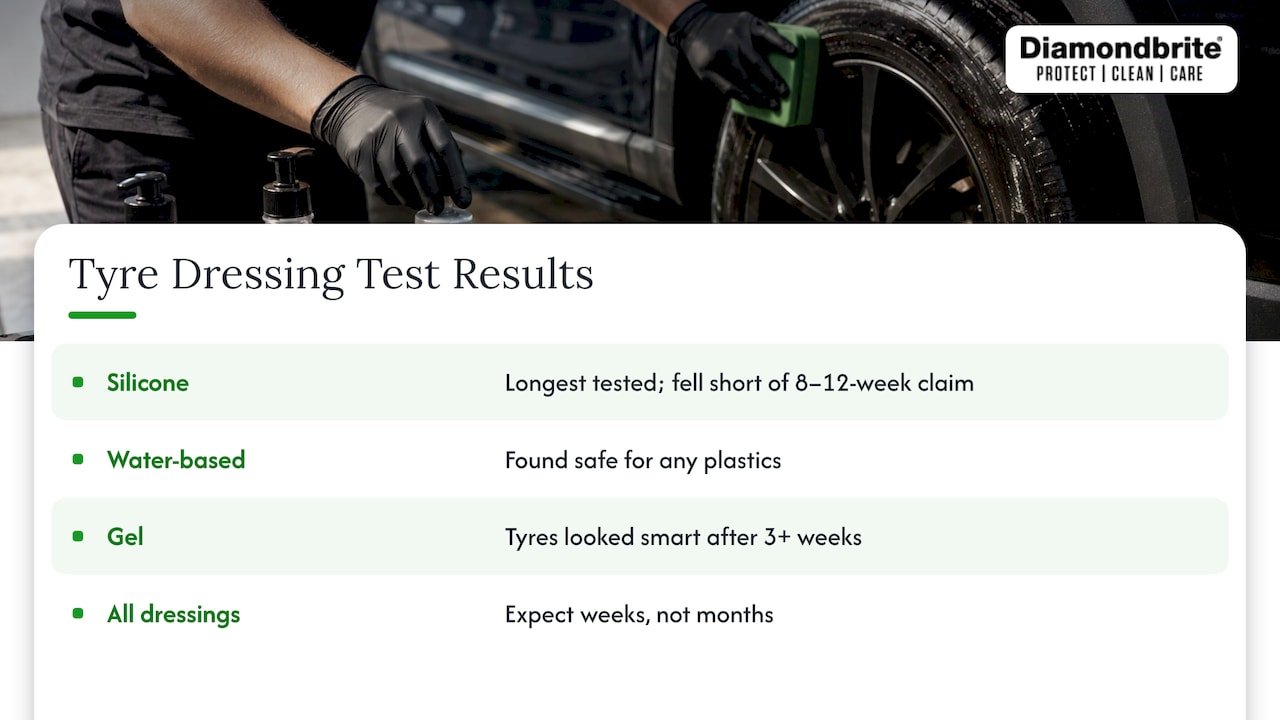
In a UK product test of tyre dressings published by Autocar in July 2023, a silicone-based dressing lasted longest of everything tested, although it fell short of its own 8 to 12 week claim. A water-based dressing in the same test was found safe for any plastics, and a gel kept tyres looking smart after three weeks or more.
Take the practical lesson from that: expect weeks, not months, from any dressing. British rain, road spray and weekly washes strip them, and that is true whatever the carrier.
Sling, grip and the safety checks
Sling is the fine spatter that flicks off a spinning tyre onto your wheel arches and doors. It comes from too much product, not enough drying time, or a product that stays wet on the surface. Four habits prevent most of it:
- Apply a thin, even coat with an applicator pad rather than spraying freely.
- Wipe off any excess, especially from the lower sidewall edge.
- Let it dry or set before you drive. Ten minutes is a sensible minimum for most products, and longer in cold, damp weather.
- Keep paint and glass masked or wiped clean as you work.
The safety point matters more than the cosmetic one. Autocar cautions that silicone-based dressings can affect grip if they get onto tyre treads. Apply to the sidewall only, keep it off the tread, and never use dressing on pedals, the steering wheel or other controls where a slippery surface is dangerous. If you ride a motorcycle, be especially strict: keep dressing off the tread, brake discs, pads and anything your feet or hands grip. Dressing also cannot repair cracked or worn rubber, so a perished tyre needs replacing, not shine.
On painted or plastic surfaces, wipe off any splatter promptly. Test on a small hidden area first if you are trying a new product on delicate or textured trim.
Dressing vs trim coating: what is the difference?
This is the other half of the question many owners ask. A dressing is a temporary cosmetic layer. It darkens and adds gloss, then washes away. A trim coating, such as a ceramic coating applied to exterior plastic, bonds to the surface and forms a protective layer that is designed to resist UV fading and washing for far longer. You apply it once and top it up occasionally, rather than reapplying every few weeks.
The practical split looks like this:
- Tyres: a dressing is the usual choice, because flexing rubber and constant road contact suit a regular, quick refresh.
- Faded or greying plastic trim, mirror housings, bumpers, wheel arch liners: a coating makes more sense, because you are protecting the material, not just adding shine.
- Vinyl and rubber seals: gentle, rubber-safe products are the priority. Our guide to protecting vinyl and rubber with ceramic care explains the approach.
If your trim is already faded, start with restoring faded plastic trim with ceramic. If you have previously layered wax or heavy dressing onto it, removing wax from plastic first gives a coating a clean surface to bond to.
Which should you choose?
Match the product to how you drive and how much time you have:
- Daily commuter, weekly wash: water-based dressing on tyres, ceramic coating on trim.
- Show car or weekend enthusiast: solvent-based gloss on tyres if you accept the extra care to avoid sling, with a coating on trim for the base protection.
- Motorcycle owner: water-based on non-contact trim only, and keep everything off tyre treads and braking surfaces.
- Caravan, motorhome or boat owner: large areas of exterior trim are where a coating saves the most time, because you are not redoing it every few weeks.
For tyre-specific picks, see our best tyre dressing guide for the UK.
How to apply dressing without streaks or sling
- Wash the wheels and tyres first so the dressing goes onto clean rubber. Our wash sequence guide shows how to keep wheel grit off the paint.
- Dry the sidewall. Dressing applied to a wet tyre runs and streaks.
- Put a small amount on an applicator pad, not directly on the tyre.
- Work it in with even strokes around the sidewall, then go over it once more lightly to level it.
- Wipe the excess with a clean microfibre towel.
- Leave it to set before driving.
The most common mistake is using too much. A thin coat looks better and slings less than a thick one.
Where our ceramic care fits
Our range at Diamondbrite covers ceramic-infused car care for cars, motorcycles, leisure vehicles and marine vessels, including exterior cleaning and protection products and trim-focused lines. Our guide on applying ceramic glaze to paint and trim walks through the process step by step, and you can browse the full range at diamondbrite.shop.
If you would rather wash and protect in fewer steps, pairing a ceramic-infused shampoo with a ceramic finish keeps the whole exterior consistent. See what ceramic shampoo does for your paintwork.
Our view
Most dressing problems come from asking one product to do two jobs. A dressing is a quick cosmetic touch for tyres, and it should be thin, dry and kept well away from anywhere you need grip.
Trim is different. Fading comes from sun, rain and repeated washing, so the better answer is a protective layer that stays put. That is why we build our ceramic-infused range around durable protection, with simple application that suits busy owners as well as enthusiasts.
Use water-based dressing for your regular refresh, and let a ceramic coating carry the long-term work on trim. You spend less time reapplying and more time enjoying a clean, sparkling car.
Will
FAQ
Is water-based or solvent-based dressing better for tyres?
For routine use, water-based is the better all-rounder: it spreads easily, feels less greasy and is kinder to rubber. Solvent-based gives a higher gloss and often lasts longer, but needs careful, thin application to avoid sling.
Can I use tyre dressing on plastic trim?
A water-based dressing is generally the safer choice on plastics, and one was found safe for any plastics in a UK product test. Always wipe off excess and test a hidden spot first. For lasting protection, a trim coating is the better route.
Why does my dressing fling onto the paintwork?
Sling usually means too much product or too little drying time. Apply a thin coat, wipe off the excess and let it set before driving. Solvent-based products carry a higher sling risk than water-based ones.
Is a trim coating the same as a trim dressing?
No. A dressing is a temporary layer that adds shine and wears off in weeks. A coating bonds to the surface to protect against fading and washing over a much longer period.
Is it safe to dress motorcycle tyres?
Keep dressing off the tread and off brake discs, pads and rider contact points, because it can reduce grip. Use it only on non-contact trim, and follow your tyre maker’s guidance.