

To remove salt stains from a car interior, vacuum the dry residue first, then dissolve what is left with a little warm water, blot it out with a microfibre cloth and let the area dry fully. Work in small sections and dab rather than scrub. Check any cleaner on a hidden patch before you use it, especially on leather, Alcantara or leatherette. Below you will find the full method, what to do on seats versus carpets, and how to keep the white crust from coming back.
TL;DR
- Vacuum thoroughly before adding any liquid, or you will turn loose grit and salt into mud.
- Salt is water soluble: use warm water, a mild pH-neutral cleaner and a dab-and-blot action, not heavy soaking.
- Test on a hidden spot first, and keep steam and strong solvents away from Alcantara, leatherette and natural leather unless your manufacturer says otherwise.
- Dry the area properly. Do not use seat heaters to speed it up.
- Weekly vacuuming and dry mats stop salt reaching the carpet base and floor.
Table of Contents
- Why salt leaves white marks inside your car
- What you need before you start
- Step by step: removing salt from car carpet and mats
- Salt stains on seats and other fabrics
- Headlining and hard-to-reach areas
- Our view: prevention beats deep cleaning
- Keep your car care kit ready for winter
- Common mistakes to avoid
- FAQ
- Sources
Why salt leaves white marks inside your car
Every winter, boots and wet trouser legs carry gritting salt into the footwell. The salt dissolves in the damp carpet, then the water evaporates and leaves the crystals behind as a pale, crusty tide line. That is why a quick vacuum rarely clears it: much of the residue has worked into the fibres rather than sitting on top.
It is more than a cosmetic problem. Professional detailers point out that once salt reaches the subfloor, it can speed up corrosion in hard-to-see places such as floor pans and seat rail anchors. That is the real reason to tackle it early. A stain you can see is a sign of salt you cannot.
If you also want to protect the outside of the car, our guide to road salt protection for cars covers what works on paint and underbody.
What you need before you start
You do not need much, and most of it is already in the house:
- A vacuum with a crevice tool and a soft brush attachment
- A soft nylon or upholstery brush
- Warm water in a spray bottle
- A mild, pH-neutral interior cleaner. pH-neutral cleaners are made to clean and degrease without harming trim
- Several clean microfibre towels
- A fan or an open door and a dry day for drying
Many DIY guides suggest a weak white vinegar and water mix for stubborn marks. It can help, but it is optional, and you should always dilute it and test it on a hidden area first. Plain warm water does most of the work because salt dissolves so readily.
Not sure which product suits which surface? Our comparison of APC vs interior cleaner explains the difference.
Step by step: removing salt from car carpet and mats
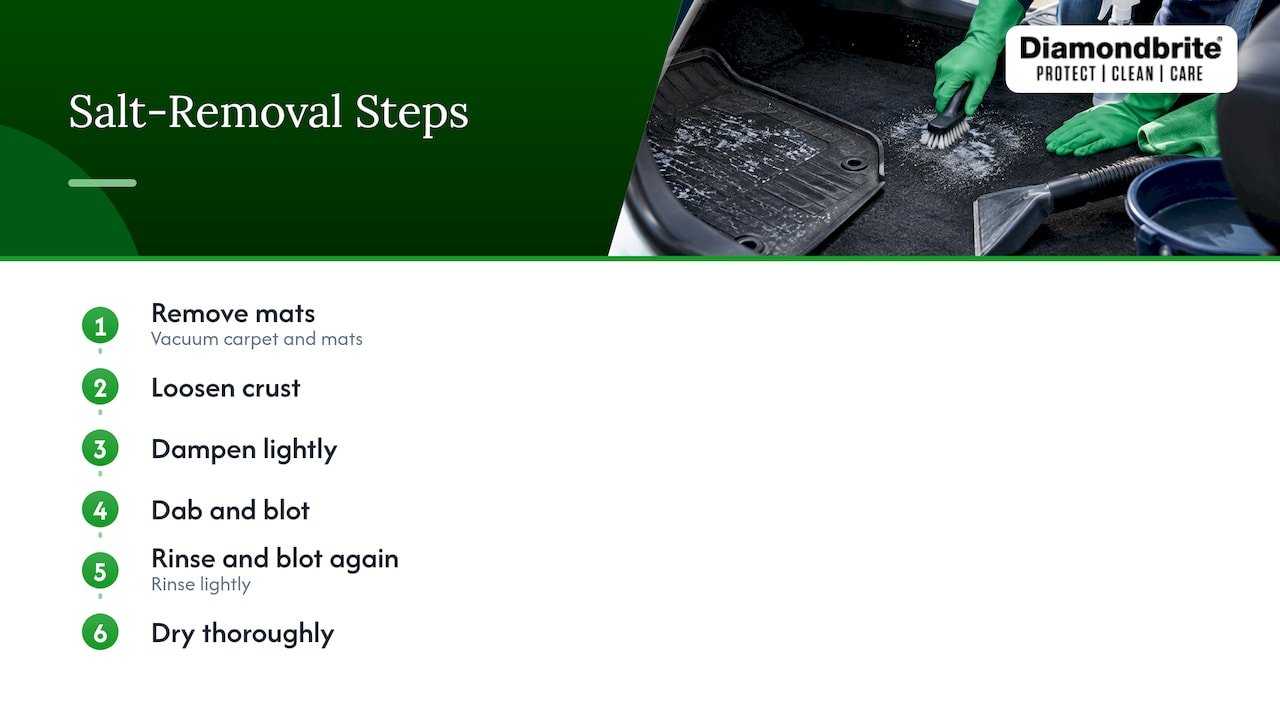
1. Take the mats out and vacuum everything
Pull out the mats and shake them off. Vacuum the carpet properly, using the crevice tool along seams, under the pedals and beneath the seats, where salt gathers. Upholstery specialists stress that thorough vacuuming before any liquid is essential. Wet cleaners on loose dirt can push debris deeper into the fibres or turn it into mud.
2. Loosen the crust
Brush the stained area lightly with a soft brush to lift hardened crystals, then vacuum again. Be gentle. You are breaking up the crust, not roughing up the pile.
3. Dampen, do not soak
Mist the stain with warm water, or with your diluted pH-neutral cleaner. Leave it for a minute or two so the salt can dissolve. Over-wetting is the usual mistake: it carries salt further down into the underlay and invites mildew.
4. Dab and blot
Press a clean microfibre towel onto the area and lift. Repeat with a fresh section of the towel. The golden rule from upholstery experts is dab, don’t scrub, because scrubbing can cause lasting damage to the texture.
5. Rinse lightly and blot again
One light mist of clean water, then blot again. This removes any cleaner and the dissolved salt that has been drawn to the surface. If a ring remains, repeat steps 3 to 5 once or twice rather than adding more liquid in one go.
6. Dry thoroughly
Leave the doors open, point a fan at the footwell, or park somewhere dry and breezy. Put mats back only when both mat and carpet are completely dry. Damp carpet is where musty smells start, so if you notice one, see our guide to stopping mould returning in car interiors and the advice on how to find the source of a car odour.
Salt stains on seats and other fabrics
Cloth seats follow the same dampen-and-blot method, but use even less water, since foam sits underneath. Work from the outside of the mark towards the centre so you do not spread it.
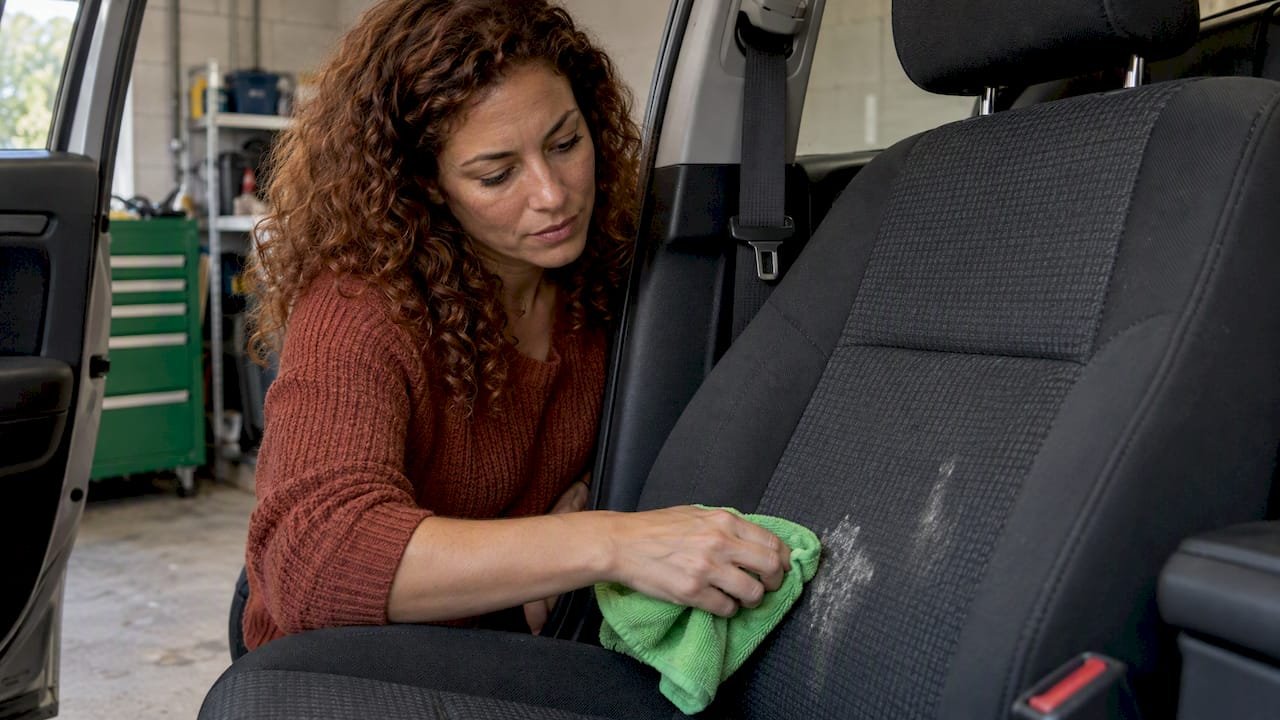
Take more care with delicate materials. Manufacturers often caution against DIY cleaning of complex fabrics such as Alcantara, leatherette or natural leather using harsh solvents or steam. The cleaning notes in one Audi owner’s manual show the kind of guidance to look for: check your own handbook for what is approved for your trim. If you drive an Alcantara-trimmed car, our guide to restoring an Alcantara steering wheel without steam or soaking shows a gentler approach.
A word on drying seats
Do not switch on the seat heaters to hurry things along. Heat can trap moisture and cleaning residue deeper in the foam padding, which may lead to odours or long-term damage. Patience and airflow are safer.
When steam makes sense
Dry steam is a chemical-free option that some professionals use on carpets and upholstery. The idea is that very hot, low-moisture steam, from systems that reach up to 174°C, breaks down mineral deposits without wetting the fabric. If you try it, keep the nozzle around 10cm from the surface, and do not use it on materials your manufacturer says to keep away from heat.
Headlining and hard-to-reach areas
Salt seldom reaches the roof lining, but damp winter air and wet coats can leave marks around door seals and pillars. Use very little moisture there, because adhesive and foam can fail if soaked. Our low-moisture headliner method walks through it. Hard plastics and door cards can be wiped with a barely damp microfibre and dried straight away.
Our view: prevention beats deep cleaning
We see the same pattern every winter. Owners wait until the white tide line is obvious, by which time the salt has been in the carpet for weeks. The cheapest fix is a light, regular routine: shake out and vacuum the mats once a week, make sure they are completely dry before they go back, and wipe door sills where boots scuff.
The outside of the car matters too. Salt on the bodywork and wheels ends up on your shoes, and from there on your carpet. A regular rinse in winter, as we explain in winter car washing on UK salt roads, cuts down what you bring in. Protected paint and glass also release salt more easily.
Ceramic-infused care is not a magic shield for the interior, so we are honest about what it can and cannot do. If you are weighing it up, read whether interior ceramic coating is worth it first.
— Will
Keep your car care kit ready for winter
A small kit makes the weekly routine painless: a pH-neutral interior cleaner, microfibre towels and a soft brush. You can browse our interior, glass and wheel ranges, along with ceramic-infused products for the exterior, in the Diamondbrite shop. Pick what suits your car, whether that is a daily driver, a motorbike or a caravan.
Common mistakes to avoid
- Skipping the vacuum. It turns dry grit into paste.
- Soaking the carpet. Excess water takes salt deeper and slows drying.
- Scrubbing hard. It frays fibres and leaves a fuzzy patch.
- Using strong solvents on delicate trim. Test first, always.
- Refitting damp mats. Trapped moisture starts odours and can hide corrosion.
FAQ
How do I get salt stains off car seats?
Vacuum the seat, then mist the mark lightly with warm water or a diluted pH-neutral cleaner. Blot with a microfibre towel from the edge inwards and repeat until the mark fades. Let the seat air-dry without heaters, and test any cleaner on a hidden area first.
What dissolves salt residue?
Water. Salt dissolves readily, so warm water, applied sparingly and blotted away, does most of the job. A mild pH-neutral cleaner helps with any grime bound up in the stain.
Is washing-up liquid safe for car seats?
A tiny amount of mild detergent in water is often used, but it can leave residue that attracts dirt and may affect some dyes or leather. A pH-neutral interior cleaner made for cars is the safer choice, and you should always test it on a hidden spot first.
How do I get salt stains out of carpet if they keep coming back?
A returning stain usually means salt is still deep in the carpet or underlay. Blot more times with less water, dry thoroughly, and then keep mats dry and vacuumed weekly. If the carpet stays damp or smells, find the source of the moisture.
Sources
- How To Clean Your Car Interior Without Causing Damage, Low Carbon Buildings
- Thermostar, Professional Dry Steam Cleaning System
- Notes on cleaning and care of the Audi A3