

There are two very different answers to this question, depending on what you mean by ceramic glaze. A pottery glaze cannot go on ordinary glass: it needs kiln temperatures that would ruin a car window or a drinking glass. A car-care ceramic coating, on the other hand, is made for glass, goes on at room temperature and leaves water beading and sheeting away. This guide explains the difference and shows how to treat your car’s glass properly.
TL;DR
- Pottery glaze is a mineral mixture fired in a kiln. It does not belong on car glass or household window glass.
- Automotive ceramic glass coatings are thin, clear treatments applied by hand at ambient temperature.
- Side windows, rear screens, mirrors and headlights are the usual places to coat. The front windscreen needs more thought because of the wipers.
- Preparation decides the result: decontaminate and degrease the glass before anything goes on.
Table of Contents
- Why the words “ceramic glaze” cause confusion
- What a car glass coating actually does
- Which glass to coat, and which to think about
- How to apply a ceramic coating to car glass
- Sealant or ceramic: which suits your glass?
- Our view: protect the glass as part of the whole car
- Keeping coated glass in good shape
- Ready to protect your glass?
- FAQ
- Sources
Why the words “ceramic glaze” cause confusion
In a pottery studio, a glaze is a glassy layer fused onto clay. It is made from silica, alumina and fluxes, and it melts and bonds in the kiln. Researchers who study these systems describe glazes as multicomponent oxide mixtures, and the glaze has to suit the clay beneath it. Engineering teaching material on tiles, for example, treats the thin glaze layer fired at high temperature and cooled slowly as a problem of matching how the two materials shrink.
That is the opposite of what you want on a car. Vehicle glass is toughened or laminated, and it is not designed to go anywhere near kiln heat. Heating it to melt a pottery glaze would distort or shatter it. Pottery glazes are also opaque or coloured, and they are not made to stay clear at room temperature.
So when someone searches for ceramic glaze on glass, there are really three situations:
- Studio artists fusing glass and glaze in a kiln. That is a specialist craft with its own safety rules, and not something to try on a windscreen.
- Crafters hoping to paint pottery glaze onto a jar or window. Ordinary glass will not take it without special glass-safe products, and it will not survive firing.
- Car owners wanting a ceramic-infused glaze or coating that protects glass. This is the case we can help with.
What a car glass coating actually does
Automotive ceramic products work in a completely different way. They are liquid treatments that you wipe or spray on, then let cure on the surface. There is no kiln involved. On glass the result is a slick, water-repellent layer, so rain forms tight beads and runs off at speed instead of smearing.
The practical benefits are modest but real:
- Water clears more readily in rain, which helps visibility.
- Dirt, insects and road film release more easily when you wash.
- Frost and ice can be easier to clear in winter.
- Glass is quicker to clean inside your normal wash routine.
How long it lasts depends on the product, how often you drive, your wipers and the weather. Our guide on keeping a windscreen beaded with ceramic coating goes into realistic durability for UK drivers.
Which glass to coat, and which to think about
Most exterior glass is a good candidate:
- Side windows and rear screen: the standard choice. No wipers sweep the side glass, so the coating simply repels water and dirt.
- Door mirrors: a good spot, as they stay clearer in drizzle.
- Headlight lenses: coat these only with a product made for them, and make sure any plastic is prepared correctly.
- Front windscreen: possible, but many detailers advise caution. The coating can change how water behaves under the wiper blades, with some drivers noticing clinging, chatter or uneven clearing in wet weather. If you do coat it, fit fresh wiper blades and test in light rain before relying on it at motorway speed.
If you are unsure, start with the side windows. You will see how the coating behaves on your car before deciding about the windscreen.
How to apply a ceramic coating to car glass
A potter knows that glazing rewards patience and careful preparation, and the same attitude pays off here. A coating can only bond to glass that is truly clean.
- Work in the shade on a cool panel, ideally in a garage or on a mild, dry day.
- Wash the glass with a ceramic-friendly shampoo and rinse thoroughly. Our car wash sequence shows how to keep wheel grit away from the glass and paint.
- Remove bonded contamination. Water spots and mineral deposits show as a faint haze. Our guide to removing water spots covers safe steps. Where you have been clay-barring paint, see our 30-second bag test to judge whether you need it.
- Degrease. Wipe the glass with a suitable glass cleaner or panel-wipe and dry with a clean microfibre. Any oily residue will leave patchy results.
- Apply the coating in thin, even passes, one pane at a time, following the instructions on your product.
- Buff off at the recommended time with a fresh microfibre until the glass is clear and streak-free.
- Allow it to cure. Keep the glass dry for the time stated by the manufacturer before rain or washing.
If a coating goes on patchy, do not keep layering. Our guide on removing a ceramic coating safely explains how to start again without harming the paint around it.
Sealant or ceramic: which suits your glass?
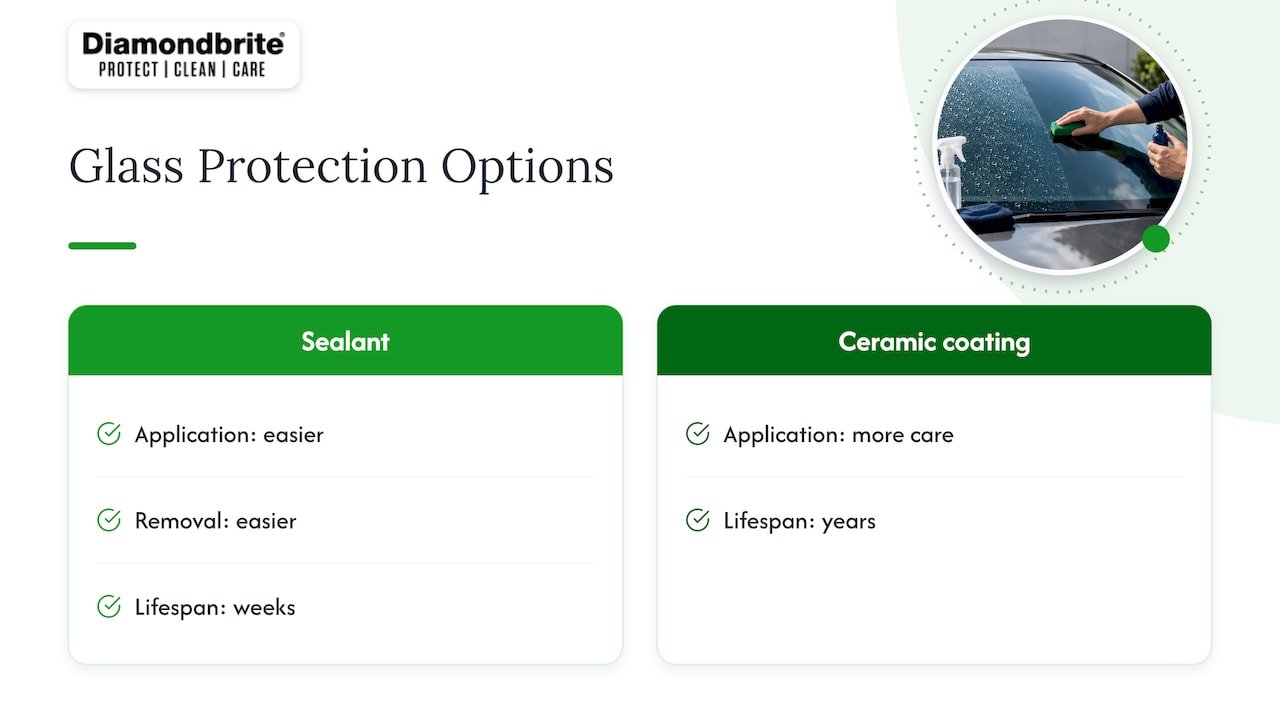
A sealant is easier to apply and easier to remove, but it wears faster. A ceramic coating takes more care and lasts longer. If you are trying glass protection for the first time, or you have doubts about wiper behaviour on the windscreen, a shorter-lived option is a gentle way to test. Our comparison of sealant vs ceramic coating sets out the trade-offs in weeks against years.
Our view: protect the glass as part of the whole car
We make ceramic-infused car care for people who want a clean, protected car without spending every weekend on it. Our experience is that glass is where many owners stop short. They coat the paint, then leave the windows with ordinary cleaner and wonder why rain still sheets badly.
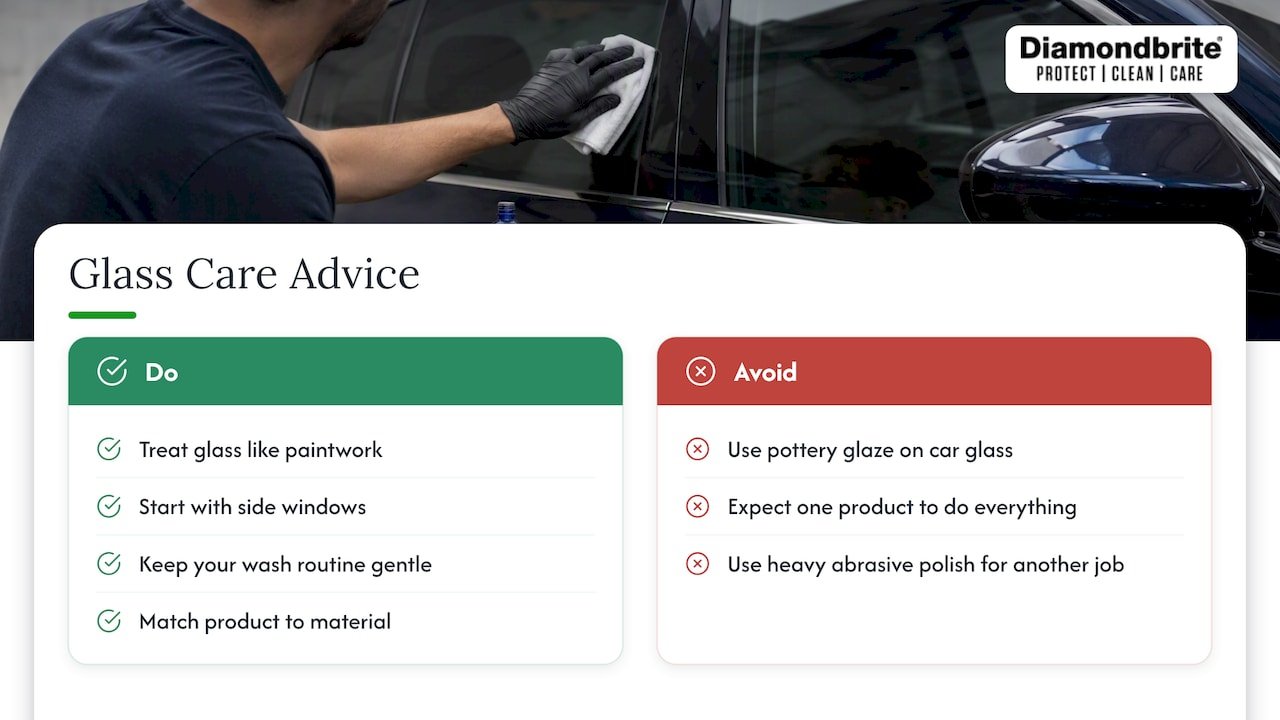
Our advice is simple. Treat the glass as a surface that deserves the same preparation as the paintwork. Start with the side windows. Keep your wash routine gentle so you do not strip protection. Use the right product for the right material, and never reach for something made for another job, whether that is pottery glaze or a heavy abrasive polish.
And be wary of any claim that a single product will do everything. A coating is a helpful layer, not a magic one. Wipers still wear out, and glass still needs cleaning.
— Will
Keeping coated glass in good shape
Once the coating is on, upkeep is straightforward:
- Wash with a pH-balanced ceramic shampoo, not harsh detergents. See what ceramic shampoo does for your paintwork and coatings.
- Use clean microfibres and avoid gritty cloths that can scratch.
- Replace worn wiper blades promptly, as dragging a split blade across the glass can mark the coating.
- Follow a regular routine: our wash routine for ceramic coatings suggests topping up beading every few months, and the ceramic coating maintenance guide covers the rest.
Ready to protect your glass?
If you want ceramic care made for cars, our Automotive Glass & Windscreen range sits alongside our wheel, paintwork and interior products. Browse the full selection at Diamondbrite and build a routine that covers every surface, from glass to paint. We also make ranges for motorcycles, leisure and marine use.
FAQ
Can you put ceramic coating on glass?
Yes. Automotive ceramic coatings are designed for glass and go on at room temperature. Side windows, the rear screen and mirrors are the usual choices. Prepare the glass carefully first, because dirt or grease under the coating will spoil the finish.
Can I use pottery ceramic glaze on glass?
No, not on car glass or ordinary window glass. Pottery glaze has to be fired in a kiln, and the heat would damage the glass. For a clear, water-repellent finish on a vehicle, use a car-care ceramic coating instead.
Should I ceramic coat my front windscreen?
It is a personal choice. Many detailers advise against it because wipers can behave differently on a coated screen. If you try it, fit new blades first and test in light rain. A shorter-lived sealant is a lower-risk way to see whether you like the effect.
Is ceramic glaze just glass?
In pottery, a glaze is essentially a thin layer of glass fused onto clay by firing. It is made from minerals and melts in a kiln. That is a different material and process from a liquid ceramic coating for cars.
Sources
- Cambridge Engineering Department teaching material on glazed tiles
- Structural characterisation of multicomponent oxide glaze systems, University of Warwick
- Glazing tips and techniques, Anglian Potters