

Use a dedicated interior cleaner on leather, soft-touch plastics, screens and anything you can’t identify. Use a well-diluted APC on hard-wearing, heavily soiled areas such as boot liners, floor mats, door shuts and tough carpet. The two overlap, but they are built for different jobs, and the difference is mostly strength and gentleness.
TL;DR
- An APC (all-purpose cleaner) is a strong, dilutable cleaner for both inside and outside the car. An interior cleaner is milder and made for cabin materials.
- Dilute APCs: lighter mixes (often 1:100) for upkeep, stronger ones (1:10 to 1:20) only for heavy soiling, according to Car magazine’s APC test.
- Keep APCs away from leather, screens and delicate trim, and check your owner’s manual first.
- Never over-wet fabric: car interiors dry slowly, especially in a British winter.
- Wear gloves and keep the doors open while you work.
Table of Contents
- What an APC actually is
- What makes an interior cleaner different
- APC vs interior cleaner: side by side
- Where each one belongs in your car
- How to use an APC safely inside the car
- Protect yourself too
- What to avoid altogether
- Our view: the best of both, in the right order
- Build a simple interior kit
- FAQ
- Sources
What an APC actually is
APC stands for all-purpose cleaner. It is a general-purpose product designed to tackle many surfaces, including upholstery, carpets, plastics and vinyl. Car magazine notes that APCs are typically alkaline-based, ammonia-free and bleach-free, which makes them safer for automotive materials than many household degreasers. The same test points out that they are not a total replacement for specialist products: a dedicated leather cleaner or glass cleaner can still beat them on its own surface.
Most APCs are sold as concentrates. That is their big advantage: one bottle, mixed to different strengths, covers tyres, arches, engine bays and filthy mats. Parkers notes that most are dilutable, which saves money in the long run.
What makes an interior cleaner different
An interior cleaner is formulated for the cabin only. Rather than relying on cleaning power, it is designed to respect the finish of the materials around you: leather, coated plastics, trim and fabric. Because it is gentler, it usually works at ready-to-use strength, so there is no mixing and no guesswork.
That gentleness matters because manufacturers are specific. In its 2026 UK guidance, Kia advises against high-alcohol, acidic or alkaline detergents on leather, as they can cause fading or strip the surface. Many APCs are alkaline, so a strong mix on a leather seat is exactly what that warning describes.
APC vs interior cleaner: side by side
| APC | Interior cleaner | |
|---|---|---|
| Strength | Adjustable by dilution | Fixed, milder |
| Best for | Boot liners, mats, door shuts, heavy dirt, exterior jobs | Dashboards, door cards, leather, everyday wipe-downs |
| Risk if misused | Residue, dulling, drying out delicate trim | Low, though it may struggle with ingrained grime |
| Convenience | Needs decanting and mixing | Ready to use |
| Value | Very good for a big car or regular use | Good for light, regular upkeep |
A useful rule: the more delicate and visible the surface, the more you should lean toward the interior cleaner. The tougher and dirtier, the more an APC earns its place.
Where each one belongs in your car
Use an APC for
- Rubber and carpet mats
- Boot liners and load areas
- Door shuts and sills
- Heavily soiled fabric carpet (diluted, then blotted)
- Wheel arches and other exterior grime
Use an interior cleaner for
- Dashboard and centre console
- Door cards and soft-touch plastics
- Leather and leatherette seats
- Light marks on seat fabric
- Regular maintenance wipes
Use something else for
- Glass: a streak-free glass method works better than any APC.
- Alcantara: it needs a gentle approach, see our guide to cleaning an Alcantara steering wheel.
- Mould: treat it properly with our guide to removing mould safely, because wiping alone rarely stops it returning.
- Odours: find the source first, as covered in our car odour guide.
How to use an APC safely inside the car
- Check the label and your manual. Manufacturers name the products they approve. If the manual is silent on a material, test somewhere hidden.
- Dilute for the job. Start at the weak end. Car magazine’s figures suggest 1:100 for upkeep and 1:10 to 1:20 for heavy soiling. Never go stronger on trim than you need.
- Spray the cloth or brush, not the surface. This keeps liquid off switches and electronics. Kia’s manual cautions that liquids must not reach electrical or electronic components.
- Work a small section at a time with a soft detailing brush for textured plastic, then lift the dirt with a clean microfibre.
- Wipe off residue with a barely damp microfibre, then dry. Leftover APC can leave a film or dull the surface.
- Don’t soak fabric. Dyson’s interior guide warns that too much water can damage soft furnishings and lead to mould, and that car interiors dry slowly in cold UK weather.
On dashboards, a milder product and a light touch are usually enough. Our dashboard cleaning guide goes through it step by step.
Protect yourself too
The HSE says many cleaning and degreasing substances used in valeting can be harmful through skin contact, splashes or breathing in mist. Keep the doors or sunroof open for ventilation, and wear gloves. This matters most with stronger APC mixes in a small, enclosed cabin.
What to avoid altogether
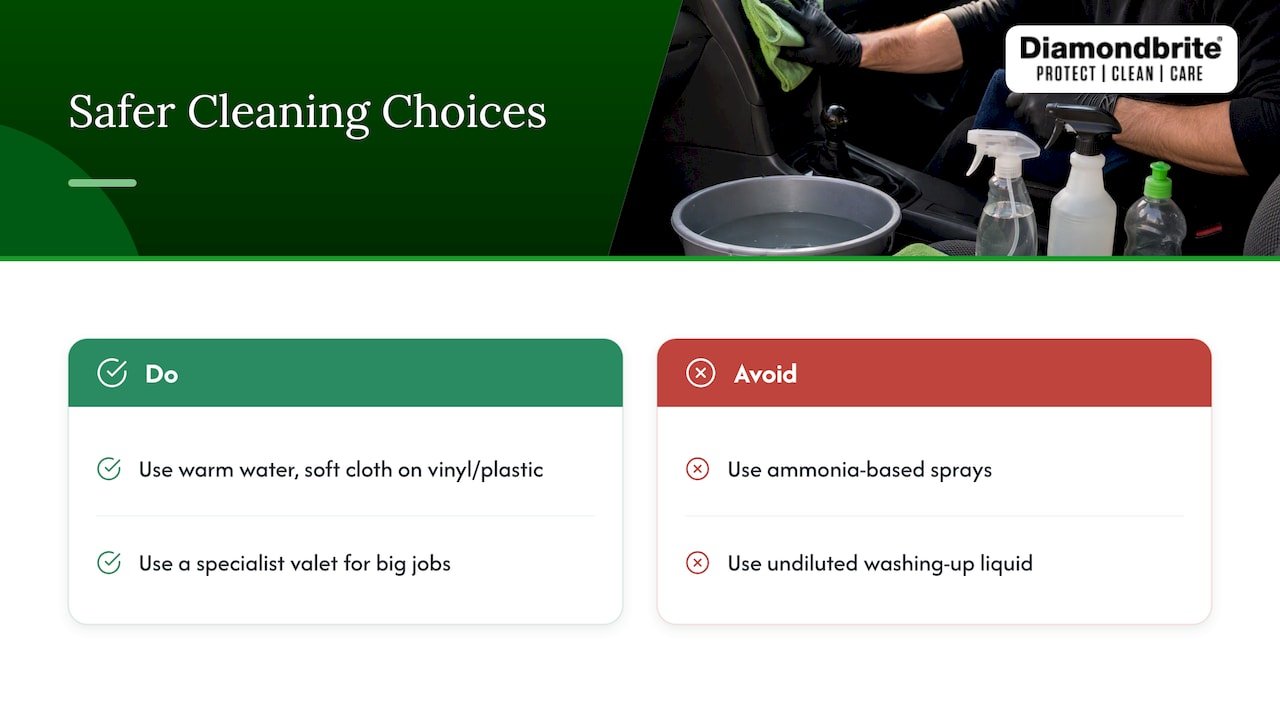
Household products are tempting, and they are a common cause of damage. Ammonia-based sprays and undiluted washing-up liquid can dry, yellow or etch cabin materials. If you have no car cleaner to hand, warm water and a soft cloth is the safer fallback on vinyl and plastic, which is what Kia’s guidance recommends when you aren’t using a specific car cleaner.
If the job is bigger than a weekend session, such as heavily stained seats or deep-set smells, a specialist valet is a reasonable option. Cleaning services such as this professional on-site upholstery cleaning service in Hungary show what a full interior treatment can involve; in the UK, look for a local valeter who will tell you what products they use.
Our view: the best of both, in the right order
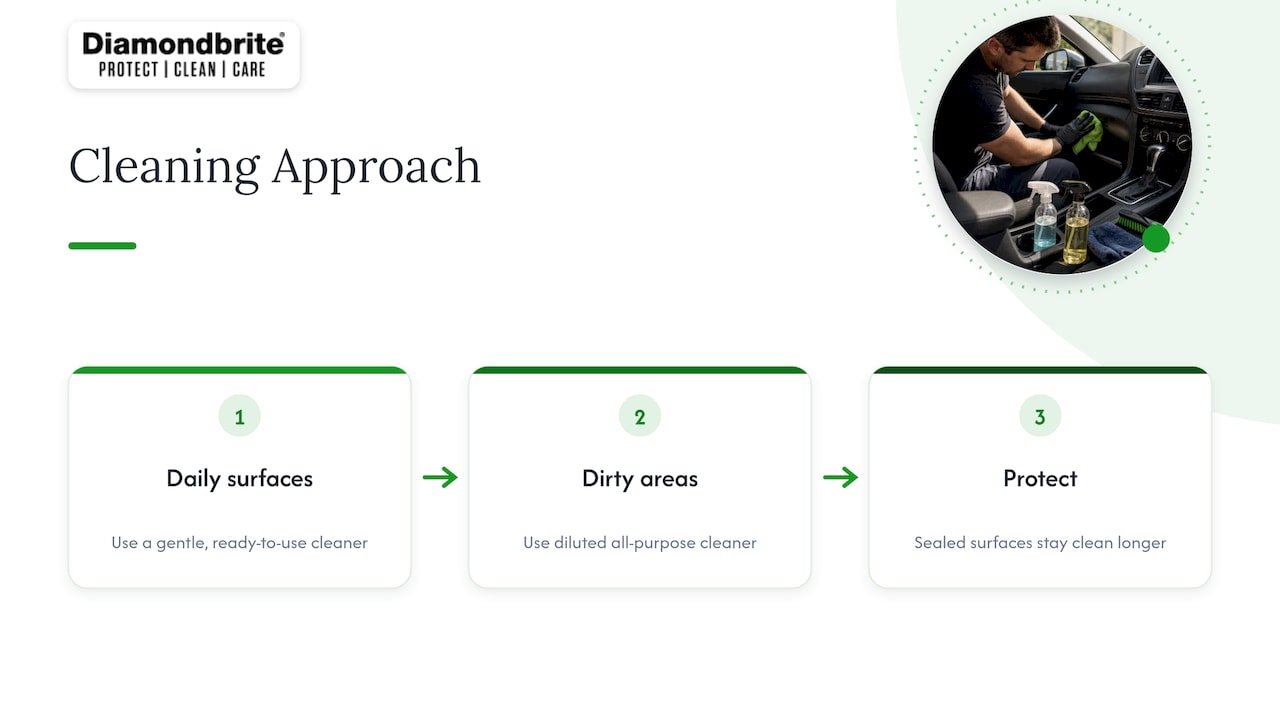
We don’t think you have to pick a side. Most of the damage we hear about comes from one product being asked to do every job at one strength. Our approach is simple: keep a gentle, ready-to-use cleaner for the surfaces you touch every day, and a diluted all-purpose product for the genuinely dirty areas. Then protect what you’ve cleaned, because a clean surface that is sealed stays clean for longer and wipes down more easily next time.
That is also why we are interested in ceramic-infused care and in sustainability. Biodegradable, cost-effective products that you can use at the right strength mean fewer bottles, less waste and a sparkling finish without going to extremes. If you want to take interior protection further, see whether an interior ceramic coating is worth it for your car.
— Will
Build a simple interior kit
Our range at Diamondbrite covers interior care, glass, wheels, paintwork and ceramic protection for cars, motorcycles, leisure vehicles and boats. If you want one place to put together a sensible kit, from interior cleaning to glass and protection, browse the Diamondbrite range. Pair it with a few clean microfibre cloths and a soft brush and you can cover almost every surface in your cabin.
FAQ
Can I use an APC on the interior of my car?
Yes, on suitable surfaces and properly diluted. APCs work well on mats, boot liners, plastics and carpets, but wipe off any residue afterwards. Avoid them on leather and delicate trim unless your manufacturer says otherwise.
What does APC stand for in cleaning?
It stands for all-purpose cleaner. It is a general cleaner, usually sold as a concentrate, that you dilute for different jobs on both the inside and outside of a car.
Can I use washing-up liquid to clean a car interior?
We wouldn’t. Undiluted washing-up liquid and ammonia-based sprays risk drying, yellowing or etching cabin materials. A purpose-made interior cleaner, or warm water for light jobs, is the safer choice.
What’s the best way to clean fabric car seats?
Vacuum first, then use a fabric-safe cleaner on a cloth or brush and work in small sections. Blot rather than soak, because over-wetting pushes stains deeper and can lead to mould. Leave the doors open so it dries fully.
Sources
- The best all-purpose (APC) cleaners for your car, Car magazine
- Interior care and seat cleaning guide, Kia Tasman 2026 owner’s manual
- Cleaning or degreasing substances including valeting, HSE
- Best all-purpose cleaners, Parkers
- How to clean a car interior, Dyson UK