

You can apply ceramic in the cold, but only if the car, the air and the workspace all stay within the range on the product label for the whole application and early cure. In a typical British autumn or winter, that means a heated, dry garage rather than a driveway. If you can’t get that, wait for a mild, dry spell. A coating that doesn’t bond won’t give you the durable shield you paid for.
TL;DR
- Most coatings want roughly 10°C to 29°C. UK DIY guidance quotes the same window. Always check your own bottle first.
- Panel temperature matters more than the air temperature on your garage thermometer.
- Cold slows flash-off and curing, and condensation can spoil the bond without you seeing it.
- Too hot is also a problem: direct sun makes coatings flash before you can level them.
- No heated space? Wait, or use a simple spray-and-rinse product that is more forgiving.
Table of Contents
- What the cold actually does to a coating
- Air temperature versus panel temperature
- Cold, damp or hot: what to avoid
- Getting the car ready in colder months
- A cold-season application routine
- Perspective: why we favour patience and simple products in winter
- If you can’t heat a garage
- Choosing your products
- FAQ
- Sources
What the cold actually does to a coating
Ceramic products bond through a chemical reaction, and chemistry slows down as it gets colder. Three things go wrong at low temperatures:
- Flash-off becomes erratic. The product thickens, spreads less evenly and leaves streaks or high spots that are hard to remove later.
- Curing drags on. The coating stays vulnerable for longer, so dust, drizzle or a frosty night can ruin it before it has set.
- Moisture gets trapped. Cold metal attracts condensation, and a film of water you can’t see can stop the coating gripping the paint.
That last point catches out more DIY owners than any other. The air feels fine, but the paint is still cold from the night before.
Air temperature versus panel temperature
A car that has sat in an unheated garage overnight stays cold even when the air warms up. The cold panels pull heat out of the liquid you are applying, so it behaves as if the day were colder than it is. Professional detailers commonly bring a car into the workspace well ahead of time so the metal settles at a stable temperature before they start.
A practical routine:
- Move the car into the garage the evening before, or at least several hours ahead.
- Lay the back of your hand on the bonnet and roof. If they feel chilly, wait.
- Use an infrared thermometer if you have one. Check the roof, bonnet and lower doors, which cool fastest.
- Keep the space warm until the coating has had the cure time on the label, not only until you finish buffing.
Cold, damp or hot: what to avoid
The British problem is usually damp as much as cold. A garage at 12°C with 90% humidity is a worse place to coat than a dry one at 10°C. Open the door on a drizzly morning and you let moisture straight onto the panels.
Summer brings the opposite trouble. Direct sun can heat dark paint far above the air temperature, and the product flashes in seconds. If you need to work in warm weather, our guide to washing a car in the sun during a heatwave shows how to take it one panel at a time. The same discipline applies to coating: shade, cool panels, small sections.
| Condition | What happens | What to do |
|---|---|---|
| Panels below about 10°C | Slow flash-off, slow cure, uneven finish | Heat the space, or wait |
| Cold panels, warmer air | Condensation, poor bonding | Acclimatise the car for several hours |
| Damp or rainy air | Moisture contaminates the curing layer | Dry, closed garage only |
| Direct sun, hot panels | Flashes too fast, streaks, high spots | Shade, cool the panel, work in small sections |
| Mild, dry, 10°C to 29°C | Normal working time and cure | Go ahead |
Getting the car ready in colder months
Preparation takes longer in winter because everything dries slowly. Allow extra time and don’t skip steps to make up for it.
Wash and decontaminate indoors
Winter roads leave tar, road film and iron fallout. Wash with a proper sequence so wheel grit stays off the paint, as in our car wash sequence for UK drivers, and use a two-bucket method to avoid adding swirls you’ll then seal in. If tar is stuck on, see how to remove tar safely.
Then check whether the paint needs a clay bar. There is a quick bag test that tells you in half a minute.
Dry it completely
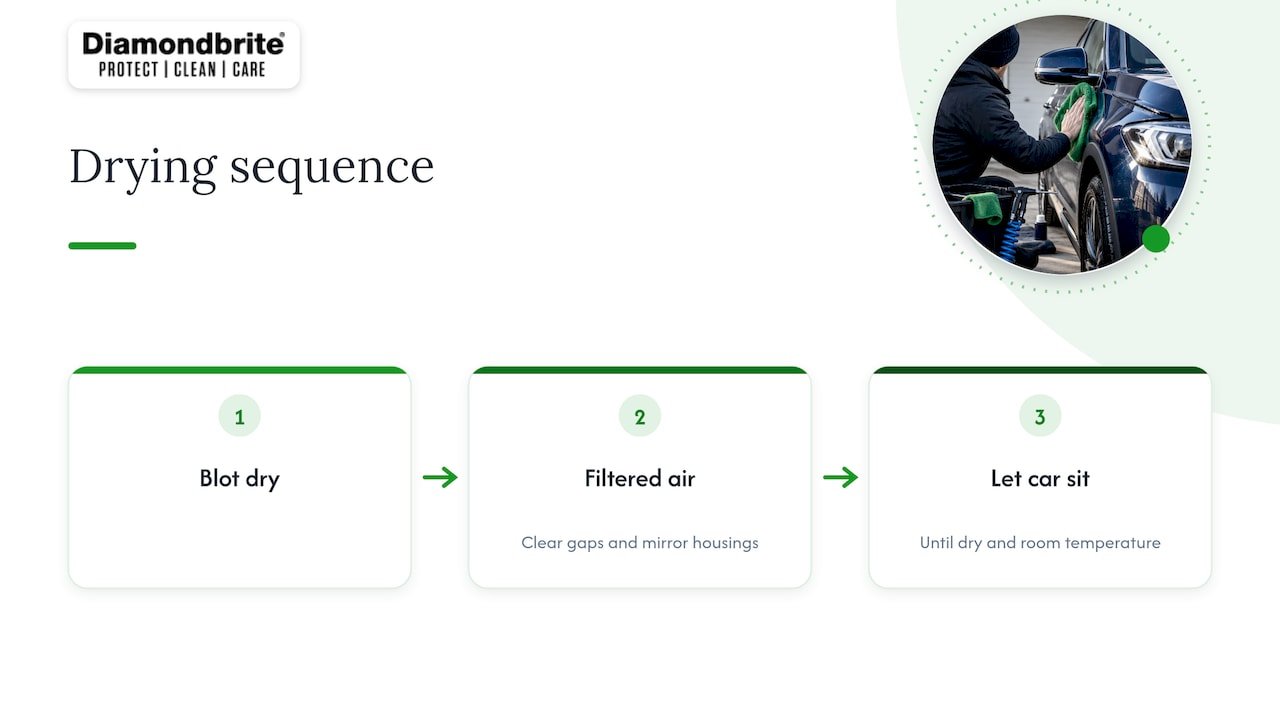
Water hiding in panel gaps, mirror housings and trim can run onto fresh coating later. Blot dry, then use filtered air if you can: here is a shortlist for drying a car with air. Let the car sit until every panel feels dry and room temperature.
Decide about polishing
Coating locks in whatever is underneath it. If the paint is swirled or dull, read whether you should polish before ceramic coating. Older paint has its own rules, covered in ceramic coating on old paint.
A cold-season application routine
- Check the label for the stated application and cure temperature range and any humidity limit.
- Heat the garage to a steady level inside that range. Avoid open-flame or fuel heaters near solvent-based products, and keep the space ventilated. An electric heater placed away from the car is safer.
- Acclimatise the car for several hours until the panels are no longer cold to the touch.
- Work in small sections, one panel at a time, so the product doesn’t sit and flash unevenly.
- Level and buff at the time the instructions say. In cooler conditions the window can be longer, so watch the surface rather than the clock.
- Keep the car indoors for the cure period on the label, and keep it dry afterwards. Don’t wash it until the instructions allow.
Treat that last step seriously. The 24 hours after application is when a cold, wet night does the most harm.
Perspective: why we favour patience and simple products in winter
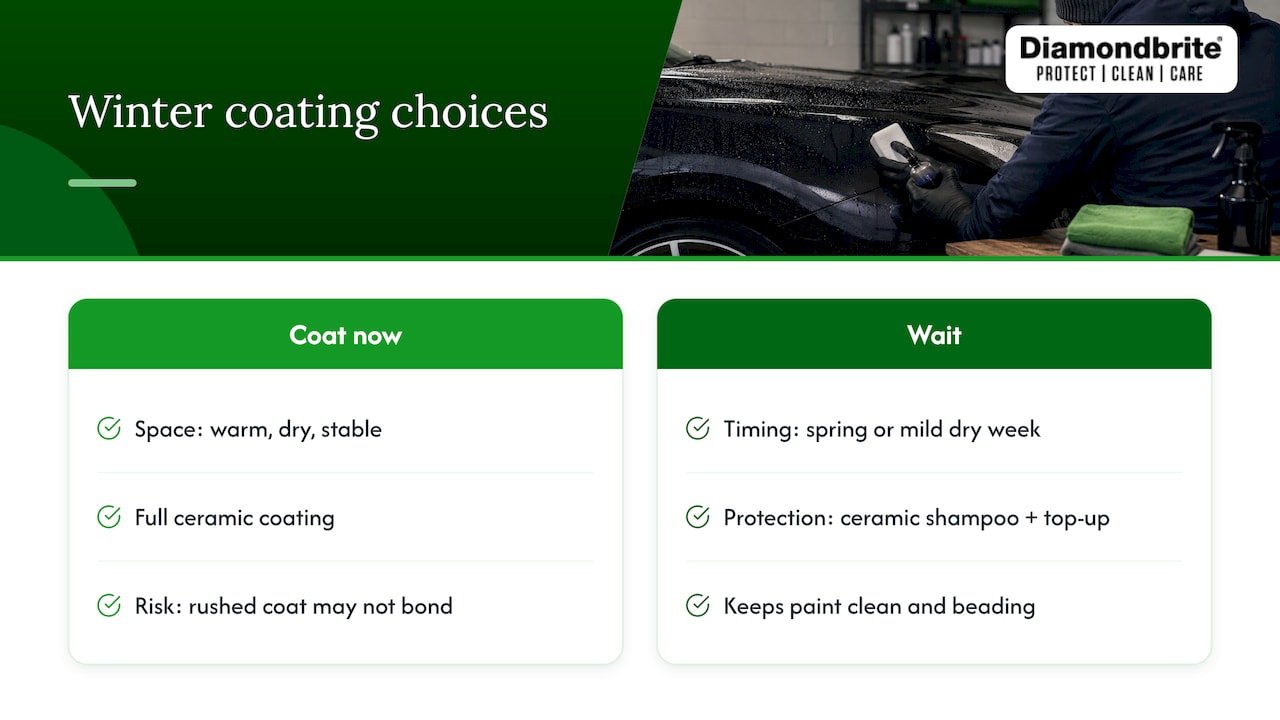
We make ceramic-infused care products for cars, motorcycles, leisure and marine vehicles, and the most common winter question we hear is whether it is worth coating now or waiting. Our honest view is that the chemistry doesn’t care about your schedule. If you can give the car a warm, dry, stable space, go ahead. If you can’t, wait for spring or a mild dry week. A rushed coating that never bonds costs more than a few weeks of patience.
That doesn’t mean the car goes unprotected meanwhile. Regular washing with a ceramic shampoo and a spray-and-rinse top-up keeps the paint clean and beading through the wet months, and it is far easier to apply in imperfect conditions. When you’re ready for a full coating, the prep you have already done carries over. Do what suits your space and your paint, and read the label before you start.
— Will
If you can’t heat a garage
You have three realistic options.
- Wait. Spring and early autumn are usually the easiest seasons in Britain, as long as the weather is dry. SRV Detailing’s seasonal advice points the same way.
- Use a more forgiving product. A panel-by-panel spray and rinse coating is less demanding than a traditional hand-applied coating, which makes it a sensible winter maintenance step. See how sealants compare with ceramic coatings if you’re deciding between the two.
- Treat other surfaces. Glass, interior trim and rubber can sometimes be done in a warm room or on a mild day. Our guides cover ceramic coating on glass, interior ceramic coating and vinyl and rubber protection.
Choosing your products
If you want to keep the paint protected through winter and be ready for spring, our shop has ceramic glazes, shampoos, snow foams and packs for cars, plus ranges for motorcycles, leisure vehicles and marine use. Browse the full range at Diamondbrite and check each product’s own temperature and cure guidance before you apply it.
Once a coating is on, you don’t need wax over it. Here’s how to keep the gloss going without waxing a ceramic coating.
FAQ
What is the lowest temperature I can apply ceramic coating at?
There is no universal figure, so the label on your product decides. Many coatings quote a working range starting around 10°C, and UK guidance gives 10°C to 29°C. Below the stated minimum, expect poor bonding and a patchy finish.
Can I apply ceramic coating outside in winter?
We wouldn’t. Outdoors you can’t control temperature, damp or dust, and the car stays exposed while it cures. A closed, heated garage is a far safer place.
Can I apply ceramic coating in the sun?
It is best avoided. Hot panels make the product flash too quickly, which causes streaks and high spots. Work in shade on cool panels, one section at a time.
How long should the car stay indoors after coating?
Follow the cure time on the product label, which varies. Keep the car dry and avoid washing it until the instructions say it is safe to do so.