

Yes, a genuine 15-minute clean is realistic for an exterior maintenance wash. Choose an express professional wash for pure speed, or follow a tightly timed DIY routine for a safe, hands-on clean. Fifteen minutes gets you a maintenance wash, not a full valet, and starting with a grit check and working top-to-bottom keeps your paintwork free of swirl marks.
TL;DR:
- Professional express washes clean the body, wheels, and tires but exclude interiors and deep decontamination, so heavily soiled cars need a longer service.
- Small car express packages start around £10 to £15, and advertised 15 minute washes cover active cleaning, not queue time.
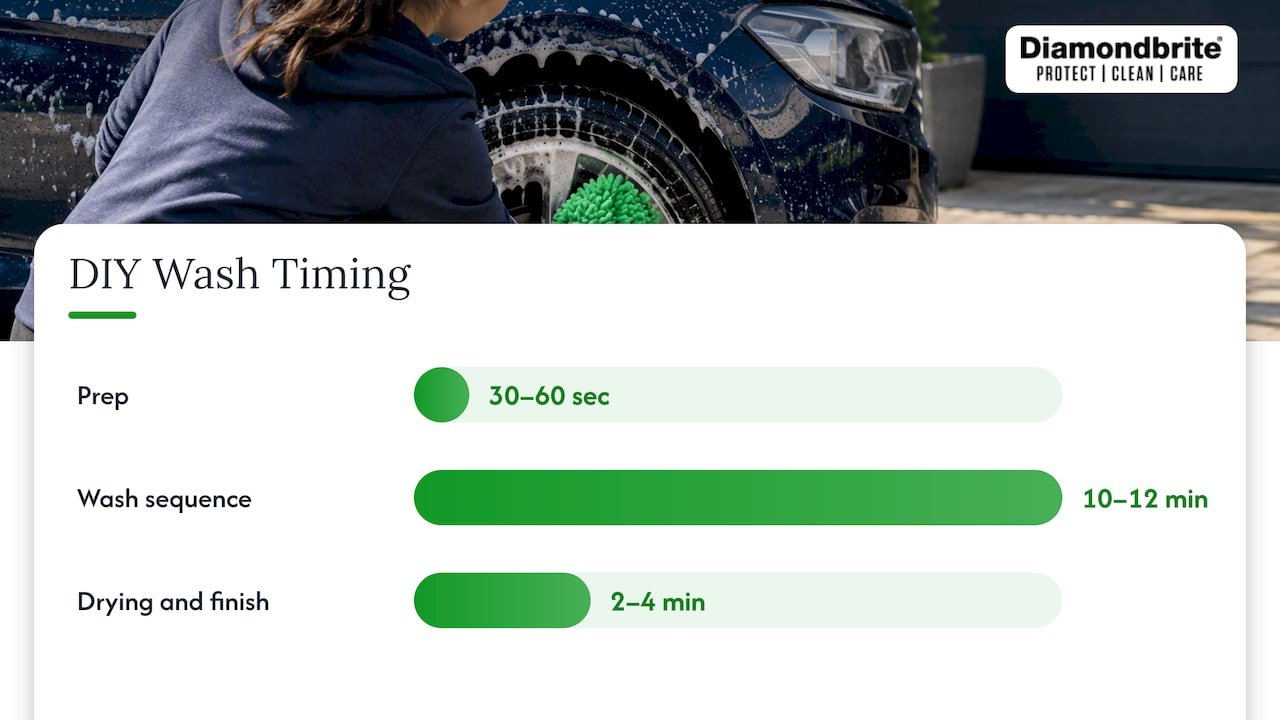
- A DIY wash takes 10 to 12 minutes before drying; spend another 2 to 4 minutes blotting the paint, dressing tires, and wiping glass.
- Check for grit before washing, rinse your mitt often, and keep separate mitts for wheels and paint to reduce scratch risk.
- During a hosepipe ban, use buckets, watering cans, rinseless products, or a commercial wash, and check local restrictions before washing at home.
Table of Contents
- What a 15-minute professional express wash usually includes
- A safe, timed 15-minute DIY maintenance wash
- When to choose a pro express wash over doing it yourself
- Typical costs and what ‘15 minutes’ actually covers
- Water use and environmental rules affecting a quick wash
- Quick kit and checklist to guarantee a 15-minute clean
- Detailer note: protecting paint during a quick wash
- Balancing speed and paint care
- Faster, safer maintenance washes with Diamondbrite
- FAQ
- Sources
What a 15-minute professional express wash usually includes
When a wash bay advertises a 15-minute service, you’re almost always looking at an exterior-only clean. That covers the body, the wheels, a tyre dressing, and often a quick wax or spot-free rinse to finish. What you won’t get in that window is anything involving the inside of the car or heavier correction work.
Speed at this level comes from design, not corner-cutting. Conveyor systems and automated drive-throughs are built for throughput, and UK government guidance notes that modern conveyor car-wash systems can handle around 40 to 60 cars an hour while recycling a high percentage of the water they use. That recycling matters because it’s also how operators manage wastewater and meet trade-effluent rules, rather than simply running more water through the system.
Hand-wash express bays hit similar speeds with a trained team working in parallel rather than a conveyor belt, but the scope stays the same. Here’s what a typical 15-minute exterior package includes and what it leaves out:
- Included: full body wash, wheel and tyre clean, tyre dressing, and a quick wax coat or spot-free rinse.
- Included: door-line and shut cleaning, since grime collects there and shows quickly.
- Excluded: interior valeting, vacuuming, or upholstery work.
- Excluded: clay bar decontamination or machine polishing, both of which need far more dwell and working time.
- Excluded: heavy decontamination for tar, tree sap, or deep-set brake dust, which usually needs a dedicated pre-treatment step.
Knowing this scope before you pull in saves disappointment. If your car needs more than a surface refresh, a 15-minute slot was never designed to deliver it, and that’s fine: it’s doing one job well rather than several jobs poorly.
A safe, timed 15-minute DIY maintenance wash
A 15-minute DIY wash works when you treat it like a drill rather than a leisurely Sunday job. The sequence matters as much as the speed, because washing in the wrong order is what actually causes swirl marks, not the time pressure itself.
Prep (30 to 60 seconds). Park in the shade if you can; direct sun dries product too fast and leaves marks. Lay out your kit within reach, then run a bare hand or a soft cloth over a panel to feel for embedded grit. RAC guidance recommends exactly this kind of quick prep check before you start, since it flags whether you need a fuller pre-rinse rather than a straight wipe-down.
Once you’re set up, the wash itself follows a clear top-to-bottom, high-to-low order:
- Pre-spray the wheels with a dedicated wheel cleaner, since this is the dirtiest, grittiest surface on the car and needs the longest dwell time.
- Wash the roof and upper panels first, working your mitt in straight lines rather than circles.
- Move to the mid panels (doors, wings), rinsing the mitt frequently in a second bucket of clean water.
- Finish the lower panels and sills last, since this is where road grime and grit concentrate.
- Rinse the wheels and tyres, then give the whole car a final rinse from top to bottom.
- Clean the glass with a dedicated glass cloth, working in a figure-of-eight to avoid streaks.
That sequence takes roughly 10 to 12 minutes once you’re moving. RAC’s own guidance backs this top-to-bottom principle specifically because it stops grit picked up lower down from transferring back onto panels you’ve already cleaned.
Drying and finish (2 to 4 minutes). Blot the car dry with a large microfibre towel rather than dragging it across the paint, apply a tyre dressing with a small sponge or applicator, and give the glass one last wipe with a dry microfibre or glass cloth.
A few shortcuts keep this paint-safe rather than paint-risky. The two-bucket method, one for soapy water and one for rinsing your mitt, is the single most effective habit for avoiding scratches, since it stops you dragging dirt back through the suds. A rinseless wash product is a solid alternative when water access is limited. Either way, rinse your mitt often and never grind at a gritty patch; if a panel feels rough, go back over it gently with more lubrication rather than more pressure.
Pro Tip: Keep two mitts on hand, one for wheels and one for paintwork, so grit from the rims never ends up on your bodywork.
When to choose a pro express wash over doing it yourself
The right choice depends less on how much time you have and more on what condition your car is actually in and what kit you’ve got to hand.
A professional express wash makes sense when:
- You want speed and water efficiency without setting up buckets, hoses, and towels yourself.
- You don’t have a reliable two-bucket setup or enough microfibre towels to dry the car properly.
- Your schedule genuinely only allows for a drop-in wash on the way to somewhere else.
DIY washing makes more sense when:
- You can commit to proper scratch-prevention technique, the two-bucket method, frequent mitt rinses, and a gentle touch on dirty areas.
- You need to deal with an interior spill, a muddy footwell, or a specific stain that an exterior-only service won’t touch.
- You want to use your own ceramic-safe shampoo or glaze to maintain a coating’s performance, something a generic wash bay won’t offer.
One flag applies to either route: if the paint is visibly gritty, a quick dry-wipe is the wrong move regardless of who’s doing it. Either give the car a thorough pre-rinse first or book a longer, proper wash. A 15-minute slot, DIY or professional, is built for maintenance, not rescue.
Typical costs and what ‘15 minutes’ actually covers
Advertised time and actual time at the wash bay aren’t always the same thing, and it’s worth knowing the difference before you commit to a slot.
For a small car, exterior express packages commonly start around £10 to £15, with prices rising for medium and larger vehicles due to the extra surface area and water needed. That same provider listing notes that while the advertised wash itself takes about 15 minutes, total waiting time can be longer when the bay is busy, so the “15 minutes” refers to active wash time, not your total time at the site.
It’s worth asking directly whether a quoted time is the wash itself or the full slot, since the gap can matter if you’re working to a tight schedule. Service tiers generally map like this:
- Express: exterior wash, wheels, tyre dressing. Fastest option, around 15 minutes of active wash time.
- Bronze/mid-tier: adds hand-drying, door shuts, and sometimes a quick interior wipe-down, typically closer to 20 minutes.
- Full valet: interior deep clean, machine polishing, and decontamination, often an hour or more.
Choosing the right tier for your car avoids paying for work you don’t need, or worse, expecting full-valet results from an express slot.
Water use and environmental rules affecting a quick wash
If you’re washing at home, water restrictions and good practice both shape how a 15-minute clean should work.
During a hosepipe ban, buckets, watering cans, and waterless or rinseless cleaners are generally the permitted route, along with visiting a commercial car wash, though it’s always worth checking the specific rules that apply where you are. RAC guidance on hosepipe bans notes that an uncontrolled hose wash can use several hundred litres of water, compared with much less using the bucket method.
A commercial automated wash typically uses significantly less water per car, often with a large share of that reused through recycling systems, which is a meaningful reduction compared with an unrestricted garden hose.
That gap is exactly why a short, deliberate wash beats a long, careless one on water use alone:
- Buckets beat hoses for water efficiency at home, even before you factor in a ban.
- Rinseless or waterless products can replicate a light maintenance wash with next to no water, useful for light dust between proper washes.
- A trigger nozzle, rather than leaving a hose running, cuts water use dramatically if you do rinse.
- Commercial washes recycle, which is part of why they remain permitted even under tighter water restrictions in many areas.
Quick kit and checklist to guarantee a 15-minute clean
Half the battle in hitting 15 minutes is not improvising halfway through. A short, fixed kit removes the guesswork.
- Two buckets (or a rinseless wash solution if water access is limited), one for suds, one for rinsing your mitt.
- A dedicated wash mitt, lambswool or microfibre, kept separate from any cloth used on wheels.
- A soft wheel brush for alloys and tyre sidewalls.
- At least two large microfibre towels, one for drying, one kept spare.
- A dedicated glass cloth, since using the same towel on glass and paint tends to leave streaks.
- A trigger nozzle if you’re using a hose, to control flow and avoid wasting water.
Before you start, run through three quick checks: is there shade nearby, is your mitt clean from last time, and does any panel feel gritty under a light touch? For heavily soiled wheels, a quick pre-spray buys you dwell time while you work on the rest of the car.
Snow foam, where you have the kit for it, is a genuine time-saver: it clings to the surface and loosens grime while you move on to wheels, rather than you scrubbing dry dirt. For light dust between washes, a spray-and-wipe detailer skips the bucket stage entirely.
Detailer note: protecting paint during a quick wash
Speed and paint safety aren’t opposites, provided the products you’re using are doing some of the work for you. A shampoo formulated to reduce surface drag helps water and suds sheet off more easily, which shortens both the wash and the drying stage, two of the slowest parts of any quick routine.
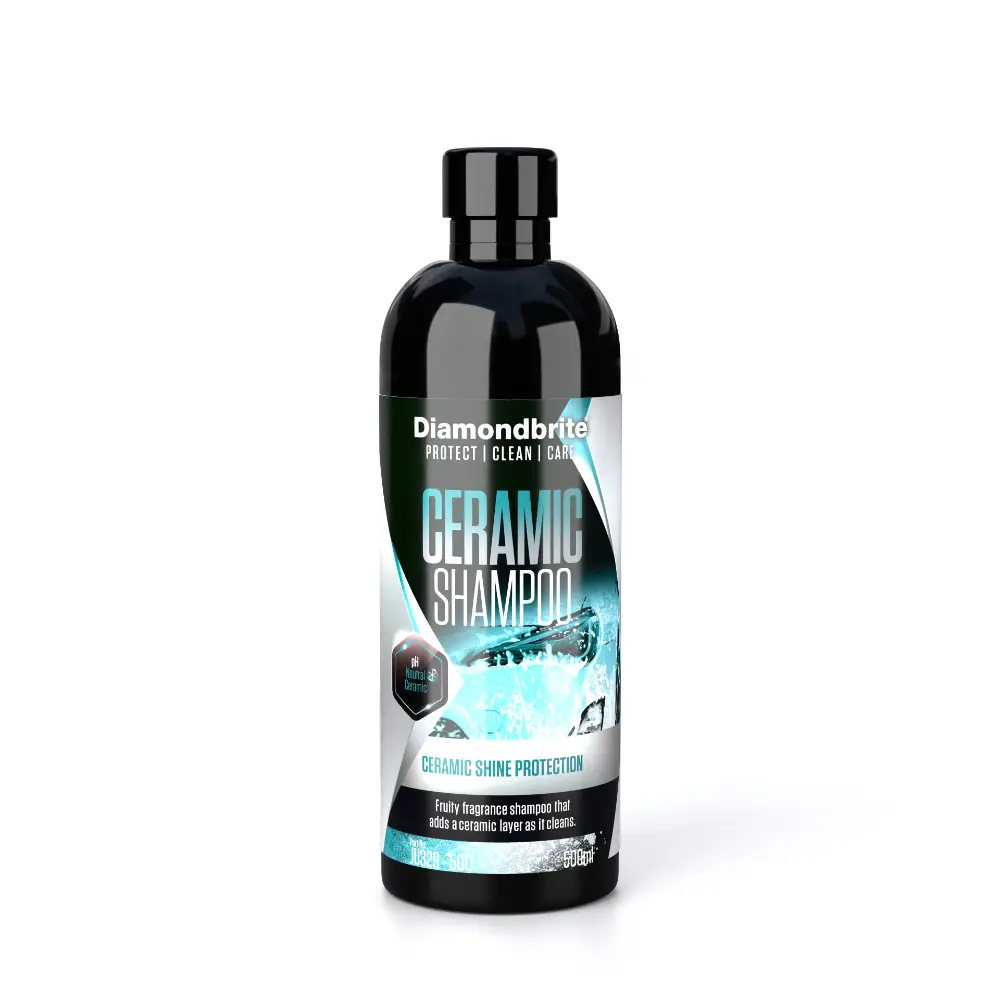
For ceramic-coated cars specifically, a short, gentle maintenance wash is actually the better habit, not a compromise. Frequent light washing with a pH-neutral, ceramic-safe shampoo reduces the abrasion risk that comes from letting grime build up and needing a harsher scrub later.
A few habits protect both your time and your coating:
- Use a dedicated ceramic-infused shampoo that’s designed to rinse cleanly rather than leave residue behind.
- Keep mitts and towels free of grit between washes, since a coated surface still scratches if you drag debris across it.
- Reapply protection periodically rather than waiting until beading visibly stops, which keeps each quick wash easier than the last.
For more on keeping a coating performing well between washes, our guide on keeping gloss without rewaxing and our piece on protecting alloy wheels both go into more detail on extending the interval between full details.
Balancing speed and paint care
If you only take one thing from a quick wash routine, make it this: protecting the paint matters more than shaving off another minute. A car washed gently once a week for ten months will look better than one scrubbed hard every fortnight, and it needs far less corrective work down the line.
When time is genuinely tight, we’d rather see someone do a shorter, two-bucket wash with a ceramic-safe shampoo than skip washing altogether and let grime sit. A small, consistent habit beats an occasional deep clean every time.
— Will
Faster, safer maintenance washes with Diamondbrite
A quick wash only stays quick when the products are pulling their weight alongside you. Our Ceramic Shampoo is designed to rinse cleanly and cut suds-removal time, so you spend less of your 15 minutes on the rinse stage and more of it moving through the panel sequence.
A light application of Ceramic Glaze between washes also helps water sheet off the bodywork, which shortens the drying step and leaves less for your microfibre towel to mop up. That combination matters most on a tight schedule:
- Ceramic Shampoo reduces drag during the wash itself, making rinsing faster.
- Ceramic Glaze keeps beading strong between washes, so each wash starts easier than the last.
- Both are formulated to work within a gentle, low-abrasion routine rather than requiring extra scrubbing.
Stick to the top-to-bottom sequence above when using either product, since even a ceramic-protected surface benefits from grit-free technique. Browse our full Automotive Ceramic range to find the combination that suits your car and your weekly routine.
FAQ
How many minutes does it take to wash a car?
A professional exterior express wash typically advertises around 15 minutes of active wash time, though queueing can extend your total visit. A careful DIY maintenance wash, following a top-to-bottom sequence, also fits comfortably into 15 minutes once you’re set up.
Which car colour is hardest to maintain?
Darker colours, particularly black, tend to show swirl marks, water spots, and dust more readily than lighter shades, which makes technique more important on dark paint. This isn’t about one colour being impossible to maintain, just more visibly affected by rushed or careless washing.
Is it legal to wash a car on a driveway?
There’s generally no blanket ban on washing a car on your own driveway, but hosepipe restrictions during a ban can limit how you do it. RAC guidance on hosepipe bans notes that buckets, watering cans, and waterless products typically remain permitted, so check local rules if a ban is in effect.
How long does the longest car wash take?
A full valet, including interior deep cleaning, decontamination, and machine polishing, can take an hour or more, far beyond the 15-minute express tier. Service time scales with how much correction and detail work is included, not just the size of the car.