

The safest way to clean an Alcantara steering wheel is to apply a pH neutral cleaner to a microfibre cloth rather than the wheel itself, work in small sections with gentle agitation, blot away moisture, then air dry and brush the nap. Skip steam and soaking altogether. Most dull, shiny wheels are simply oily and respond well to this routine without any need for a retrim.
TL;DR:
- Using a pH neutral cleaner applied to a microfibre cloth and working in sections prevents water from seeping into the foam core and causing damage.
- Weekly maintenance with a dry brush or vacuum, plus spot cleaning after heavy use, helps keep the Alcantara looking fresh and reduces the need for full cleanings.
- Brushing the fibres upright with a soft brush after drying significantly restores the nap and improves the wheel’s appearance, especially when done in the same direction.
- Avoid steam cleaning, solvents, and flooding the fabric with liquids, as these can cause lasting damage and trap moisture inside.
- Regular light cleaning and brushing, paired with tested interior products, can keep an Alcantara steering wheel looking factory fresh for years.
Table of Contents
- Step by step cleaning method for an Alcantara steering wheel
- Tools and cleaners that are safe to use
- What not to do: common mistakes that cause lasting damage
- Maintenance schedule and prevention tips for a factory look
- Expert tips for restoring the nap and where products fit in
- When to DIY and when to call in a professional
- Diamondbrite: interior care that supports this routine
- Sources
- FAQ
Step by step cleaning method for an Alcantara steering wheel
Before you touch a cleaner, clear away loose grit. A soft brush or a handheld vacuum with a gentle head lifts dust and crumbs that would otherwise grind into the fibres once you start wiping.
From there, the process follows a simple rhythm:
- Divide the wheel into quarters and work on one section at a time.
- Lightly dampen that section with distilled water to loosen surface residue.
- Apply your chosen cleaner to a white microfibre cloth, never directly onto the wheel.
- Agitate gently in small circular motions, using a soft bristled brush on stubborn patches.
- Blot the area with a dry cloth immediately to lift moisture rather than letting it sit.
- Move to the next quarter and repeat until the whole wheel is done.
- Leave the wheel to air dry fully before touching it again.
- Once dry, brush the pile with a soft bristled brush to bring the nap back upright.
This sectioned approach matters more than it might seem. Alcantara sits on a foam core, and soaking any one area for too long risks pushing water down into that padding, which is exactly what you are trying to avoid. Working in quarters keeps each patch under control and lets you blot before moisture has a chance to travel.
Brushing at the end is not a cosmetic afterthought. Reviving flattened Alcantara depends on removing grease first and then mechanically coaxing the fibres back into position, and that second step is often what separates a wheel that still looks tired from one that looks factory fresh.
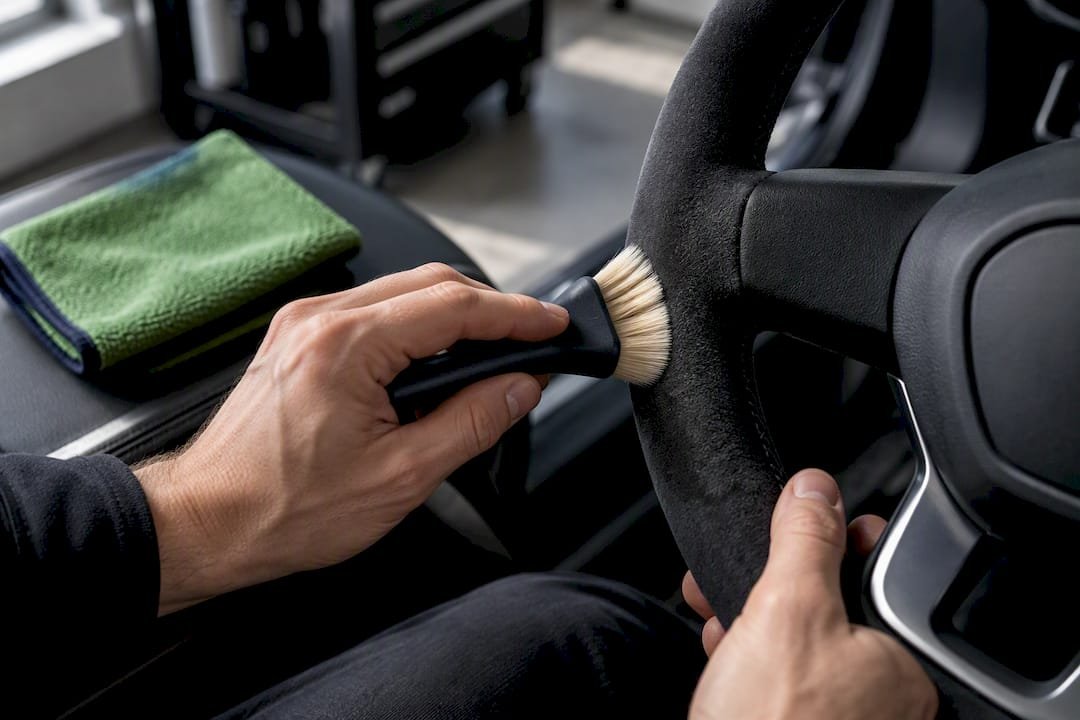
Pro Tip: Let the wheel dry overnight before brushing. Damp fibres mat down again almost instantly, so patience here saves you a repeat job.
Tools and cleaners that are safe to use
The right kit is short and inexpensive, which is part of why this routine works so well for home use. You do not need anything specialist, just the right basics used correctly.
- A spray bottle of distilled water, which avoids the mineral spotting tap water can leave behind.
- White, short pile microfibre cloths, since coloured cloths can transfer dye onto light coloured Alcantara.
- A soft bristled brush, similar to an interior detailing brush or a soft toothbrush, for agitation and for fluffing once dry.
- A handheld vacuum with a soft brush head for the initial dust removal stage.
On cleaners, Alcantara branded products are the safest starting point where available, alongside mild interior textile shampoos formulated to be pH neutral. Heavily diluted washing up liquid can work as an emergency measure because it cuts through oils, though it is not ideal and can leave a slight residue behind. Whatever you choose, Alcantara’s own guidance stresses testing on a hidden section first, such as the underside of the wheel spoke, to confirm the product will not affect colour before you commit to the full surface.
What not to do: common mistakes that cause lasting damage
Alcantara is forgiving when you treat it gently, but a handful of habits will do damage that no amount of brushing can undo.
- Never use steam cleaners, since Alcantara’s washing instructions rule out direct steam contact entirely.
- Avoid bleach, acetone and any solvent based cleaner, along with leather conditioners, which are formulated for a completely different material.
- Never spray cleaner directly onto the wheel, and never flood the fabric hoping to rinse away dirt.
- Skip abrasive pads, magic erasers, hard vacuum crevice tools and hot forced drying, all of which flatten or fray the pile.
High temperatures, solvent exposure and excessive wetting cause the majority of DIY damage to Alcantara, according to Alcantara’s own maintenance guidance, which is precisely why the official advice stays so simple. Over-wetting is the quiet culprit here: water that reaches the foam core beneath the fabric tends to linger, and that trapped moisture is what leads to odour and shape loss rather than the cleaning itself.
Maintenance schedule and prevention tips for a factory look
A little effort often beats a big clean, and Alcantara rewards owners who keep on top of it rather than waiting for heavy fouling to set in.
- Each week, give the wheel a light dry brush or a quick vacuum pass, followed by a wipe with a dry white microfibre.
- Once a month, or as soon as the surface starts to look slick or noticeably darker, run through the full cleaning routine above.
- After a sweaty drive or heavy sunscreen use, spot-clean that area straight away rather than letting oils settle in.
- Consider driving gloves on long journeys and washing your hands before driving, since skin oils are the main cause of that shiny, matted look in the first place.
Expert tips for restoring the nap and where products fit in
Brushing is the step people skip, and it is usually the one that makes the biggest visible difference. A soft toothbrush or a small interior detailing brush works into the grain far better than a cloth alone, lifting fibres that cleaning has pressed flat.
- Use a soft bristled brush in short, consistent strokes, always in the same direction, to bring the pile back upright.
- Interior focused products including ceramic shampoo and interior care items can play a role here when spot-tested first and applied sparingly.
- Stick to the cleaner-on-cloth rule with any product you try, rather than applying it straight to the wheel.
Pro Tip: Brush in the direction the nap naturally lies. Going against the grain can leave streaks that only another light brushing will fix.
When to DIY and when to call in a professional
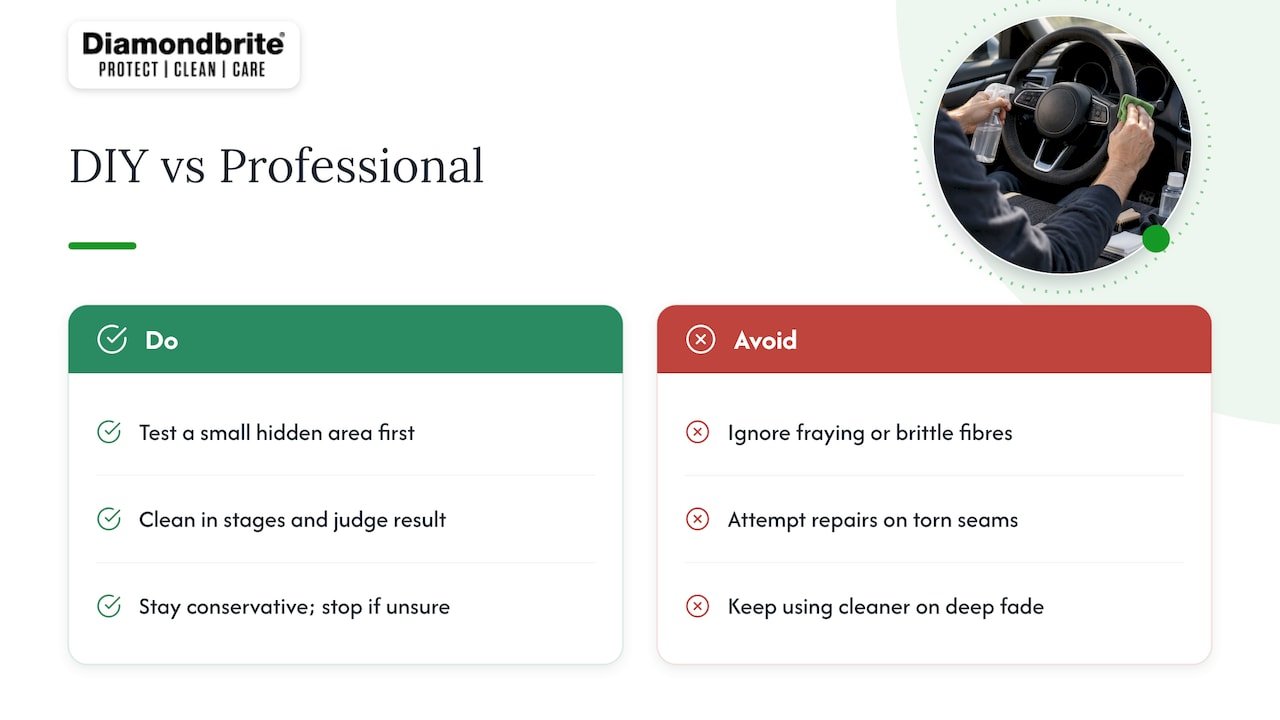
In practice, most shiny, tired looking wheels are just oily, and the routine above brings them back without drama. I would treat any sign of fraying, brittle fibres or deep permanent fade differently: those point to structural wear that brushing and cleaning cannot reverse.
My advice is to stay conservative. Test small, clean in stages, and judge the result before going further. Once you are looking at torn seams or fabric that has genuinely given up, that is a job for a professional retrim rather than another bottle of cleaner.
— Will
Diamondbrite: interior care that supports this routine
Once your Alcantara wheel is back to its matte, grippy self, keeping it that way is largely about consistency rather than extra effort. Diamondbrite’s interior care and ceramic shampoo ranges sit alongside the rest of our automotive line and are built to fit into exactly the routine described above, applied sparingly and always tested on a hidden section first.
A few ways they slot into your existing habits:
- Use a small amount on a microfibre cloth rather than spraying it onto the wheel, in line with the cleaner-on-cloth method.
- Reserve deeper products for the monthly clean rather than the weekly dry brush, so the fabric is not handled more than it needs to be.
- Pair interior cleaning with our ceramic shampoo on wash day for a consistent finish across the cabin and the paintwork.
Have a look through the full product range to find the interior products that suit your car, and start your next clean with the wheel rather than leaving it until it looks tired.
Sources
For the full official position, Alcantara’s cleaning and maintenance guide and its washing instructions cover the material’s own do’s and don’ts in detail. For a practical, hands-on walkthrough of the brushing and restoration steps, Hagerty’s guide to reviving Alcantara is a useful companion piece.
FAQ
What is the best cleaner for Alcantara?
A pH neutral, Alcantara specific cleaner is the safest choice, applied to a cloth rather than sprayed on the wheel. Mild interior textile shampoos also work well, and heavily diluted washing up liquid is a reasonable emergency backup when nothing else is to hand.
How do you bring Alcantara back to life?
Remove surface oils with a pH neutral cleaner worked in small sections, then let the wheel air dry completely. The real transformation comes from brushing the dry fibres with a soft bristled brush, which lifts the flattened pile back into its original texture.
Is it okay to steam clean Alcantara?
No, Alcantara’s own washing instructions advise against direct steam contact on the material. A slightly moistened cloth is the recommended approach for anything that cannot be removed and machine washed.
Can Alcantara be washed?
Removable Alcantara covers can be machine washed at 30°C without a spin cycle, while non-removable sections such as a steering wheel should only be cleaned by hand with a well wrung cloth. Air drying overnight followed by gentle brushing finishes the job properly in either case.