

For most owners, a dedicated filtered car dryer is the safest way to dry a car without touching the paint, with a cordless blower a solid second choice for hobbyists on a budget. Raw compressed air or a garden leaf blower can move water fast, but only if you accept the risk of grit and oil hitting your clearcoat. Contact-free drying avoids the tiny scratches that towels and chamois leave behind, which is why it protects a car’s finish over time. The comparison below will help you match a model to your budget and garage setup.
TL;DR:
- A dedicated filtered car dryer is the safest method for touchless drying, with cordless blowers as a budget-friendly alternative for hobbyists.
- Higher airflow and wattage improve water removal speed, but features like hose length, filtration, and temperature control are more important for effective drying.
- Unfiltered compressed air or garden leaf blowers pose a risk of grit and oil contaminating the paint, making dedicated dryers with filtration essential.
- Combining air drying for crevices with towel blotting for flat panels minimizes paint risk and speeds up the overall drying process.
- Using a surface-friendly shampoo and applying a ceramic glaze after drying can reduce the need for frequent drying and enhance paint protection.
Table of Contents
- Comparing car dryers, cordless blowers and budget alternatives
- What to check before you buy an air dryer
- How air actually lifts water off your paintwork
- Drying coated and delicate finishes the careful way
- When a pro reaches for the air dryer and when they don’t
- Drying without the drama: what pairs well with any air dryer
- Where these figures and recommendations come from
- Sources
- FAQ
Comparing car dryers, cordless blowers and budget alternatives
A wide range of products dominate the touchless drying conversation among UK owners and detailers, spanning pocket-sized cordless blowers to heated canister units built for full valet bays. The table below sets them side by side on the criteria that actually affect a buying decision.
The Bigboi range covers the widest span of use cases in one family: the BlowR Buddi suits crevices and bike wheels, the BlowR Mini favours anyone who wants to tuck a dryer in a cupboard, the BlowR PRO MKII brings workshop-grade stamina, and the BlowR CHARGD trades a mains lead for cordless freedom on mobile jobs.
Rokit’s three models scale up together. The Resolution 1 is a design-led entry point, the Resolution 2 adds power and accessories for owners who have outgrown it, and the Rokit Dry R adds a longer hose and stronger motor for anyone drying larger vehicles or reaching awkward panels. The Forced Air Vehicle Dryer sits at the top of Rokit’s line-up as a workshop-grade forced-air unit.
Metro Vac’s Master Blaster is a long-standing choice among professional detailers for its canister-strength airflow, while the Sidekick shrinks that same build into something a small workshop or serious hobbyist can store and move around. The Blo Car Dryer AIR-GT pairs heated dual motors with a long hose, and a detailer review of the AIR-GT notes it as a favourite for full-vehicle drying, while flagging that buyers should check certifications and weigh the price against how often they will actually use it.
The Flex Cordless Blower 18.0V and the AIR RS Car Dryer sit at opposite ends of the same idea: the Flex borrows a general-purpose power tool platform for cordless convenience on a budget, while the AIR RS is built specifically for cars, with filtration and a heated option aimed at paint safety. A domestic leaf blower can move water quickly and cheaply, but it carries no filtration and can throw dust or debris at the paint, so it only belongs in large, low-dust outdoor settings as a last resort.
- Buy from the manufacturer’s own site or an established detailing retailer to secure a proper warranty.
- Check the returns window before buying a cordless model, since battery packs are often excluded from standard returns.
- Keep the receipt and registration card for any unit with a heating element, since warranty claims often ask for both.
What to check before you buy an air dryer
Specification sheets can hide as much as they reveal, so work through a short list before handing over your card details.
- Airflow and power: higher wattage or CFM clears water faster across large panels, but only matters if the nozzle design actually directs that air where you need it.
- Heating: warm air speeds evaporation and helps prevent spotting on cooler days, but check whether the heat is adjustable or fixed.
- Filtration: look for a stated mesh filter or filtered intake, since this is what keeps grit and dust off freshly washed paint.
- Hose length and reach: a longer hose lets you dry a full saloon or estate without repositioning the unit halfway through.
- Duty cycle and noise: a motor rated for continuous use will outlast one designed for short bursts, and quieter units suit residential driveways better.
- Weight and portability: cordless units win on convenience, corded canister models win on sustained power.
- Warranty and spare parts: filters and hoses wear out, so check whether replacements are sold separately.
Ask any seller directly: is the intake filtered, what is the duty cycle, and does the unit carry a CE or UKCA mark? A vague answer to any of these is a red flag, alongside missing filtration, unclear heating claims, no stated hose length, or connectors that feel like an afterthought.
Pro Tip: Price tends to track hose length, motor count and filtration quality more closely than raw wattage, so compare those three before you compare price tags.
How air actually lifts water off your paintwork
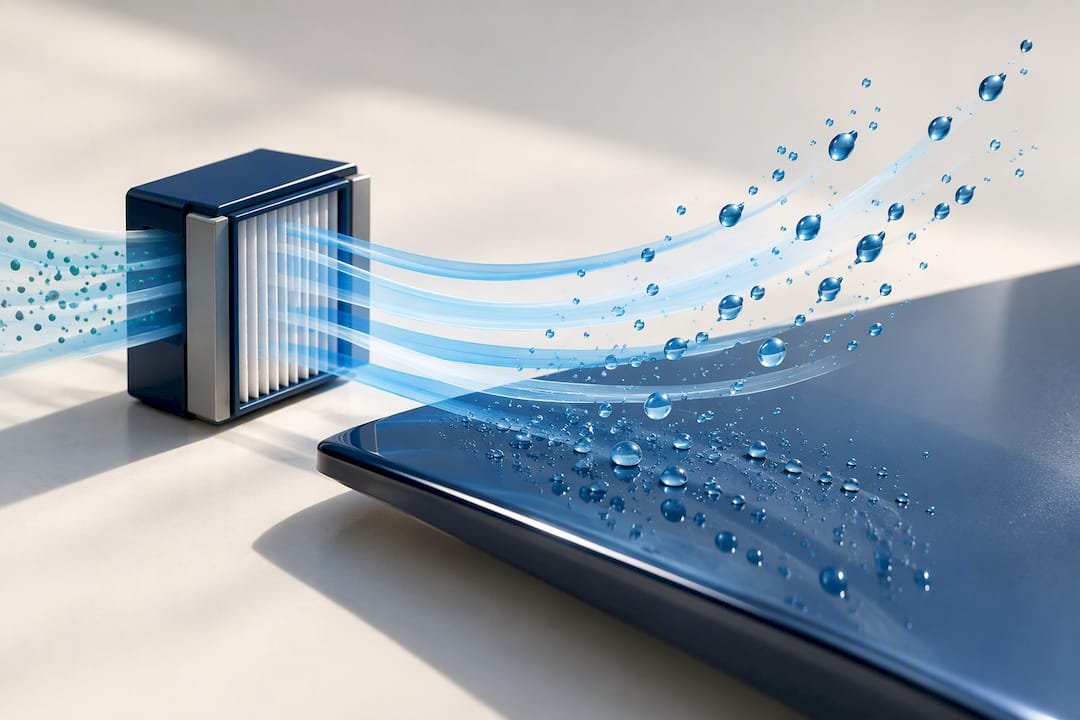
Air drying works by pushing a fast-moving stream across the surface that physically displaces water droplets before they have time to sit and dry into spots. Warm air speeds up evaporation of whatever thin film remains, which is why heated units tend to leave fewer marks on cooler, damper days.
The catch is what is in that airflow. Unfiltered compressed air or a garden leaf blower can carry dust, oil residue or moisture straight onto wet paint, which is exactly why dedicated dryers and quality workshop guns are built with mesh filters or oil-water separation, as seen on Sealey’s air-operated drying gun, which pairs a mesh filter with adjustable airflow and specifies its air consumption so buyers can match it to a compressor safely.
- Use air to clear crevices, mirrors, badges and wheel arches where towels struggle to reach.
- Blot large flat panels with a plush microfiber towel rather than dragging it, to finish the last of the moisture without contact marring.
- Rinse with clean water and avoid letting wash effluent run into a road drain, since Gov flags vehicle washing as a potential source of contaminated runoff.
A dedicated filtered dryer paired with a soft microfibre blot is currently the closest thing to a fully paint-safe drying routine, according to detailer reviews of heated canister units.
Drying coated and delicate finishes the careful way
Ceramic-coated and matte finishes reward a gentler hand, and the routine we recommend starts before the dryer ever switches on. Wash with a lubrication-rich shampoo so dirt lifts away rather than dragging across the surface, then reach for air on badges, grilles and wheel arches before any towel comes near the paint.
- Pre-wash with a shampoo that carries good lubricity to reduce friction during the wash itself.
- Use air drying on tight crevices and trim, where towels tend to leave lint or press grit into the surface.
- Finish with a compatible ceramic glaze once the car is fully dry, to seal the surface and add a slick, water-shedding layer.
These steps sit alongside a dryer rather than replacing one: air handles the airflow, and the products handle the finish.
When a pro reaches for the air dryer and when they don’t
I use an air dryer for anything with a coating I want to protect long term, and a soft towel blot only on large, flat panels once most of the water is already gone. For hobbyists, a compact cordless blower covers most Saturday washes. For anyone running a full valet business, a heated canister unit with proper filtration earns its keep within weeks.
— Will
Drying without the drama: what pairs well with any air dryer
However good your dryer is, water still needs somewhere to go before it lands on your paint, which is where the wash itself starts to matter. Diamondbrite Ceramic Shampoo is formulated with slick, lubrication-rich chemistry that lets dirt glide off rather than drag, so less water clings to the surface before you ever reach for a dryer or a towel.
Follow the wash with Diamondbrite Ceramic Glaze once the panels are dry, and you get a slicker, more water-shedding surface that makes the next wash easier too. Together they shrink how much contact drying your car actually needs, which is the whole point of going touchless in the first place.
- Wash with Ceramic Shampoo to cut surface friction before drying begins.
- Air-dry crevices and trim, then blot any remaining flat-panel moisture with a soft microfibre towel.
- Apply Ceramic Glaze once dry to lock in the finish and ease your next wash.
Browse the full range of ceramic care products at the Diamondbrite shop and build a routine that keeps your paint looking sharp between washes.
Where these figures and recommendations come from
- Gov: official advice on containing and disposing of contaminated wash water.
- NetRegs guidance for pollution prevention: practical rules for vehicle washing runoff.
- Sealey air-operated drying gun specification: real-world filtration and air consumption figures.
- CarCareTruth review of the Blo AIR-GT: detailer perspective on heated canister dryers.
- On magazine’s waterless car washing guide: background on reducing drying needs altogether.
Sources
- Gov
- Guidance for pollution prevention (PPG13) – NetRegs
- Air Operated Drying Gun with Adjustable Airflow SDA05
- BLO AIR-GT Car Dryer review · CarCareTruth
- The ultimate guide to waterless car washing – On magazine
FAQ
Is it good to air dry your car?
Yes, air drying avoids the direct contact that towels and chamois make with paint, which reduces the risk of fine scratches over time. A filtered, dedicated dryer is the safest version of this approach, since it avoids the grit risk that comes with unfiltered air sources.
What is the fastest way to dry a car?
A heated canister dryer with a long hose, such as the Blo Car Dryer AIR-GT reviewed by CarCareTruth, clears water fastest across large panels because warm air speeds evaporation on top of displacing droplets. Combining air on crevices with a quick microfibre blot on flat panels is the fastest safe routine for most owners.
Can you dry a car with compressed air?
You can, but only if the air supply is properly filtered, since unfiltered workshop compressed air can carry oil or moisture that causes paint defects. Products like Sealey’s drying gun are built with mesh filtration specifically to make this safe.
Is it better to air dry or towel dry a car?
Air drying is generally gentler on the paint because it avoids the direct friction of a towel, while towel drying still has a place for blotting the last moisture off large flat panels. Most detailers combine the two rather than choosing one exclusively.