

Stop mould in its tracks by dampening the affected area and lifting the growth rather than brushing it dry, then treating the fabric with a fungicidal cleaner made for convertible roofs. Rinse thoroughly and let the hood dry completely before you fold it away. Once it’s clean and bone dry, reproof it and tighten up your moisture-management habits (drains, ventilation, a breathable cover) so the problem doesn’t come straight back.
TL;DR:
- Applying a fungicidal cleaner dampened with a soft brush is essential to avoid spreading spores during mould removal on a fabric soft top.
- Only specialist vehicle fabric treatments or diluted white vinegar are safe options, while bleach, solvents, and pressure washing risk damage and should be avoided.
- Mould commonly develops in damp seams, creases, and stitching areas, requiring careful, prolonged treatment rather than aggressive scrubbing to prevent damage.
- Reproofing restores water repellency after cleaning but must be done on a fully dry, clean roof to be effective and lasts around six to twelve months.
- Preventing future mould involves fully drying the roof before folding, keeping drains clear, and using a breathable cover for outdoor storage, with biannual inspections recommended.
Table of Contents
- How do you clean mould off a fabric soft top?
- Which mould treatments are safe for soft top fabric?
- Sorting out the seams, edges and seals
- Reproofing and protectants: locking in the clean result
- Storage and moisture management that actually stops mould coming back
- Where Diamondbrite products fit into this routine
- When DIY cleaning stops being enough
- Keep your soft top looking sharp between deep cleans
- Sources
- FAQ
How do you clean mould off a fabric soft top?
Getting rid of mould on a convertible roof is a sequence, not a scrub. Rush the order and you either spread spores across the fabric or grind them deeper into the weave.
- Rinse loose debris first. Use a garden hose on a gentle setting to wash away dust, pollen and grit before any product touches the roof. This stops you dragging grit across the fabric like sandpaper once you start scrubbing.
- Clear the folds and drains. Leaves and seed pods collect in the creases where the roof folds down, and they hold moisture long after the rest of the hood has dried. Left in place, that trapped organic debris becomes a hidden reservoir that keeps feeding mould growth.
- Apply a dedicated soft-top cleaner. Work it in with a soft brush using small circular motions, never a stiff-bristled scrubbing action. Respect the dwell time printed on the bottle; most fungicidal treatments need several minutes of contact to actually kill spores rather than just relocate them.
- Rinse thoroughly. Any cleaner residue left behind can attract dirt and moisture, which defeats the point of cleaning in the first place.
- Treat seam mould separately. A small brush, or even an old toothbrush, gets into stitched seams far more safely than a general-purpose scrubbing pad. Give these areas longer dwell time instead of extra pressure.
- Dry fully before doing anything else. Park in shade or somewhere warm and ventilated and let the roof dry naturally rather than folding it damp.
Pro Tip: Never dry-brush mould off a soft top. Disturbing dry spores sends them airborne, where you’ll breathe them in and they’ll resettle somewhere else on the fabric. Dampen first, always.
Which mould treatments are safe for soft top fabric?
The single biggest mistake owners make is treating a soft top like a patio slab. Fabric hoods are woven, coated and often laminated to a lining, and the wrong chemical or a dry-brush approach can do lasting damage in seconds.
Local authority housing guidance on domestic damp is worth borrowing here: it specifically warns against dry-brushing or vacuuming mould, because disturbing it releases spores into the air. The same advice applies directly to soft tops: dampen the area first, wear gloves and a dust mask, and use a fungicidal treatment as the label directs rather than whatever’s under the kitchen sink.
Safe to use:
- Specialist fungicidal washes labelled specifically for vehicle fabric or convertible roofs
- Diluted white vinegar as a short-term, cautious measure on light surface mould, always spot-tested first
Avoid entirely:
- Bleach, which strips waterproofing and bleaches the dye out of the weave
- Solvents and alcohol-based cleaners
- Strong alkaline degreasers
- Pressure washing or jet washing, which manufacturer handbooks warn can force water past the seams and into the lining
Household cleaners and solvents are a false economy on soft tops. They strip the factory waterproofing and often leave behind a residue that attracts more dirt than it removes. Always test any new product on a small, hidden patch first and give it ten minutes before judging the result.
Sorting out the seams, edges and seals
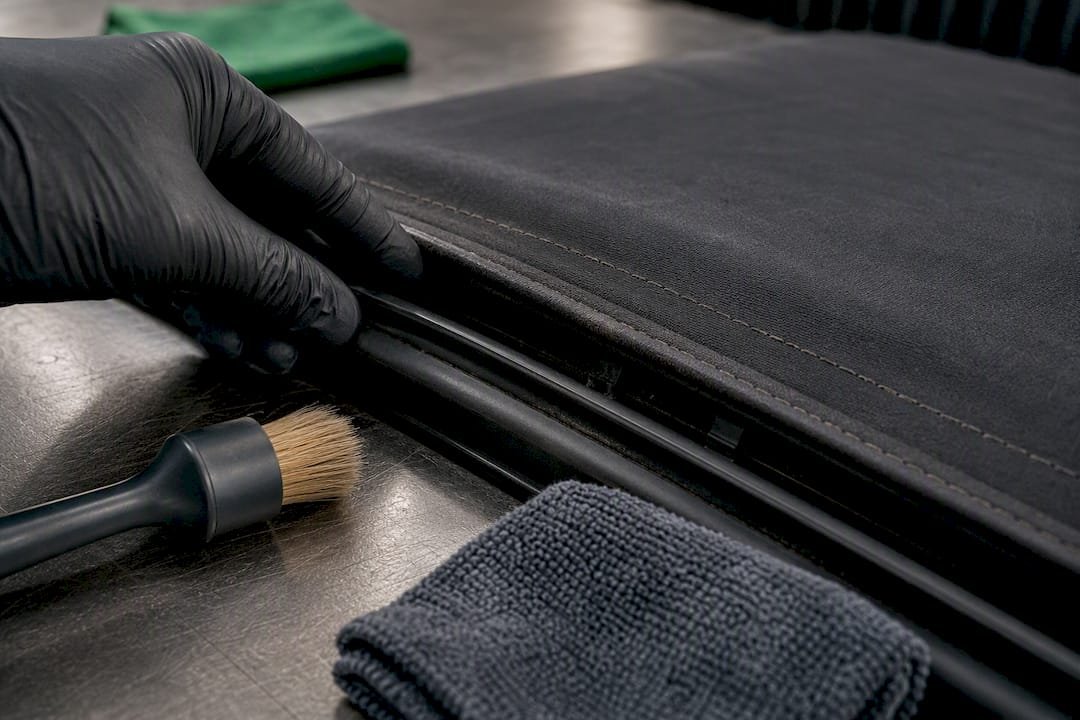
Mould rarely starts on the flat panel of the roof. It starts in the places water lingers: the rear-window perimeter, the folding creases, and wherever stitching meets fabric. These spots stay damp long after the rest of the hood looks dry, so run a hand over them after every wash and check for hidden dampness, not just visible spotting.
Treat these areas with patience rather than force:
- Use a small, soft brush (a clean toothbrush works well) rather than anything stiff enough to fray stitching
- Keep water pressure low when rinsing seams; a hose on a gentle setting is plenty
- Give fungicidal treatment longer dwell time here rather than scrubbing harder
Persistent mould in seams responds better to diluted cleaner and repeated gentle passes than to aggressive scrubbing, which risks damaging the stitching and the lining underneath it. If mould keeps returning to the same seam no matter how carefully you clean it, that’s usually a sign the seal has failed and water is getting in from underneath. At that point you’re looking at a repair, not another wash.
Reproofing and protectants: locking in the clean result
Cleaning gets rid of what’s already there. Reproofing is what stops the next lot of spores taking hold, and the two jobs are not interchangeable. Reproofing restores the durable water repellency that fades with age and sun exposure, while a surface protectant adds a further layer of resistance to soiling on top of that. Neither works properly on a dirty roof, so cleaning always comes first.
Getting the application right:
- Confirm the fabric is completely clean and completely dry before you spray a drop of anything
- Apply an even coat, following the product’s instructions on distance and overlap rather than dousing one patch
- Let it cure fully before you fold the roof down; folding too soon can crack the fresh treatment and waste the product
Pro Tip: Reproofing has a shelf life. A professional deep clean and reproofing service typically restores water repellency for around six to twelve months under normal UK weather, so treat it as a seasonal job rather than a one-off fix.
Reproofing reduces risk, it doesn’t remove it. A perfectly reproofed roof left folded down while wet will still grow mould, because the underlying driver is moisture, not a lack of chemical treatment.
Storage and moisture management that actually stops mould coming back
Most repeat mould problems trace back to one habit: folding the roof away before it’s properly dry. Fix that single behaviour and you’ll solve more mould problems than any product on the shelf.
- Dry the hood completely before folding it down. If you’ve had to raise it wet, lower it again and let it dry fully at the next opportunity rather than leaving it folded.
- Use a breathable, water-resistant cover for outdoor storage. An impermeable tarpaulin traps condensation underneath it, which does more harm than leaving the roof exposed.
- Keep drains and seals clear. Blocked drain channels hold standing water against the fabric, and drying, regular cleaning and ventilation are the core defences against biofilm and mould growth generally, whether that’s on a roof or a window seal.
- Ventilate the cabin and check the carpets. Crack a window when the car’s parked in a garage, and lift the carpets occasionally to check for damp. Persistent interior dampness usually means a seal is leaking, not that the air alone is the problem.
- Book a proper inspection twice a year if the car lives outdoors. Professional guidance suggests a spring and autumn deep clean for convertibles kept outside year-round, dropping to an annual check for cars that spend most of their life in a garage.
Where Diamondbrite products fit into this routine
Once the roof is clean, dry and reproofed, the job shifts from treatment to maintenance, and that’s where a sensible product routine earns its keep. A ceramic shampoo works well as the regular wash step between deep cleans, lifting road grime without stripping the reproofing treatment you’ve just applied. A dedicated protectant or glaze, used sparingly on top of a cured reproofing layer, adds an extra layer of resistance to everyday soiling so less dirt sticks in the first place.
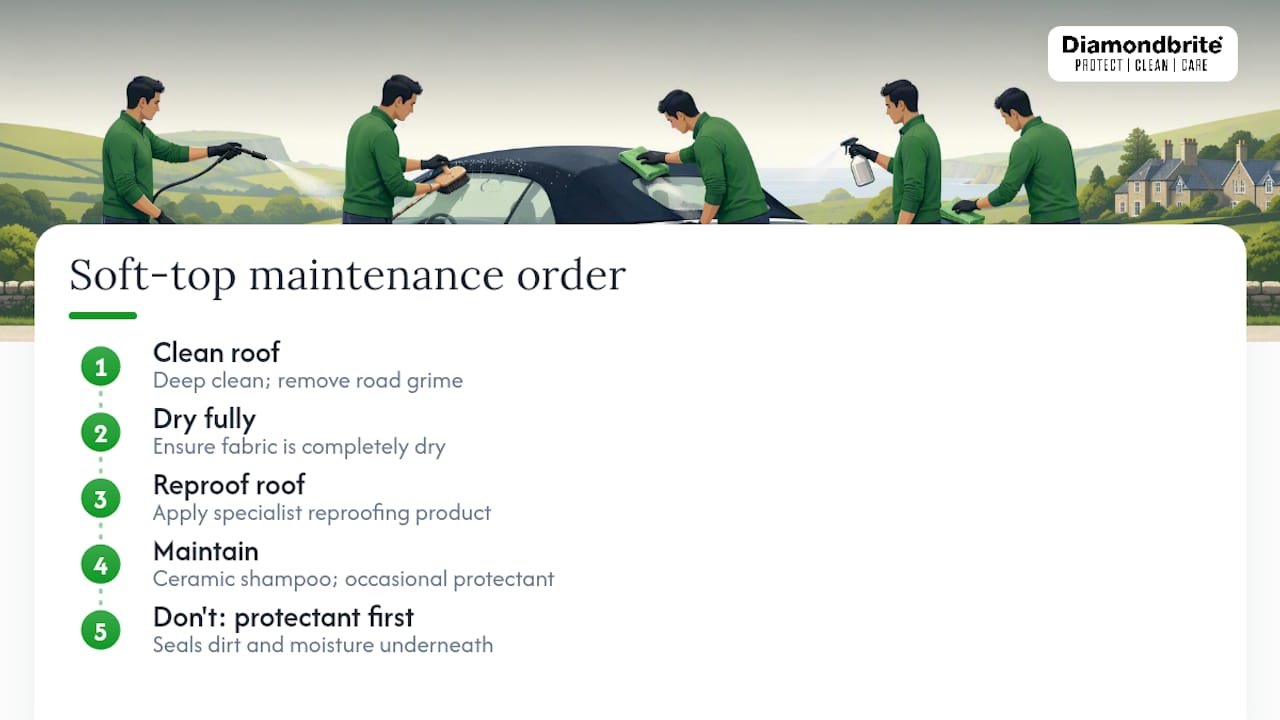
The practical order runs: clean the roof, dry it fully, reproof it with a specialist product, then keep it looking right with a ceramic shampoo and the occasional protectant top-up. Skipping straight to a protectant without cleaning and reproofing first just seals dirt and moisture underneath the new layer, which is exactly the outcome you’re trying to avoid.
Full application instructions for each product line sit on the Diamondbrite shop, where you’ll find dwell times and coverage guidance specific to each formula.
When DIY cleaning stops being enough
Some mould problems are past a brush and a bottle. Long-standing seam mould, delaminating lining, or interior dampness that keeps returning point to a failed seal rather than dirt. At that stage, repeated home cleaning is throwing good time after bad money.
A professional deep clean pairs a specialist fabric cleaner with proper reproofing in one visit, and it’s often cheaper over a year than several half-successful DIY attempts plus the products they burn through.
— Will
Keep your soft top looking sharp between deep cleans
There are products available that provide soft top owners a straightforward way to maintain what a proper clean and reproof have already restored, without booking another professional visit every few weeks. Where a full valet or specialist reproofing service handles the heavy lifting once or twice a year, a ceramic shampoo and protectant routine from Diamondbrite fills the gap between those visits, keeping road grime and light soiling from building back up on a freshly treated roof.
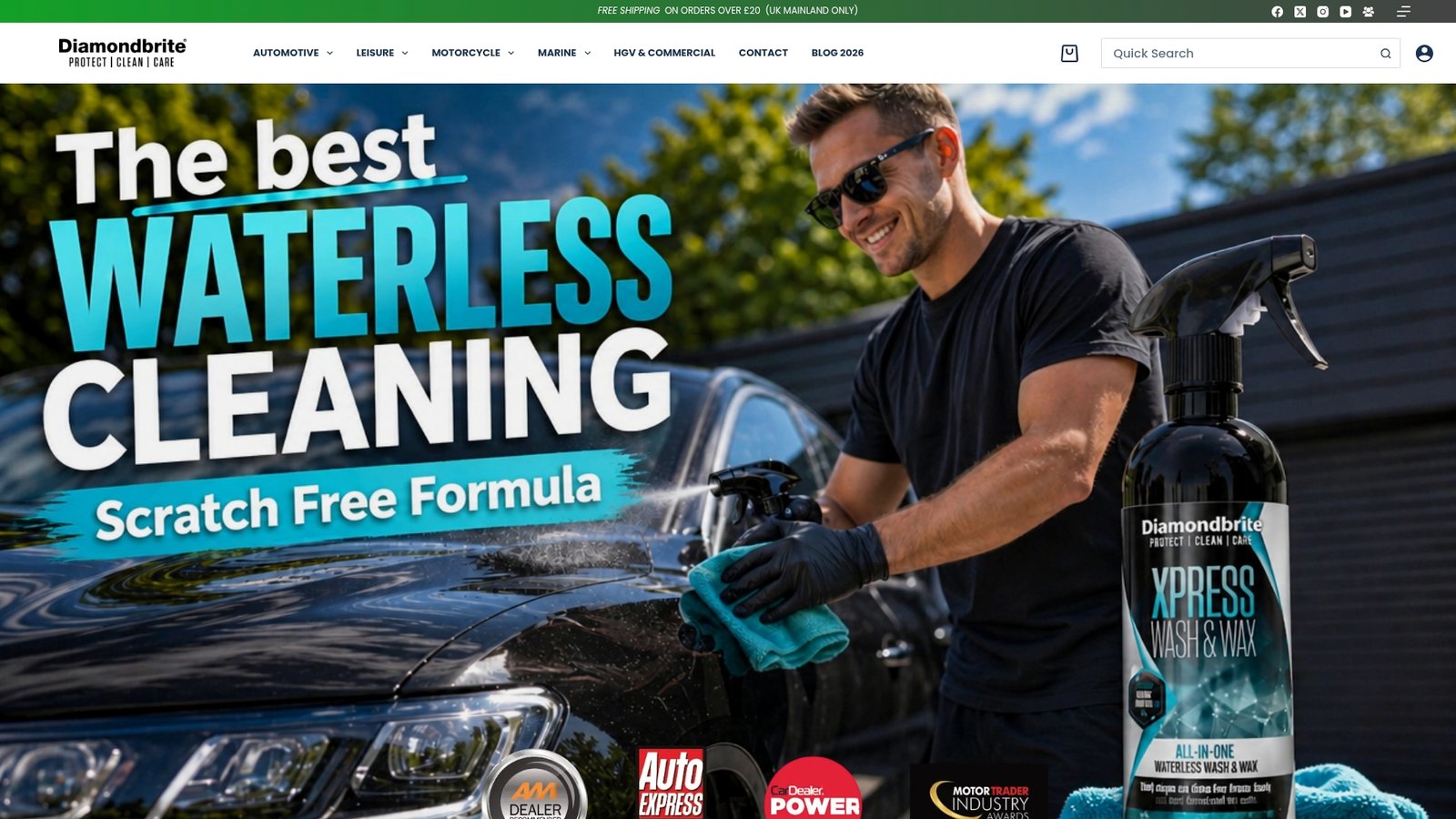
The Automotive Core Range covers the wash step that sits safely on top of a cured reproofing treatment, while the ceramic-infused protectants in the wider Diamondbrite range add a further layer of resistance to soiling on cleaned fabric and paintwork alike. Check product pages for specific dwell times and application steps for your roof type, then order what you need directly from the shop to keep the routine going through the next damp autumn.
Sources
- How do you treat mould affected areas? – South Oxfordshire District Council
- Biofilms, mould, slimes and staining – Drinking Water Inspectorate
- Classic Car Soft Top and Webasto Care Guide: Hoods, Canvas, Vinyl and Everything In Between | Classic Car Hub
- How to clean a convertible soft top — and keep it that way | Washdoctors
FAQ
How do I get rid of mould on a convertible soft top?
Dampen the affected area rather than brushing it dry, then apply a fungicidal cleaner labelled for vehicle fabric and work it in with a soft brush. Rinse thoroughly and dry the roof completely before folding, since dry-brushing risks releasing mould spores into the air.
What’s the best protectant for a soft top?
A dedicated reproofing treatment applied after cleaning restores water repellency most effectively, followed by a protectant or glaze for added soiling resistance. Diamondbrite’s ceramic shampoo and protectant range fits well as a maintenance step once the roof has been cleaned and reproofed properly.
Can you use a jet wash on a soft top?
No. Pressure washing can force water past the seams and into the lining, and manufacturer handbooks specifically warn against it for convertible roofs. Stick to a garden hose on a gentle setting and a soft brush for cleaning.
How do I protect a convertible soft top from mould long term?
Always dry the hood fully before folding it away, keep drains and seals clear of debris, and use a breathable, water-resistant cover for outdoor storage. Pair that routine with reproofing every six to twelve months, since reproofing restores water repellency for roughly that period under normal UK exposure.