

Rinse it after every outing, clean it properly every few weeks, and feed it a marine-grade protectant every 4 to 6 weeks. That single habit does more for your seats than any occasional deep clean. It works because plasticisers keep vinyl flexible, UV rays burn them off, and food residue left on the surface is exactly what mould spores need to grow. Marine care specialists back this up, and it is the same logic behind certain ceramic-based surface protection approaches.
TL;DR:
- Rinsing with fresh water after each outing is the most effective way to prevent salt and dirt damage on boat vinyl.
- Use a marine-grade protectant every four to six weeks to replace lost plasticisers and maintain vinyl flexibility.
- Ventilation and periodic application of mildew-preventing sprays are essential to prevent mold growth inside cushions and seams.
- Avoid using bleach, ammonia cleaners, or abrasive products like magic erasers, as they cause long-term damage and accelerate cracking.
- Restoring faded vinyl is possible if it remains flexible, but stiff or cracked panels require re-covering or replacement.
Table of Contents
- How do you protect boat vinyl day to day?
- Which protectant actually works, and how often should you use it?
- How do you stop mould and mildew taking hold?
- What should you never use on boat vinyl?
- Can you restore aged or stained vinyl, or is it time to replace it?
- Why habits beat miracle products
- Build your rinse, clean, protect kit with Diamondbrite
- Sources
- FAQ
How do you protect boat vinyl day to day?
Salt crystals are abrasive. Left on a seat cushion in the sun, they act like fine sandpaper every time someone sits down or brushes past. That is why a fresh-water rinse after every outing is the single most effective habit you can build, according to upholstery specialists who see the damage salt causes over a season.
The routine itself takes minutes:
- Rinse with a hose or bucket to lift salt, sand and sunscreen residue before it dries into the grain.
- Wash weekly, or after heavy use, with a mild boat soap or dedicated marine vinyl cleaner and a soft microfibre mitt.
- Avoid scrubbing hard. Let the cleaner do the work and wipe with light, circular pressure.
- Rinse again, wring out excess water from seams, and let cushions air-dry fully before storing or covering them.
- Prop cushions on their edges after cleaning so airflow reaches the seams, where moisture likes to hide.
Keep a small kit aboard: a couple of microfibre cloths, a bottle of marine vinyl cleaner, and a soft-bristled brush for stitching and piping.
Spot-clean small marks the moment you see them. Save the deeper clean, with cleaner worked into seams and buttons, for weekly maintenance or after a particularly grubby day out.
Pro Tip: Keep a spray bottle of diluted marine cleaner in your gear bag. Wiping a spill the second it happens is far easier than scrubbing a set stain a week later.
Which protectant actually works, and how often should you use it?
Marine-grade vinyl protectants are not the same product as an automotive silicone spray, and the difference matters more than most owners realise. Marine formulas are built to replace lost plasticisers and sit as a sacrificial layer that takes the UV hit instead of the vinyl underneath. Automotive silicone and solvent-based sprays tend to sit on the surface without replenishing what UV rays have already stripped out, and some leave a slick residue that traps dirt rather than repelling it.
Here is the practical schedule:
- Clean the surface first. Any protectant applied over old residue or a previous coat will bond poorly and streak.
- Apply a thin, even coat of marine vinyl protectant with a clean microfibre applicator. A little goes further than you would expect.
- Let it sit for the manufacturer’s recommended dwell time, then buff off any excess with a dry cloth.
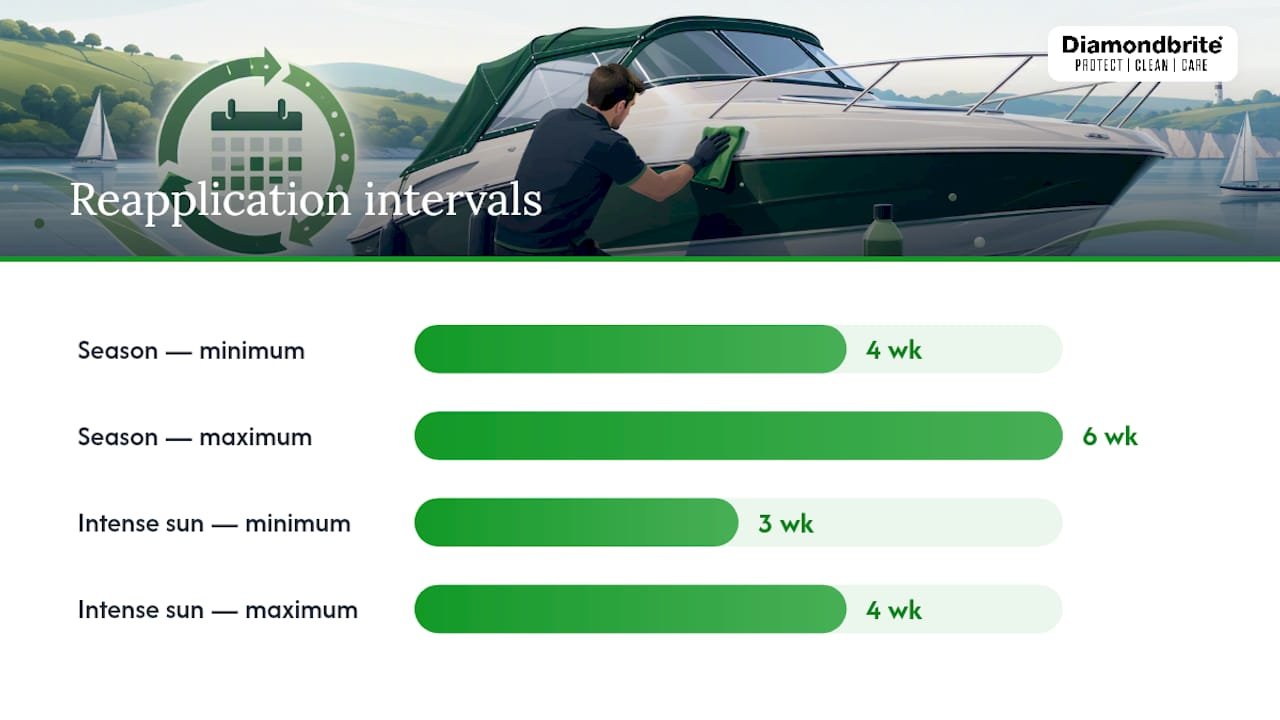
- Reapply every 4 to 6 weeks during the boating season, shortening that to roughly every 3 to 4 weeks if you are moored somewhere with intense, near-constant sun.
That 4 to 6 week window is not a rough guess. It reflects how quickly UV exposure degrades the sacrificial barrier under real seasonal use, and it is the interval marine-upholstery specialists consistently point to for keeping vinyl flexible rather than brittle.
How do you stop mould and mildew taking hold?
Prevention beats treatment every time with mildew, because once spores are established in stitching or foam, they are genuinely hard to shift for good. Ventilation is the cheapest and most effective defence: propping cushions on their edges and choosing a breathable cover over a fully sealed tarp lets moisture escape instead of sitting trapped against the vinyl.
- Use a breathable, vented cover rather than an airtight one, especially in humid marinas.
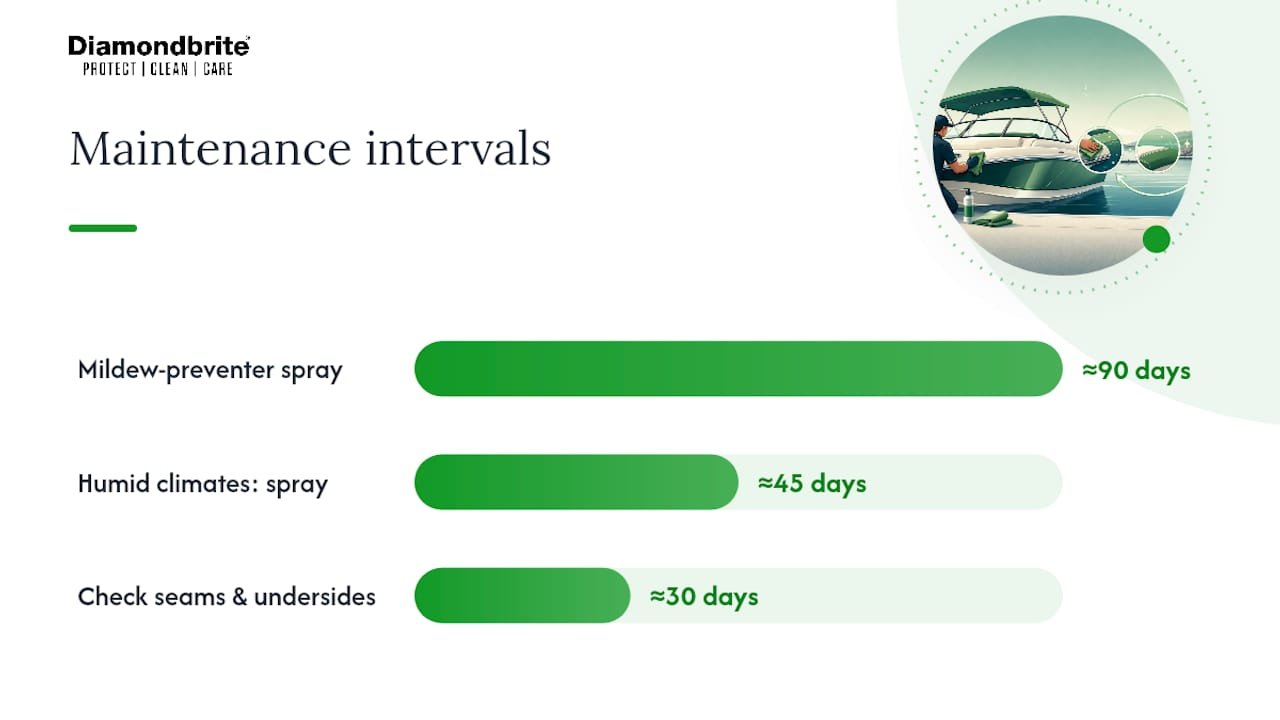
- Apply a mildew-preventer spray roughly every 90 days, dropping to every 45 days in genuinely humid climates.
- Store cushions upright or propped, never stacked flat against a damp deck.
- Check seams and undersides monthly during warm, wet months, where spores often start before you notice a smell.
If mildew appears on the surface, start mild. A dedicated marine vinyl cleaner lifts most surface growth. Only escalate to a vinyl-safe mildew remover if the mild approach fails, then rinse thoroughly and reapply protectant once dry, since cleaning strips whatever coating was there before.
When the smell returns even after the surface looks clean, the spores are likely living inside the cushion foam. Treating that foam with a baking soda application, followed by a vinegar soak and several thorough rinses, then a full air-dry away from direct sun, often breaks the cycle. If the smell persists after that, or the foam has visibly broken down, replacement is usually cheaper than fighting it further. For recurring problems in consistently humid conditions, some owners bring in a professional who can apply preventer with an atomiser that reaches deep into seams and thread, a level of coverage that is hard to match by hand.
Pro Tip: Never seal damp cushions inside a cover for storage. Trapped moisture under an airtight cover is the fastest route to a mould problem you didn’t have last week.
What should you never use on boat vinyl?
Some of the most common “quick fix” habits are the ones doing the most long-term damage.
- Bleach: lifts mildew but also breaks down stitching and the vinyl’s topcoat, so treat it as a last resort, not a routine cleaner.
- Ammonia-based cleaners: strip plasticisers directly, speeding up cracking. Use a pH-neutral marine cleaner instead.
- Magic Erasers or melamine pads: work by abrasion, essentially fine-grit sandpaper, which thins the wear layer with every use.
- Power washers: force water into seams and foam, seeding the exact moisture problem you are trying to avoid.
- Automotive silicone or solvent sprays: strip the wear layer over time rather than replenishing it, leaving vinyl more vulnerable, not less.
Keep using any of these regularly and the result is predictable: stiff, cracked panels within a season or two, and stitching that fails long before the vinyl itself does.
Can you restore aged or stained vinyl, or is it time to replace it?
The first question is whether you are looking at a stain or actual material failure. Discolouration and surface grime respond well to cleaning and restoration. Cracking, brittleness or panels that feel stiff underhand do not, because that means the plasticisers are already gone.
- Diagnose first. Run a hand across the surface. Flexible with staining means restoration is worth trying; stiff and cracked means restoration will not hold.
- Clean thoroughly with a dedicated vinyl restorer, working gently rather than aggressively.
- If you had to resort to a bleach-based product for stubborn mildew, neutralise it with a thorough rinse before doing anything else.
- Once dry, reapply a marine protectant to rebuild the barrier the cleaning removed.
- Check seams and the underside for trapped moisture. Damp foam under a seemingly clean surface will undo all of this within weeks.
Restorers can bring tired, faded vinyl back to a respectable finish, but they cannot restore flexibility once plasticisers are truly gone. At that point, re-covering the panel or replacing degraded foam is the only real fix. A local marine upholstery shop can usually assess in person whether you are looking at a clean-and-protect job or a re-cover.
Pro Tip: Press a fingernail gently into a suspect panel. If it leaves a crease that doesn’t spring back, you’re looking at replacement, not restoration.
Why habits beat miracle products
Most damage on boat seats builds up quietly over a season of small skipped steps, not one bad decision. A rinse here, a missed protectant application there, and by August the vinyl is already working against you. Consistency matters more than any single product, marine or otherwise. It’s the same principle Diamondbrite applies to ceramic-based coatings: a durable barrier only holds up when it’s renewed on a routine, not left to do all the work on its own.
— Will
Build your rinse, clean, protect kit with Diamondbrite
Diamondbrite gives you a straightforward way to put this routine into practice without hunting across three different brands for the right products. The Marine range covers cleaning and protection products suited to vinyl, gelcoat and other onboard surfaces, so you can build the same rinse, clean, protect cycle covered above using one trusted product family rather than a cupboard of mismatched sprays.
If you already use Diamondbrite’s ceramic shampoo or interior protection products on your car, the same philosophy carries over to your boat: a clean surface, then a barrier that gets renewed rather than reapplied once and forgotten. Start small. Try a marine cleaner and protectant on a single cushion first, check how it feels once dry, then roll it out across the rest of your seating once you’re happy with the result. Head to the Diamondbrite shop to see the current marine range and pick your starting point.
Sources
- Boating Magazine — Protect your boat’s vinyl
- Coastal Craft Upholstery — Boat & marine upholstery care
- Mercury Marine — How to clean and care for boat vinyl
- Yachting Magazine — How to clean boat cushions and seats
FAQ
What is the best protectant for boat vinyl seats?
A marine-grade vinyl protectant designed to replace plasticisers and block UV, rather than a general automotive silicone spray, performs best over a season. Look for one built specifically for marine vinyl and reapply it every 4 to 6 weeks through the boating season.
What is a good protector for boat vinyl seats if I’m on a budget?
Any dedicated marine vinyl cleaner and protectant pairing, used consistently, will outperform an expensive product applied inconsistently. A single-brand marine range can cover both cleaning and protection steps if you want to keep the routine simple and consistent.
How do you maintain marine vinyl fabric?
Rinse with fresh water after every outing, wash weekly with a mild marine cleaner, and apply a protectant every 4 to 6 weeks. Ventilate cushions between uses and avoid bleach, ammonia and melamine pads, which all accelerate wear on the vinyl’s surface.
How can I restore marine vinyl that has faded or stained?
Staining and fading respond well to a dedicated vinyl restorer followed by a fresh protectant coat, but genuine cracking means the plasticisers are gone and restoration will not bring back flexibility. At that stage, re-covering the panel is the only lasting fix.