

Yes, you can polish over a ceramic coating, but only with the right product and technique. Light, non-abrasive maintenance polishing can safely restore gloss and beading, while abrasive correction polishing will strip the coating away. If you’re dealing with haze or dullness, reach for a coating-safe finishing polish. If you’re looking at scratches or etching, you need a different plan entirely.
TL;DR:
- Light, maintenance-safe polishing should only be used on coatings that are at least a few weeks old and show surface dullness rather than physical damage.
- Abrasive correction methods, including cutting compounds and heavy machine polishing, will strip the ceramic coating and require reapplication afterward.
- Decontamination products and booster sprays can restore gloss and beading chemically, often eliminating the need for abrasive polishing unless the damage is deep.
- Proper product pairing involves using coating-safe shampoos, soft foam pads, and polishing products, avoiding any abrasive compounds during maintenance.
- Deep scratches or etching signals the need for correction, which includes stripping the coating and redoing the surface prep before recoating.
Table of Contents
- Why polishing affects ceramic coating: the technical explanation
- How do you polish over ceramic coating safely?
- What happens when polishing is unavoidable: the correction workflow
- Restoring gloss without abrasives: what actually works first
- Choosing the right products for maintenance or recoat prep
- A detailer’s rule of thumb on when to polish
- Keep your coating topped up with the right products
- Sources
- FAQ
Why polishing affects ceramic coating: the technical explanation
A ceramic coating sits on your paintwork at roughly 1 to 3 microns thick, thinner than a human hair. That thinness is the whole story here: any abrasive pass strong enough to level a defect will cut straight through the coating before it touches the clear coat beneath it, according to guidance from Car Care Knowledge Base. A cutting compound, loaded with aggressive abrasives designed to remove material, behaves very differently to a finishing polish, which contains far finer abrasives (or none at all) meant to add slickness rather than strip layers.
That distinction is the difference between maintenance and correction:
- Maintenance means using ultra-fine, coating-safe products to restore gloss without removing the ceramic layer.
- Correction means using abrasive compounds to physically cut away paint defects, taking the coating with it.
Before reaching for any product, inspect the surface. Does water still bead tightly, or has it gone flat and sheeting? Is there a general haze you can feel with your fingertips, or can you catch a fingernail in individual scratches? Beading loss and light haze point to maintenance. Deep, catchable scratches point to correction.
How do you polish over ceramic coating safely?
Maintenance polishing works best on coatings that are at least a few weeks cured and showing surface-level dullness rather than physical damage. Before you start, run a test spot on a small, inconspicuous panel and check the result before committing to the whole car.
- Wash first. Use a coating-safe shampoo through the two-bucket method to lift loose grit without grinding it into the surface.
- Decontaminate. An iron remover and a clay alternative (a fine detailing mitt rather than traditional clay bar) clear bonded contamination that often masquerades as coating failure.
- Choose a finishing polish or ceramic-safe topper, never a cutting compound, and pair it with a soft foam finishing pad.
- Run the machine polisher on its lowest speed setting, with light pressure, working small sections at a time.
- Wipe down with an isopropyl alcohol (IPA) solution to strip oils and confirm the coating still beads and sheets correctly.
Repeat this process every few months, or whenever gloss starts to flatten, rather than on a fixed schedule. Skip anything labelled a compound, avoid heavy pressure at higher speeds, and never assume more passes will fix a problem a finishing polish can’t touch. As one practitioner guide notes, this kind of light, coating-safe polish can be safe when applied correctly, with the same caveat: test first, and accept that even a gentle pass carries some risk.
Pro Tip: Keep a SiO2 booster spray in your kit alongside your polish. If your test spot shows any dulling of beading after polishing, a quick booster application often brings it straight back without another machine pass.
What happens when polishing is unavoidable: the correction workflow
Some defects simply won’t respond to a finishing polish. Deep etching from bird droppings, scratches you can catch with a fingernail, or heavy swirling from a bad wash routine all fall into correction territory, and correction means treating the coating as gone before you even start.
- Deep etching or fingernail-catching scratches signal you need abrasive correction, not maintenance.
- Machine stripping with a cutting compound and firm pad removes the coating in a controlled way across the affected panel.
- Chemical strip products offer an alternative, dissolving the ceramic layer without mechanical abrasion, useful on complex panel shapes.
- Once the coating is stripped, correct the actual paint defect, wipe the panel down with IPA to remove polishing oils, then recoat that panel before it’s exposed to contaminants.
Paint thickness matters here. Removing defects at panel level takes measurement and control, which is why professional paint correction is normally sequenced before any coating goes on in the first place. Skipping the recoat step after correction leaves you with a patchwork car: some panels protected, others bare, with inconsistent beading and uneven contamination resistance across the bodywork. Such patchiness is often worse than the original defect because it is far more visible in direct sunlight.
Restoring gloss without abrasives: what actually works first
Before you touch a polisher, most gloss and beading problems can be solved chemically. Coating manufacturers sell SiO2 booster and top-up sprays specifically so owners rarely need abrasive polishing for cosmetic issues, and that’s a deliberate design choice, not a marketing afterthought.
- Booster sprays work by restoring surface energy chemically rather than cutting anything away. That’s the same hydrophobic effect behind water beading in the first place, a surface chemistry phenomenon explained in detail by MIT News. Apply monthly, or whenever beading starts to flatten.
- Iron removers and pH-neutral strip washes commonly restore gloss lost to contamination plugging the coating’s pores, often solving what looks like coating failure.
- A proper wash routine, pH-neutral shampoo and the two-bucket method, prevents the swirling that leads to “needing” a polish in the first place.
If beading and gloss don’t return after decontamination and a booster application, you’re likely looking at genuine surface damage, and that’s when correction becomes the honest answer.
Choosing the right products for maintenance or recoat prep
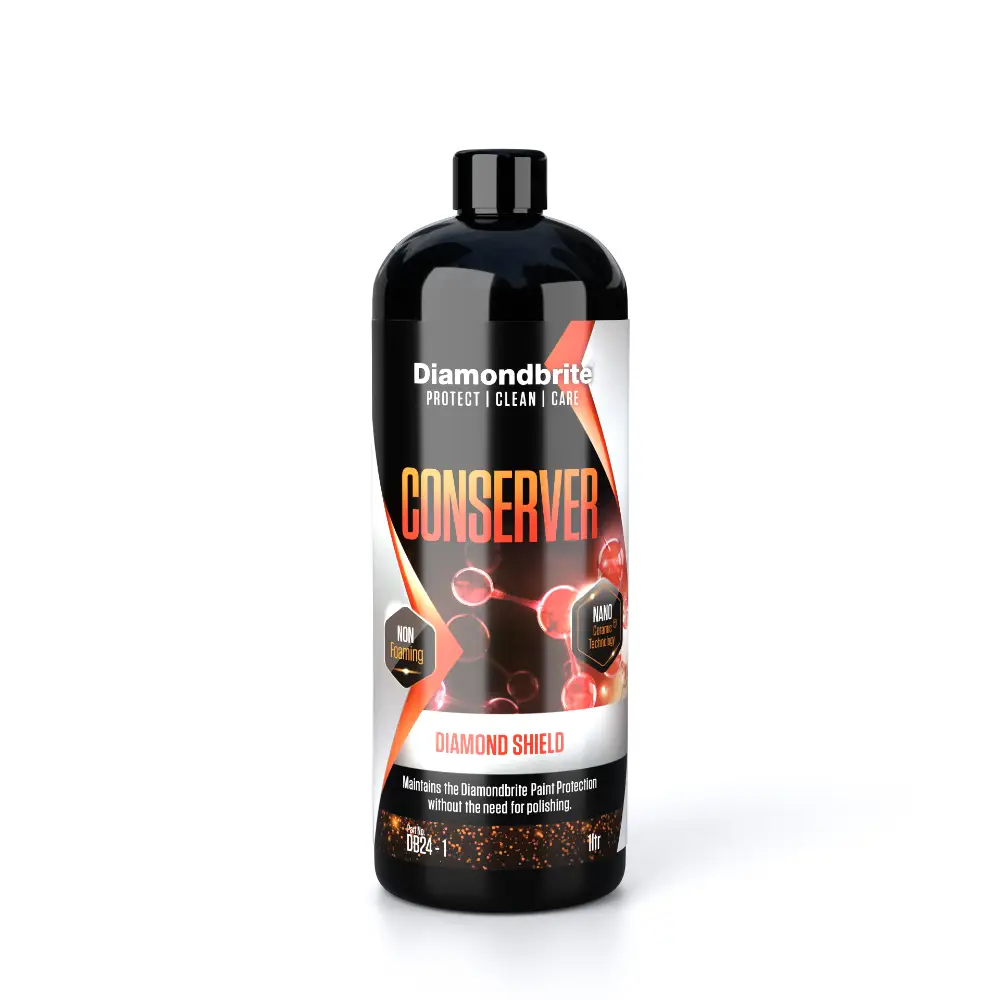
Diamondbrite’s ceramic-infused range covers both ends of this decision. For routine maintenance, a ceramic shampoo and topper spray keep gloss and hydrophobic performance topped up between full details, without any abrasive risk to the existing layer. Read more about what a ceramic shampoo does for your paintwork if you’re building a maintenance-only routine.
For recoat prep after correction work, you need a different toolkit: a decontaminating strip wash and panel prep wipes to guarantee a clean, oil-free surface before new coating goes on.
- Light haze, no beading loss: reach for a booster or topper spray first.
- Heavy contamination, flat beading: start with an iron remover and clay alternative.
- Post-correction panels: always use a strip wash and IPA wipe before recoating.
If you’re weighing up whether polishing before coating makes sense for your car, our guide on polishing before ceramic coating walks through the sequencing in more detail.
A detailer’s rule of thumb on when to polish
Here’s the rule I’d give any owner staring at a dull bonnet: maintain, don’t correct, unless the defect genuinely demands it. Most cars that look “past saving” just need decontamination and a booster, not a machine polisher. If you can catch a scratch with your fingernail, that’s your signal to stop DIY-ing and call a professional who can measure paint thickness and plan the correction properly, rather than guessing your way through a panel you can’t recoat evenly afterwards.
— Will
Keep your coating topped up with the right products
You can find coating-safe maintenance products available to purchase without needing to book a professional detailer every time your beading starts to flatten. Where a full correction job can run into hours of labour and a recoat charge, a booster spray and a proper wash routine handle most gloss problems yourself, at a fraction of the cost and none of the waiting list.
The Automotive Ceramic range covers toppers, glazes and ceramic-safe shampoos built for exactly the maintenance workflow described above, while the wider Diamondbrite shop stocks everything from decontamination products to panel prep wipes if you’re heading into a recoat job. Pick a maintenance kit based on what your test spot shows, haze or heavy contamination, and keep your coating performing without ever reaching for a cutting compound.
Sources
- Can I polish over ceramic coating? | Car Care Knowledge Base
- Can You Polish a Ceramic Coating?
- Hydrophobic and hydrophilic explained | MIT News
FAQ
What happens if you polish over a ceramic coating?
A non-abrasive maintenance polish restores gloss without harming the coating, but any abrasive compound will thin or remove the ceramic layer, meaning that panel needs recoating afterwards.
What polish can I use on ceramic coating?
Use a dedicated, ultra-fine finishing polish or ceramic-safe topper applied with a soft pad, never a cutting compound, and always test a small area first.
Can you polish a car that’s been ceramic coated?
Yes, for light maintenance issues like haze or reduced beading, but deep scratches or etching require abrasive correction, which strips the coating and demands reapplication.
What should you not do after ceramic coating?
Avoid cutting compounds, high machine speeds, and heavy pressure on a fresh coating. Stick to coating-safe shampoos, boosters like those in Diamondbrite’s Automotive Ceramic range, and gentle maintenance polishes only when genuinely needed.